이동평균선, 지지저항선, 거래량에 기반한 고급 진입 조건 전략


생성 날짜: 2024-06-14 15:40:46 마지막으로 수정됨: 2024-06-14 15:40:46
복사: 9 클릭수: 550
avatar of ChaoZhang ChaoZhang
1
집중하다
1617
수행원

이동평균선, 지지저항선, 거래량에 기반한 고급 진입 조건 전략

개요

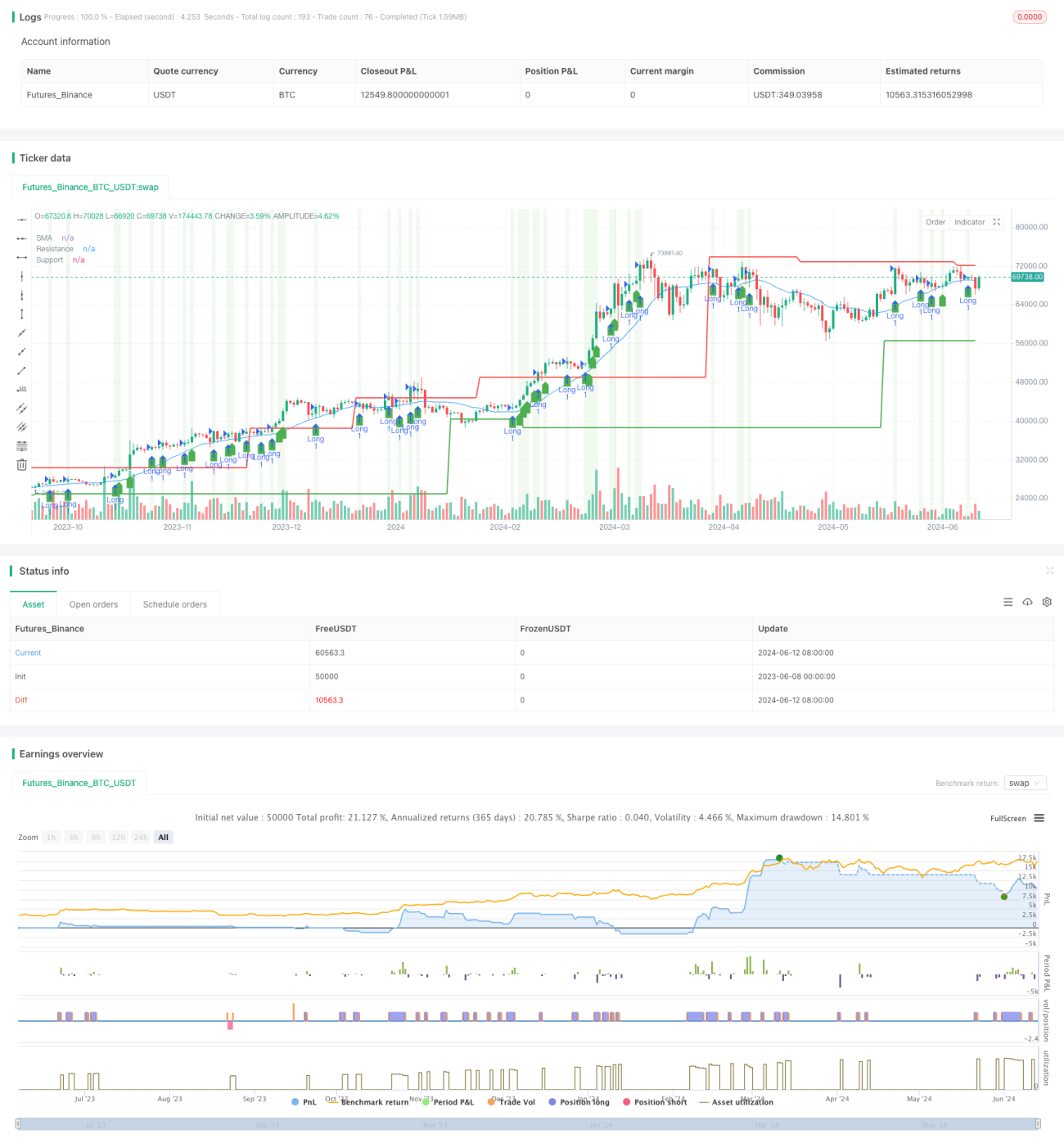
이 전략은 간단한 이동 평균 ((SMA), 지지부진 및 거래량이 증가하는 세 가지 기술 지표를 결합하여 포괄적인 거래 전략을 구성한다. 전략의 주요 아이디어는 가격이 SMA 평균선을 돌파하고 지지부진을 지지하며 거래량이 증가하는 상황에서 거래하며, 위험을 제어하기 위해 중지 조건을 설정한다.

전략 원칙

  1. 지정된 주기 SMA 평균선, 지지점과 저항점을 계산한다.
  2. 현재 거래량이 이전 기간보다 증가했는지 판단하십시오.
  3. 다중 입점 조건: 현재 종료 가격은 이전 주기 종료 가격보다 크고, SMA 평균선과 지지점보다 크며, 가격은 저항점으로부터 일정 거리이며 거래량이 증가한다.
  4. 공허 입시 조건: 현재 종료 가격은 전주기 종료 가격보다 낮으며 SMA 평균선과 지지점보다 낮으며 가격은 저항점으로부터 일정 거리이며 거래량이 증가한다.
  5. 손실 조건: 다중 헤드 스톱 가격은 입시 가격으로 곱하기 ((1- 손실 비율), 공허 헤드 스톱 가격은 입시 가격으로 곱하기 ((1+ 손실 비율) .

우위 분석

  1. 여러 기술 지표와 결합하여 전략의 신뢰성과 안정성을 높였습니다.
  2. 가격의 SMA 평균선과 지지부진을 돌파하는 것을 고려하여 트렌드 기회를 더 잘 잡을 수 있습니다.
  3. 거래량 지표를 도입하여 가격 돌파가 충분한 시장 참여와 함께 이루어지도록 보장하여 신호의 효과를 높였습니다.
  4. 스톱로스 조건을 설정하여 거래 위험을 효과적으로 통제합니다.

위험 분석

  1. 저항 지점을 지원하는 계산은 역사적인 데이터에 의존하며, 시장의 큰 변동이 있을 때 유효성을 잃을 수 있다.
  2. 거래량 지표에 비정상적인 변동이 있을 수 있으며, 이는 잘못된 신호를 발생시킬 수 있다.
  3. 스톱로스 조건의 설정은 시장의 극단적인 상황에서의 손실을 완전히 피할 수 없습니다.

최적화 방향

  1. 상대적으로 약한 지수 (RSI) 또는 이동 평균의 종결 분산 (MACD) 과 같은 다른 기술 지표를 도입하는 것을 고려하여 거래 신호의 신뢰성을 추가로 검증하십시오.
  2. 지원 저항 지점을 계산하는 방법을 최적화하여, 예를 들어, 다른 시장 상황에 적응하기 위해 더 역동적인 방법을 사용합니다.
  3. 거래량 지표에 대한 부드러운 처리가 비정상적인 변동이 전략에 미치는 영향을 줄여줍니다.
  4. 이동식 스톱을 사용하거나 시장의 변동에 따라 스톱 퍼센티지를 동적으로 조정하는 등의 최적화된 스톱 조건을 설정합니다.

요약하다

이 전략은 SMA 평균선, 지지부진 및 거래량 지표를 결합하여 포괄적인 거래 전략을 구축한다. 전략의 장점은 트렌드적 기회를 포착하고 거래 위험을 제어하는 데 있다. 그러나 전략에는 시장의 극단적 인 상황에 대한 적응력을 향상시키는 것과 같은 특정 한계가 있습니다.

전략 소스 코드
/*backtest
start: 2023-06-08 00:00:00
end: 2024-06-13 00:00:00
period: 1d
basePeriod: 1h
exchanges: [{"eid":"Futures_Binance","currency":"BTC_USDT"}]
*/

//@version=4
strategy("Advanced Entry Conditions with Support/Resistance, SMA, and Volume", overlay=true)

// Inputs
length = input(20, title="SMA Length")
stopLossPerc = input(1, title="Stop Loss Percentage", type=input.float) / 100
leftBars = input(15, title="Left Bars")
rightBars = input(15, title="Right Bars")
distanceThresh = input(1, title="Distance Threshold from Support/Resistance", type=input.float) / 100

// Calculations
smaValue = sma(close, length)
highUsePivot = fixnan(pivothigh(leftBars, rightBars)[1])
lowUsePivot = fixnan(pivotlow(leftBars, rightBars)[1])

// Volume Calculation
volumeIncrease = volume > volume[1]

// Entry Conditions
longEntryCondition = close[0] > close[1] and close[1] > smaValue and close[0] > smaValue and close[0] > lowUsePivot and close[1] > lowUsePivot and abs(close[0] - highUsePivot) > distanceThresh and volumeIncrease
shortEntryCondition = close[0] < close[1] and close[1] < smaValue and close[0] < smaValue and close[0] < lowUsePivot and close[1] < lowUsePivot and abs(close[0] - highUsePivot) > distanceThresh and volumeIncrease

// Calculate stop loss levels
longStopLoss = close * (1 - stopLossPerc)
shortStopLoss = close * (1 + stopLossPerc)

// Strategy Logic
strategy.entry("Long", strategy.long, when=longEntryCondition)
strategy.exit("Exit Long", "Long", stop=longStopLoss)

strategy.entry("Short", strategy.short, when=shortEntryCondition)
strategy.exit("Exit Short", "Short", stop=shortStopLoss)

// Plotting
plot(smaValue, color=color.blue, title="SMA")
plot(highUsePivot, color=color.red, linewidth=2, title="Resistance")
plot(lowUsePivot, color=color.green, linewidth=2, title="Support")

plotshape(series=longEntryCondition, location=location.belowbar, color=color.green, style=shape.labelup, title="Long Entry")
plotshape(series=shortEntryCondition, location=location.abovebar, color=color.red, style=shape.labeldown, title="Short Entry")

// Background Color
bgcolor(longEntryCondition ? color.new(color.green, 90) : shortEntryCondition ? color.new(color.red, 90) : na)