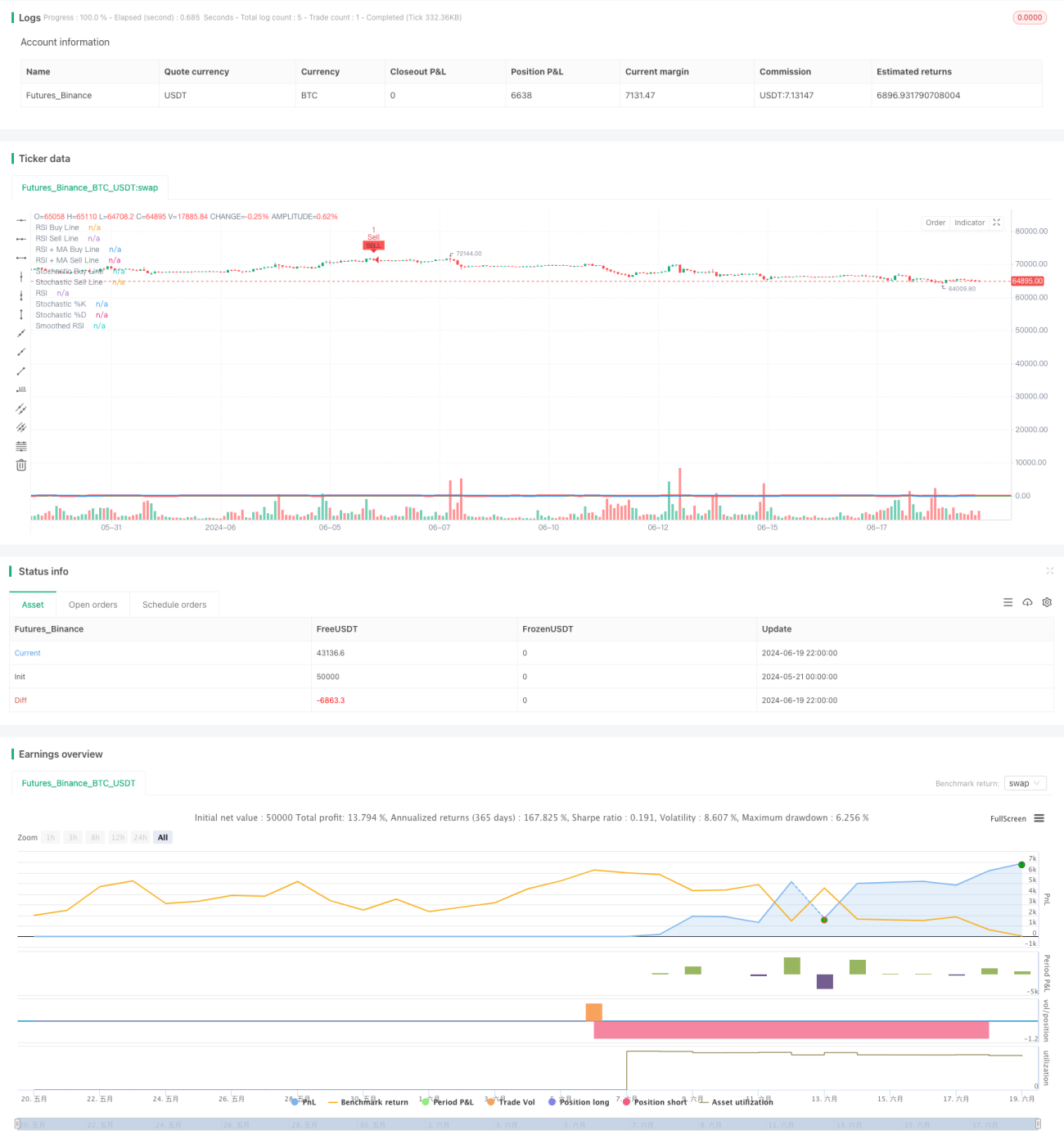
RSI와 Stochastic Indicator Fusion Crossover 전략

RSI STOCH SMA EMA WMA SMMA VMMA
생성 날짜: 2024-06-21 17:55:30 마지막으로 수정됨: 2024-06-21 17:55:30
복사: 12 클릭수: 721
avatar of ChaoZhang ChaoZhang
1
집중하다
1617
수행원

RSI와 Stochastic Indicator Fusion Crossover 전략

개요

이 전략은 종합적인 기술적 분석 시스템으로, 상대적으로 약한 지표 ((RSI) 와 무작위 지표 ((Stochastic) 의 특성을 결합하고, 이동 평균 ((MA) 의 개념을 통합합니다. 전략의 핵심 아이디어는 여러 동적 지표의 교차와 하락 판단을 통해 시장의 전환점을 포착하여 구매 및 판매 신호를 생성하는 것입니다. 이러한 다차원 분석 방법은 거래 의사 결정의 정확성과 신뢰성을 높이기 위해 고안되었습니다.

전략 원칙

  1. RSI 분석:

    • 표준 14주기 RSI를 사용한다.
    • 구매 (37) 와 판매 (49) 값을 설정했다.
    • RSI 상승과 구매 하락 아래의 하락은 시선적 신호 중 하나입니다.
    • RSI가 하락하고 상하가 팔리는 것은 하락 신호 중 하나다.
  2. 평평한 RSI:

    • RSI를 이동 평균 처리, 선택 SMA, EMA, WMA, SMMA 또는 VMMA.
    • RSI와 평평한 선의 교차는 추가 신호 확인으로 사용됩니다.
  3. 무작위적인 지표 분석:

    • 표준 사용의 무작위 지표 설정 ((14,3,3) ).
    • 오버 바이 (80) 와 오버 세일 (20) 값을 설정했다.
    • K선과 D선의 골드포크와 데드포크가 거래 신호의 중요한 구성요소이다.
  4. 합성 신호 생성:

    • 구매 신호: RSI 상승 및 구매 하위값, 무작위 지표 K 값은 초상 판매 라인 및 골드 포크, RSI 상의 평평한 RSI 및 RSI + MA 구매 라인 아래.
    • 팔기 신호: RSI가 하락하고 팔기 마이너스보다 높습니다. 무작위 지표 K 값이 오버 바이 라인보다 높고 사다리입니다. RSI 아래 RSI가 평평하고 RSI + MA에서 팔기 라인보다 높습니다.

전략적 이점

  1. 다중 지표 융합: RSI, 무작위 지표 및 이동 평균을 결합하여 전략은 여러 관점에서 시장 동력을 분석하여 잘못된 신호를 줄일 수 있습니다.

  2. 동적 적응성: RSI와 무작위 지표의 교차 신호를 사용하여 다른 시장 환경에 더 잘 적응할 수 있다.

  3. 트렌드 확인: RSI와 그 평평한 선의 교차는 추가적인 트렌드 확인을 제공하여 신뢰할 수없는 신호를 필터링하는 데 도움이됩니다.

  4. 유연성: 전략은 사용자가 RSI 길이, 거래 마이너스 등과 같은 여러 매개 변수를 사용자 정의 할 수있게 해줍니다. 이는 다른 시장과 개인 선호도에 따라 조정 할 수 있습니다.

  5. 시각적 피드백: 전략은 풍부한 차트 그리기 기능을 제공하여 거래자가 시장 상태와 신호 생성 과정을 직관적으로 이해할 수 있도록 도와줍니다.

전략적 위험

  1. 과도한 거래: 여러 가지 조건으로 인해 신호가 자주 생성되어 거래 비용이 증가할 수 있습니다.

  2. 지연성: 여러 개의 이동 평균과 부드러운 처리를 사용하면 빠르게 변화하는 시장에서 기회를 놓치는 신호 지연이 발생할 수 있습니다.

  3. 매개 변수 감수성: 정책은 여러 개의 조정 가능한 매개 변수에 의존하며, 잘못된 매개 변수 설정으로 인해 정책의 성능이 좋지 않을 수 있다.

  4. 시장 환경 의존성: 추세가 명확하지 않거나 수평 시장에서, 전략은 많은 가짜 신호를 생성할 수 있다.

  5. 기술 지표에 과도하게 의존: 기본 사항과 시장 감정과 같은 다른 중요한 요소를 무시하면 잘못된 판단이 발생할 수 있습니다.

전략 최적화 방향

  1. 동적 변수 조정: 시장의 변동성에 따라 RSI와 무작위 지표의 변수를 자동으로 조정하는 적응 메커니즘을 도입한다.

  2. 트렌드 필터를 추가합니다: 장기 이동 평균 또는 ADX 지표와 결합하여 강력한 추세에서 거래하는 것을 보장합니다.

  3. 거래량 분석을 도입: 거래량 지표를 의사 결정 과정에 포함하여 신호의 신뢰성을 높인다.

  4. 출전 전략을 최적화: 추적 중지 또는 ATR 기반의 동적 중지와 같은 더 정교한 중지 중지 메커니즘을 개발하십시오.

  5. 시간 프레임 조정: 여러 시간 프레임에서 신호를 검증하여 잘못된 신호를 줄이고 정확성을 향상시킵니다.

  6. 기계 학습 통합: 기계 학습 알고리즘을 사용하여 매개 변수 선택 및 신호 생성 과정을 최적화한다.

요약하다

RSI와 무작위 지표 융합 크로스 전략은 여러 동적 지표와 이동 평균을 결합하여 시장의 중요한 전환점을 포착하기 위한 포괄적인 기술 분석 시스템입니다. 이 전략의 장점은 다차원 분석 방법과 유연한 파라미터 설정으로 인해 다양한 시장 환경에 적응할 수 있습니다. 그러나 전략은 과도한 거래와 파라미터 민감성 등의 위험에 직면합니다.

전략 소스 코드
/*backtest
start: 2024-05-21 00:00:00
end: 2024-06-20 00:00:00
period: 2h
basePeriod: 15m
exchanges: [{"eid":"Futures_Binance","currency":"BTC_USDT"}]
*/

//@version=5
strategy("-VrilyaSS-RSI&SToch-Cross+2xRSI+2xStoch-Lines+RSI-SMA-Cross-V4-", overlay=true)

// RSI settings
rsiLength = input.int(14, title="RSI Length")
rsiSource = input.source(ohlc4, title="RSI Source")
rsiBuyLine = input.int(37, title="RSI Buy Line", minval=0, maxval=100)
rsiSellLine = input.int(49, title="RSI Sell Line", minval=0, maxval=100)
rsi = ta.rsi(rsiSource, rsiLength)

// Smoothed RSI (Gleitender Durchschnitt von RSI)
smaLength = input.int(14, title="MA Length for RSI")
smaSource = input.source(ohlc4, title="MA Source for RSI")
maTypeRSI = input.string(title="MA Type for RSI", defval="SMA", options=["SMA", "EMA", "WMA", "SMMA (RMA)", "VMMA"])
f_get_ma_rsi(source, length, type) =>
    switch type
        "SMA" => ta.sma(source, length)
        "EMA" => ta.ema(source, length)
        "WMA" => ta.wma(source, length)
        "SMMA (RMA)" => ta.rma(source, length) // Smoothed Moving Average (Simple Moving Average)
        "VMMA" => ta.vwma(source, length) // Volume Weighted Moving Average (VMMA)
smoothedRsi = f_get_ma_rsi(ta.rsi(smaSource, rsiLength), smaLength, maTypeRSI)
rsiSmaBuyLine = input.int(40, title="RSI + MA Buy Line", minval=0, maxval=100)
rsiSmaSellLine = input.int(60, title="RSI + MA Sell Line", minval=0, maxval=100)

// Stochastic settings
kLength = input.int(14, title="Stochastic K Length")
kSmoothing = input.int(3, title="Stochastic K Smoothing")
dSmoothing = input.int(3, title="Stochastic D Smoothing")
stochBuyLine = input.int(20, title="Stochastic Buy Line", minval=0, maxval=100)
stochSellLine = input.int(80, title="Stochastic Sell Line", minval=0, maxval=100)
stochK = ta.sma(ta.stoch(close, high, low, kLength), kSmoothing)
stochD = ta.sma(stochK, dSmoothing)

// Stochastic Crosses
bullishCross = ta.crossover(stochK, stochD)
bearishCross = ta.crossunder(stochK, stochD)

// RSI Direction and Crosses
rsiUp = ta.change(rsi) > 0
rsiDown = ta.change(rsi) < 0
rsiCrossAboveSMA = ta.crossover(rsi, smoothedRsi) and rsi < rsiSmaBuyLine
rsiCrossBelowSMA = ta.crossunder(rsi, smoothedRsi) and rsi > rsiSmaSellLine

// Buy Signal (RSI geht hoch und ist unter der Buy-Line, Stochastic unter Buy-Line mit bullischem Cross, und RSI kreuzt über SMA unterhalb der RSI+SMA Buy Line)
buySignal = rsiUp and rsi < rsiBuyLine and bullishCross and stochK < stochBuyLine and rsiCrossAboveSMA

// Sell Signal (RSI geht runter und ist über der Sell-Line, Stochastic über Sell-Line mit bärischem Cross, und RSI kreuzt unter SMA oberhalb der RSI+SMA Sell Line)
sellSignal = rsiDown and rsi > rsiSellLine and bearishCross and stochK > stochSellLine and rsiCrossBelowSMA

// Plot RSI, Smoothed RSI, and Stochastic for reference with default visibility off
plot(rsi, title="RSI", color=color.yellow, linewidth=2, display=display.none)
plot(smoothedRsi, title="Smoothed RSI", color=color.blue, linewidth=2, display=display.none)
hline(rsiBuyLine, "RSI Buy Line", color=color.green, linewidth=2, linestyle=hline.style_solid, display=display.none)
hline(rsiSellLine, "RSI Sell Line", color=color.red, linewidth=2, linestyle=hline.style_solid, display=display.none)
hline(rsiSmaBuyLine, "RSI + MA Buy Line", color=color.purple, linewidth=2, linestyle=hline.style_solid, display=display.none)
hline(rsiSmaSellLine, "RSI + MA Sell Line", color=color.orange, linewidth=2, linestyle=hline.style_solid, display=display.none)
plot(stochK, title="Stochastic %K", color=color.aqua, linewidth=2, display=display.none)
plot(stochD, title="Stochastic %D", color=color.red, linewidth=3, display=display.none)
hline(stochBuyLine, "Stochastic Buy Line", color=color.green, linewidth=2, linestyle=hline.style_solid, display=display.none)
hline(stochSellLine, "Stochastic Sell Line", color=color.red, linewidth=2, linestyle=hline.style_solid, display=display.none)

// Alert conditions
alertcondition(buySignal, title="Buy Signal", message="Buy Signal: RSI and Stochastic conditions met.")
alertcondition(sellSignal, title="Sell Signal", message="Sell Signal: RSI and Stochastic conditions met.")

// Plot buy and sell signals for visual reference
plotshape(series=buySignal, location=location.belowbar, color=color.new(color.green, 0), style=shape.labelup, text="BUY", textcolor=color.black, size=size.tiny)
plotshape(series=sellSignal, location=location.abovebar, color=color.new(color.red, 0), style=shape.labeldown, text="SELL", textcolor=color.black, size=size.tiny)

// Strategy orders
if (buySignal)
    strategy.entry("Buy", strategy.long)
if (sellSignal)
    strategy.entry("Sell", strategy.short)