이중 이동 평균 및 상대 강도 하이브리드 적응 전략

EMA RSI RS
생성 날짜: 2024-12-04 15:29:05 마지막으로 수정됨: 2024-12-04 15:29:05
복사: 0 클릭수: 414
avatar of ChaoZhang ChaoZhang
1
집중하다
1617
수행원

이중 이동 평균 및 상대 강도 하이브리드 적응 전략

개요

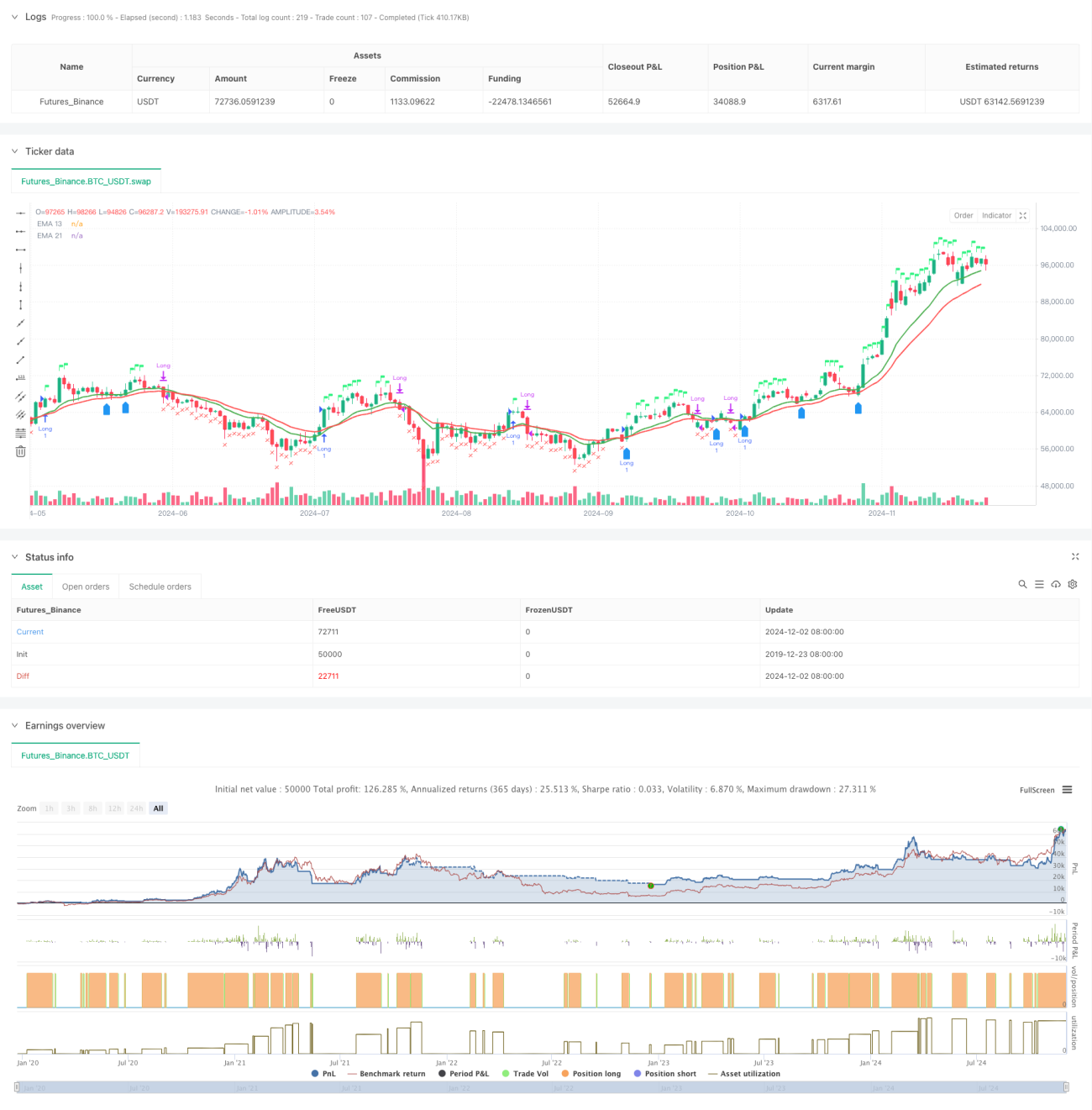
이 전략은 양평선 시스템, 상대적으로 약한 지표 ((RSI) 와 상대적으로 강한 지표 ((RS) 분석을 결합한 통합 거래 시스템입니다. 전략은 13일과 21일 지수 이동 평균 ((EMA) 의 교차 확인 트렌드를 통해, RSI와 기준 지수의 RS 값에 대한 거래 신호의 확인을 결합하면서 다차원 거래 의사 결정 메커니즘을 구현합니다. 이 전략은 또한 52주 최고점에 대한 위험 제어 메커니즘과 재입장 조건에 대한 판단을 포함합니다.

전략 원칙

여러 신호 확인 메커니즘을 사용하는 전략:

  1. 입력 신호는 다음과 같은 조건을 동시에 충족해야 합니다:
    • EMA13에 EMA21을 착용하거나 EMA13보다 높은 가격
    • RSI가 60보다 크면
    • 상대 강도 (RS) 는
  2. 탈퇴 조건은 다음과 같습니다.
    • 가격 하락 EMA21
    • RSI는 50보다 낮습니다
    • RS를 마이너스로 변환합니다.
  3. 재입학 조건:
    • 가격은 EMA13를 착용하고 EMA13는 EMA21보다 크다.
    • RS는 0으로 유지됩니다.
    • 지난주 최고치를 넘어서거나

전략적 이점

  1. 복수 신호 확인 메커니즘이 가짜 침입 위험을 낮춘다
  2. 상대 강도 분석과 함께 강력한 품종을 효과적으로 선별합니다.
  3. 자율적 시간 주기 조정 메커니즘
  4. 위험 통제 체계가 잘 갖추어져 있습니다.
  5. 지능형 재입학 메커니즘
  6. 실시간 거래 상태를 시각화합니다.

전략적 위험

  1. 시장의 흔들림으로 인해 거래가 빈번해질 수 있습니다.
  2. 다중 지표에 의존하면 신호 지연이 발생할 수 있습니다.
  3. 고정 RSI 마이너스는 모든 시장 환경에 적합하지 않을 수 있습니다.
  4. 상대 강도 계산은 기준 지수의 정확성에 의존합니다.
  5. 52주 최고치의 중지 손실이 너무 느려질 수 있습니다.

전략 최적화 방향

  1. 적응된 RSI 마이너스
  2. 재입학 조건을 최적화하기 위한 판단 논리
  3. 거래량 분석 차원을 추가합니다.
  4. 손절매 및 손절매 메커니즘 개선
  5. 변동율 필터에 추가
  6. 상대 강도 계산 사이클을 최적화

요약하다

이 전략은 기술 분석과 상대 강도 분석을 결합하여 포괄적인 거래 시스템을 구축한다. 여러 신호 확인 메커니즘과 위험 제어 시스템은 강력한 실용성을 갖는다. 제안된 최적화 방향에 의해 전략은 더 향상될 여지가 있다. 전략의 성공적인 실행은 거래자가 시장에 대한 깊은 이해를 가지고 특정 거래 품종의 특성에 따라 적절한 매개 변수를 조정해야 한다.

전략 소스 코드
/*backtest
start: 2019-12-23 08:00:00
end: 2024-12-03 00:00:00
period: 1d
basePeriod: 1d
exchanges: [{"eid":"Futures_Binance","currency":"BTC_USDT"}]
*/

//@version=5
strategy("EMA 13 & 21 Entry Exit", overlay=true)

// Define the EMAs
ema13 = ta.ema(close, 13)
ema21 = ta.ema(close, 21)

// Define the RSI
rsi = ta.rsi(close, 14)

// Calculate the closing price relative to Nifty 50
//nifty50 = request.security("NSE:NIFTY", timeframe.period, close)
//closeRelative = close / nifty50

// Define a base period (e.g., 123) and adjust it based on the timeframe
//basePeriod = 123

// Calculate the effective period based on the timeframe
//effectivePeriod = basePeriod * (timeframe.isintraday ? (60 / timeframe.multiplier) : 1)

// Calculate the EMA
//rs = ta.ema(closeRelative, effectivePeriod)

// Define the Relative Strength with respect to NIFTY 50
nifty50 = request.security("swap", "D", close)
rs = ta.ema(close / nifty50, 55 )

// Define the previous 2-week low and last week's high
twoWeekLow = ta.lowest(low, 10)  // 10 trading days roughly equal to 2 weeks
lastWeekHigh = ta.highest(high, 5)  // 5 trading days roughly equal to 1 week
fiftytwoWeekhigh = ta.highest(high, 52*5) // 252 tradingdays roughly equal to 52 week.

// Long condition: EMA 21 crossing above EMA 55, price above EMA 21, RSI > 50, and RS > 0
longCondition = ta.crossover(ema13, ema21) or close > ema13 and rsi > 60 and rs > 0

// Exit condition: Price closing below EMA 55 or below the previous 2-week low
exitCondition = close < ema21 or rsi < 50 or rs < 0 //or close < fiftytwoWeekhigh*0.80

// Re-entry condition: Price crossing above EMA 21 after an exit, EMA 21 > EMA 55, and RS > 1
reEntryCondition = ta.crossover(close, ema13) and ema13 > ema21 and rs > 0

// Re-entry condition if trailing stop loss is hit: Price crossing above last week's high
reEntryAfterSL = ta.crossover(close, lastWeekHigh)

// Plot the EMAs
plot(ema13 ,color=color.green, title="EMA 13",linewidth = 2)
plot(ema21, color=color.red, title="EMA 21",linewidth = 2)


// Plot buy and sell signals
plotshape(series=longCondition, location=location.abovebar, color=color.rgb(50, 243, 130), style=shape.flag, title="Buy Signal")
plotshape(series=exitCondition, location=location.belowbar, color=color.red, style=shape.xcross, title="Sell Signal")
plotshape(series=reEntryCondition or reEntryAfterSL, location=location.belowbar, color=color.blue, style=shape.labelup, title="Re-entry Signal")
//plotshape(series = fiftytwoWeekhigh,location=location.abovebar, color=color.blue,style=shape.flag, title="52WH")

// Plot background color for RS > 0
//bgcolor(rs > 0 ? color.new(color.green, 90) : na, title="RS Positive Background")
// Plot the previous 2-week low and last week's high
// plot(twoWeekLow, color=color.orange, title="2-Week Low")
// plot(lastWeekHigh, color=color.purple, title="Last Week High")

// Strategy logic
if (longCondition or reEntryCondition or reEntryAfterSL)
    strategy.entry("Long", strategy.long)

if (exitCondition)
    strategy.close("Long")

 // Calculate Stop Loss (SL) and Profit
var float entryPrice = na
var float stopLoss = na
var float profit = na

if (strategy.opentrades > 0)
    entryPrice := strategy.opentrades.entry_price(strategy.opentrades - 1)
    stopLoss := fiftytwoWeekhigh * 0.80
    profit := (close - entryPrice) / entryPrice * 100

// Display the strategy table
var table strategyTable = table.new(position.top_right, 4, 2, border_width = 1)

// Make the table movable
tableX = input.int(0, title="Table X Position")
tableY = input.int(0, title="Table Y Position")

// Add size options for the table
tableSize = input.string("small", title="Table Size", options=["tiny", "small", "large"])

// Adjust table size based on user input
tableWidth = tableSize == "tiny" ? 2 : tableSize == "small" ? 4 : 6
tableHeight = tableSize == "tiny" ? 1 : tableSize == "small" ? 2 : 3

// Create the table with the specified size
//table = table.new(position.top_right, tableWidth, tableHeight, border_width = 1)

// Position the table based on user input
// table.cell(strategyTable, tableX, tableY, "Entry Price",  bgcolor=#18eef9)
// table.cell(strategyTable, tableX, tableY + 1, str.tostring(entryPrice, format.mintick), bgcolor=#18eef9)
// table.cell(strategyTable, tableX + 1, tableY, "Stop Loss (20%)", bgcolor=color.red)
// table.cell(strategyTable, tableX + 1, tableY + 1, str.tostring(stopLoss, format.mintick), bgcolor=color.red)
// table.cell(strategyTable, tableX + 2, tableY, "Profit (%)", bgcolor=color.green)
// table.cell(strategyTable, tableX + 2, tableY + 1, str.tostring(profit, format.percent), bgcolor=color.green)