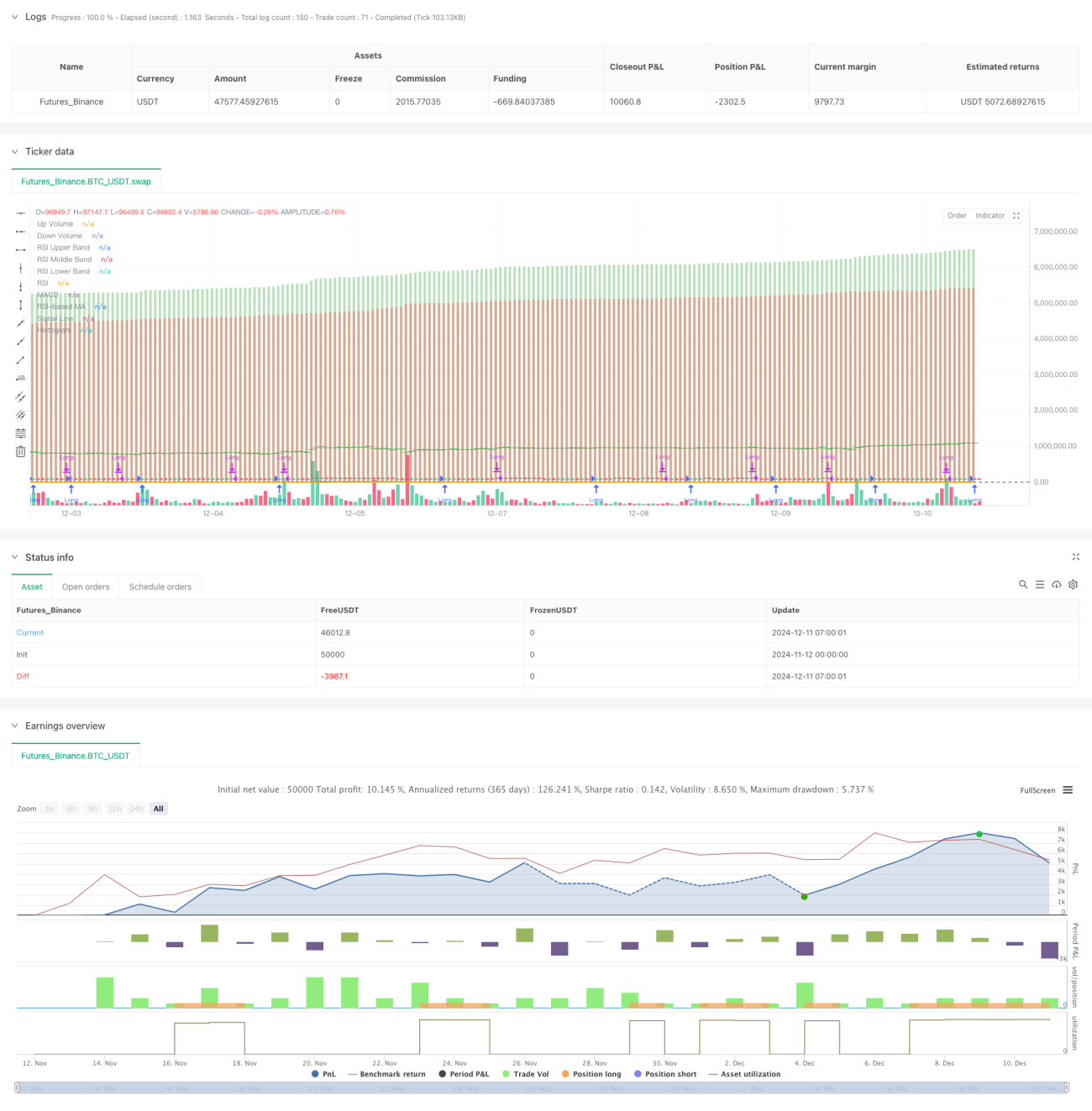
RSI, MACD 및 거래량을 기반으로 한 다중 지표 조합 적응형 거래 전략

RSI MACD VOL BB EMA SMA VWMA WMA SMMA
생성 날짜: 2024-12-13 10:19:34 마지막으로 수정됨: 2024-12-13 10:19:34
복사: 0 클릭수: 501
avatar of ChaoZhang ChaoZhang
1
집중하다
1617
수행원

RSI, MACD 및 거래량을 기반으로 한 다중 지표 조합 적응형 거래 전략

개요

이 전략은 상대적으로 약한 지표 ((RSI), 이동 평균 동향 분산 지표 ((MACD), 브린 밴드 ((BB) 및 거래량 ((Volume) 분석을 결합한 통합 거래 시스템입니다. 전략은 다차원 기술 지표의 조화를 통해 시장 추세, 변동성 및 거래량 등에 대한 전체적인 분석을 수행하여 최고의 거래 기회를 찾습니다.

전략 원칙

전략의 핵심 논리는 다음과 같은 측면에 기초합니다.

  1. RSI ((14) 를 사용하여 시장의 과매매 상태를 판단합니다. RSI가 30보다 낮으면 과매매로 간주됩니다.
  2. MACD ((12,26,9) 를 사용하여 트렌드 방향을 판단하고, MACD 금포는 다중 신호로 사용됩니다.
  3. 거래량 상승과 거래량 감소의 차이를 계산하여 가격 움직임을 확인하는 방법 (Delta Volume)
  4. 부린과 결합하여 시장 진입 시기를 최적화하기 위한 가격 변동성을 평가합니다.
  5. RSI 오버셀, MACD 골드포크, 델타 볼륨이 양성일 경우, 시스템은 최적의 구매 신호를 발산합니다.
  6. MACD 사각지대 또는 RSI가 60을 초과할 때, 시스템은 자동으로 위험을 통제하기 위해 청산합니다.

전략적 이점

  1. 다중 지표 크로스 검증은 거래 신호의 신뢰성을 높인다.
  2. 거래량 분석을 통해 가격 트렌드의 유효성을 확인합니다.
  3. 전략의 유연성을 강화하는 적응형 이동 평균 유형 선택
  4. 정지 및 정지 설정을 포함한 완벽한 위험 제어 장치
  5. 전략 매개 변수는 시장 상황에 따라 최적화 조정할 수 있습니다.

전략적 위험

  1. 다중 지표 조합은 신호 지연을 유발할 수 있습니다.
  2. 위축 시장에서 잘못된 신호가 발생할 수 있습니다.
  3. 과도한 매개변수 최적화는 과적합으로 이어질 수 있습니다.
  4. 높은 주파수 거래는 높은 거래 비용을 초래할 수 있습니다.
  5. 시장의 급격한 변동으로 인해 더 큰 회수일 수 있다.

전략 최적화 방향

  1. 시장 상태에 따라 동적으로 지수 변수를 조정하는 적응 변수 메커니즘을 도입합니다.
  2. 트렌드 강도 필터를 늘리고, 가로 시장의 가짜 신호를 줄여라
  3. 손해 방지 제도를 최적화하고 자금 사용 효율을 높여라
  4. 변동율 필터링 메커니즘에 가입하여 높은 변동율 환경에서 포지션을 조정합니다.
  5. 지능형 자금 관리 시스템 개발, 동적 포지션 제어

요약하다

이 전략은 RSI, MACD, 거래량과 같은 다차원 분석을 통해 시장 기회를 포착하는 여러 기술적 지표를 결합 한 복합적인 거래 전략입니다. 전략은 강력한 적응력과 확장성을 갖추고 있으며, 또한 완벽한 위험 제어 장치가 있습니다. 지속적인 최적화와 개선으로, 이 전략은 다양한 시장 환경에서 안정적인 성능을 유지할 것으로 예상됩니다.

전략 소스 코드
/*backtest
start: 2024-11-12 00:00:00
end: 2024-12-11 08:00:00
period: 1h
basePeriod: 1h
exchanges: [{"eid":"Futures_Binance","currency":"BTC_USDT"}]
*/

//@version=5
strategy("Liraz sh Strategy - RSI MACD Strategy with Bullish Engulfing and Net Volume", overlay=true, currency=currency.NONE, initial_capital=100000, commission_type=strategy.commission.percent, commission_value=0.1, slippage=3)

// Input parameters
rsiLengthInput = input.int(14, minval=1, title="RSI Length", group="RSI Settings")
rsiSourceInput = input.source(close, "RSI Source", group="RSI Settings")
maTypeInput = input.string("SMA", title="MA Type", options=["SMA", "Bollinger Bands", "EMA", "SMMA (RMA)", "WMA", "VWMA"], group="MA Settings")
maLengthInput = input.int(14, title="MA Length", group="MA Settings")
bbMultInput = input.float(2.0, minval=0.001, maxval=50, title="BB StdDev", group="MA Settings")

fastLength = input.int(12, minval=1, title="MACD Fast Length")
slowLength = input.int(26, minval=1, title="MACD Slow Length")
signalLength = input.int(9, minval=1, title="MACD Signal Length")

startDate = input(timestamp("2018-01-01"), title="Start Date")
endDate = input(timestamp("2069-12-31"), title="End Date")

// Custom Up and Down Volume Calculation
var float upVolume = 0.0
var float downVolume = 0.0

if close > open
    upVolume += volume
else if close < open
    downVolume += volume

delta = upVolume - downVolume

plot(upVolume, "Up Volume", style=plot.style_columns, color=color.new(color.green, 60))
plot(downVolume, "Down Volume", style=plot.style_columns, color=color.new(color.red, 60))
plotchar(delta, "Delta", "—", location.absolute, color=delta > 0 ? color.green : color.red)

// MA function
ma(source, length, type) =>
    switch type
        "SMA" => ta.sma(source, length)
        "Bollinger Bands" => ta.sma(source, length)
        "EMA" => ta.ema(source, length)
        "SMMA (RMA)" => ta.rma(source, length)
        "WMA" => ta.wma(source, length)
        "VWMA" => ta.vwma(source, length)

// RSI calculation
up = ta.rma(math.max(ta.change(rsiSourceInput), 0), rsiLengthInput)
down = ta.rma(-math.min(ta.change(rsiSourceInput), 0), rsiLengthInput)
rsi = down == 0 ? 100 : up == 0 ? 0 : 100 - (100 / (1 + up / down))
rsiMA = ma(rsi, maLengthInput, maTypeInput)
isBB = maTypeInput == "Bollinger Bands"

// MACD calculation
fastMA = ta.ema(close, fastLength)
slowMA = ta.ema(close, slowLength)
macd = fastMA - slowMA
signalLine = ta.sma(macd, signalLength)
hist = macd - signalLine

// Bullish Engulfing Pattern Detection
bullishEngulfingSignal = open[1] > close[1] and close > open and close >= open[1] and close[1] >= open and (close - open) > (open[1] - close[1])
barcolor(bullishEngulfingSignal ? color.yellow : na)

// Plotting RSI and MACD
plot(rsi, "RSI", color=#7E57C2)
plot(rsiMA, "RSI-based MA", color=color.yellow)
hline(70, "RSI Upper Band", color=#787B86)
hline(50, "RSI Middle Band", color=color.new(#787B86, 50))
hline(30, "RSI Lower Band", color=#787B86)

bbUpperBand = plot(isBB ? rsiMA + ta.stdev(rsi, maLengthInput) * bbMultInput : na, title="Upper Bollinger Band", color=color.green)
bbLowerBand = plot(isBB ? rsiMA - ta.stdev(rsi, maLengthInput) * bbMultInput : na, title="Lower Bollinger Band", color=color.green)

plot(macd, title="MACD", color=color.blue)
plot(signalLine, title="Signal Line", color=color.orange)
plot(hist, title="Histogram", style=plot.style_histogram, color=color.gray)

// Best time to buy condition
bestBuyCondition = rsi < 30 and ta.crossover(macd, signalLine) and delta > 0

// Plotting the best buy signal line
var line bestBuyLine = na
if (bestBuyCondition )
    bestBuyLine := line.new(bar_index[1], close[1], bar_index[0], close[0], color=color.white)

// Strategy logic
longCondition = (ta.crossover(macd, signalLine) or bullishEngulfingSignal) and rsi < 70 and delta > 0
if (longCondition )
    strategy.entry("Long", strategy.long)

// Reflexive exit condition: Exit if MACD crosses below its signal line or if RSI rises above 60
exitCondition = ta.crossunder(macd, signalLine) or (rsi > 60 and strategy.position_size > 0)
if (exitCondition )
    strategy.close("Long")