다중 추세선 돌파 교차 양적 전략

ATR SMA
생성 날짜: 2024-12-20 14:26:41 마지막으로 수정됨: 2024-12-20 14:26:41
복사: 1 클릭수: 427
avatar of ChaoZhang ChaoZhang
1
집중하다
1617
수행원

다중 추세선 돌파 교차 양적 전략

전략 개요

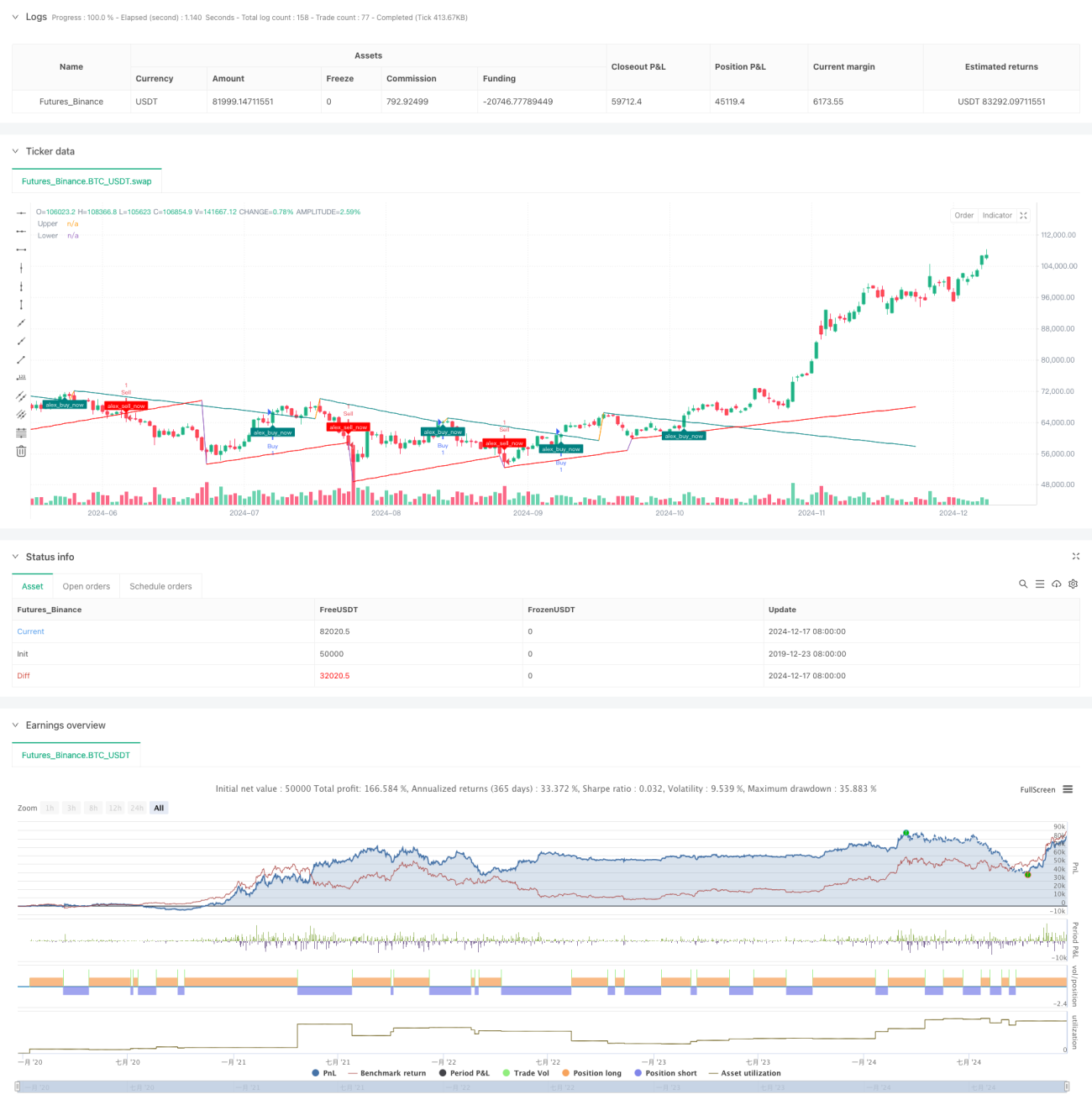
이 전략은 다중 트렌드 라인 브레이크를 기반으로 하는 지능형 거래 시스템이다. 그것은 동적으로 중요한 지지 저항 지점을 식별하고, 여러 기술 지표와 결합하여 트렌드 라인 경사도를 계산하여 가격이 트렌드 라인 브레이크를 할 때 거래한다. 이 전략은 시장 추세의 전환점을 포착할 수 있을 뿐만 아니라, 파라미터를 최적화하여 다른 시장 환경에 적응할 수 있다.

전략 원칙

전략의 핵심 논리는 세 가지 주요 부분으로 구성됩니다. 첫째, 초기 지지 저항 지점을 형성하는 중요한 고위와 낮은 지점을 후퇴 기간 (Lookback Period) 을 통해 식별합니다. 둘째, 트렌드 라인의 기울기를 선택된 계산 방법 (ATR, 표준 차차 또는 선형 회귀) 에 따라 동적으로 계산하여 트렌드 라인이 시장의 변동에 더 잘 적응하도록합니다. 마지막으로, 가격과 트렌드 라인의 관계를 모니터링하여 돌파구가 발생했을 때 거래 신호를 유발합니다.

전략적 이점

  1. 적응성: 다양한 기울기 계산 방법과 조정 가능한 매개 변수를 통해 전략은 다양한 시장 환경에 적응할 수 있습니다.
  2. 리스크 제어: 트렌드 라인의 동적 조정 능력은 트렌드 변화를 제 시간에 식별하고 가짜 돌파구로 인한 손실을 줄일 수 있습니다.
  3. 좋은 시각화 효과: 트렌드 라인 연장 및 브레이크 마크를 포함한 명확한 시각적 피드백을 제공하는 전략
  4. 신호 확인 메커니즘: 다중 조건 검증을 통해 거래 신호의 신뢰성을 보장합니다.

전략적 위험

  1. 시장의 급격한 변동으로 인해 잘못된 신호가 발생할 수 있습니다.
  2. 트렌드 라인 계산의 지연성으로 인해 출입 시기가 약간 늦어질 수 있습니다.
  3. 잘못 선택된 매개 변수는 과도한 거래 또는 중요한 기회를 놓칠 수 있습니다.
  4. 수평 정리 시장에서 빈번한 가짜 브레이크 신호가 발생할 수 있습니다.

전략 최적화 방향

  1. 진출의 유효성을 검증하기 위한 트랜스포트 지표 도입
  2. 시장 변동율 필터를 추가하여 높은 변동 동안 변수를 조정합니다.
  3. 신호의 정확성을 높이기 위해 다른 기술 지표를 통합
  4. 자율적인 변수 조정 메커니즘을 개발
  5. 스톱로스와 수익을 증가시키는 지능형 계산 방법

요약하다

이 전략은 여러 가지 기술적 분석 방법을 통합하여 신뢰할 수 있는 트렌드 라인을 깨는 거래 시스템을 구축합니다. 이 전략의 장점은 시장 변화에 동적으로 적응할 수 있다는 점과 동시에 명확한 거래 신호를 제공하는 것입니다. 일부 고유한 위험이 있지만 합리적인 매개 변수 설정과 지속적인 최적화를 통해 전략의 안정성과 수익성을 크게 향상시킬 수 있습니다.

전략 소스 코드
/*backtest
start: 2019-12-23 08:00:00
end: 2024-12-18 08:00:00
period: 1d
basePeriod: 1d
exchanges: [{"eid":"Futures_Binance","currency":"BTC_USDT"}]
*/

// This Pine Script™ code is subject to the terms of the Mozilla Public License 2.0 at https://mozilla.org/MPL/2.0/
// © Alexgoldhunter

//@version=5
strategy("Trendlines with Breaks Strategy [AlexGoldHunter]", overlay=true)

// Input parameters
length = input.int(14, title="Swing Detection Lookback")
mult = input.float(1.0, title="Slope", minval=0, step=0.1)
calcMethod = input.string('Atr', title="Slope Calculation Method", options=['Atr','Stdev','Linreg'])
backpaint = input(true, tooltip='Backpainting offset displayed elements in the past. Disable backpainting to see real-time information returned by the indicator.')

// Style settings
upCss = input.color(color.teal, title="Up Trendline Color", group="Style")
dnCss = input.color(color.red, title="Down Trendline Color", group="Style")
showExt = input(true, title="Show Extended Lines")

// Calculations
var upper = 0.0
var lower = 0.0
var slope_ph = 0.0
var slope_pl = 0.0

var offset = backpaint ? length : 0

n = bar_index
src = close

ph = ta.pivothigh(length, length)
pl = ta.pivotlow(length, length)

// Slope Calculation Method
slope = switch calcMethod
    'Atr'    => ta.atr(length) / length * mult
    'Stdev'  => ta.stdev(src, length) / length * mult
    'Linreg' => math.abs(ta.sma(src * n, length) - ta.sma(src, length) * ta.sma(n, length)) / ta.variance(n, length) / 2 * mult

// Get slopes and calculate trendlines
slope_ph := ph ? slope : slope_ph
slope_pl := pl ? slope : slope_pl

upper := ph ? ph : upper - slope_ph
lower := pl ? pl : lower + slope_pl

var upos = 0
var dnos = 0
upos := ph ? 0 : close > upper - slope_ph * length ? 1 : upos
dnos := pl ? 0 : close < lower + slope_pl * length ? 1 : dnos

// Extended Lines
// var uptl  = line.new(na, na, na, na, color=upCss, style=line.style_dashed, extend=extend.right)
// var dntl  = line.new(na, na, na, na, color=dnCss, style=line.style_dashed, extend=extend.right)

// if ph and showExt
//     uptl.set_xy1(n - offset, backpaint ? ph : upper - slope_ph * length)
//     uptl.set_xy2(n - offset + 1, backpaint ? ph - slope : upper - slope_ph * (length + 1))

// if pl and showExt
//     dntl.set_xy1(n - offset, backpaint ? pl : lower + slope_pl * length)
//     dntl.set_xy2(n - offset + 1, backpaint ? pl + slope : lower + slope_pl * (length + 1))

// Plots
plot(backpaint ? upper : upper - slope_ph * length, title="Upper", color=ph ? na : upCss, offset=-offset)
plot(backpaint ? lower : lower + slope_pl * length, title="Lower", color=pl ? na : dnCss, offset=-offset)

// Breakouts
plotshape(upos > upos[1] ? low : na, title="Upper Break", 
  style=shape.labelup, location=location.absolute, color=upCss, text="alex_buy_now", textcolor=color.white, size=size.tiny)
plotshape(dnos > dnos[1] ? high : na, title="Lower Break", 
  style=shape.labeldown, location=location.absolute, color=dnCss, text="alex_sell_now", textcolor=color.white, size=size.tiny)

// Strategy: Buy and Sell conditions
if (upos > upos[1])
    strategy.entry("Buy", strategy.long)
if (dnos > dnos[1])
    strategy.entry("Sell", strategy.short)

// Alerts
alertcondition(upos > upos[1], title="Upward Breakout", message="Price broke the down-trendline upward")
alertcondition(dnos > dnos[1], title="Downward Breakout", message="Price broke the up-trendline downward")