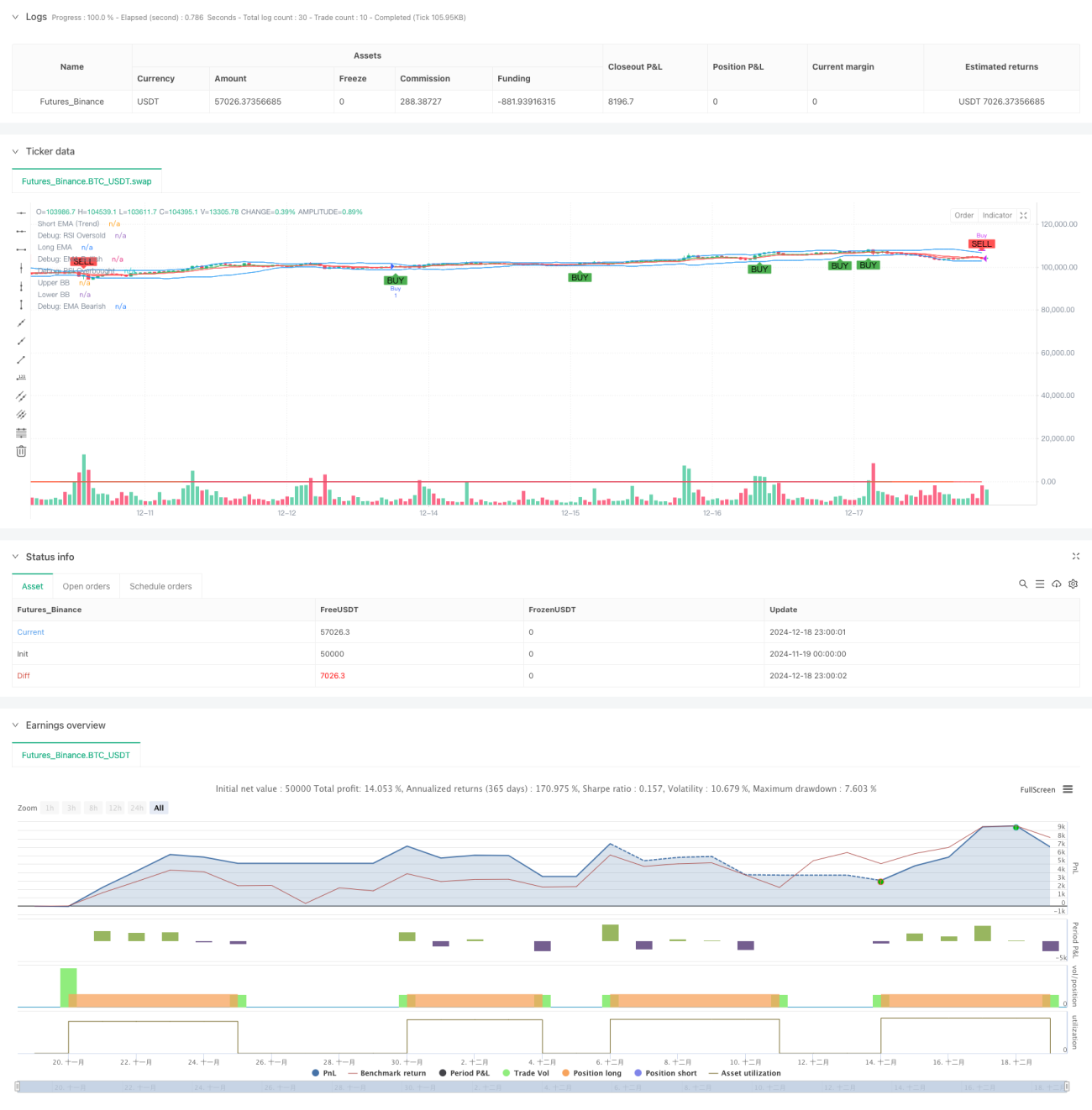
다중 지표 동적 손절매 모멘텀 트렌드 거래 전략

EMA RSI MACD BB ADX ATR SMA
생성 날짜: 2024-12-20 16:00:29 마지막으로 수정됨: 2024-12-20 16:00:29
복사: 1 클릭수: 454
avatar of ChaoZhang ChaoZhang
1
집중하다
1617
수행원

다중 지표 동적 손절매 모멘텀 트렌드 거래 전략

개요

이 전략은 여러 기술 지표가 결합된 통합 거래 시스템으로, 주로 동적으로 시장의 움직임과 추세 변화를 모니터링하여 거래 기회를 잡습니다. 전략은 평평선 시스템 ((EMA), 상대적으로 강한 지표 ((RSI), 이동 평균 수렴 분산 지표 ((MACD), 부린 밴드 ((BB)) 과 같은 여러 지표를 통합하고, 실제 파도 (ATR) 에 기반한 동적 손실 제도를 도입하여 시장의 다차원 분석과 위험을 제어합니다.

전략 원칙

이 전략은 여러 계층의 신호 확인 메커니즘을 적용하고 있으며, 주로 다음과 같은 요소들을 포함합니다.

  1. 추세 판단: 7주기 및 14주기 EMA의 교차를 사용하여 시장 추세 방향을 결정합니다.
  2. 동력 분석: RSI 지표로 시장의 과매매 상태를 모니터링하고 30/70의 동적 마이너스를 설정합니다.
  3. 트렌드 강도 확인: 트렌드 강도를 판단하는 ADX 지표를 도입하여, ADX>25일 때 강한 트렌드가 존재함을 확인한다
  4. 변동 범위 판단: 부린을 사용하여 가격 변동 범위를 정의하고, 가격과 부린 대역을 접촉하는 경우와 결합하여 거래 신호를 생성합니다.
  5. 거래량 검증: 동적 거래량 평행 필터를 사용하여 거래가 충분한 시장 활동으로 이루어지도록 보장합니다.
  6. 위험 관리: ATR 지표에 기반하여 설계된 다이내믹 스톱 로드 전략, 1.5배의 ATR로 스톱 로드 거리

전략적 이점

  1. 다차원 신호 검증, 가짜 신호를 효과적으로 감소
  2. 다이내믹 스포드 메커니즘은 전략의 리스크 조정 능력을 향상시킵니다.
  3. 거래량 분석과 트렌드 강도 분석을 결합하여 거래 신뢰도를 높여줍니다.
  4. 지표 파라미터가 조정 가능하며 잘 적응할 수 있습니다.
  5. 전체 입출장 메커니즘, 명확한 거래 논리
  6. 표준화된 기술 지표로 이해하기 쉽고 유지 관리하기 쉽습니다.

전략적 위험

  1. 여러 지표로 인해 신호 지연이 발생할 수 있습니다.
  2. 매개변수 최적화에는 과적합의 위험이 있을 수 있습니다.
  3. 상장 시장에서 거래가 자주 발생할 수 있습니다.
  4. 복잡한 신호 시스템은 컴퓨팅 부담을 증가시킬 수 있습니다.
  5. 전략의 효과를 검증하기 위해 더 많은 표본이 필요합니다.

전략 최적화 방향

  1. 시장의 변동율 자조 메커니즘을 도입하고, 동적으로 지표 변수를 조정
  2. 시간 필터를 추가하여 불리한 시간에 거래하는 것을 피하십시오.
  3. 이동식 차단을 고려하여 차단 전략을 최적화할 수 있습니다.
  4. 거래비용에 대한 고려사항을 포함하고, 평점 조건의 최적화
  5. 위치 관리 메커니즘을 도입하여 포지션 동적 조정

요약하다

이 전략은 다중 지표 협동으로 비교적 완전한 거래 시스템을 구축한다. 핵심 장점은 다차원적인 신호 확인 메커니즘과 역동적인 위험 제어 시스템이지만, 또한 파라미터 최적화 및 시장 적응성에 주의를 기울여야 한다. 지속적인 최적화 및 조정으로 이 전략은 다양한 시장 환경에서 안정적인 성능을 유지할 것으로 보인다.

전략 소스 코드
/*backtest
start: 2024-11-19 00:00:00
end: 2024-12-19 00:00:00
period: 1h
basePeriod: 1h
exchanges: [{"eid":"Futures_Binance","currency":"BTC_USDT"}]
*/

//@version=5
strategy("XRP/USDT Scalping Strategy", overlay=true)

// Input Parameters
emaShortLength = input.int(7, title="Short EMA Length")
emaLongLength = input.int(14, title="Long EMA Length")
rsiLength = input.int(7, title="RSI Length")
rsiOverbought = input.int(70, title="RSI Overbought Level") // Adjusted to 70 for broader range
rsiOversold = input.int(30, title="RSI Oversold Level") // Adjusted to 30 for broader range
macdFastLength = input.int(12, title="MACD Fast Length")
macdSlowLength = input.int(26, title="MACD Slow Length")
macdSignalLength = input.int(9, title="MACD Signal Length")
bbLength = input.int(20, title="Bollinger Bands Length")
bbStdDev = input.float(2.0, title="Bollinger Bands Standard Deviation") // Adjusted to 2.0 for better signal detection

// EMA Calculation
emaShort = ta.ema(close, emaShortLength)
emaLong = ta.ema(close, emaLongLength)

// RSI Calculation
rsi = ta.rsi(close, rsiLength)

// MACD Calculation
[macdLine, signalLine, _] = ta.macd(close, macdFastLength, macdSlowLength, macdSignalLength)
macdHistogram = macdLine - signalLine

// Bollinger Bands Calculation
basis = ta.sma(close, bbLength)
deviation = ta.stdev(close, bbLength)
bbUpper = basis + (bbStdDev * (deviation > 1e-5 ? deviation : 1e-5)) // Ensure robust Bollinger Band calculation
bbLower = basis - bbStdDev * deviation

// Volume Condition
volCondition = volume > ta.sma(volume, input.int(20, title="Volume SMA Period")) // Dynamic volume filter

// Trend Strength (ADX)
// True Range Calculation
tr = math.max(high - low, math.max(math.abs(high - close[1]), math.abs(low - close[1])))
// Directional Movement
plusDM = high - high[1] > low[1] - low ? math.max(high - high[1], 0) : 0
minusDM = low[1] - low > high - high[1] ? math.max(low[1] - low, 0) : 0
// Smooth Moving Averages
atr_custom = ta.rma(tr, 14)
plusDI = 100 * ta.rma(plusDM, 14) / atr_custom // Correct reference to atr_custom
minusDI = 100 * ta.rma(minusDM, 14) / atr_custom // Correct reference to atr_custom
// ADX Calculation
adx = plusDI + minusDI > 0 ? 100 * ta.rma(math.abs(plusDI - minusDI) / (plusDI + minusDI), 14) : na // Simplified ternary logic for ADX calculation // Prevent division by zero // Prevent division by zero // Final ADX
strongTrend = adx > 25

// Conditions for Buy Signal
emaBullish = emaShort > emaLong
rsiOversoldCondition = rsi < rsiOversold
macdBullishCrossover = ta.crossover(macdLine, signalLine)
priceAtLowerBB = close <= bbLower

buySignal = emaBullish and (rsiOversoldCondition or macdBullishCrossover or priceAtLowerBB) // Relaxed conditions by removing volCondition and strongTrend

// Conditions for Sell Signal
emaBearish = emaShort < emaLong
rsiOverboughtCondition = rsi > rsiOverbought
macdBearishCrossover = ta.crossunder(macdLine, signalLine)
priceAtUpperBB = close >= bbUpper

sellSignal = emaBearish and (rsiOverboughtCondition or macdBearishCrossover or priceAtUpperBB) // Relaxed conditions by removing volCondition and strongTrend

// Plot EMA Lines
trendColor = emaShort > emaLong ? color.green : color.red
plot(emaShort, color=trendColor, title="Short EMA (Trend)") // Simplified color logic
plot(emaLong, color=color.red, title="Long EMA")

// Plot Bollinger Bands
plot(bbUpper, color=color.blue, title="Upper BB")
plot(bbLower, color=color.blue, title="Lower BB")

// Plot Buy and Sell Signals
plot(emaBullish ? 1 : na, color=color.green, linewidth=1, title="Debug: EMA Bullish")
plot(emaBearish ? 1 : na, color=color.red, linewidth=1, title="Debug: EMA Bearish")
plot(rsiOversoldCondition ? 1 : na, color=color.orange, linewidth=1, title="Debug: RSI Oversold")
plot(rsiOverboughtCondition ? 1 : na, color=color.purple, linewidth=1, title="Debug: RSI Overbought")
plotshape(series=buySignal, title="Buy Signal", location=location.belowbar, color=color.green, style=shape.labelup, text="BUY")
plotshape(series=sellSignal, title="Sell Signal", location=location.abovebar, color=color.red, style=shape.labeldown, text="SELL", size=size.small) // Dynamic size for signals

// Strategy Execution with ATR-based Stop Loss and Take Profit
// Reuse atr_custom from earlier calculation
stopLoss = low - (input.float(1.5, title="Stop Loss Multiplier") * atr_custom) // Consider dynamic adjustment based on market conditions // Adjustable stop-loss multiplier
takeProfit = close + (2 * atr_custom)

if (buySignal)
    strategy.entry("Buy", strategy.long, stop=stopLoss) // Removed limit to simplify trade execution

if (sellSignal)
    strategy.close("Buy")