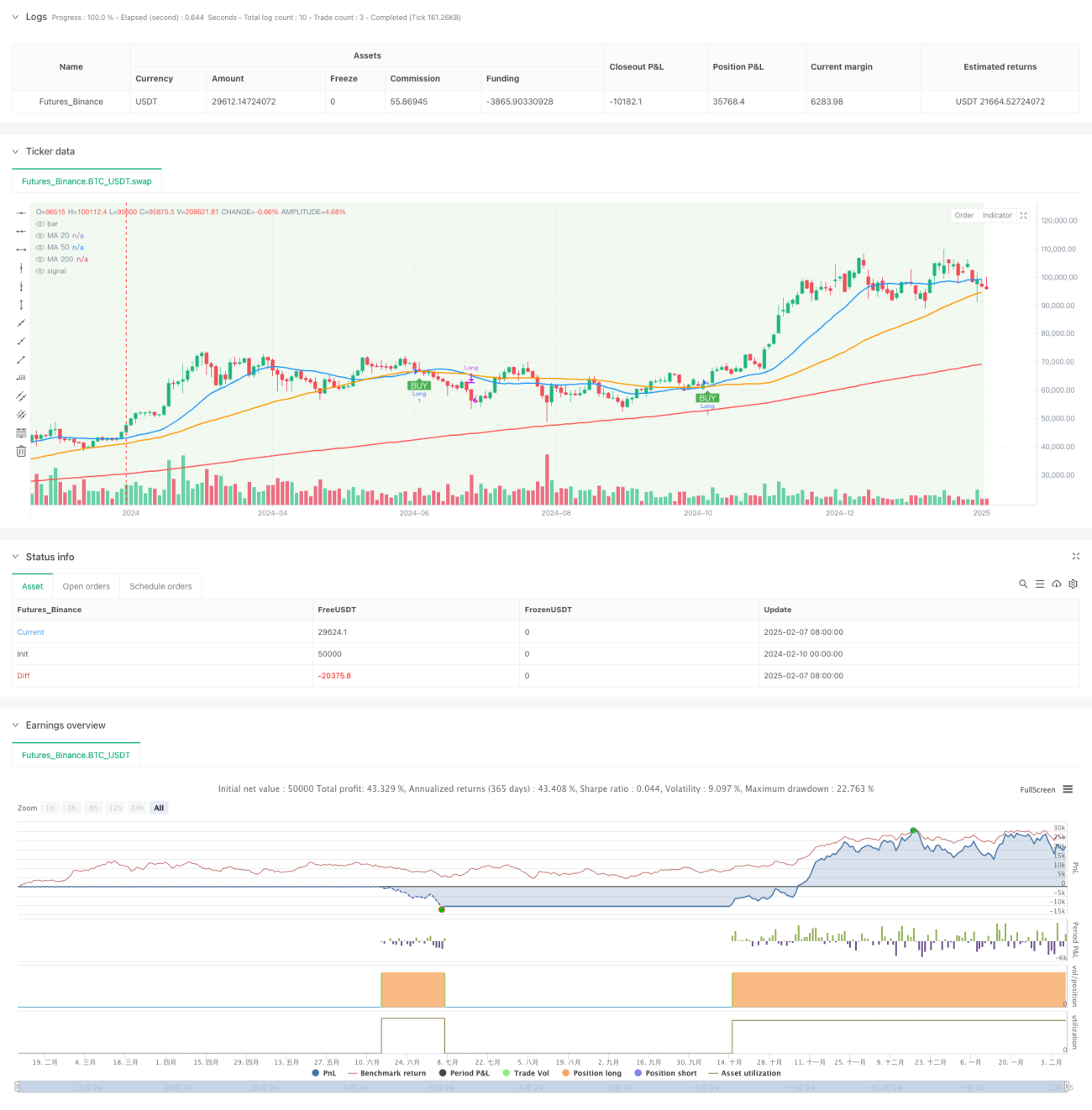
트리플 이동 평균 모멘텀 트렌드 거래 전략

MA EMA SMA TP SL
생성 날짜: 2025-02-10 14:37:15 마지막으로 수정됨: 2025-02-10 14:37:15
복사: 2 클릭수: 408
avatar of ChaoZhang ChaoZhang
1
집중하다
1617
수행원

트리플 이동 평균 모멘텀 트렌드 거래 전략

개요

이것은 올리버 발레즈의 거래 방법론에 기반한 삼중평준 트렌드 추적 전략이다. 이 전략은 20주기, 50주기, 200주기 이동 평균의 교차 신호를 사용하여 시장의 추세와 거래 기회를 식별한다. 200주기 평균은 주요 트렌드 필터로 사용되며 20주기, 50주기 평균의 교차는 특정 거래 신호를 생성하는 데 사용됩니다.

전략 원칙

이 전략의 핵심 논리는 세 가지 핵심적인 측면을 포함하고 있습니다.

  1. 트렌드 식별: 200 주기 평균선을 트렌드 경계선으로 사용한다. 200 평균선 위에 있을 때 상승 트렌드라고 인정하고, 200 평균선 아래에 있을 때 하향 트렌드라고 인정한다.
  2. 거래 신호: 상승 추세에서 20 주기 평균선이 50 주기 평균선을 상향으로 통과하면 다중 신호를 유발합니다. 하향 추세에서 20 주기 평균선이 50 주기 평균선을 하향으로 통과하면 공백 신호를 유발합니다.
  3. 위험 제어: 전략은 기본으로 2%의 스톱로즈와 4%의 스톱스을 설정하고, 반전 크로스 신호가 발생했을 때 자동으로 포지션을 청산한다.

전략적 이점

  1. 다중확인 메커니즘: 3개의 일률적인 선의 조합을 통해 더 신뢰할 수 있는 거래 신호를 제공합니다.
  2. 트렌드 필터: 200 일률의 트렌드 필터 기능은 가짜 돌파의 위험을 효과적으로 감소시킵니다.
  3. 유연성: SMA와 EMA 사이에 전환을 지원하고, 다른 시장 특성에 따라 파라미터를 조정할 수 있다.
  4. 리스크 관리: 내장된 손해 차단 장치, 자금 안전 보호
  5. 시각화 효과: 배경 색상의 변화를 통해 트렌드 상태를 직관적으로 표시한다.

전략적 위험

  1. 지연성: 이동 평균은 본질적으로 지연 지표이며, 출전 또는 출전 시기가 약간 늦어질 수 있다.
  2. 흔들림 시장은 적용되지 않는다: 가로 디스크 정리 단계에서, 자주 평행선 교차는 거짓 신호를 생성할 수 있다.
  3. 고정 스톱 리스크: 고정 퍼센티지 스톱 리스를 사용하는 것은 모든 시장 환경에 적합하지 않을 수 있습니다.
  4. 변수 감수성: 서로 다른 평균주기 설정은 현저하게 다른 결과를 초래할 수 있다.

전략 최적화 방향

  1. 트래픽 분석을 도입: 트래픽 확인 지표를 추가하여 신호 신뢰성을 향상시킬 수 있다.
  2. 동적 정지 설정: ATR 또는 변동률 지표를 사용하여 동적으로 정지 위치를 조정하는 것을 고려하십시오.
  3. 트렌드 강도 필터를 추가: 트렌드 강도 지표인 ADX를 도입하여 약한 트렌드 환경을 필터링할 수 있다.
  4. 최적화된 입시 시점: 가격 형태와 지지 저항 지점과 결합하여 입시의 정확도를 높인다.
  5. 시간 필터 추가: 거래 시간 창을 설정하여 변동성이 높은 시간을 피할 수 있습니다.

요약하다

이것은 구조적으로 완전하고 논리적으로 명확한 트렌드 추적 전략이다. 트리플 평행선의 협동적 협동으로 트렌드 식별의 정확성을 보장하고 명확한 거래 신호를 제공합니다. 전략의 위험 관리 메커니즘은 상대적으로 완벽하지만 여전히 최적화 할 여지가 있습니다. 거래자는 실제 사용 전에 충분한 피드백을 수행하고 특정 거래 품종의 특성에 따라 매개 변수 설정을 조정하는 것이 좋습니다.

전략 소스 코드
/*backtest
start: 2024-02-10 00:00:00
end: 2025-02-08 08:00:00
period: 2d
basePeriod: 2d
exchanges: [{"eid":"Futures_Binance","currency":"BTC_USDT"}]
*/

//@version=5
strategy("Oliver Valez Triple MA Strategy", overlay=true, margin_long=100, margin_short=100)

// Inputs
ma20_length = input.int(20, "20-period MA Length", minval=1)
ma50_length = input.int(50, "50-period MA Length", minval=1)
ma200_length = input.int(200, "200-period MA Length", minval=1)
use_ema = input.bool(false, "Use EMA Instead of SMA")
sl_percent = input.float(2.0, "Stop Loss %", minval=0.0)
tp_percent = input.float(4.0, "Take Profit %", minval=0.0)

// Calculate MAs
ma20 = use_ema ? ta.ema(close, ma20_length) : ta.sma(close, ma20_length)
ma50 = use_ema ? ta.ema(close, ma50_length) : ta.sma(close, ma50_length)
ma200 = use_ema ? ta.ema(close, ma200_length) : ta.sma(close, ma200_length)

// Plot MAs
plot(ma20, "MA 20", color=color.new(color.blue, 0), linewidth=2)
plot(ma50, "MA 50", color=color.new(color.orange, 0), linewidth=2)
plot(ma200, "MA 200", color=color.new(color.red, 0), linewidth=2)

// Trend Filter
bullish_trend = close > ma200
bearish_trend = close < ma200

// Entry Conditions
long_condition = ta.crossover(ma20, ma50) and bullish_trend
short_condition = ta.crossunder(ma20, ma50) and bearish_trend

// Exit Conditions
exit_long = ta.crossunder(ma20, ma50)
exit_short = ta.crossover(ma20, ma50)

// Risk Management
stop_loss = strategy.position_avg_price * (1 - sl_percent/100)
take_profit = strategy.position_avg_price * (1 + tp_percent/100)

// Execute Trades
if (long_condition)
    strategy.entry("Long", strategy.long)
    strategy.exit("XL", "Long", stop=stop_loss, limit=take_profit)

if (short_condition)
    strategy.entry("Short", strategy.short)
    strategy.exit("XS", "Short", stop=stop_loss, limit=take_profit)

// Close trades on opposite signals
if (exit_long)
    strategy.close("Long")

if (exit_short)
    strategy.close("Short")

// Plot Signals
plotshape(long_condition, "Buy", shape.labelup, location.belowbar, color=color.green, text="BUY", textcolor=color.white)
plotshape(short_condition, "Sell", shape.labeldown, location.abovebar, color=color.red, text="SELL", textcolor=color.white)

// Background Color for Trend
bgcolor(bullish_trend ? color.new(color.green, 90) : bearish_trend ? color.new(color.red, 90) : na)