이중 이동 평균 추세 추적 거래 시스템 및 적응형 동적 필터링 전략

EMA MA HMA
생성 날짜: 2025-02-20 09:49:23 마지막으로 수정됨: 2025-02-27 17:51:58
복사: 0 클릭수: 305
avatar of ianzeng123 ianzeng123
2
집중하다
319
수행원

이중 이동 평균 추세 추적 거래 시스템 및 적응형 동적 필터링 전략 이중 이동 평균 추세 추적 거래 시스템 및 적응형 동적 필터링 전략

개요

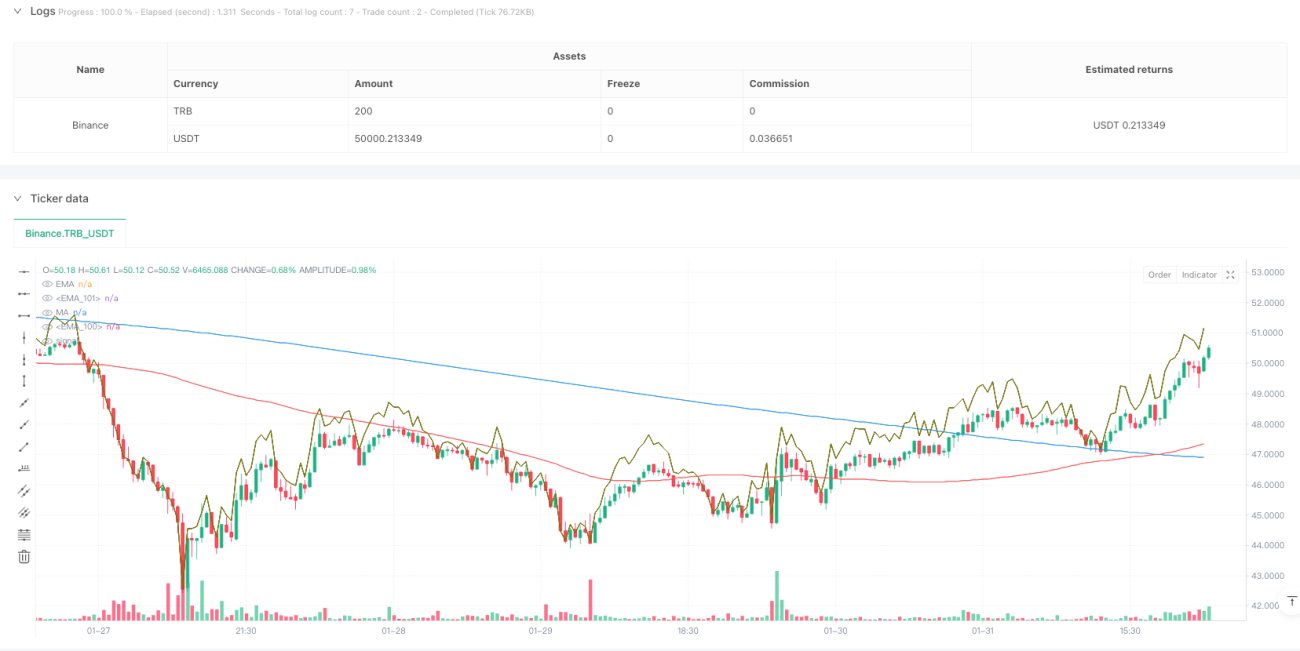
이 전략은 여러 기술 지표들을 결합한 트렌드 추적 거래 시스템이다. 그것은 주로 단순 이동 평균 (SMA) 과 지수 이동 평균 (EMA) 의 교차 신호를 기반으로 하고 있으며, 헐 이동 평균 (HMA) 트렌드 밴드, 윌리엄 지표 (%R), 휘어지는 고저점 분석 등과 같은 여러 고급 기능을 통합하여 동적 필터링 메커니즘을 통해 더 신뢰할 수 있는 거래 신호를 제공한다.

전략 원칙

이 전략의 핵심 논리는 다음과 같은 몇 가지 핵심 요소에 기반합니다.

  1. 주류 판단 지표로 100주기 SMA와 200주기 EMA를 사용
  2. 70주기를 통합한 HMA 트렌드 밴드는 트렌드 동력을 확인하는 데 사용됩니다.
  3. 윌리엄 지표 ((%R) 를 사용하여 동적 지원/저항 부위의 계산
  4. 20주기 회귀 창 검사를 통해 상승과 하락의 진동
  5. 실시간 모니터링 및 업데이트
  6. 허위 신호를 줄이기 위해 디스크 초기 필터링과 변동률 스릴값을 설정합니다.

입시 조건은 동시에 충족해야 합니다: 가격 스테이션의 쌍평균선, %R 지표는 연속으로 3개의 K선으로 상승하고 20보다 크다, K선은 닫히고 닫기 가격은 전의 선보다 높으며, 가격은 하루 내 변동 경치를 초과하지 않는다. 출구 조건은 다음 조건 중 하나를 충족한다: 가격이 쌍평균선 아래로 떨어지고, %R 지표는 80보다 낮다.

전략적 이점

  1. 다중 기술 지표의 공동 검증은 거래 신호의 신뢰성을 향상시킵니다
  2. 동적 필터링 메커니즘은 파동이 심한 기간에 가짜 신호를 효과적으로 줄여줍니다.
  3. 자동 적응된 지원 저항점 계산으로 전략이 시장에 잘 적응할 수 있습니다.
  4. 오픈 초기 필터링 및 변동성 마이너스 컨트롤을 포함한 전체 일일 거래 관리 메커니즘
  5. 다양한 시장 조건에 따라 최적화 할 수 있도록 변수가 조정 가능

전략적 위험

  1. 평선 시스템은 흔들리는 시장에서 자주 잘못된 신호를 생성할 수 있다.
  2. 다중 조건의 필터링은 잠재적인 거래 기회를 놓칠 수 있습니다.
  3. 고정 이동 평균의 주기는 다른 시장 환경에서 다르게 나타날 수 있습니다.
  4. 급격한 트렌드 상황 속에서 중요한 기회를 놓칠 수 있는 일일 거래 필터링 시스템
  5. 매개 변수를 지나치게 최적화하면 오버피칭 문제가 발생할 수 있습니다.

전략 최적화 방향

  1. 적응형 평선 주기 계산 기계를 도입하여 시장의 변동에 더 잘 적응할 수 있도록 한다.
  2. 트렌드 확인의 신뢰성을 높이기 위해 거래량 분석 지표를 추가합니다.
  3. 역동적인 손해배상장치를 개발하여 재무관리의 효율성을 높여주기
  4. 필터링 조건을 최적화하기 위한 마이너스 설정을 시장 변동률 지표에 추가함
  5. 다른 시간 주기의 신호 연동을 고려하여 시스템의 안정성을 강화

요약하다

이것은 잘 설계된 트렌드 추적 거래 시스템이며, 여러 기술 지표의 조합과 엄격한 필터링 메커니즘을 통해 신뢰성을 보장하면서도 유연성을 유지합니다. 전략의 최적화 공간은 주로 매개 변수의 자조성 및 위험 관리 장치의 개선에 있습니다. 거래자는 실제 사용 전에 다양한 시장 환경에서의 성능을 충분히 테스트하고 특정 상황에 따라 매개 변수 설정을 조정하는 것이 좋습니다.

전략 소스 코드
/*backtest
start: 2025-01-01 00:00:00
end: 2025-01-31 23:59:59
period: 30m
basePeriod: 30m
exchanges: [{"eid":"Binance","currency":"TRB_USDT"}]
*/

//@version=5
strategy(title="EMA & MA Crossover Strategy", shorttitle="EMA & MA Crossover Strategy", overlay=true)

// Inputs
LengthMA = input.int(100, minval=1, title="MA Length")
LengthEMA = input.int(200, minval=1, title="EMA Length")
swingLookback = input.int(20, title="Swing Lookback")
Lengthhmaribbon = input.int(70, minval=1, title="HMA Ribbon")
// Input for ignoring the first `n` candles of the day
ignore_n_candles = input.int(1, "Ignore First N Candles", minval=0)
// Input for percentage threshold to ignore high run-up candles
run_up_threshold = input.float(0.5, "Run-up Threshold (%)", minval=0.0)

//====================================================================
hmacondition = ta.hma(close,Lengthhmaribbon)> ta.hma(close,Lengthhmaribbon)[1]

//====================================================================
// Function to drop the first `n` candles
dropn(src, n) =>
    na(src[n]) ? na : src

// Request data with the first `n` candles dropped
valid_candle = not na(dropn(close, ignore_n_candles))
// Check for run-up condition on the previous candle
prev_run_up = (high[1] - low[1]) / low[1] * 100

// Combine conditions: exclude invalid candles and ignore high run-up candles
valid_entry_condition = valid_candle and prev_run_up <= run_up_threshold

//======================================================
// Define the start of a new day based on time
var is_first = false
var float day_high = na
var float day_low = na

// Use time() to detect the start of a new day
t = time("1440") // 1440 = 60 * 24 (one full day in minutes)
is_first := na(t[1]) and not na(t) or t[1] < t

if is_first and barstate.isnew
    day_high := high
    day_low := low
else
    day_high := nz(day_high[1], high)
    day_low := nz(day_low[1], low)

// Update daily high and low
if high > day_high
    day_high := high

if low < day_low
    day_low := low

//====================================================
previousdayclose = request.security(syminfo.tickerid, "D", close)

day_highrange = previousdayclose*.018
//======================================================
length = input(title="Length", defval=14)
src = input(close, "Source")
_pr(length) =>
	max = ta.highest(length)
	min = ta.lowest(length)
	100 * (src - max) / (max - min)
percentR = _pr(length)

//======================================================
higherline = close* 1+((100-(percentR*-1))/100)
lowerline = close* 1-((100-(percentR*-1))/100)
//======================================================
// Moving Averages
xMA = ta.sma(close, LengthMA)
xEMA = ta.sma(xMA, LengthEMA)

// Plot the MA and EMA lines
plot(xMA, color=color.red, title="MA")
plot(xEMA, color=color.blue, title="EMA")

// Find recent swing high and low
recentHigh = ta.highest(high, swingLookback)
recentLow = ta.lowest(low, swingLookback)
//===============================================
emacondition = ta.ema(close,20)>ta.ema(close,30) and ta.ema(close,30)>ta.ema(close,40) and ta.ema(close,40)>ta.ema(close,50) and close >ta.ema(close,20)
// Define Buy Condition
buyCondition1 = (percentR>percentR[1] and percentR[1]>percentR[2] and percentR[2]>percentR[3]) and percentR>-20 and percentR[1]>-20
buyCondition = (close> xMA and close> xEMA) and (close > open and close > close[1]) or xMA>xEMA and close<day_highrange and hmacondition and emacondition

// Define Sell Conditions
sellCondition = (close < xMA and close < xEMA) or xMA<xEMA or percentR<-80

// Strategy Execution
if (buyCondition and buyCondition1 and valid_entry_condition)
    strategy.entry("Buy", strategy.long)

if (sellCondition)
    strategy.close("Buy")  // Close the long position

// Candle coloring for buy/sell indication
barcolor(buyCondition ? color.green : sellCondition ? color.red : na)
plot(higherline, color=color.olive, title="EMA")
plot(higherline, color=color.black, title="EMA")