多중 이동평균선 추세 모멘텀 교차 거래 시스템

개요
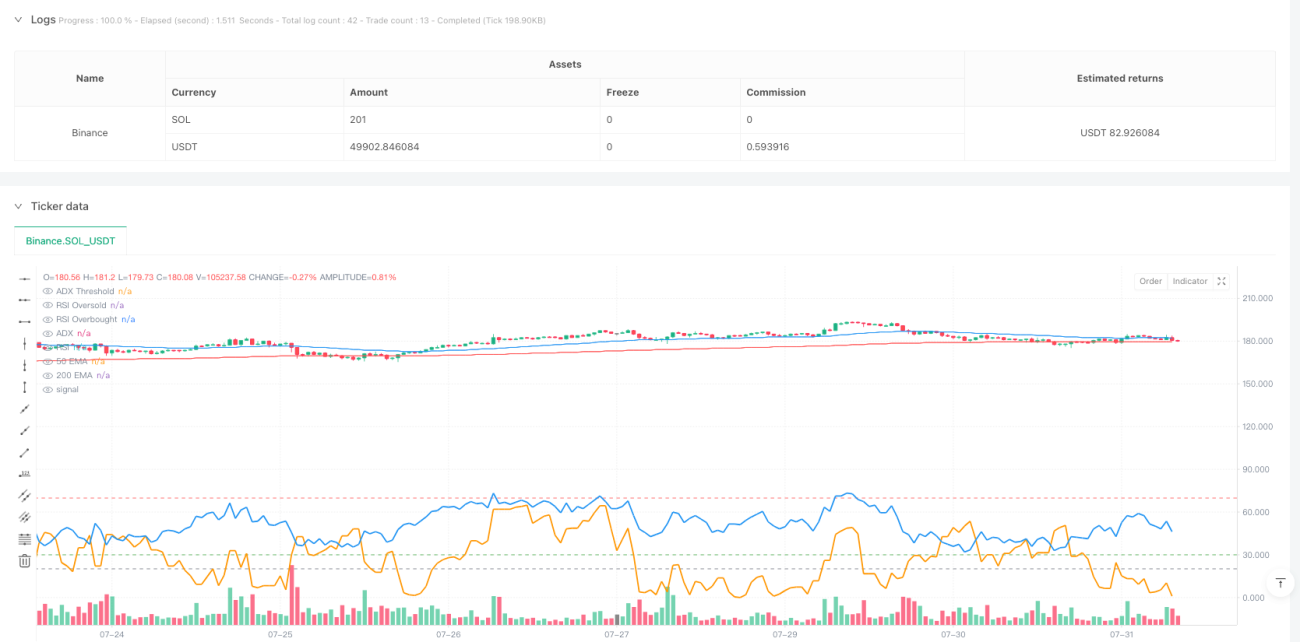
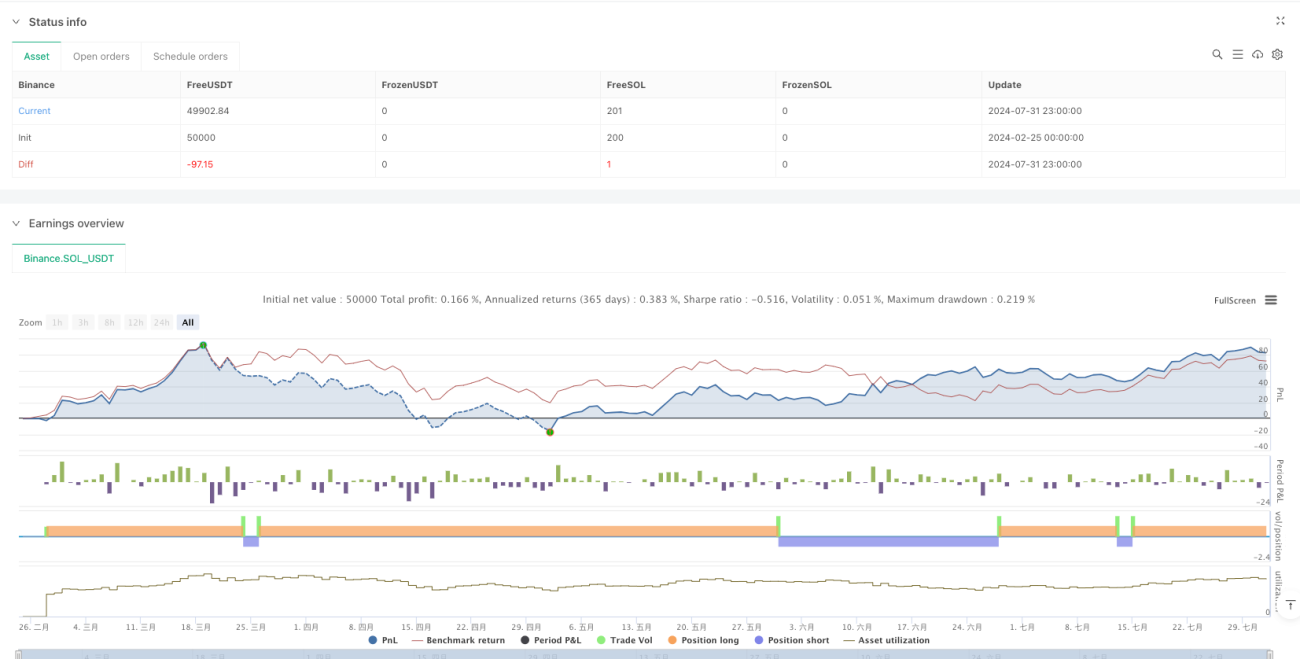
이 전략은 여러 기술적 지표를 기반으로 하는 추세 추종 시스템으로, 지수이동평균(EMA), 평균방향성지수(ADX), 상대강도지수(RSI)의 장점을 결합합니다. 50일 및 200일 지수이동평균의 교차를 통해 시장 추세를 식별하고, ADX를 사용하여 약한 추세를 걸러내며, RSI를 활용하여 과매수 또는 과매도 영역에서의 거래를 피합니다. 전략은 ATR(평균진폭) 기반의 동적 손절매와 이익 실현 목표를 사용하여 위험 관리와 이익 극대화를 동시에 보장합니다.
전략 원리
전략의 핵심 로직은 다음 주요 요소에 기반합니다:
- 추세 판단: 빠른 EMA(50일)와 느린 EMA(200일)의 교차를 통해 시장 추세 방향을 결정합니다. 50일 EMA가 200일 EMA를 상향 돌파하면 상승 추세 진입으로, 하향 돌파하면 하락 추세 진입으로 간주합니다.
- 추세 강도 확인: ADX 지표를 사용하여 추세 강도를 측정하며, ADX 값이 20 이상일 때만 진입을 고려하여 강한 추세에서만 거래합니다.
- 모멘텀 필터링: RSI 지표를 모멘텀 필터로 적용하여 RSI가 30-70 사이에 있을 때만 포지션을 진입하고, 과매수 또는 과매도 영역에서의 거래를 피합니다.
- 위험 관리: ATR 기반의 동적 손절매와 이익 실현 목표를 사용하며, 손절매는 ATR의 2배, 이익 실현은 ATR의 4배로 설정합니다.
전략 장점
- 다차원 추세 확인: 이동평균 교차, ADX, RSI의 삼중 필터링을 결합하여 거래 신호의 신뢰성을 크게 향상시킵니다.
- 동적 위험 관리: ATR 기반의 동적 손절매 및 이익 실현 설정이 시장 변동성에 따라 자동으로 조정됩니다.
- 약한 추세 필터링: ADX 도입으로 횡보장에서의 잦은 거래를 효과적으로 피합니다.
- 극단적 진입 방지: RSI 필터링 메커니즘으로 극단적 영역에서의 거래를 방지합니다.
전략 리스크
- 추세 반전 리스크: 급격한 반전 장세에서 이동평균 시스템의 지연으로 인해 큰 손실이 발생할 수 있습니다.
- 횡보장 리스크: 시장이 박스권에서 등락할 때 잦은 가짜 돌파 신호가 발생할 수 있습니다.
- 매개변수 민감성: 여러 지표의 매개변수 설정은 다양한 시장 환경에 따라 최적화가 필요합니다.
- 슬리피지 리스크: 유동성이 낮은 시장에서 실제 체결 가격이 신호 가격과 크게 차이날 수 있습니다.
전략 최적화 방향
- 거래량 지표 도입: 거래량 확인 메커니즘을 추가하여, 거래량이 동반된 돌파 시에만 거래를 고려할 수 있습니다.
- 손절매 메커니즘 개선: 트레일링 스탑을 도입하여 추세 진행 중 기존 이익을 보호할 수 있습니다.
- 시간 필터 추가: 거래 시간 필터를 추가하여 변동성이 큰 시간대의 거래를 피할 수 있습니다.
- 시장 환경 분류: 다양한 시장 환경(추세, 횡보)에 따라 전략 매개변수를 동적으로 조정합니다.
요약
이 전략은 여러 기술적 지표를 종합적으로 활용하여 완전한 추세 추종 거래 시스템을 구축합니다. 전략의 장점은 다차원 신호 확인 메커니즘과 동적 위험 관리 시스템에 있지만, 추세 반전 및 횡보장에서의 리스크에도 주의해야 합니다. 지속적인 최적화와 개선을 통해 이 전략은 다양한 시장 환경에서도 안정적인 성과를 유지할 수 있을 것으로 기대됩니다.
Overview
This strategy is a trend-following system based on multiple technical indicators, combining the advantages of Exponential Moving Averages (EMA), Average Directional Index (ADX), and Relative Strength Index (RSI). It identifies market trends through the crossover of 50-day and 200-day EMAs, filters weak trends using ADX, and avoids trading in overbought or oversold areas using RSI. The strategy employs dynamic stop-loss and take-profit targets based on Average True Range (ATR), ensuring both risk control and profit maximization.
Strategy Principles
The core logic of the strategy is built on the following key elements:
- Trend Identification: Uses the crossover of fast EMA (50-day) and slow EMA (200-day) to determine market trend direction. A bullish trend is signaled when the 50-day EMA crosses above the 200-day EMA, and a bearish trend when it crosses below.
- Trend Strength Confirmation: Utilizes the ADX indicator to measure trend strength, only considering entry when ADX is above 20, ensuring trades only in strong trends.
- Momentum Filtering: Applies RSI indicator for momentum filtering, only entering positions when RSI is between 30-70, avoiding trades in overbought or oversold areas.
- Risk Management: Uses ATR-based dynamic stop-loss and take-profit levels, with stop-loss set at 2x ATR and take-profit at 4x ATR.
Strategy Advantages
- Multi-dimensional Trend Confirmation: Combines EMA crossover, ADX, and RSI triple filtering to significantly improve signal reliability.
- Dynamic Risk Management: ATR-based dynamic stop-loss and take-profit settings adapt to market volatility.
- Weak Trend Filtering: Introduction of ADX effectively avoids frequent trading in ranging markets.
- Prevention of Extreme Entries: RSI filtering mechanism prevents trading in extreme areas.
Strategy Risks
- Trend Reversal Risk: The lag in moving average systems may lead to significant drawdowns in quick reversal scenarios.
- Range-bound Market Risk: May generate frequent false breakout signals during sideways markets.
- Parameter Sensitivity: Multiple indicator parameters need optimization across different market conditions.
- Slippage Risk: Actual execution prices may significantly deviate from signal prices in less liquid markets.
Strategy Optimization Directions
- Volume Indicator Integration: Consider adding volume confirmation, only trading on volume breakouts.
- Stop-loss Mechanism Enhancement: Consider implementing trailing stops to protect profits during trend development.
- Time Filter Addition: Add trading time filters to avoid high-volatility periods.
- Market Environment Classification: Dynamically adjust strategy parameters based on different market conditions (trending, ranging).
요약
이 전략은 여러 기술적 지표를 통합적으로 사용하여 포괄적인 추세 추종 거래 시스템을 구축합니다. 강점은 다차원 신호 확인과 동적 위험 관리 시스템에 있으며, 추세 반전 및 횡보장에서의 위험에 주의를 기울여야 합니다. 지속적인 최적화와 개선을 통해 이 전략은 다양한 시장 환경에서 안정적인 성과를 유지할 잠재력을 가지고 있습니다.
- 1