다차원 단기 추세 예측 전략: 기술적 분석과 변동성 적응형 거래 방식

SMA RSI ADX ATR MACD STOCH
생성 날짜: 2025-03-31 16:30:52 마지막으로 수정됨: 2025-03-31 16:30:52
복사: 0 클릭수: 335
avatar of ianzeng123 ianzeng123
2
집중하다
319
수행원

다차원 단기 추세 예측 전략: 기술적 분석과 변동성 적응형 거래 방식 다차원 단기 추세 예측 전략: 기술적 분석과 변동성 적응형 거래 방식

개요

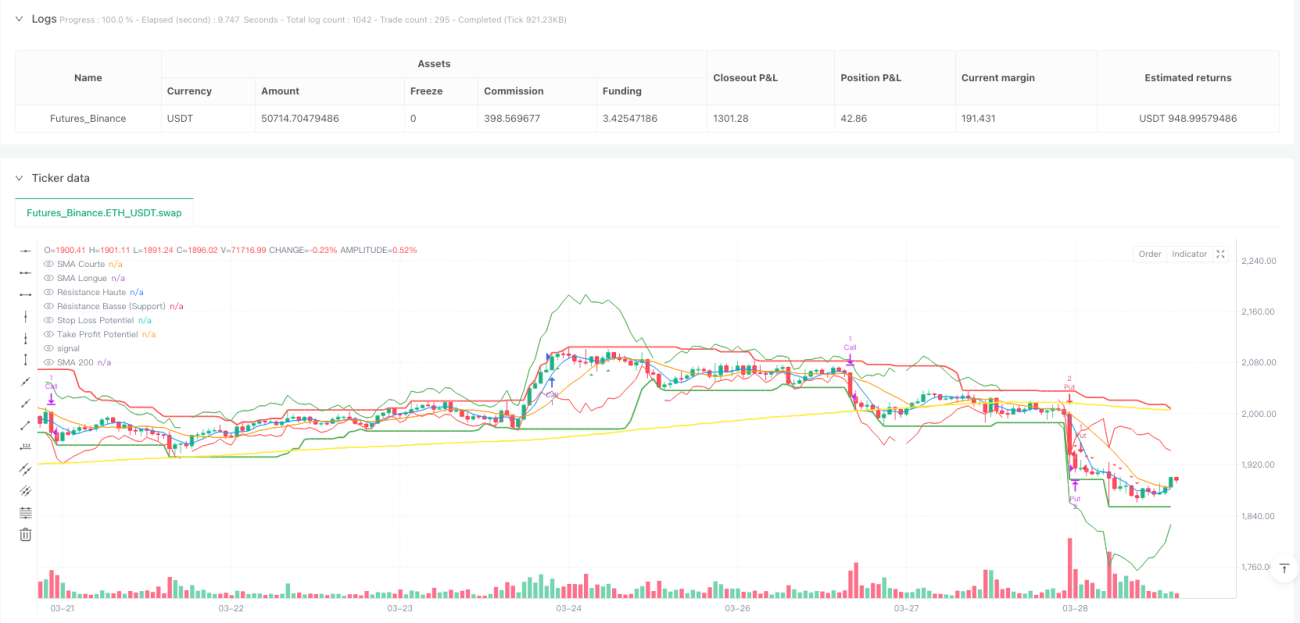
이 전략은 다차원 단기 추세 예측 전략으로, 여러 기술 지표의 연동 효과를 사용하여 금융 시장의 단기 추세 변화를 식별하고 예측하는 데 초점을 맞추고 있습니다. 이 전략은 거래 신호의 정확성과 신뢰성을 높이기 위해 간단한 이동 평균 (SMA), 상대적으로 강한 지수 (RSI), 평균 방향 지수 (ADX), 평균 실제 변동 범위 (ATR), 이동 평균 경사 지수 (MACD) 및 무작위 진동기 (Stochastic) 와 같은 중요한 기술 분석 도구를 통합합니다.

전략 원칙

이 전략의 핵심 원칙은 여러 기술 지표의 연동 분석과 트렌드 확인 메커니즘에 기반합니다. 거래 신호는 다음과 같은 중요한 요소를 종합적으로 고려하여 생성됩니다.

  1. 단기 및 장기 이동 평균의 교차
  2. RSI의 과매매 상태
  3. MACD 선과 신호 선의 변화
  4. 무작위 진동기의 운동 지표
  5. ADX 트렌드 강도
  6. 200 주기 이동 평균의 전체 시장 추세
  7. 최근 시장의 변동성

전략은 잠재적인 진입점, 중지 및 정지 수준을 동적으로 계산하고 최근 시장의 변동성에 따라 이러한 핵심 매개 변수를 조정하여 위험 관리 및 거래 실행을 수행합니다.

전략적 이점

  1. 다중 지표 통합 분석: 여러 기술 지표를 통합하여 단일 지표로 인한 잘못된 판단의 위험을 줄입니다.
  2. 다이내믹 리스크 관리: ATR 기반의 중지 및 중지 장치, 시장의 변동성에 따라 포지션을 조정할 수 있습니다.
  3. 유연한 시간 프레임: 5분에서 4시간의 거래 사이클을 지원합니다.
  4. 적응형 포지션 규모: 사용 가능한 자본과 거래 당 위험의 비율에 따라 포지션 크기를 동적으로 조정합니다.
  5. 트렌드 강도 확인: ADX 지표로 트렌드의 유효성을 확인하고, 흔들리는 시장에서 자주 거래하는 것을 피하십시오.

전략적 위험

  1. 다중 지표 복잡성이 신호 생성 지연을 초래할 수 있다.
  2. 매우 불안정한 시장 환경에서 지표는 모순된 신호를 줄 수 있습니다.
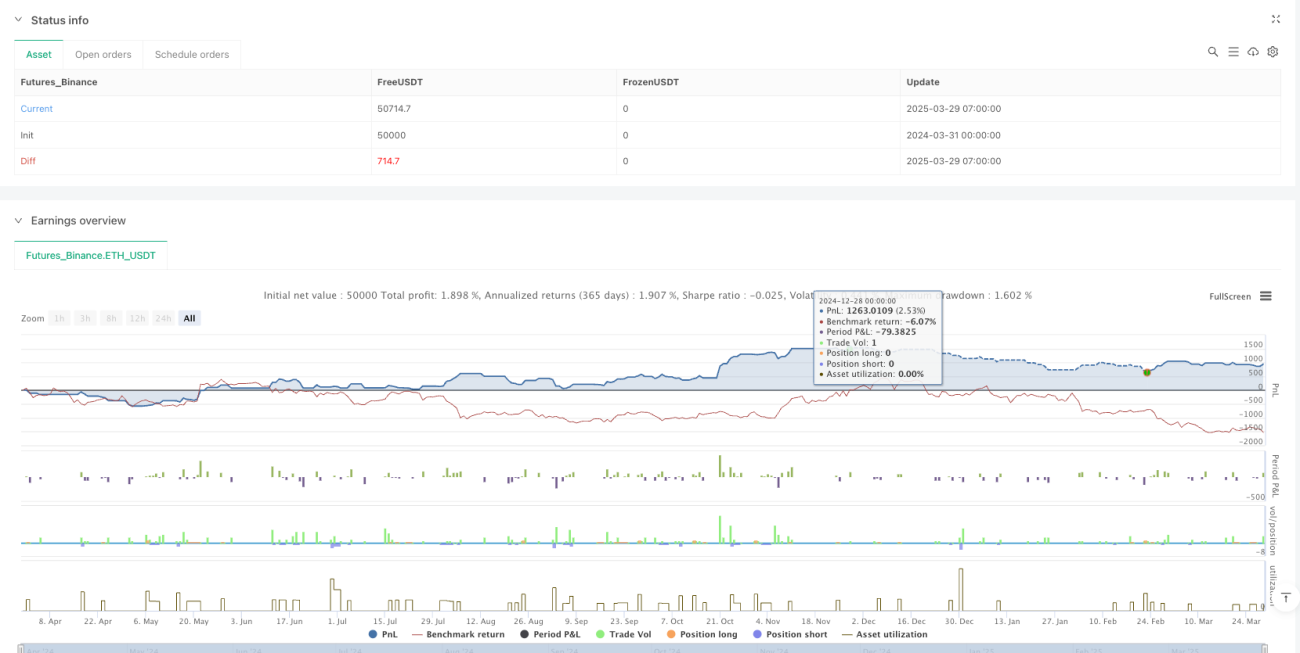
  3. 재검토 결과는 미래의 실제 거래 성과를 완전히 나타내지 않을 수 있습니다.
  4. 리베이트 거래는 손실을 크게 증가시킬 수 있습니다.
  5. 근본적인 요소와 시장의 갑작스러운 현상을 고려하지 않고

전략 최적화 방향

  1. 기계 학습 알고리즘을 도입하여 지표 무게를 동적으로 조정합니다.
  2. 더 많은 기본 및 감정 지표를 추가합니다.
  3. 더 똑똑한 포지션 관리 알고리즘 개발
  4. 다른 시장과 자산 유형에 맞게 개인화 매개 변수
  5. 실시간 뉴스와 소셜 미디어 감정 분석을 통합합니다.

요약하다

이것은 복잡한 기술 지표 조합과 동적 위험 관리 메커니즘을 통해 거래 의사 결정의 정확성과 신뢰성을 향상시키기 위해 고안된 다차원, 데이터 주도 단기 경향 예측 전략입니다. 전략은 이론적 장점이 있지만 실제 응용에서는 신중하고 지속적인 피드백과 최적화가 필요합니다.

전략 소스 코드
/*backtest
start: 2024-03-31 00:00:00
end: 2025-03-29 08:00:00
period: 1h
basePeriod: 1h
exchanges: [{"eid":"Futures_Binance","currency":"ETH_USDT"}]
*/

// © HugoMora
//@version=5
strategy("Short-Term Trend Predictor: Call/Put (5min to 4hr)", overlay=true)

// --- 1. Paramètres (Inputs) ---
// Info-bulle pour short_length
short_length = input.int(5, title="Période SMA Courte", minval=1, tooltip = "Période de la moyenne mobile courte. Utilisée pour identifier les tendances à court terme.")
long_length = input.int(13, title="Période SMA Longue", minval=1, tooltip = "Période de la moyenne mobile longue. Utilisée pour confirmer les tendances à plus long terme.")
rsi_length = input.int(14, title="Période RSI", minval=1, tooltip = "Période de l'indice de force relative (RSI). Mesure la vitesse et l'ampleur des mouvements de prix récents pour évaluer les conditions de surachat ou de survente.")
sma200_length = input.int(200, title="Période SMA 200", minval=1, tooltip = "Période de la moyenne mobile sur 200 périodes. Utilisée pour déterminer la tendance générale du marché (haussière ou baissière).")
resistance_length = input.int(20, title="Période Résistance", minval=1, tooltip="Nombre de périodes utilisées pour calculer les niveaux de résistance et de support.")
macd_fast = input.int(12, title="Longueur Rapide MACD", tooltip = "Période plus courte utilisée dans le calcul de la ligne MACD. Représente les mouvements de prix à court terme.")
macd_slow = input.int(26, title="Longueur Lente MACD", tooltip = "Période plus longue utilisée dans le calcul de la ligne MACD. Représente les mouvements de prix à long terme.")
macd_signal = input.int(9, title="Période Signal MACD", tooltip = "Période de la SMA de la ligne MACD, utilisée comme signal d'achat ou de vente.")
stoch_k = input.int(14, title="Longueur %K Stoch", tooltip = "Période utilisée pour calculer la ligne %K du Stochastic Oscillator, indiquant où le prix de clôture se situe par rapport à la fourchette haute-basse sur cette période.")
stoch_d = input.int(3, title="Longueur %D Stoch", tooltip = "Période utilisée pour calculer la ligne %D, qui est une moyenne mobile de %K. Utilisée pour lisser les fluctuations de %K.")
adx_length = input.int(14, title="Longueur ADX", tooltip = "Période utilisée pour calculer l'Average Directional Index (ADX), qui mesure la force de la tendance.")
adx_smooth = input.int(14, title="Lissage ADX", tooltip = "Période utilisée pour lisser la ligne ADX, réduisant le bruit et fournissant une mesure plus stable de la force de la tendance.")
atrLength = input.int(14, title="Longueur ATR", tooltip = "Période utilisée pour calculer l'Average True Range (ATR), qui mesure la volatilité du marché.")
atrMultiplierSL = input.float(2.0, title="Multiplicateur ATR Stop Loss", minval=0.1, tooltip = "Multiplicateur de l'ATR pour déterminer le niveau de Stop Loss. Un multiplicateur plus élevé signifie un Stop Loss plus éloigné du prix d'entrée.")
atrMultiplierTP = input.float(2.0, title="Multiplicateur ATR Take Profit", minval=0.1, tooltip = "Multiplicateur de l'ATR pour déterminer le niveau de Take Profit. Un multiplicateur plus élevé signifie un Take Profit plus éloigné du prix d'entrée.")
takeProfitRiskRatio = input.float(2.0, title="Ratio Take Profit/Risque", minval=0.1, tooltip = "Ratio du Take Profit par rapport au risque (Stop Loss). Par exemple, un ratio de 2 signifie que le Take Profit est deux fois plus éloigné que le Stop Loss.")
volatility_lookback = input.int(20, title="Volatilité Récente (Périodes)", minval=5, tooltip="Nombre de périodes utilisées pour calculer la volatilité récente du marché, mesurée par l'écart-type des prix de clôture.") // Paramètre pour la volatilité
initialCapital = input.float(100, title="Capital Initial (€)", minval=1, tooltip = "Capital initial utilisé pour le backtest de la stratégie.") // Capital initial de 100€
riskPerTrade = input.float(1.0, title="Risque par Trade (%)", minval=0.01, maxval=1.0, tooltip = "Pourcentage du capital initial risqué par trade. Utilisé pour calculer la taille de la position.") // Risk is 100% of available capital
leverage = input.int(1, title="Levier", minval=1, tooltip = "Effet de levier appliqué aux trades. Multiplie les profits et les pertes.")   // Add leverage input

// --- 2. Calcul des Indicateurs et des Résistances ---
sma_short = ta.sma(close, short_length)
sma_long = ta.sma(close, long_length)
rsi = ta.rsi(close, rsi_length)
sma200 = ta.sma(close, sma200_length)
isUptrend = ta.rising(sma200, 5)
isDowntrend = ta.falling(sma200, 5)
resistance_high = ta.highest(high, resistance_length)
resistance_low = ta.lowest(low, resistance_length)
[macdLine, signalLine, hist] = ta.macd(close, macd_fast, macd_slow, macd_signal)
stochK = ta.stoch(close, high, low, stoch_k)
stochD = ta.sma(stochK, stoch_d)
[diPlus, diMinus, adx] = ta.dmi(adx_length, adx_smooth)
atrValue = ta.atr(atrLength)

// Calcul de la volatilité récente (écart-type des prix)
recentVolatility = ta.stdev(close, volatility_lookback)

// --- 3. Détection des Croisements et Conditions ---
short_above_long = sma_short > sma_long and macdLine > signalLine and stochK > stochD and adx > 25 and diPlus > diMinus
short_below_long = sma_short < sma_long and macdLine < signalLine and stochK < stochD and adx > 25 and diMinus > diPlus // Modified stochK < stochD
long_enter = ta.crossover(sma_short,sma_long)
short_enter = ta.crossunder(sma_short,sma_long)

// --- 4. Analyse de Tendance et Recommandations et Points d'Entrée/Sortie Potentiels ---
var string tendance = ""
var color tendance_couleur = color.gray // Couleur neutre par défaut
var float potentialEntry = na
var float potentialStopLoss = na
var float potentialTakeProfit = na

if (isUptrend and short_above_long)
    tendance := "Haussier Fort (Call)"
    tendance_couleur := color.green
    potentialEntry := high
    // Utilisation de la volatilité récente pour le Stop Loss et le Take Profit
    potentialStopLoss := potentialEntry - (recentVolatility * atrMultiplierSL)
    potentialTakeProfit := potentialEntry + (recentVolatility * atrMultiplierTP)

else if (isUptrend and not short_above_long and not short_below_long) // Added check to prevent both conditions being true
    tendance := "Haussier Modéré (Call)"
    tendance_couleur := color.lime
    potentialEntry := high
    potentialStopLoss := potentialEntry - (recentVolatility * atrMultiplierSL)
    potentialTakeProfit := potentialEntry + (recentVolatility * atrMultiplierTP)

else if (isDowntrend and short_below_long)
    tendance := "Baissier Fort (Put)"
    tendance_couleur := color.red
    potentialEntry := low
    potentialStopLoss := potentialEntry + (recentVolatility * atrMultiplierSL)
    potentialTakeProfit := potentialEntry - (recentVolatility * atrMultiplierTP)

else if (isDowntrend and not short_below_long and not short_above_long) // Added check to prevent both conditions being true
    tendance := "Baissier Modéré (Put)"
    tendance_couleur := color.orange
    potentialEntry := low
    potentialStopLoss := potentialEntry + (recentVolatility * atrMultiplierSL)
    potentialTakeProfit := potentialEntry - (recentVolatility * atrMultiplierTP)

else
    tendance := "Neutre"
    tendance_couleur := color.gray
    potentialEntry := na
    potentialStopLoss := na
    potentialTakeProfit := na

// --- 5. Affichage de la Tendance (Label Persistant) ---
var label tendance_label = na

if (barstate.islast)
    if (na(tendance_label))
        tendance_label := label.new(bar_index, high, text="Tendance: " + tendance, color=tendance_couleur, textcolor=color.white, style=label.style_label_down, yloc=yloc.abovebar, y=high*1.02)
        label.set_tooltip(tendance_label, "Tendance actuelle du marché")  // Ajout du tooltip au label
    else
        label.set_text(tendance_label, "Tendance: " + tendance)
        label.set_x(tendance_label, bar_index)
        label.set_y(tendance_label, high*1.02)
        label.set_color(tendance_label, tendance_couleur)
        label.set_tooltip(tendance_label, "Tendance actuelle du marché")
// --- 6. Tableau d'Information ---
var table info_table = table.new(position.top_right, 2, 12, border_width=1) // Ajout d'une ligne pour le capital
var float currentCapital = initialCapital // Declare currentCapital here

table.cell(info_table, 0, 0, "Indicateur", bgcolor=color.gray, text_color=color.white)
table.cell(info_table, 1, 0, "Valeur", bgcolor=color.gray, text_color=color.white)
table.cell(info_table, 0, 1, "SMA Courte", bgcolor=color.white, text_color=color.black)
table.cell(info_table, 1, 1, str.tostring(sma_short, "#.##"), bgcolor=color.white, text_color=color.black)
table.cell_set_tooltip(info_table, 0, 1, "Moyenne mobile courte")
table.cell_set_tooltip(info_table, 1, 1, str.tostring(sma_short, "#.##"))

table.cell(info_table, 0, 2, "SMA Longue", bgcolor=color.white, text_color=color.black)
table.cell(info_table, 1, 2, str.tostring(sma_long, "#.##"), bgcolor=color.white, text_color=color.black)
table.cell_set_tooltip(info_table, 0, 2, "Moyenne mobile longue")
table.cell_set_tooltip(info_table, 1, 2, str.tostring(sma_long, "#.##"))

table.cell(info_table, 0, 3, "RSI", bgcolor=color.white, text_color=color.black)
table.cell(info_table, 1, 3, str.tostring(rsi, "#.##"), bgcolor=color.white, text_color=color.black)
table.cell_set_tooltip(info_table, 0, 3, "Indice de force relative")
table.cell_set_tooltip(info_table, 1, 3, str.tostring(rsi, "#.##"))

table.cell(info_table, 0, 4, "Tendance", bgcolor=color.white, text_color=color.black)
table.cell(info_table, 1, 4, tendance, bgcolor=color.white, text_color=color.black)
table.cell_set_tooltip(info_table, 0, 4, "Tendance actuelle du marché")
table.cell_set_tooltip(info_table, 1, 4, tendance)

table.cell(info_table, 0, 5, "Point d'entrée Potentiel", bgcolor=color.white, text_color=color.black)
table.cell(info_table, 1, 5, str.tostring(potentialEntry, "#.##"), bgcolor=color.white, text_color=color.black)
table.cell_set_tooltip(info_table, 0, 5, "Point d'entrée suggéré pour un trade")
table.cell_set_tooltip(info_table, 1, 5, str.tostring(potentialEntry, "#.##"))

table.cell(info_table, 0, 6, "Stop Loss Potentiel", bgcolor=color.white, text_color=color.black)
table.cell(info_table, 1, 6, str.tostring(potentialStopLoss, "#.##"), bgcolor=color.white, text_color=color.black)
table.cell_set_tooltip(info_table, 0, 6, "Niveau de prix auquel fermer automatiquement une position pour limiter les pertes")
table.cell_set_tooltip(info_table, 1, 6, str.tostring(potentialStopLoss, "#.##"))

table.cell(info_table, 0, 7, "Take Profit Potentiel", bgcolor=color.white, text_color=color.black)
table.cell(info_table, 1, 7, str.tostring(potentialTakeProfit, "#.##"), bgcolor=color.white, text_color=color.black)
table.cell_set_tooltip(info_table, 0, 7, "Niveau de prix auquel fermer automatiquement une position pour sécuriser les profits")
table.cell_set_tooltip(info_table, 1, 7, str.tostring(potentialTakeProfit, "#.##"))

table.cell(info_table, 0, 8, "Résistance Haute", bgcolor=color.white, text_color=color.red)
table.cell(info_table, 1, 8, str.tostring(resistance_high, "#.##"), bgcolor=color.white, text_color=color.red)
table.cell_set_tooltip(info_table, 0, 8, "Niveau de prix auquel on s'attend à ce que la pression vendeuse l'emporte sur la pression acheteuse")
table.cell_set_tooltip(info_table, 1, 8, str.tostring(resistance_high, "#.##"))

table.cell(info_table, 0, 9, "Résistance Basse", bgcolor=color.white, text_color=color.green)
table.cell(info_table, 1, 9, str.tostring(resistance_low, "#.##"), bgcolor=color.white, text_color=color.green)
table.cell_set_tooltip(info_table, 0, 9, "Niveau de prix auquel on s'attend à ce que la pression acheteuse l'emporte sur la pression vendeuse")
table.cell_set_tooltip(info_table, 1, 9, str.tostring(resistance_low, "#.##"))

table.cell(info_table, 0, 10, "ATR", bgcolor=color.white, text_color=color.black)
table.cell(info_table, 1, 10, str.tostring(atrValue, "#.##"), bgcolor=color.white, text_color=color.black)
table.cell_set_tooltip(info_table, 0, 10, "Average True Range")
table.cell_set_tooltip(info_table, 1, 10, str.tostring(atrValue, "#.##"))

table.cell(info_table, 0, 11, "Volatilité Récente", bgcolor=color.white, text_color=color.black)
table.cell(info_table, 1, 11, str.tostring(recentVolatility, "#.##"), bgcolor=color.white, text_color=color.black)
table.cell_set_tooltip(info_table, 0, 11, "Volatilité du marché calculée sur les dernières périodes")
table.cell_set_tooltip(info_table, 1, 11, str.tostring(recentVolatility, "#.##"))
// --- 7. Tracé des Indicateurs et des Résistances ---
plot(sma_short, color=color.blue, title="SMA Courte")
plot(sma_long, color=color.orange, title="SMA Longue")
plot(sma200, color=color.yellow, title="SMA 200", linewidth=2)
plot(resistance_high, color=color.red, title="Résistance Haute", linewidth=2, style=plot.style_linebr)
plot(resistance_low, color=color.green, title="Résistance Basse (Support)", linewidth=2, style=plot.style_linebr)

// --- 8. Tracé des Points d'Entrée et de Sortie Potentiels ---
plotshape(isUptrend and short_above_long, title="Entrée Call Potentielle", style=shape.triangleup, location=location.belowbar, color=color.green, size=size.small, offset=0)
plotshape(isDowntrend and short_below_long, title="Entrée Put Potentielle", style=shape.triangledown, location=location.abovebar, color=color.red, size=size.small, offset=0)

plot(potentialStopLoss, color=color.red, title="Stop Loss Potentiel", linewidth=1, style=plot.style_linebr)
plot(potentialTakeProfit, color=color.green, title="Take Profit Potentiel", linewidth=1, style=plot.style_linebr)

// --- 9. Ajout des Noms des Courbes ---
if barstate.islast
    var label_sma_short = label.new(bar_index, sma_short, "SMA Courte", color=color.blue, style=label.style_label_left)
    label.set_tooltip(label_sma_short, "Moyenne mobile Courte")
    var label_sma_long = label.new(bar_index, sma_long, "SMA Longue", color=color.orange, style=label.style_label_left)
    label.set_tooltip(label_sma_long, "Moyenne mobile Longue")
    var label_sma200 = label.new(bar_index, sma200, "SMA 200", color=color.yellow, style=label.style_label_left)
    label.set_tooltip(label_sma200, "Moyenne mobile 200")
    var label_resistance_high = label.new(bar_index, resistance_high, "Résistance Haute", color=color.red, style=label.style_label_left)
    label.set_tooltip(label_resistance_high, "Niveau de Résistance Haute")
    var label_resistance_low = label.new(bar_index, resistance_low, "Résistance Basse", color=color.green, style=label.style_label_left)
    label.set_tooltip(label_resistance_low, "Niveau de Résistance Basse")

// --- 10. Backtest ---
var int tradesCount = 0
var int winningTradesCount = 0
var int losingTradesCount = 0
var float totalProfit = 0.0
var float maxDrawdown = 0.0
var float previousPeak = initialCapital
var int currentPosition = 0 // 0: no position, 1: long (Call), -1: short (Put)
var float entryPrice = 0.0
var float positionSize = 0.0
var float stopLossPrice = 0.0
var float takeProfitPrice = 0.0
var int entryDate = 0
var int exitDate = 0
var float exitPrice = 0.0 // Declare exitPrice here
var float tradeProfit = 0.0
currentCapital := initialCapital // Reset capital at the beginning of the backtest

if (currentPosition == 0) // No open position
    if (isUptrend and short_above_long)
        // Enter a long position (Call)
        tradesCount := tradesCount + 1
        entryPrice := potentialEntry
        positionSize := math.floor((currentCapital * riskPerTrade * leverage) / (entryPrice - potentialStopLoss)) // Position size based on risk
        if (positionSize > 0) // check if positionSize is valid
            currentPosition := 1
            stopLossPrice := potentialStopLoss
            takeProfitPrice := potentialTakeProfit
            entryDate := time
            strategy.entry("Call", strategy.long, qty=positionSize, comment="Call Entry", stop=stopLossPrice, limit=takeProfitPrice) // Utilisez strategy.entry
    else if (isDowntrend and short_below_long)
        // Enter a short position (Put)
        tradesCount := tradesCount + 1
        entryPrice := potentialEntry
        positionSize := math.floor((currentCapital * riskPerTrade * leverage) / (potentialStopLoss - entryPrice)) // Position size based on risk
        if (positionSize > 0) // check if positionSize is valid
            currentPosition := -1
            stopLossPrice := potentialStopLoss
            takeProfitPrice := potentialTakeProfit
            entryDate := time
            strategy.entry("Put", strategy.short, qty=positionSize, comment="Put Entry", stop=stopLossPrice, limit=takeProfitPrice) // Utilisez strategy.entry

else if (currentPosition != 0) // There is an open position
    if (currentPosition == 1) // Long position (Call)
        if (low <= stopLossPrice or high >= takeProfitPrice)
            // Exit the long position
            exitPrice := low <= stopLossPrice ? stopLossPrice : takeProfitPrice
            tradeProfit := positionSize * (exitPrice - entryPrice)
            currentCapital := currentCapital + tradeProfit
            totalProfit := totalProfit + tradeProfit
            if (tradeProfit > 0)
                winningTradesCount := winningTradesCount + 1
            else
                losingTradesCount := losingTradesCount + 1
            currentPosition := 0
            exitDate := time
            strategy.close("Call", comment="Call Exit", qty=positionSize) // Utilisez strategy.close
    else if (currentPosition == -1) // Short position (Put)
        if (high >= stopLossPrice or low <= takeProfitPrice)
            // Exit the short position
            exitPrice := high >= stopLossPrice ? stopLossPrice : takeProfitPrice
            tradeProfit := positionSize * (entryPrice - exitPrice)  // Short position profit
            currentCapital := currentCapital + tradeProfit
            totalProfit := totalProfit + tradeProfit
            if (tradeProfit > 0)
                winningTradesCount := winningTradesCount + 1
            else
                losingTradesCount := losingTradesCount + 1
            currentPosition := 0
            exitDate := time
            strategy.close("Put", comment="Put Exit", qty=positionSize) // Utilisez strategy.close

// --- 11. Calcul des métriques de performance ---
if (currentCapital > previousPeak)
    previousPeak := currentCapital
var float drawdown = 0.0
drawdown := previousPeak - currentCapital
if (drawdown > maxDrawdown)
    maxDrawdown := drawdown

var float winRate = 0.0
var float averageProfit = 0.0
var float averageLoss = 0.0
var float profitFactor = 0.0

winRate := tradesCount > 0 ? (winningTradesCount / tradesCount) * 100 : 0
averageProfit := winningTradesCount > 0 ? totalProfit / winningTradesCount : 0
averageLoss := losingTradesCount > 0 ? totalProfit / losingTradesCount : 0
profitFactor := averageLoss != 0 ? math.abs(averageProfit / averageLoss) : 0