Strategi Ujian Semula Pengayun Pelangi

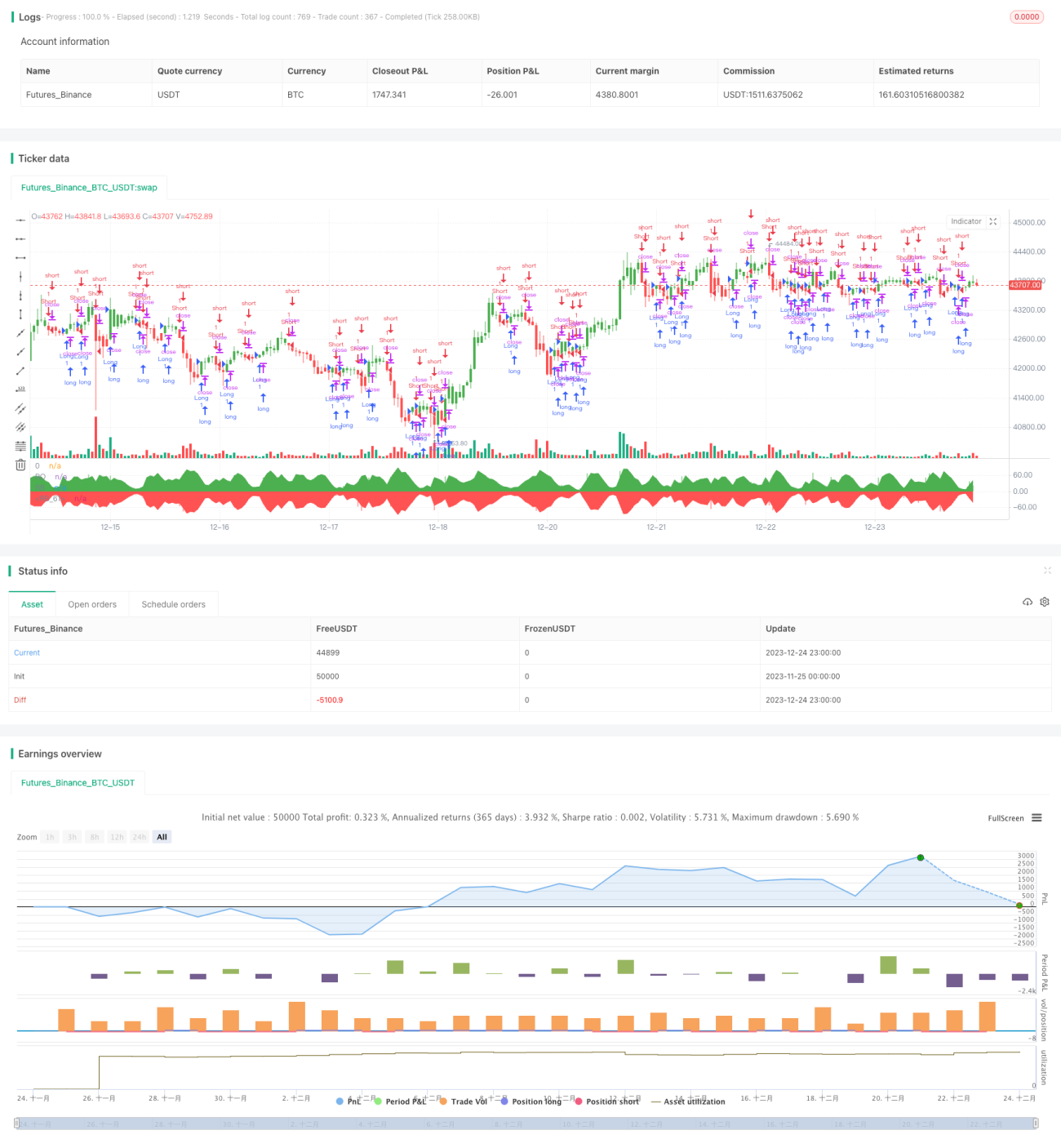
Gambaran Keseluruhan
Strategi ujian semula Rainbow Oscillator adalah strategi dagangan kuantitatif berdasarkan penunjuk Rainbow Oscillator. Strategi ini menilai arah dan kekuatan trend pasaran dengan mengira tahap sisihan harga daripada purata bergerak, seterusnya membuat keputusan untuk kedudukan panjang dan pendek.
Prinsip Strategi
Penunjuk teras strategi ini ialah Rainbow Oscillator (RO), dengan formula pengiraan seperti berikut:
RO = 100 * ((Harga Penutup - Purata Bergerak 10 Hari) / (Nilai Tertinggi Harga Tertinggi - Nilai Terendah Harga Terendah))
Di mana purata bergerak 10 hari adalah purata bergerak mudah bagi harga penutup dalam 10 tempoh. Penunjuk ini mencerminkan sisihan harga relatif terhadap purata bergeraknya sendiri. Apabila RO > 0, ia menunjukkan harga berada di atas purata bergerak, memberikan isyarat menaik; apabila RO < 0, ia menunjukkan harga berada di bawah purata bergerak, memberikan isyarat menurun.
Strategi ini juga mengira penunjuk tambahan iaitu Lebar Jalur (Bandwidth, RB), dengan formula seperti berikut:
RB = 100 * ((Nilai Tertinggi Purata Bergerak - Nilai Terendah Purata Bergerak) / (Nilai Tertinggi Harga Tertinggi - Nilai Terendah Harga Terendah))
RB mencerminkan lebar antara purata bergerak. Semakin besar RB, semakin besar turun naik harga, dan sebaliknya semakin stabil harga. Penunjuk RB boleh digunakan untuk menilai kestabilan pasaran.
Berdasarkan nilai penunjuk RO dan RB, strategi ini menilai tahap sisihan harga dan kestabilan pasaran, seterusnya menghasilkan isyarat dagangan untuk kedudukan panjang dan pendek.
Kelebihan Strategi
Strategi ini mempunyai kelebihan berikut:
- Berdasarkan penilaian dua penunjuk, mengelakkan batasan penilaian penunjuk tunggal.
- Boleh menilai serentak arah aliran harga dan kestabilan pasaran.
- Pengiraan mudah, mudah difahami dan dilaksanakan.
- Penunjuk boleh divisualisasikan, menghasilkan kesan "pelangi", intuitif dan mudah dibaca.
Risiko Strategi
Strategi ini juga mempunyai beberapa risiko:
- Parameter RO dan RB yang tidak sesuai boleh menyebabkan isyarat dagangan yang salah.
- Strategi dua purata bergerak mudah menghasilkan isyarat palsu dan dagangan yang kerap.
- Pemilihan tempoh ujian semula dan instrumen yang tidak sesuai boleh menjejaskan prestasi strategi.
- Tidak mengambil kira kos dagangan, prestasi sebenar mungkin kurang baik.
Langkah-langkah mengatasi:
- Optimumkan parameter penunjuk RO dan RB.
- Tambah syarat penapisan untuk mengelakkan dagangan yang kerap.
- Pilih tempoh ujian semula dan instrumen yang sesuai.
- Kira dan ambil kira kos dagangan.
Pengoptimuman Strategi
Strategi ini boleh dioptimumkan daripada beberapa aspek berikut:
- Tambah fungsi Smooth pada penunjuk RO untuk mengelakkan turun naik mendadak penunjuk.
- Tambah strategi henti rugi untuk mengawal kerugian setiap dagangan.
- Gabung dengan penunjuk lain untuk dagangan gabungan, meningkatkan kebarangkalian keuntungan.
- Tambah model pembelajaran mesin untuk ramalan, menilai kesan penunjuk.
- Optimumkan parameter untuk instrumen berbeza, meningkatkan kebolehsuaian.
Kesimpulan
Strategi ujian semula Rainbow Oscillator menilai trend dan kestabilan pasaran dengan mengira hubungan sisihan antara harga dan purata bergerak, seterusnya membuat dagangan panjang dan pendek. Strategi ini intuitif dan mudah dibaca, mudah dilaksanakan, dan mempunyai nilai praktikal yang tertentu. Namun, ia juga mempunyai beberapa risiko yang memerlukan pengoptimuman pada parameter dan peraturan dagangan untuk mengurangkan risiko dan meningkatkan prestasi sebenar.
/*backtest
start: 2023-11-25 00:00:00
end: 2023-12-25 00:00:00
period: 1h
basePeriod: 15m
exchanges: [{"eid":"Futures_Binance","currency":"BTC_USDT"}]
*/

//@version=2
////////////////////////////////////////////////////////////
//  Copyright by HPotter v1.0 18/03/2018
// Ever since the people concluded that stock market price movements are not - 1