Strategi Persilangan Gabungan Sebelas Purata Bergerak

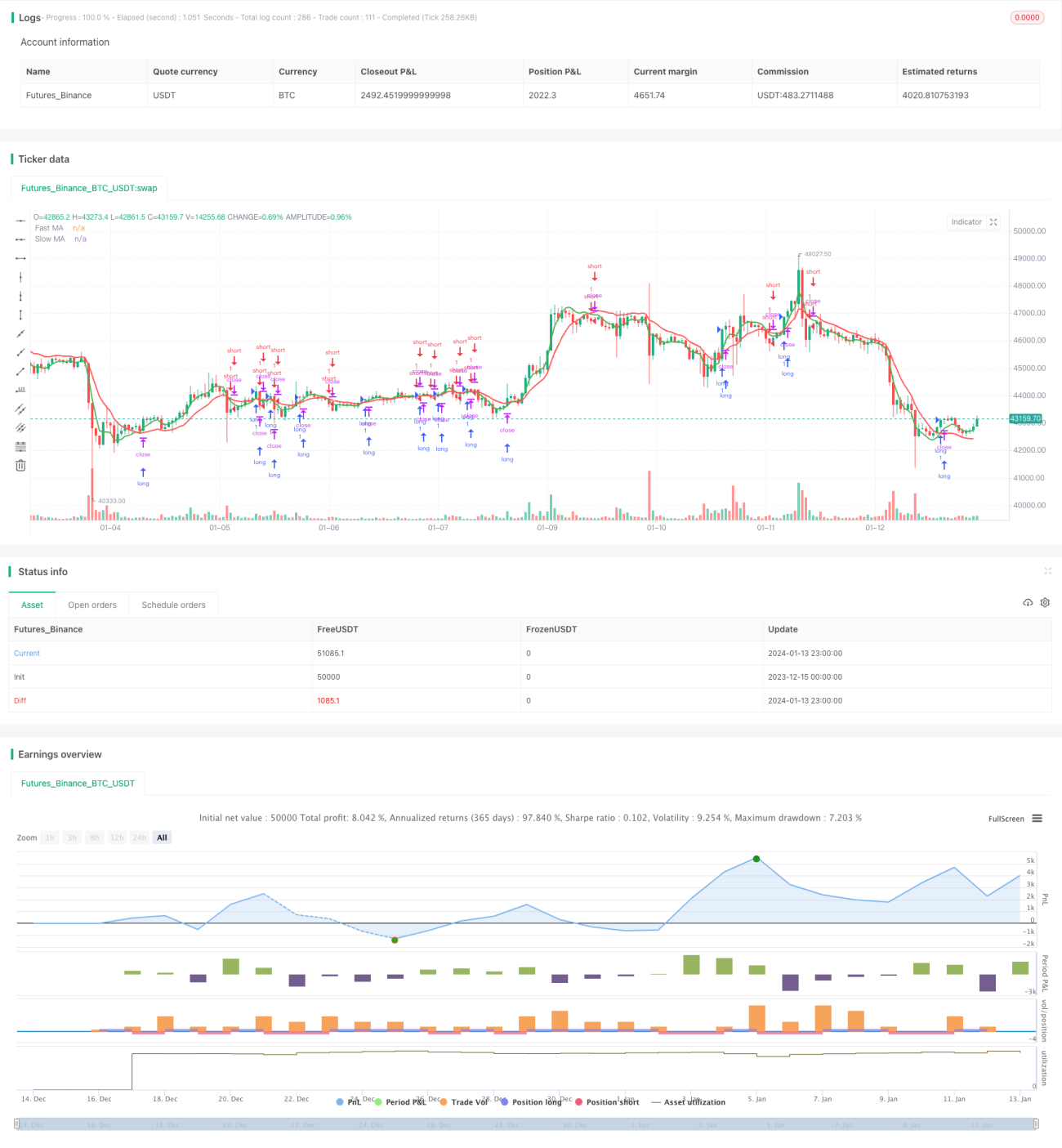
Gambaran Keseluruhan
Strategi gabungan ini menggunakan persilangan 11 jenis purata bergerak yang berbeza untuk mengambil posisi beli (long) dan jual (short). 11 purata bergerak yang digunakan termasuk: Purata Bergerak Mudah (SMA), Purata Bergerak Eksponen (EMA), Purata Bergerak Berwajaran (WMA), Purata Bergerak Berwajaran Volume (VWMA), Purata Bergerak Licin (SMMA), Purata Bergerak Eksponen Berganda (DEMA), Purata Bergerak Eksponen Tiga Kali (TEMA), Purata Bergerak Hull (HMA), Purata Bergerak Eksponen Tanpa Ketinggalan (ZEMA), Purata Bergerak Segitiga (TMA) dan Penapis Sangat Licin (SSMA).
Strategi ini membolehkan konfigurasi dua purata bergerak – satu lebih pantas dan satu lebih perlahan, kedua-duanya dipilih daripada 11 pilihan. Apabila MA yang lebih pantas melintasi ke atas MA yang lebih perlahan, isyarat beli (long) dihasilkan. Apabila MA yang lebih pantas melintasi ke bawah MA yang lebih perlahan, isyarat jual (short) dihasilkan.
Ciri tambahan termasuk tetapan piramid, paras ambil untung dan henti rugi.
Logik Strategi
Logik strategi teras bergantung pada persilangan antara dua purata bergerak untuk menentukan kemasukan dan keluar.
Syarat kemasukan adalah:
Kemasukan Beli: MA pantas > MA perlahan
Kemasukan Jual: MA pantas < MA perlahan
Keluar ditentukan oleh salah satu daripada tiga kriteria berikut:
- Paras ambil untung tercapai
- Paras henti rugi tercapai
- Isyarat bertentangan dihasilkan (purata bergerak melintasi ke arah bertentangan)
Strategi ini membolehkan konfigurasi parameter utama seperti jenis dan panjang MA, tetapan piramid, serta peratus ambil untung dan henti rugi. Ini memberikan fleksibiliti untuk mengoptimumkan strategi mengikut keadaan pasaran yang berbeza dan toleransi risiko.
Kelebihan
- Menggabungkan 11 jenis MA yang berbeza untuk menghasilkan isyarat yang kukuh
- Konfigurasi parameter utama yang fleksibel
- Fungsi ambil untung dan henti rugi melindungi keuntungan dan mengehadkan kerugian
- Piramid membolehkan penambahan kedudukan dalam trend yang kukuh
Risiko
- Seperti mana-mana penunjuk teknikal, persilangan MA mungkin menghasilkan isyarat palsu
- Pengoptimuman berlebihan terhadap keadaan pasaran semasa boleh mengurangkan prestasi masa hadapan
- Henti rugi keras boleh menyebabkan keluar awal dari perdagangan yang betul dalam pasaran yang tidak menentu
Pengurusan risiko boleh diperkukuh dengan menggunakan pengesahan harga untuk isyarat kemasukan, menggunakan henti rugi berkesan dan bukannya henti rugi keras, serta mengelakkan pengoptimuman berlebihan.
Ruang Pengoptimuman
Strategi ini boleh diperbaiki melalui beberapa cara:
- Menambah penapis tambahan seperti volum dan semakan harga sebelum kemasukan
- Menguji prestasi pelbagai jenis MA secara sistematik, memilih 1-2 yang terbaik
- Mengoptimumkan panjang MA untuk pasangan dan jangka masa tertentu
- Menggunakan henti rugi berkesan dan bukannya henti rugi keras
- Menambah pengambilan untung berperingkat apabila trend berlanjutan
Kesimpulan
Strategi Persilangan Sebelas Purata Bergerak menyediakan pendekatan sistematik untuk berdagang menggunakan persilangan. Dengan menggabungkan isyarat merentas pelbagai penunjuk MA dan membenarkan konfigurasi parameter utama, ia menyediakan rangka kerja perdagangan yang kukuh dan fleksibel. Pengoptimuman dan pengurusan risiko akan memainkan peranan penting dalam memperhalusi prestasi. Strategi ini mempunyai potensi yang kuat dalam perdagangan momentum, tetapi perlu disesuaikan mengikut persekitaran pasaran yang berbeza.
- 1