Strategi Pemasaan Dwipetunjuk Super Trend, Momentum dan Volatiliti

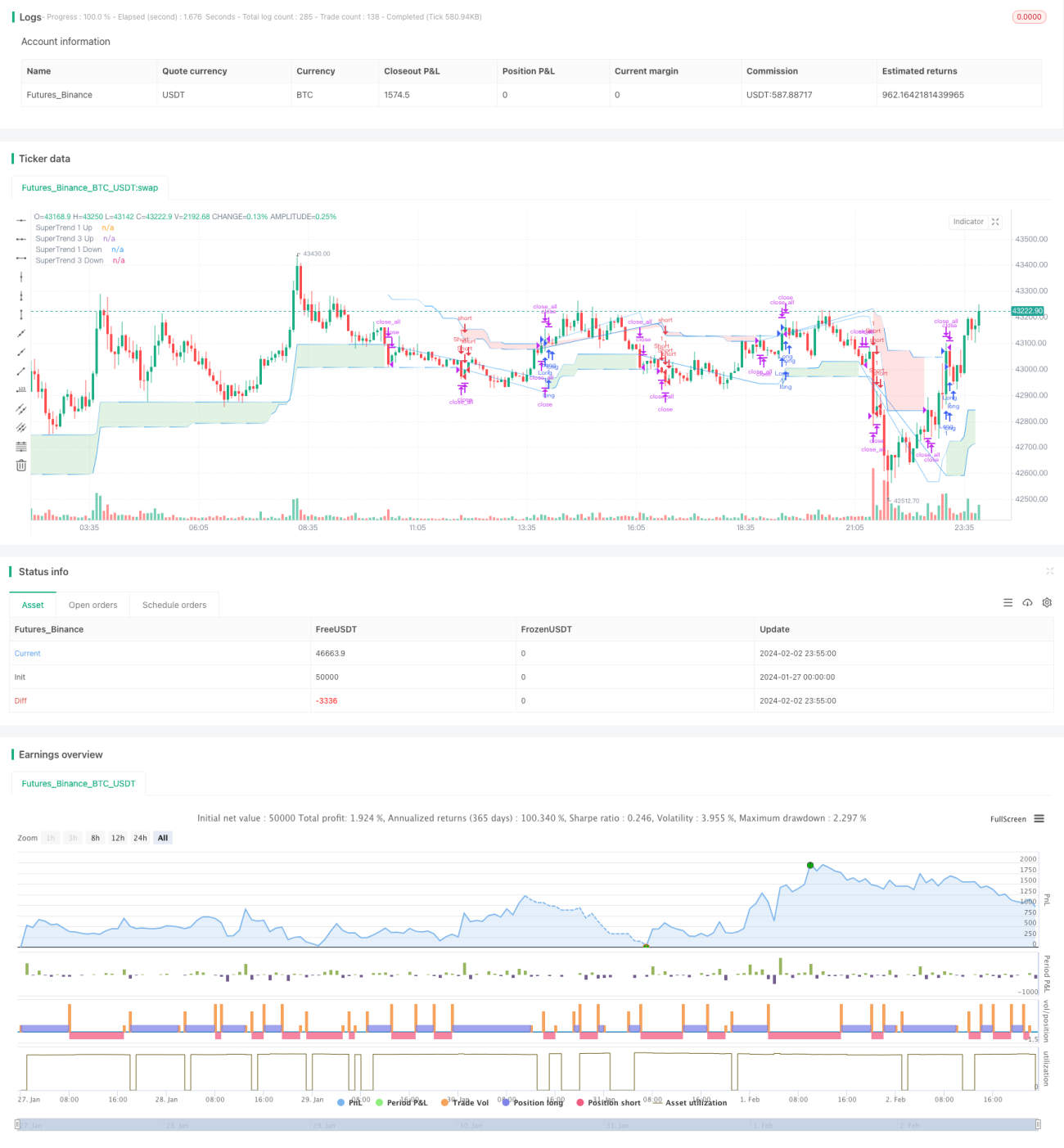
Gambaran Keseluruhan
Strategi ini menggabungkan Indikator SuperTrend dan Teori Gelombang Elliott untuk membina alat dagangan teknikal yang kukuh. Ia menggunakan analisis arah aliran berbilang lapisan untuk memberikan perspektif pasaran yang lebih komprehensif, membolehkan Early Capture potensi pembalikan arah aliran pasaran dan pergerakan harga yang penting.
Prinsip Strategi
Idea teras terletak pada pendekatan berbilang lapisannya:
- Menggunakan 4 indikator SuperTrend, setiap satu dengan panjang ATR dan pengganda yang berbeza, untuk menilai arah aliran daripada jangka pendek ke jangka panjang.
- Gabungan indikator ini membolehkan pengecaman isyarat beli dan jual yang kukuh.
- Merujuk kepada kaedah pengecaman corak Gelombang Elliott, untuk mengenal pasti corak tingkah laku pasaran yang serupa dan mengesahkan isyarat dagangan.
Dengan cara ini, ia memanfaatkan pelbagai indikator dan menambahkan pengecaman corak, menjadikan strategi lebih teguh.
Analisis Kelebihan
- Reka bentuk berbilang indikator menyediakan penilaian menyeluruh.
- Inspirasi daripada teori gelombang, pengecaman corak meningkatkan kestabilan.
- Pelarasan arah secara masa nyata, menyesuaikan diri dengan perubahan pasaran.
- Parameter boleh dikonfigurasikan, sesuai untuk pelbagai instrumen dan jangka masa.
Analisis Risiko
- Tetapan parameter bergantung pada pengalaman, memerlukan pelarasan untuk menentukan kombinasi parameter optimum.
- Reka bentuk berbilang indikator agak kompleks, meningkatkan beban pengiraan.
- Tidak dapat mengelakkan sepenuhnya penjanaan isyarat palsu.
Risiko dapat diurus melalui pengoptimuman parameter untuk menentukan parameter optimum secara berperingkat; penggunaan pengkomputeran awan untuk meningkatkan prestasi pengiraan; dan penetapan stop loss untuk mengawal risiko.
Hala Tuju Pengoptimuman
Pengoptimuman boleh dilakukan dari aspek berikut:
- Menambah modul pelarasan parameter adaptif, melaraskan parameter secara dinamik mengikut keadaan pasaran.
- Menambah model pembelajaran mesin untuk membantu menilai kebolehpercayaan isyarat dagangan.
- Menggabungkan faktor luaran seperti indikator sentimen dan peristiwa berita untuk menilai corak pasaran.
- Menyokong templat parameter pelbagai instrumen untuk mengurangkan beban kerja ujian.
Ini akan menjadikan parameter strategi lebih pintar, penilaian lebih tepat, dan aplikasi praktikal lebih mudah.
Kesimpulan
Strategi ini mempertimbangkan dua dimensi iaitu arah aliran dan corak, memastikan keteguhan penilaian dan menambah fleksibiliti strategi. Pelbagai indikator dan tetapan parameter memastikan kesesuaian merentas pasaran. Jika kaedah pintar dan automatik diperkenalkan lagi, ia akan meningkatkan tahap praktikal strategi dengan ketara. Ia menawarkan inspirasi dan rujukan yang berguna untuk perkembangan dagangan teknikal.
/*backtest
start: 2024-01-27 00:00:00
end: 2024-02-03 00:00:00
period: 5m
basePeriod: 1m
exchanges: [{"eid":"Futures_Binance","currency":"BTC_USDT"}]
*/

//@version=5
strategy("Elliott's Quadratic Momentum - Strategy [presentTrading]",shorttitle = "EQM Strategy [presentTrading]", overlay=true )

// Inputs for selecting trading direction- 1