Strategi Bata Momentum

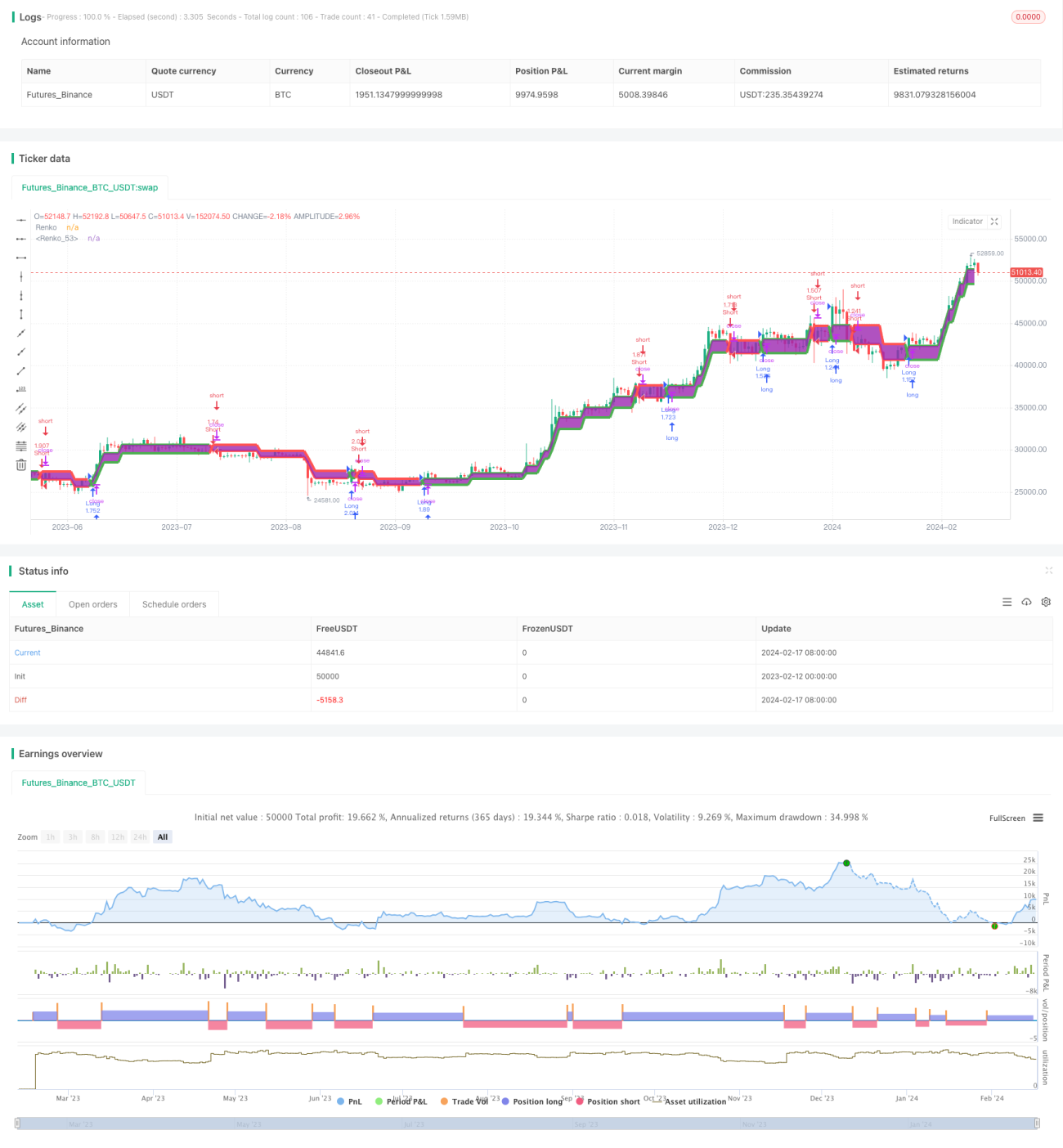
Strategi ini mensimulasikan pembentukan bata untuk menilai perubahan momentum pasaran, dan mengambil posisi beli (long) atau jual (short) berdasarkan arah bata.
Prinsip Strategi
Prinsip teras strategi ini adalah dengan mengira hubungan antara ATR dan harga penutup untuk mensimulasikan pembentukan bata. Secara khusus, dua pembolehubah ditakrifkan: Brick1 dan Brick2.
Kaedah pengiraan Brick1: Jika harga penutup melebihi nilai Brick1 semalam + ATR, maka Brick1 = nilai Brick1 semalam + ATR; jika harga penutup di bawah nilai Brick1 semalam - ATR, maka Brick1 = nilai Brick1 semalam - ATR; jika tidak, Brick1 mewarisi nilai Brick1 semalam.
Kaedah pengiraan Brick2: Jika nilai Brick1 tidak sama dengan nilai Brick1 semalam, maka Brick2 = nilai Brick1 semalam; jika tidak, Brick2 mewarisi nilai Brick2 semalam.
Dengan ini, pembentukan bata disimulasikan. Apabila Brick1 naik melebihi satu ATR, ia membentuk bata menaik; apabila Brick1 turun melebihi satu ATR, ia membentuk bata menurun. Brick2 mencatatkan kedudukan bata sebelumnya.
Apabila Brick1 dan Brick2 bersilang ke atas, ia menunjukkan bata mengembang ke atas, ditafsir sebagai arah menaik (long); apabila Brick1 dan Brick2 bersilang ke bawah, ia menunjukkan bata mengecut ke bawah, ditafsir sebagai arah menurun (short).
Kelebihan Strategi
- Menggunakan ATR untuk menentukan pembentukan bata, mengelakkan penggunaan saiz bata tetap, dan dapat menyesuaikan secara dinamik dengan turun naik pasaran
- Menentukan arah pasaran melalui persilangan bata, mengenal pasti perubahan momentum
- Kepekaan terhadap perubahan momentum pasaran boleh dilaraskan dengan mengubah tempoh ATR
- Visualisasi pembentukan dan persilangan bata membolehkan penilaian arah aliran pasaran secara intuitif
Risiko Strategi
- Pemilihan saiz ATR mempengaruhi pulangan strategi. Jika ATR terlalu kecil, terlalu banyak bata terbentuk, menghasilkan lebih banyak isyarat tidak sah; jika ATR terlalu besar, terlalu sedikit bata, mudah terlepas peluang.
- Pergerakan sebenar mungkin tidak mengikuti bentuk bata, dan isyarat persilangan bata mungkin dinafikan oleh pembalikan pasaran.
- Kepekaan terhadap kos urus niaga amat diperlukan, jika tidak, persilangan bata yang kerap akan mengurangkan pulangan bersih dengan ketara.
Parameter optimum boleh didapati melalui pengoptimuman tempoh ATR; laraskan strategi henti rugi/ambil untung untuk mengurangkan kerugian daripada isyarat tidak sah; besarkan sedikit instrumen dagangan untuk mengurangkan kesan kos terhadap pulangan.
Pengoptimuman Strategi
- Boleh digabungkan dengan penunjuk lain untuk penapisan isyarat, seperti penunjuk volum, penunjuk ayunan, dan lain-lain untuk mengelakkan isyarat tidak sah
- Tambah penapisan arah aliran, hanya beri isyarat dalam arah aliran utama, elakkan kerugian akibat pembalikan
- Gunakan kaedah pengoptimuman parameter sampel penuh dalam tempoh ujian untuk mencari parameter optimum secara automatik
Kesimpulan
Strategi ini menentukan arah aliran jangka pendek dan sederhana serta momentum pasaran melalui simulasi dinamik persilangan bata, dengan visualisasi bentuk yang intuitif. Ruang pengoptimuman strategi adalah luas, dan pengoptimuman parameter serta penapisan isyarat boleh meningkatkan kestabilan selanjutnya.
- 1