Strategi Purata Bergerak Berdasarkan Persilangan Dua Purata Bergerak

Gambaran Keseluruhan
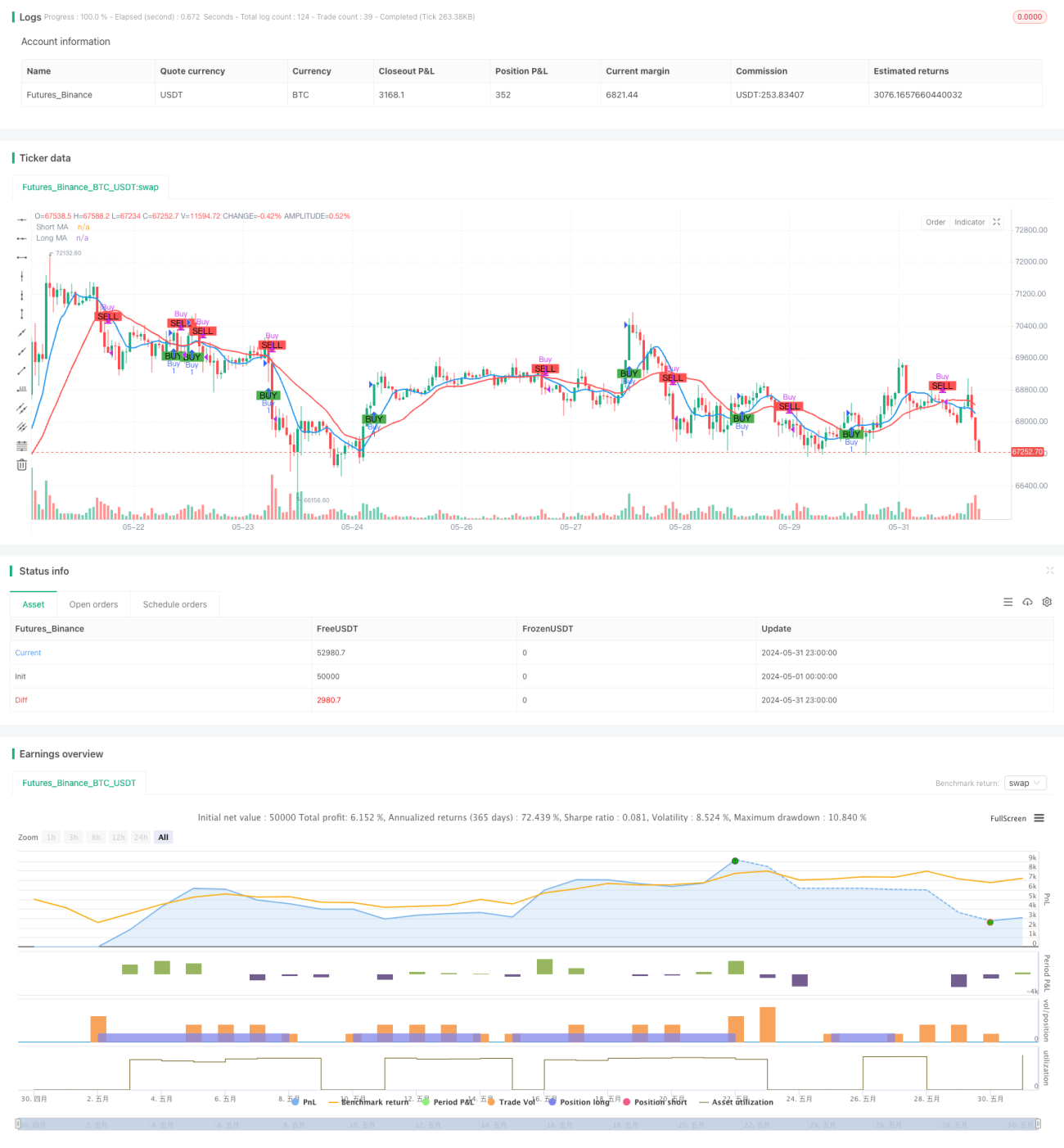
Strategi Purata Bergerak berdasarkan persilangan dua purata bergerak adalah kaedah dagangan intrahari yang mudah dan berkesan, direka untuk mengenal pasti peluang beli dan jual yang berpotensi di pasaran dengan menganalisis hubungan antara dua purata bergerak dengan tempoh yang berbeza. Strategi ini menggunakan Purata Bergerak Mudah (Simple Moving Average, SMA) jangka pendek dan satu lagi SMA jangka panjang. Apabila SMA jangka pendek melintasi ke atas SMA jangka panjang, ia menunjukkan isyarat kenaikan harga (bullish), mencadangkan peluang pembelian yang berpotensi. Sebaliknya, apabila SMA jangka pendek melintasi ke bawah SMA jangka panjang, ia menunjukkan isyarat penurunan harga (bearish), mencadangkan peluang penjualan yang berpotensi. Kaedah persilangan ini membantu pedagang menangkap pergerakan aliran pasaran sambil meminimumkan gangguan bunyi pasaran.
Prinsip Strategi
Prinsip teras strategi ini adalah menggunakan ciri-ciri arah aliran dan ketinggalan (lag) purata bergerak dengan tempoh yang berbeza. Dengan membandingkan kedudukan relatif antara purata bergerak jangka pendek dan purata bergerak jangka panjang, strategi ini menentukan arah aliran pasaran semasa dan membuat keputusan dagangan yang sepadan. Apabila aliran menaik muncul di pasaran, harga akan terlebih dahulu menembusi purata bergerak jangka panjang, dan purata bergerak jangka pendek kemudiannya akan melintasi ke atas purata bergerak jangka panjang, membentuk persilangan keemasan (golden cross) dan menjana isyarat beli. Apabila aliran menurun muncul di pasaran, harga akan terlebih dahulu jatuh di bawah purata bergerak jangka panjang, dan purata bergerak jangka pendek kemudiannya akan melintasi ke bawah purata bergerak jangka panjang, membentuk persilangan maut (death cross) dan menjana isyarat jual. Dalam penetapan parameter strategi ini, tempoh purata bergerak jangka pendek ditetapkan kepada 9, dan tempoh purata bergerak jangka panjang ditetapkan kepada 21. Kedua-dua parameter ini boleh diselaraskan berdasarkan ciri pasaran dan pilihan peribadi. Selain itu, strategi ini turut memperkenalkan konsep pengurusan wang dengan menetapkan modal awal dan peratus risiko setiap dagangan, menggunakan pelarasan saiz kedudukan (position sizing) untuk mengawal pendedahan risiko setiap dagangan.
Kelebihan Strategi
- Mudah difahami: Strategi ini berdasarkan teori purata bergerak klasik, logiknya jelas, mudah difahami dan dilaksanakan.
- Kebolehsuaian tinggi: Strategi ini boleh digunakan untuk pelbagai pasaran dan instrumen dagangan yang berbeza. Dengan melaraskan tetapan parameter, ia boleh menyesuaikan diri secara fleksibel dengan ciri pasaran yang berbeza.
- Menangkap aliran: Dengan menggunakan persilangan dua purata bergerak untuk menentukan arah aliran, ia membantu pedagang mengikuti aliran utama tepat pada masanya, meningkatkan peluang keuntungan.
- Kawalan risiko: Strategi ini memperkenalkan konsep pengurusan risiko, mengawal pendedahan risiko setiap dagangan melalui pelarasan saiz kedudukan, menguruskan potensi kerugian secara berkesan.
- Mengurangkan bunyi: Dengan memanfaatkan ciri ketinggalan purata bergerak, ia berkesan menapis bunyi rawak dalam pasaran, meningkatkan kebolehpercayaan isyarat dagangan.
Risiko Strategi
- Pemilihan parameter: Tetapan parameter yang berbeza akan memberi kesan besar kepada prestasi strategi. Pemilihan yang tidak sesuai boleh menyebabkan strategi gagal atau menunjukkan prestasi yang kurang baik.
- Aliran pasaran: Dalam pasaran yang tidak menentu (sideways) atau pada titik perubahan aliran, strategi ini mungkin mengalami kerugian berturut-turut.
- Kos gelinciran (slippage): Dagangan yang kerap boleh menjana kos gelinciran yang tinggi, menjejaskan keuntungan keseluruhan strategi.
- Peristiwa angsa hitam (black swan): Strategi ini mempunyai kebolehsuaian yang lemah terhadap pergerakan pasaran yang melampau. Peristiwa angsa hitam boleh menyebabkan kerugian besar kepada strategi.
- Risiko overfitting: Jika pengoptimuman parameter terlalu bergantung pada data sejarah, ia boleh menyebabkan prestasi strategi yang lemah dalam dagangan sebenar.
Arah Pengoptimuman Strategi
- Pengoptimuman parameter dinamik: Melaraskan parameter strategi secara dinamik berdasarkan perubahan keadaan pasaran untuk meningkatkan kebolehsuaian.
- Pengesahan aliran: Selepas isyarat dagangan dijana, memperkenalkan penunjuk lain atau corak tindakan harga untuk mengesahkan aliran, meningkatkan kebolehpercayaan isyarat.
- Henti rugi dan ambil untung (stop loss dan take profit): Memperkenalkan mekanisme henti rugi dan ambil untung yang munasabah untuk mengawal pendedahan risiko setiap dagangan dengan lebih lanjut.
- Pengurusan saiz kedudukan: Mengoptimumkan kaedah pelarasan saiz kedudukan, contohnya dengan memperkenalkan penunjuk turun naik (volatility), melaraskan saiz kedudukan secara dinamik berdasarkan tahap turun naik pasaran.
- Penilaian kekuatan beli dan jual: Menilai perbandingan kekuatan antara pihak beli dan pihak jual, memasuki pasaran pada peringkat awal aliran untuk meningkatkan ketepatan menangkap aliran.
Kesimpulan
Strategi Purata Bergerak berdasarkan persilangan dua purata bergerak adalah kaedah dagangan intrahari yang mudah dan praktikal. Dengan membandingkan kedudukan relatif purata bergerak dengan tempoh yang berbeza, ia menentukan arah aliran pasaran dan menjana isyarat dagangan. Strategi ini mempunyai logik yang jelas dan kebolehsuaian tinggi, boleh menangkap aliran pasaran dengan berkesan, sambil memperkenalkan langkah pengurusan risiko untuk mengawal potensi kerugian. Walau bagaimanapun, strategi ini juga mempunyai risiko yang berpotensi seperti pemilihan parameter, perubahan aliran, dan dagangan yang kerap. Ia perlu dipertingkatkan lagi melalui pengoptimuman dinamik, pengesahan isyarat, dan pengurusan saiz kedudukan untuk meningkatkan kestabilan dan keuntungan strategi. Secara keseluruhan, sebagai penunjuk analisis teknikal klasik, prinsip asas dan nilai aplikasi praktikal purata bergerak telah terbukti secara meluas di pasaran. Strategi ini berbaloi untuk dikaji secara mendalam dan dioptimumkan secara berterusan.
Gambaran Keseluruhan
Strategi Persilangan Purata Bergerak berdasarkan dua purata bergerak adalah pendekatan dagangan intrahari yang mudah dan berkesan, direka untuk mengenal pasti peluang beli dan jual yang berpotensi di pasaran dengan menganalisis hubungan antara dua purata bergerak dengan tempoh yang berbeza. Strategi ini menggunakan Purata Bergerak Mudah (SMA) jangka pendek dan satu lagi SMA jangka panjang. Apabila purata bergerak jangka pendek melintasi ke atas purata bergerak jangka panjang, ia menunjukkan isyarat kenaikan harga (bullish), mencadangkan peluang pembelian yang berpotensi. Sebaliknya, apabila purata bergerak jangka pendek melintasi ke bawah purata bergerak jangka panjang, ia menunjukkan isyarat penurunan harga (bearish), mencadangkan peluang penjualan yang berpotensi. Kaedah persilangan ini membantu pedagang menangkap pergerakan aliran pasaran sambil meminimumkan gangguan bunyi pasaran.
Kelebihan Strategi
- Kesederhanaan: Strategi ini berasaskan teori purata bergerak klasik, dengan logik yang jelas dan mudah difahami serta dilaksanakan.
- Kebolehsuaian: Strategi ini boleh digunakan dalam pelbagai pasaran dan instrumen dagangan yang berbeza. Dengan melaraskan tetapan parameter, ia boleh menyesuaikan diri secara fleksibel dengan ciri pasaran yang berbeza.
- Penangkapan Trend: Dengan menggunakan persilangan purata bergerak dua kali untuk menentukan arah aliran, ia membantu pedagang mengikuti trend utama dengan segera dan meningkatkan peluang keuntungan.
- Kawalan Risiko: Strategi ini memperkenalkan konsep pengurusan risiko, menggunakan saiz posisi untuk mengawal pendedahan risiko setiap dagangan, serta mengurus potensi kerugian dengan berkesan.
- Pengurangan Bunyi: Dengan memanfaatkan ciri ketinggalan purata bergerak, ia dapat menapis bunyi rawak dalam pasaran dengan berkesan, meningkatkan kebolehpercayaan isyarat dagangan.
Risiko Strategi
- Pemilihan Parameter: Tetapan parameter yang berbeza boleh memberi kesan besar terhadap prestasi strategi. Pemilihan yang tidak sesuai boleh menyebabkan kegagalan strategi atau prestasi yang lemah.
- Trend Pasaran: Dalam pasaran yang tidak menentu atau titik perubahan trend, strategi ini mungkin mengalami kerugian berturut-turut.
- Kos Slippage: Dagangan yang kerap boleh menyebabkan kos slippage yang lebih tinggi, menjejaskan keuntungan keseluruhan strategi.
- Peristiwa Angsa Hitam: Strategi ini kurang kebolehsuaian terhadap keadaan pasaran yang melampau, dan peristiwa angsa hitam boleh menyebabkan kerugian besar kepada strategi.
- Risiko Overfitting: Jika pengoptimuman parameter terlalu bergantung pada data sejarah, ia boleh menyebabkan prestasi strategi yang lemah dalam dagangan sebenar.
Arah Pengoptimuman Strategi
- Pengoptimuman Parameter Dinamik: Melaraskan parameter strategi secara dinamik berdasarkan perubahan keadaan pasaran untuk meningkatkan kebolehsuaian.
- Pengesahan Trend: Selepas menjana isyarat dagangan, memperkenalkan indikator lain atau corak tingkah laku harga untuk mengesahkan trend, meningkatkan kebolehpercayaan isyarat.
- Henti Rugi dan Ambil Untung: Memperkenalkan mekanisme henti rugi dan ambil untung yang munasabah untuk mengawal pendedahan risiko setiap dagangan dengan lebih lanjut.
- Pengurusan Posisi: Mengoptimumkan kaedah saiz posisi, seperti memperkenalkan indikator turun naik untuk melaraskan posisi secara dinamik berdasarkan tahap turun naik pasaran.
- Penilaian Kekuatan Bullish dan Bearish: Menilai hubungan perbandingan antara kekuatan menaik dan menurun, memasuki pasaran pada peringkat awal trend untuk meningkatkan ketepatan penangkapan trend.
Ringkasan
Strategi Persilangan Purata Bergerak berdasarkan dua purata bergerak adalah kaedah dagangan intrahari yang mudah dan praktikal. Dengan membandingkan kedudukan relatif purata bergerak dengan tempoh yang berbeza, ia menentukan arah trend pasaran dan menjana isyarat dagangan. Strategi ini mempunyai logik yang jelas, kebolehsuaian yang kuat, dan dapat menangkap trend pasaran dengan berkesan sambil memperkenalkan langkah pengurusan risiko untuk mengawal potensi kerugian. Walau bagaimanapun, strategi ini juga mempunyai risiko potensi seperti pemilihan parameter, pembalikan trend, dan dagangan yang kerap. Ia perlu diperbaiki melalui pengoptimuman dinamik, pengesahan isyarat, dan pengurusan posisi untuk meningkatkan keteguhan dan keuntungan strategi. Secara keseluruhan, sebagai indikator analisis teknikal klasik, prinsip asas dan nilai aplikasi praktikal purata bergerak telah disahkan secara meluas oleh pasaran. Ia adalah strategi dagangan yang wajar dikaji secara mendalam dan dioptimumkan secara berterusan.
- 1