Estratégia de várias barras na mesma direção


Data de criação: 2023-10-18 12:20:59 última modificação: 2023-10-18 12:20:59
cópia: 3 Cliques: 639
1
focar em
1617
Seguidores

Estratégia de várias barras na mesma direção

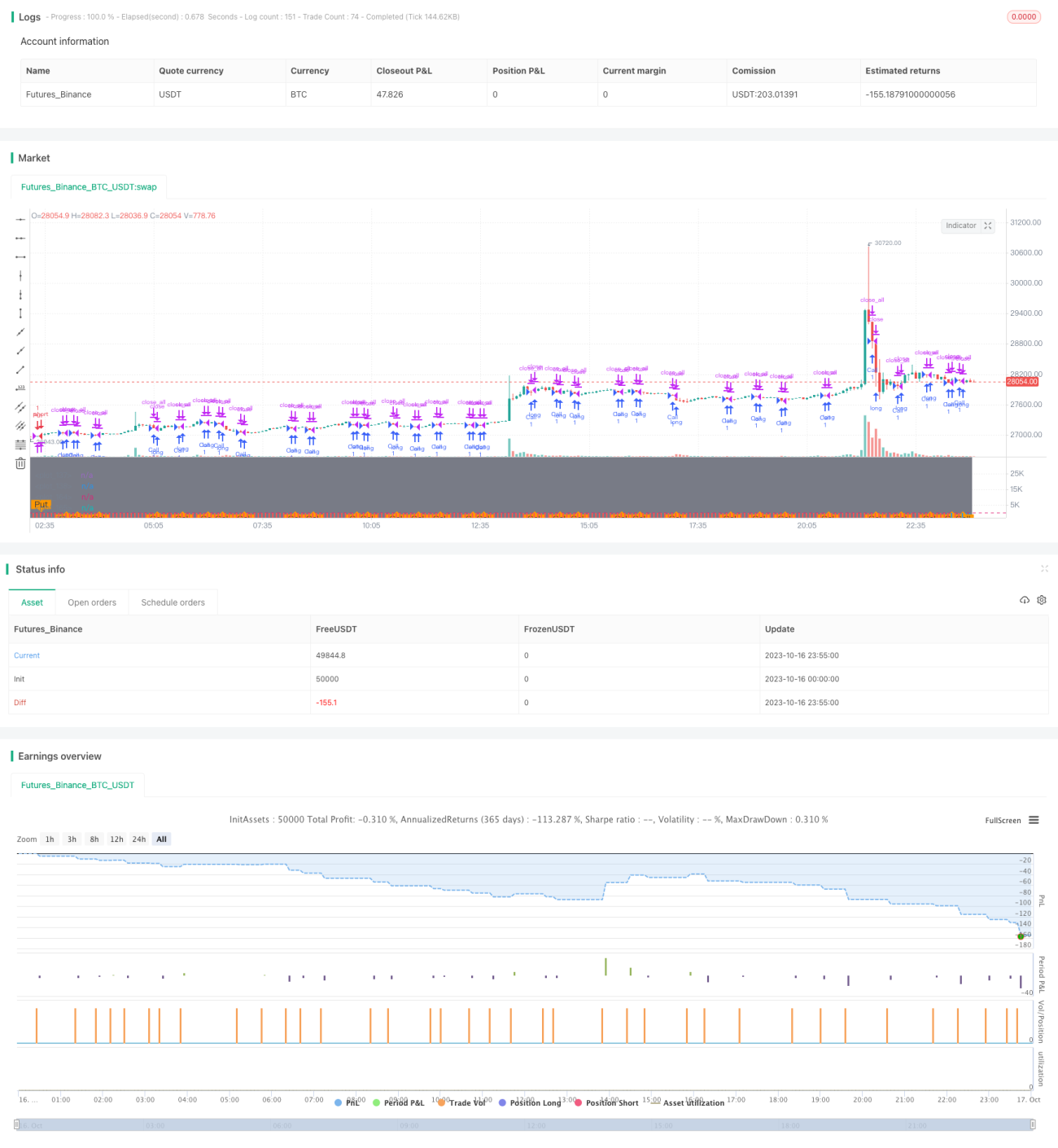
Visão geral

A estratégia multi-bar simetria é aplicada principalmente para a negociação de linhas médias e curtas.

Princípio da estratégia

A estratégia primeiro define o tempo de início e o tempo de término das estatísticas para extrair dados históricos. Em seguida, define o tempo de negociação para identificar as linhas K elegíveis. A estratégia estatisticamente determina a probabilidade de ocorrência de um aumento ou diminuição simultâneo entre as linhas 2K e 7K. Se o aumento ou a diminuição atingem um determinado limiar percentual, um sinal de negociação é gerado.

Por exemplo, a estratégia estatística da probabilidade de ocorrência de queda dentro de 3 linhas K. Se a probabilidade de queda for inferior a 50%, as 3 linhas K atuais são elegíveis, gerando um sinal de pessimismo. A estratégia permite a configuração de parâmetros estatísticos de 2 a 7 linhas K.

A lógica da estratégia é a seguinte:

  1. Configure um intervalo de tempo de retorno, incluindo data de início, data de término e intervalo de tempo de negociação.

  2. Cálcule o número de subidas e descidas de 2 a 7 linhas K.

  3. Calcule a probabilidade de um aumento ou diminuição contínuo do número de linhas K adjacentes.

  4. Se a probabilidade for inferior a 50%, considera-se que a linha K atual corresponde à forma de sinal de inversão.

  5. O que é um sinal de alta ou baixa em um intervalo de tempo de negociação?

  6. Fazer retrospectivas para verificar a eficácia da estratégia.

Vantagens estratégicas

  • Evitar erros de sinalização por causa de uma única linha K, através da estatística da probabilidade de múltiplas linhas K.
  • Número de linhas K personalizáveis para identificar sinais de inversão em diferentes períodos de tempo
  • Definir um intervalo de tempo de negociação claro para evitar sinais de não negociação
  • A visualização de estatísticas do número de linhas K por segmento permite avaliar a eficácia
  • Parâmetros mais otimizáveis, adequados para diferentes mercados

Risco estratégico

  • A quantidade de linhas K não determina exatamente o ponto de reversão da tendência, existindo uma certa probabilidade de erro.
  • Requer períodos estatísticos mais longos, podendo perder oportunidades de negociação em linhas curtas
  • A depreciação estática é vulnerável a mudanças no mercado e precisa de um ajuste dinâmico
  • A escolha do intervalo de tempo de detecção pode afetar os resultados, sendo necessário evitar a sobre-adaptação.

O risco pode ser reduzido através das seguintes medidas:

  1. Parâmetros para otimizar o número de linhas K, usando diferentes números para diferentes períodos
  2. Em combinação com outros indicadores validated_hvgggjhjj tjgtdfnjnjhggvft
  3. Utilização de depreciação dinâmica para considerar os efeitos das flutuações do mercado
  4. Ampliação do intervalo de tempo de resposta para testes repetidos

Direção de otimização da estratégia

A estratégia pode ser otimizada em:

  1. Otimizar o número de linhas K. Pode testar de 2 a 10 diferentes parâmetros, selecionando o melhor parâmetro.

  2. Optimizar a inversão de margem. 40% a 60% de diferentes parâmetros podem ser testados, levando em conta as mudanças do mercado.

  3. Aumentar a estratégia de stop loss. Pode definir um ponto de stop loss após a formação de um sinal, para controlar o risco.

  4. Em combinação com outros indicadores. Por exemplo, pode ser combinado com indicadores como o RSI para validar o sinal de inversão.

  5. Adicionar diferentes variedades, como futuros, divisas e outros. Testar os parâmetros de diferentes variedades de negociação.

  6. Optimização progressiva. Ajuste os parâmetros gradualmente para encontrar a combinação ideal de parâmetros.

  7. Adicionar modelos de aprendizagem de máquina. Usar algoritmos para encontrar automaticamente o melhor parâmetro.

Resumir

A estratégia de Bar para identificar potenciais sinais de reversão através da análise estatística da probabilidade de uma linha K, permite um tratamento de sinal mais preciso. Mas os efeitos da estratégia estão relacionados com a escolha de parâmetros e precisam ser totalmente otimizados. Além disso, o sinal de reversão em si pode ser mal interpretado e precisa ser verificado em combinação com outros fatores.

Código-fonte da estratégia
/*backtest
start: 2023-10-16 00:00:00
end: 2023-10-17 00:00:00
period: 5m
basePeriod: 1m
exchanges: [{"eid":"Futures_Binance","currency":"BTC_USDT"}]
*/

// BO - Bar's direction Signal - Backtesting
//anch.v43
// © inno14
//@version=4

strategy("BO - Bar's direction Signal - Backtesting", pyramiding=15)
// === INPUT PERIOD OF TIME ===
Date   = input(true, title = "=== Periods Counting ===")
FromDay   = input(defval = 1, title = "From Day", minval = 1, maxval = 31)
FromMonth = input(defval = 1, title = "From Month", minval = 1, maxval = 12)
FromYear  = input(defval = 2020, title = "From Year", minval = 2017)

ToDay     = input(defval = 1, title = "To Day", minval = 1, maxval = 31)
ToMonth   = input(defval = 1, title = "To Month", minval = 1, maxval = 12)
ToYear    = input(defval = 9999, title = "To Year", minval = 2017)

// === DATE RANGE ===
start     = timestamp(FromYear, FromMonth, FromDay, 00, 00)  // backtest start window
finish    = timestamp(ToYear, ToMonth, ToDay, 23, 59)        // backtest finish window
window()  => time >= start and time <= finish ? true : false // create function "within window of time"

// === Trading Time ===
CTimeDvM   = input(true, title = "=== Trading Time ===")
Time_zone = input(7,title="Time Zone")
FromHourDvM   = input(defval = 05, title = "From Hour", minval = 00, maxval = 23)
FromMinuteDvM = input(defval = 00, title = "From Minute", minval = 00, maxval = 59)
ToHourDvM   = input(defval = 04, title = "To Hour", minval = 00, maxval = 23)
ToMinuteDvM = input(defval = 59, title = "To Minute", minval = 00, maxval = 59)

GMT_FHDvM=FromHourDvM<Time_zone?FromHourDvM-Time_zone+24:FromHourDvM-Time_zone
GMT_THDvM=ToHourDvM<Time_zone?ToHourDvM-Time_zone+24:ToHourDvM-Time_zone
fhDvM= (GMT_FHDvM<10?"0"+tostring(GMT_FHDvM):tostring(GMT_FHDvM))
fmDvM= (FromMinuteDvM<10?"0"+tostring(FromMinuteDvM):tostring(FromMinuteDvM))
thDvM= (GMT_THDvM<10?"0"+tostring(GMT_THDvM):tostring(GMT_THDvM))
tmDvM= (ToMinuteDvM<10?"0"+tostring(ToMinuteDvM):tostring(ToMinuteDvM))
WorkingHourDvM = fhDvM+fmDvM+"-"+thDvM+tmDvM
t0_DvM = time(timeframe.period, WorkingHourDvM)
htrtime = input(true,title="Highlight Tradingtime")
bgcolor(htrtime? t0_DvM? color.gray : na:na, title="Trading Time", transp=90)

// === Date Backtesting ===
Date1   = input(true, title = "=== Date Backtesting ===")
FromDay1   = input(defval = 1, title = "From Day", minval = 1, maxval = 31)
FromMonth1 = input(defval = 1, title = "From Month", minval = 1, maxval = 12)
FromYear1  = input(defval = 2020, title = "From Year", minval = 2017)

ToDay1     = input(defval = 1, title = "To Day", minval = 1, maxval = 31)
ToMonth1   = input(defval = 1, title = "To Month", minval = 1, maxval = 12)
ToYear1    = input(defval = 9999, title = "To Year", minval = 2017)

// === DATE RANGE ===
start1     = timestamp(FromYear1, FromMonth1, FromDay1, 00, 00)  // backtest start window
finish1    = timestamp(ToYear1, ToMonth1, ToDay1, 23, 59)        // backtest finish window
window1()  => time >= start1 and time <= finish1 ? true : false // create function "within window of time"

// === Setup ===
Setup   = input(true, title = "=== Setup Options ===")
set1 = input(true, title = "Reversal after 2 bars same direction")
set2 = input(true, title = "Reversal after 3 bars same direction")
set3 = input(true, title = "Reversal after 4 bars same direction")
set4 = input(true, title = "Reversal after 5 bars same direction")
set5 = input(true, title = "Reversal after 6 bars same direction")


// Calculate hours, minutes, and seconds till close
timeLeft = barstate.isrealtime ?
     (time_close - timenow) / 1000 :
     na

minutesLeft = floor((timeLeft % 3600) / 60)
secondsLeft = timeLeft % 60
// truncate() truncates a given number
// to a certain number of decimals
truncate(number, decimals) =>
    factor = pow(10, decimals)
    int(number * factor) / factor
//count 2
redv2=window()?1:0
bluev2=window()?1:0
mchange2 = close[0]<open[0] and close[1]<open[1] and t0_DvM?-1:0
pchange2 = close[0]>open[0] and close[1]>open[1] and t0_DvM?1:0
blue2 = cum(pchange2 > 0 ? bluev2 : 0 * bluev2)
red2 = cum(mchange2 < 0 ? redv2 : 0 * redv2)

//count 3
redv3=window()?1:0
bluev3=window()?1:0
mchange3 = close[0]<open[0] and close[1]<open[1] and close[2]<open[2] and t0_DvM?-1:0
pchange3 = close[0]>open[0] and close[1]>open[1] and close[2]>open[2] and t0_DvM?1:0
blue3 = cum(pchange3 > 0 ? bluev3 : 0 * bluev3)
red3 = cum(mchange3 < 0 ? redv3 : 0 * redv3)

//count 4
redv4=window()?1:0
bluev4=window()?1:0
mchange4 = close[0]<open[0] and close[1]<open[1] and close[2]<open[2] and close[3]<open[3] and t0_DvM?-1:0
pchange4 = close[0]>open[0] and close[1]>open[1] and close[2]>open[2] and close[3]>open[3] and t0_DvM?1:0
blue4 = cum(pchange4 > 0 ? bluev4 : 0 * bluev4)
red4 = cum(mchange4 < 0 ? redv4 : 0 * redv4)

//count 5
redv5=window()?1:0
bluev5=window()?1:0
mchange5 = close[0]<open[0] and close[1]<open[1] and close[2]<open[2] and close[3]<open[3] and close[4]<open[4] and t0_DvM?-1:0
pchange5 = close[0]>open[0] and close[1]>open[1] and close[2]>open[2] and close[3]>open[3] and close[4]>open[4] and t0_DvM?1:0
blue5 = cum(pchange5 > 0 ? bluev5 : 0 * bluev5)
red5 = cum(mchange5 < 0 ? redv5 : 0 * redv5)

//count 6
redv6=window()?1:0
bluev6=window()?1:0
mchange6 = close[0]<open[0] and close[1]<open[1] and close[2]<open[2] and close[3]<open[3] and close[4]<open[4] and close[5]<open[5] and t0_DvM?-1:0
pchange6 = close[0]>open[0] and close[1]>open[1] and close[2]>open[2] and close[3]>open[3] and close[4]>open[4] and close[5]>open[5] and t0_DvM?1:0
blue6 = cum(pchange6 > 0 ? bluev6 : 0 * bluev6)
red6 = cum(mchange6 < 0 ? redv6 : 0 * redv6)

//count 7
redv7=window()?1:0
bluev7=window()?1:0
mchange7 = close[0]<open[0] and close[1]<open[1] and close[2]<open[2] and close[3]<open[3] and close[4]<open[4] and close[5]<open[5] and close[6]<open[6] and t0_DvM?-1:0
pchange7 = close[0]>open[0] and close[1]>open[1] and close[2]>open[2] and close[3]>open[3] and close[4]>open[4] and close[5]>open[5] and close[6]>open[6] and t0_DvM?1:0
blue7 = cum(pchange7 > 0 ? bluev7 : 0 * bluev7)
red7 = cum(mchange7 < 0 ? redv7 : 0 * redv7)

//Percent 3rd bar has same direction
pred3=(red3/red2)*100
pblue3=(blue3/blue2)*100

//2->3
p23_blue_xloc=0
p23_red_xloc=2
p23_lable_xloc=round((p23_blue_xloc+p23_red_xloc)/2)
p23_label_yloc=1.0*100
blue2_100=100
red2_100=100

plot(blue2_100, style=plot.style_columns, offset=p23_blue_xloc, color=color.blue, transp=60, show_last=1)
plot(red2_100, style=plot.style_columns, offset=-p23_red_xloc, color=color.red, transp=60, show_last=1)
plot(pblue3, style=plot.style_columns, offset=p23_blue_xloc, color=color.blue, transp=40, show_last=1)
plot(pred3, style=plot.style_columns, offset=-p23_red_xloc, color=color.red, transp=40, show_last=1)
// label_pred_23=label.new(bar_index[p23_red_xloc],pred3,style=label.style_none,text=tostring(truncate(pred3,2))+"%")
// label.delete(label_pred_23[1])
//label_2dn=label.new(bar_index[p23_red_xloc],red2,style=label.style_none,text="2 bars downward: "+tostring(red2))
//label.delete(label_2dn[1])
// label_pblue_23=label.new(bar_index[p23_blue_xloc],pblue3,style=label.style_none,text=tostring(truncate(pblue3,2))+"%")
// label.delete(label_pblue_23[1])
//label_2up=label.new(bar_index[p23_blue_xloc],blue2,style=label.style_none,text="2 bars upward: "+tostring(blue2))
//label.delete(label_2up[1])
// label_23=label.new(bar_index[p23_lable_xloc],p23_label_yloc,style=label.style_labeldown,text="3 bars same direction", color=color.orange)
// label.delete(label_23[1])

//Percent 4th bar has same direction
pred4=(red4/red3)*100
pblue4=(blue4/blue3)*100

//3->4
p34_blue_xloc=4
p34_red_xloc=6
p34_lable_xloc=round((p34_blue_xloc+p34_red_xloc)/2)
p34_label_yloc=1.0*100
blue3_100=100
red3_100=100

plot(blue3_100, style=plot.style_columns, offset=-p34_blue_xloc, color=color.blue, transp=60, show_last=1)
plot(red3_100, style=plot.style_columns, offset=-p34_red_xloc, color=color.red, transp=60, show_last=1)
plot(pblue4, style=plot.style_columns, offset=-p34_blue_xloc, color=color.blue, transp=40, show_last=1)
plot(pred4, style=plot.style_columns, offset=-p34_red_xloc, color=color.red, transp=40, show_last=1)
// label_pred_34=label.new(bar_index[p34_red_xloc],pred4,style=label.style_none,text=tostring(truncate(pred4,2))+"%")
// label.delete(label_pred_34[1])
// //label_3dn=label.new(bar_index[p34_red_xloc],red3,style=label.style_none,text="3 bars downward: "+tostring(red3))
// //label.delete(label_3dn[1])
// label_pblue_34=label.new(bar_index[p34_blue_xloc],pblue4,style=label.style_none,text=tostring(truncate(pblue4,2))+"%")
// label.delete(label_pblue_34[1])
// //label_3up=label.new(bar_index[p34_blue_xloc],blue3,style=label.style_none,text="3 bars upward: "+tostring(blue3))
// //label.delete(label_3up[1])
// label_34=label.new(bar_index[p34_lable_xloc],p34_label_yloc,style=label.style_labeldown,text="4 bars same direction", color=color.orange)
// label.delete(label_34[1])

//Percent 5th bar has same direction
pred5=(red5/red4)*100
pblue5=(blue5/blue4)*100

//4->5
p45_blue_xloc=8
p45_red_xloc=10
p45_lable_xloc=round((p45_blue_xloc+p45_red_xloc)/2)
p45_label_yloc=1.0*100
blue4_100=100
red4_100=100

plot(blue4_100, style=plot.style_columns, offset=-p45_blue_xloc, color=color.blue, transp=60, show_last=1)
plot(red4_100, style=plot.style_columns, offset=-p45_red_xloc, color=color.red, transp=60, show_last=1)
plot(pblue5, style=plot.style_columns, offset=-p45_blue_xloc, color=color.blue, transp=40, show_last=1)
plot(pred5, style=plot.style_columns, offset=-p45_red_xloc, color=color.red, transp=40, show_last=1)
// label_pred_45=label.new(bar_index[p45_red_xloc],pred5,style=label.style_none,text=tostring(truncate(pred5,2))+"%")
// label.delete(label_pred_45[1])
// //label_4dn=label.new(bar_index[p45_red_xloc],red4,style=label.style_none,text="4 bars downward: "+tostring(red4))
// //label.delete(label_4dn[1])
// label_pblue_45=label.new(bar_index[p45_blue_xloc],pblue5,style=label.style_none,text=tostring(truncate(pblue5,2))+"%")
// label.delete(label_pblue_45[1])
// //label_4up=label.new(bar_index[p45_blue_xloc],blue4,style=label.style_none,text="4 bars upward: "+tostring(blue4))
// //label.delete(label_4up[1])
// label_45=label.new(bar_index[p45_lable_xloc],p45_label_yloc,style=label.style_labeldown,text="5 bars same direction", color=color.orange)
// label.delete(label_45[1])

//Percent 6th bar has same direction
pred6=(red6/red5)*100
pblue6=(blue6/blue5)*100

//5->6
p56_blue_xloc=12
p56_red_xloc=14
p56_lable_xloc=round((p56_blue_xloc+p56_red_xloc)/2)
p56_label_yloc=1.0*100
blue5_100=100
red5_100=100

plot(blue5_100, style=plot.style_columns, offset=-p56_blue_xloc, color=color.blue, transp=60, show_last=1)
plot(red5_100, style=plot.style_columns, offset=-p56_red_xloc, color=color.red, transp=60, show_last=1)
plot(pblue6, style=plot.style_columns, offset=-p56_blue_xloc, color=color.blue, transp=40, show_last=1)
plot(pred6, style=plot.style_columns, offset=-p56_red_xloc, color=color.red, transp=40, show_last=1)
// label_pred_56=label.new(bar_index[p56_red_xloc],pred6,style=label.style_none,text=tostring(truncate(pred6,2))+"%")
// label.delete(label_pred_56[1])
// //label_5dn=label.new(bar_index[p56_red_xloc],red5,style=label.style_none,text="5 bars downward: "+tostring(red5))
// //label.delete(label_5dn[1])
// label_pblue_56=label.new(bar_index[p56_blue_xloc],pblue6,style=label.style_none,text=tostring(truncate(pblue6,2))+"%")
// label.delete(label_pblue_56[1])
// //label_5up=label.new(bar_index[p56_blue_xloc],blue5,style=label.style_none,text="5 bars upward: "+tostring(blue5))
// //label.delete(label_5up[1])
// label_56=label.new(bar_index[p56_lable_xloc],p56_label_yloc,style=label.style_labeldown,text="6 bars same direction", color=color.orange)
// label.delete(label_56[1])

//Percent 7th bar has same direction
pred7=(red7/red6)*100
pblue7=(blue7/blue6)*100

//6->7
p67_blue_xloc=16
p67_red_xloc=18
p67_lable_xloc=round((p67_blue_xloc+p67_red_xloc)/2)
p67_label_yloc=1.0*100
blue6_100=100
red6_100=100

plot(blue6_100, style=plot.style_columns, offset=-p67_blue_xloc, color=color.blue, transp=60, show_last=1)
plot(red6_100, style=plot.style_columns, offset=-p67_red_xloc, color=color.red, transp=60, show_last=1)
plot(pblue7, style=plot.style_columns, offset=-p67_blue_xloc, color=color.blue, transp=40, show_last=1)
plot(pred7, style=plot.style_columns, offset=-p67_red_xloc, color=color.red, transp=40, show_last=1)
// label_pred_67=label.new(bar_index[p67_red_xloc],pred7,style=label.style_none,text=tostring(truncate(pred7,2))+"%")
// label.delete(label_pred_67[1])
// //label_6dn=label.new(bar_index[p67_red_xloc],red6,style=label.style_none,text="6 bars downward: "+tostring(red6))
// //label.delete(label_6dn[1])
// label_pblue_67=label.new(bar_index[p67_blue_xloc],pblue7,style=label.style_none,text=tostring(truncate(pblue7,2))+"%")
// label.delete(label_pblue_67[1])
// //label_6up=label.new(bar_index[p67_blue_xloc],blue6,style=label.style_none,text="6 bars upward: "+tostring(blue6))
// //label.delete(label_6up[1])
// label_67=label.new(bar_index[p67_lable_xloc],p67_label_yloc,style=label.style_labeldown,text="7 bars same direction", color=color.orange)
// label.delete(label_67[1])

//Plot Time Label
time_label_yloc=1.4*100
time_lable_xloc=round((p67_red_xloc+p23_blue_xloc)/2)
time_label_text="Bar's Direction Info From: "+tostring(FromDay)+"/"+tostring(FromMonth)+"/"+tostring(FromYear)+" To: "+tostring(ToDay)+"/"+tostring(ToMonth)+"/"+tostring(ToYear)
// label_time=label.new(bar_index[time_lable_xloc],time_label_yloc,style=label.style_none,text=time_label_text, color=color.aqua)
// label.delete(label_time[1])

//Signal
//Put signal
x1=
       pblue3<50?blue2[0]>blue2[1] and blue3[0]==blue3[1]:false
x2=
       pblue4<50?blue3[0]>blue3[1] and blue4[0]==blue4[1]:false
x3=
       pblue5<50?blue4[0]>blue4[1] and blue5[0]==blue5[1]:false
x4=
       pblue6<50?blue5[0]>blue5[1] and blue6[0]==blue6[1]:false
x5=
       pblue7<50?blue6[0]>blue6[1] and blue7[0]==blue7[1]:false

//Call signal
y1=
       pred3<50?red2[0]>red2[1] and red3[0]==red3[1]:false
y2=
       pred4<50?red3[0]>red3[1] and red4[0]==red4[1]:false
y3=
       pred5<50?red4[0]>red4[1] and red5[0]==red5[1]:false
y4=
       pred6<50?red5[0]>red5[1] and red6[0]==red6[1]:false
y5=
       pred7<50?red6[0]>red6[1] and red7[0]==red7[1]:false

//Function
xTech=
       set1?x1:false
       or set2?x2:false
       or set3?x3:false
       or set4?x4:false
       or set5?x5:false
       

yTech=
       set1?y1:false
       or set2?y2:false
       or set3?y3:false
       or set4?y4:false
       or set5?y5:false
       

//Plot Analyzing Signals
hline1=hline(-100)
hline2=hline(-1.6*100)
hline0=hline(0)
sigtext=xTech?"Put signal":yTech?"Call signal":"Analyzing Signals - Bar's Time left:"+tostring(minutesLeft)+":"+tostring(secondsLeft)
sig_col=xTech?color.new(color.red,0):yTech?color.new(color.blue,0):color.new(color.navy,0)
// label_sig_text = label.new(bar_index[0], -1.5*100, text=sigtext, style=label.style_none, textcolor=sig_col, size=size.large)
// label.delete(label_sig_text[1])

//plot Signal

putcol = xTech? color.red : na
callcol = yTech? color.blue : na
PutSignal= xTech and window1() and t0_DvM?-100:na
CallSignal= yTech and window1() and t0_DvM?-100:na

plot(PutSignal, title='Put Signal', style=plot.style_columns, color=color.red, offset=1, transp=0)
plot(CallSignal, title='Call Signal', style=plot.style_columns, color=color.blue, offset=1, transp=0)
plotshape(PutSignal, title='Put', text="Put", style=shape.labeldown, location=location.bottom, color=color.orange, textcolor=color.black, offset=1, transp=0)
plotshape(CallSignal, title='Call', text="Call", style=shape.labelup, location=location.bottom, color=color.orange, textcolor=color.black, offset=1, transp=0)

//Backtesting
strategy.entry("Call", strategy.long, when=yTech and window1() and t0_DvM)
strategy.entry("Put", strategy.short, when=xTech and window1() and t0_DvM)
strategy.close_all(when=barstate.isnew)
//EOF