Estratégia de Cruzamento Duplo de Médias Móveis

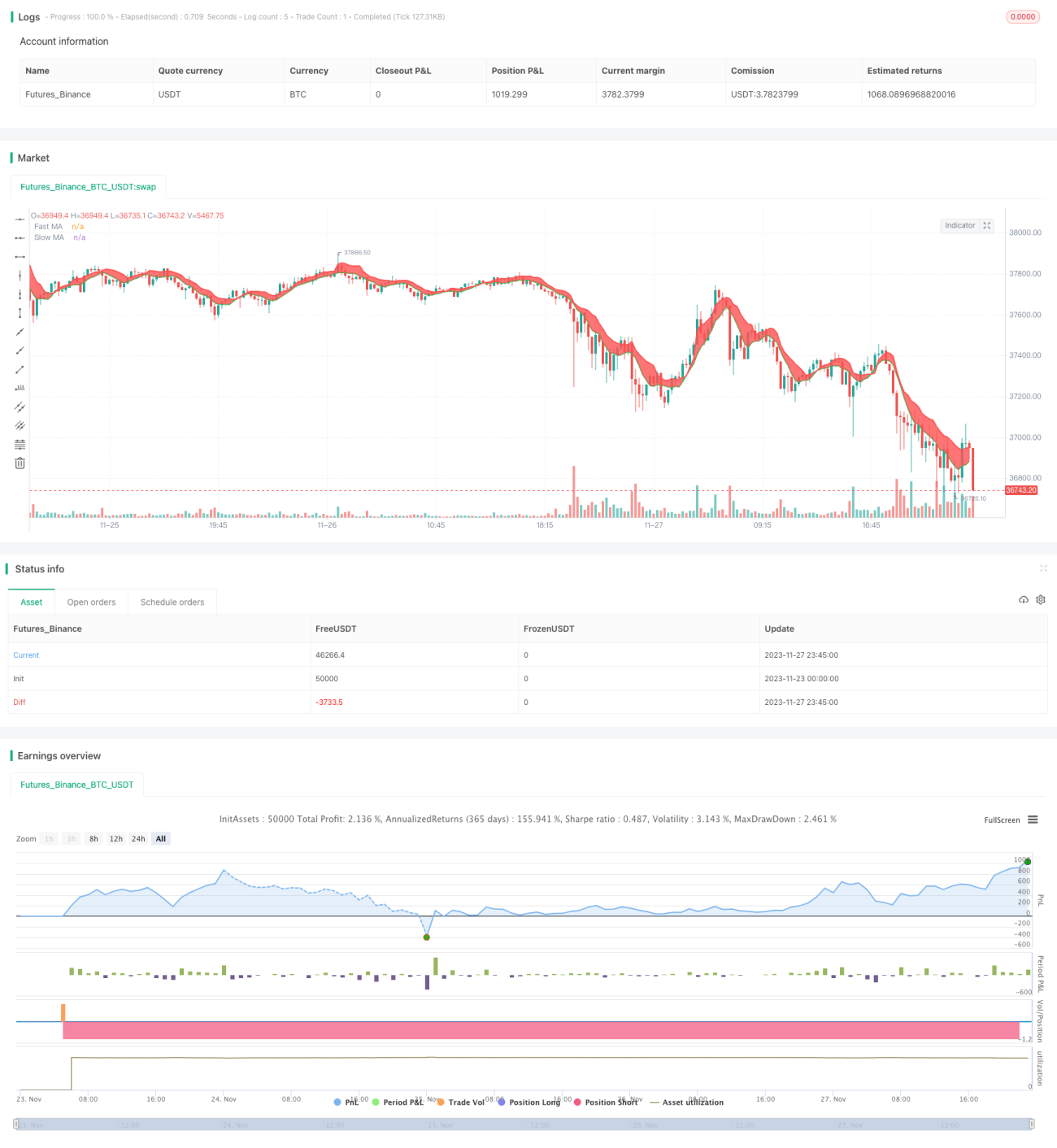
Visão Geral
Esta estratégia é uma estratégia de acompanhamento de tendência baseada no cruzamento de médias móveis duplas. Ela combina a Média Móvel Simples (SMA) rápida e a Média Móvel Ponderada por Volume (VWMA) lenta, utilizando o cruzamento das duas médias para gerar sinais de compra e venda.
Quando a SMA rápida cruza acima da VWMA lenta, gera-se um sinal de compra; quando a SMA rápida cruza abaixo da VWMA lenta, gera-se um sinal de venda. A estratégia adota um mecanismo de stop loss para controlar o risco.
Princípio da Estratégia
A lógica central da estratégia baseia-se no sistema de cruzamento de médias móveis duplas. Especificamente, ela utiliza simultaneamente os seguintes indicadores técnicos:
- Média Móvel Simples (SMA): Calcula a média aritmética dos preços de fechamento dos últimos n dias, refletindo o preço médio do período recente.
- Média Móvel Ponderada por Volume (VWMA): Calcula a média ponderada dos preços de fechamento dos últimos n dias, atribuindo maior peso aos preços mais recentes, respondendo mais rapidamente às mudanças de preço.
Na média móvel dupla, a SMA rápida possui um parâmetro mais curto, respondendo rapidamente às variações de preço; a VWMA lenta possui um parâmetro mais longo, funcionando como um filtro. Quando as tendências de curto e longo prazo se movem na mesma direção, a SMA rápida cruza acima da VWMA lenta, gerando um sinal de compra; quando cruza abaixo, gera um sinal de venda.
A estratégia também define um mecanismo de stop loss. Quando o preço se move em direção desfavorável, o stop loss é acionado a tempo de controlar o risco.
Análise de Vantagens
- Resposta rápida, acompanhando as mudanças na tendência do mercado
- Bom controle de drawdown, mecanismo de stop loss eficaz para controlar o risco
- Simples e intuitivo, fácil de entender e implementar
- Pode ser otimizado ajustando os parâmetros para se adaptar a diferentes condições de mercado
Análise de Riscos
- A estratégia de médias móveis duplas pode gerar sinais falsos em mercados laterais
- Requer seleção adequada de parâmetros; configurações inadequadas podem levar a perdas
- Ocasionalmente, eventos inesperados do mercado podem causar perdas
Métodos de controle de risco:
- Utilizar indicadores de filtro de tendência para confirmação
- Otimizar as configurações de parâmetros
- Adotar estratégias de stop loss para controlar perdas individuais de forma adequada
Direções de Otimização
A estratégia pode ser otimizada nos seguintes aspectos:
- Combinar com outros indicadores técnicos para confirmação, como RSI, Bandas de Bollinger, etc., melhorando a precisão dos sinais
- Otimizar o comprimento dos parâmetros das médias móveis, ajustando os parâmetros de acordo com diferentes períodos
- Incorporar indicadores de volume, realizando transações em pontos com grande fluxo de energia
- Ajustar os parâmetros com base nos resultados do backtest, selecionando os parâmetros ideais
- Utilizar stop loss dinâmico, ajustando o ponto de stop loss de acordo com a volatilidade do mercado
Resumo
No geral, esta estratégia é uma estratégia de acompanhamento de tendência muito prática. Ela utiliza o cruzamento de médias móveis duplas, simples e intuitivo, para gerar sinais de negociação. Através da combinação de uma média rápida e uma média lenta, é capaz de capturar efetivamente as mudanças na tendência do mercado. O mecanismo de stop loss também proporciona um bom controle de risco. Com a inclusão de outros indicadores e a otimização de parâmetros, o desempenho da estratégia pode ser ainda mais aprimorado.
/*backtest
start: 2023-11-23 00:00:00
end: 2023-11-28 00:00:00
period: 15m
basePeriod: 5m
exchanges: [{"eid":"Futures_Binance","currency":"BTC_USDT"}]
*/

//@version=4
//strategy(title="Bitlinc Entry v0.1 VWMA / SMA / MRSI SQQQ 94M", overlay=true, initial_capital=10000, currency='USD')

strategy(title="Bitlinc Entry v0.1 VWMA / SMA / MRSI SQQQ 94M", overlay=true)- 1