Estratégia de Cruzamento de Duas Médias Móveis para Seguir Tendência

Visão Geral
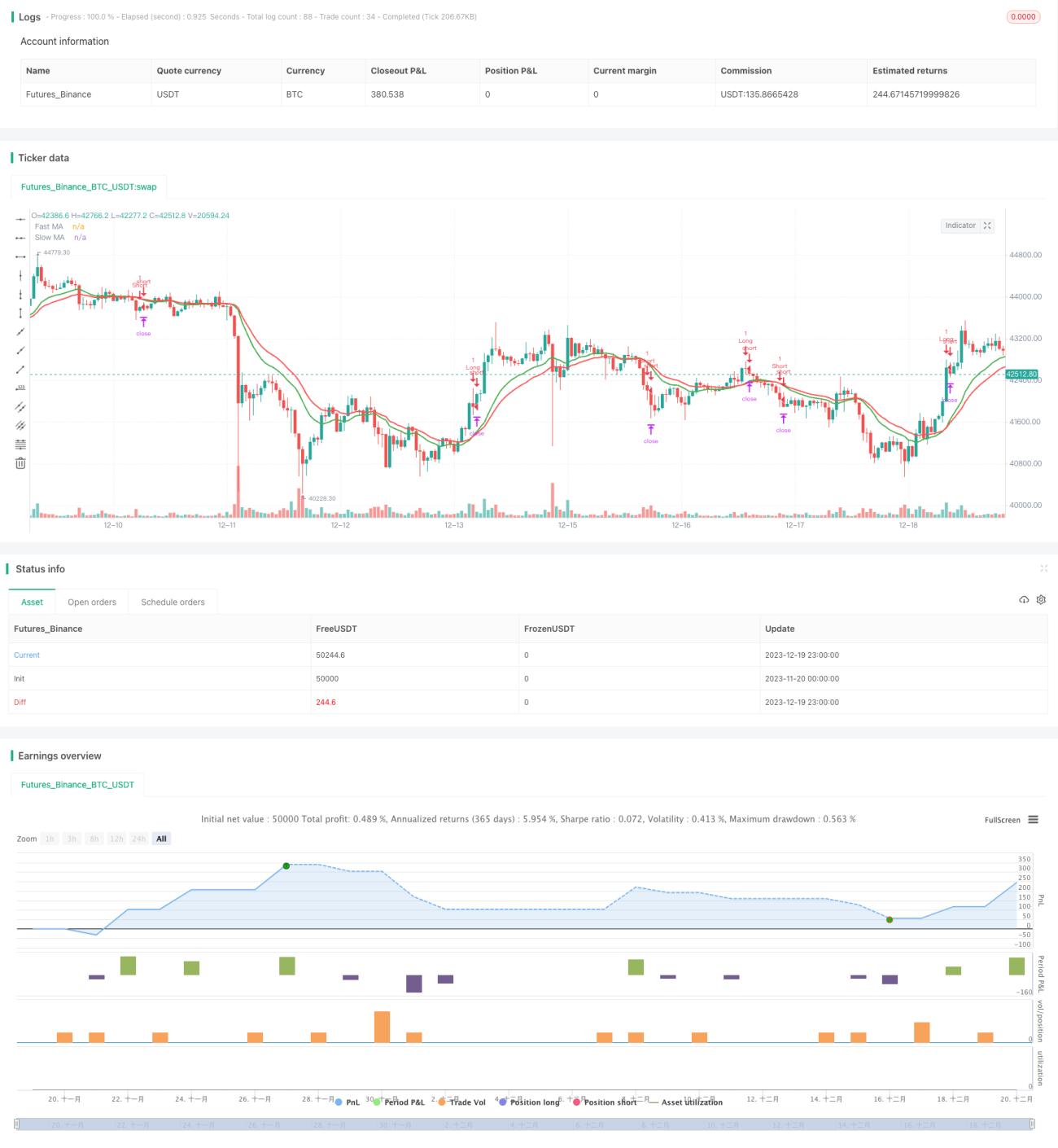
Esta estratégia utiliza o método típico de seguir tendência com cruzamento de duas médias móveis, combinado com mecanismos de gestão de risco como stop loss, take profit e trailing stop, visando capturar lucros significativos em movimentos de tendência.
Princípio da Estratégia
- Calcular a média móvel exponencial (EMA) de um período rápido n dias, como média de curto prazo;
- Calcular a EMA de um período lento m dias, como média de longo prazo;
- Quando a média de curto prazo cruza acima da média de longo prazo, comprar (long); quando cruza abaixo, vender (short);
- Condição de fechamento: cruzamento reverso (por exemplo, se estiver em posição comprada e ocorrer um cruzamento reverso para baixo, fechar a posição).
- Utilizar stop loss, take profit, trailing stop e outras formas de gestão de risco.
Análise de Vantagens
- O uso de duas EMAs permite identificar melhor os pontos de inflexão da tendência de preços e capturar movimentos tendenciais.
- A combinação de stop loss, take profit e trailing stop controla eficazmente as perdas individuais, fixa os lucros e reduz o drawdown.
- Possui muitos parâmetros personalizáveis, permitindo ajustes e otimizações para diferentes ativos e condições de mercado.
- A lógica da estratégia é simples e clara, fácil de entender e modificar.
- Suporta operações de compra e venda (long e short), adaptando-se a diferentes tipos de mercado.
Análise de Riscos
- A estratégia de duas médias é muito sensível a falsos rompimentos, podendo facilmente prender o trader em posições perdedoras.
- Parâmetros mal ajustados podem levar a negociações frequentes, aumentando os custos de transação e o slippage.
- A estratégia por si só não consegue determinar os pontos de reversão da tendência, sendo melhor combinada com outros indicadores.
- Em mercados laterais (range), pode gerar muitos sinais de negociação, mas com baixa rentabilidade real.
- É necessário otimizar os parâmetros para se adaptar a diferentes ativos e condições de mercado.
Os riscos podem ser reduzidos das seguintes formas:
- Combinar com outros indicadores para filtrar falsos rompimentos.
- Otimizar a configuração dos parâmetros para reduzir a frequência de negociações.
- Adicionar indicadores de identificação de tendência para evitar negociar em mercados laterais.
- Ajustar a gestão de posição para reduzir o risco por operação.
Direções de Otimização
Esta estratégia pode ser otimizada nos seguintes aspectos:
- Otimizar os períodos das médias rápida e lenta para se adaptar a diferentes ativos e condições de mercado.
- Adicionar outros indicadores para identificar tendências e filtrar sinais de falso rompimento. Tipicamente, podem ser adicionados MACD, KDJ, etc.
- Considerar substituir a EMA por SMA (média móvel simples) ou WMA (média móvel ponderada).
- Ajustar dinamicamente a distância do stop loss com base no ATR.
- Flexibilizar o tamanho da posição com base na gestão de capital.
- Realizar otimização adaptativa de parâmetros com base em indicadores de correlação e volatilidade.
Resumo
No geral, esta estratégia é uma típica estratégia de seguimento de tendência com duas EMAs. Apresenta a vantagem de capturar movimentos de tendência, combinada com mecanismos de gestão de risco como stop loss, take profit e trailing stop. No entanto, também apresenta problemas típicos, como alta sensibilidade a ruídos e mercados laterais, podendo facilmente prender o trader. A introdução de indicadores auxiliares, otimização de parâmetros, ajustes dinâmicos e combinações pode melhorar ainda mais a eficácia da estratégia. Em suma, se os parâmetros forem configurados adequadamente e estiverem alinhados com o comportamento do ativo, esta estratégia pode obter bons resultados.
- 1