Melhorar a estratégia de acompanhamento de tendência com rompimento de momentum

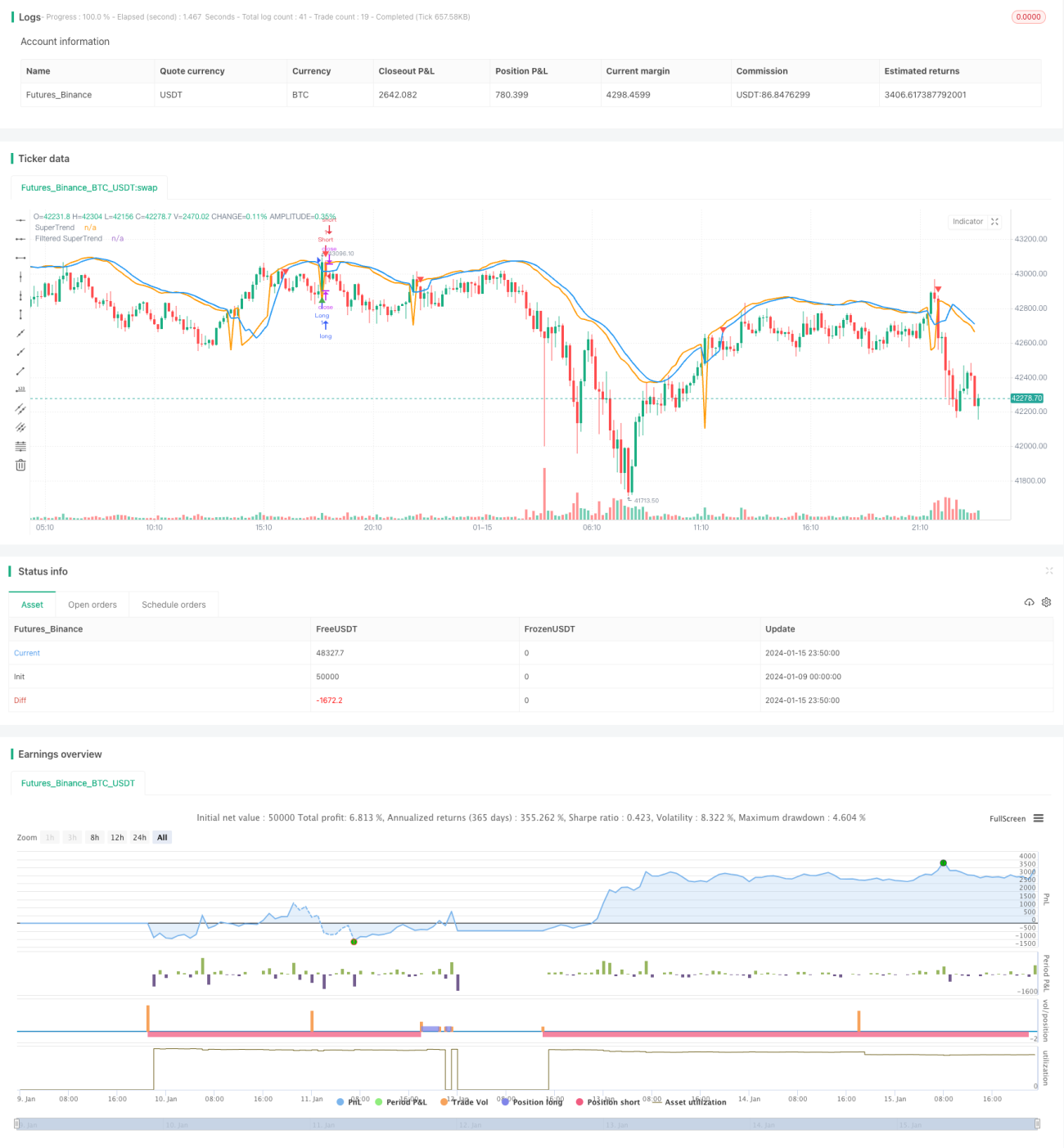
Visão Geral
Este artigo analisa detalhadamente uma estratégia de acompanhamento de tendência melhorada que combina o indicador SuperTrend com o filtro Stochastic RSI. A estratégia visa gerar sinais de compra e venda, levando em conta a tendência do mercado e reduzindo sinais falsos. O Stochastic RSI é usado para evitar sinais falsos em situações de sobrecompra ou sobrevenda.
Princípio da Estratégia
Cálculo do SuperTrend
Primeiro, calcula-se o True Range (TR) e o Average True Range (ATR). Em seguida, utiliza-se o ATR para calcular as bandas superior e inferior:
Banda superior = SMA(Preço de fechamento, Período ATR) + Multiplicador ATR × ATR
Banda inferior = SMA(Preço de fechamento, Período ATR) - Multiplicador ATR × ATR
Se o preço de fechamento estiver acima da banda inferior, a tendência é de alta; se estiver abaixo da banda superior, a tendência é de baixa. Em tendência de alta, o SuperTrend é a banda inferior; em tendência de baixa, o SuperTrend é a banda superior.
Mecanismo de Filtro
Para reduzir sinais falsos, aplica-se uma média móvel ao SuperTrend para obter o SuperTrend filtrado.
Stochastic RSI
Calcula-se o valor do RSI e, em seguida, aplica-se o indicador Stochastic para gerar o Stochastic RSI. Ele reflete se o RSI está em zona de sobrecompra ou sobrevenda.
Condições de Entrada e Saída
Condição de compra: O preço de fechamento cruza acima do SuperTrend filtrado e está em tendência de alta, e o Stochastic RSI < 80
Condição de venda: O preço de fechamento cruza abaixo do SuperTrend filtrado e está em tendência de baixa, e o Stochastic RSI > 20
Saída de compra: O preço de fechamento cruza abaixo do SuperTrend filtrado e está em tendência de alta
Saída de venda: O preço de fechamento cruza acima do SuperTrend filtrado e está em tendência de baixa
Vantagens da Estratégia
Esta é uma estratégia de acompanhamento de tendência melhorada que oferece as seguintes vantagens em relação a indicadores simples como médias móveis:
- O próprio SuperTrend possui forte capacidade de identificação de tendências e filtragem de sinais falsos.
- A aplicação do mecanismo de filtro reduz ainda mais os sinais falsos, tornando os sinais mais confiáveis.
- O Stochastic RSI evita sinais falsos gerados em situações de sobrecompra ou sobrevenda, fazendo com que a estratégia gere sinais perto de áreas importantes de suporte e resistência.
- A estratégia considera simultaneamente a direção da tendência e as condições de sobrecompra/sobrevenda do Stochastic RSI, equilibrando bem o acompanhamento de tendência e a evitação de sinais falsos.
- Os parâmetros da estratégia podem ser ajustados de forma flexível, adequando-se a diferentes ambientes de mercado.
Riscos e Otimização da Estratégia
Possíveis Riscos
- Em mercados altamente voláteis, os stops podem ser rompidos.
- Tanto o SuperTrend quanto o mecanismo de filtro possuem defasagem, podendo perder mudanças recentes de preço.
- A configuração inadequada dos parâmetros do Stochastic RSI também pode afetar o desempenho da estratégia.
Mitigação de Riscos
- Ajustar adequadamente o stop loss ou usar stop loss padrão.
- Ajustar os parâmetros do período ATR e do período de filtro para equilibrar a defasagem.
- Testar e otimizar os parâmetros do Stochastic RSI.
Direções de Otimização
- Testar diferentes combinações de parâmetros para encontrar os melhores parâmetros.
- Experimentar diferentes mecanismos de filtro, como suavização por EMA.
- Aplicar algoritmos de aprendizado de máquina para otimizar automaticamente os parâmetros.
- Combinar com outros indicadores para complementar a entrada.
Conclusão
Esta estratégia integra as vantagens dos indicadores SuperTrend e Stochastic RSI, sendo capaz de identificar tendências de forma eficaz e gerar sinais de negociação de alta qualidade. Além disso, o mecanismo de filtro a torna mais robusta contra o ruído do mercado. A estratégia pode obter melhores resultados por meio da otimização de parâmetros e também pode ser considerada em combinação com outros indicadores ou modelos. De modo geral, a estratégia demonstra boa capacidade de acompanhamento de tendências e possui certo mecanismo de controle de risco, sendo adequada para investidores que buscam retornos estáveis.
- 1