Estratégia de acompanhamento de tendência com ajuste dinâmico de volatilidade

Visão Geral
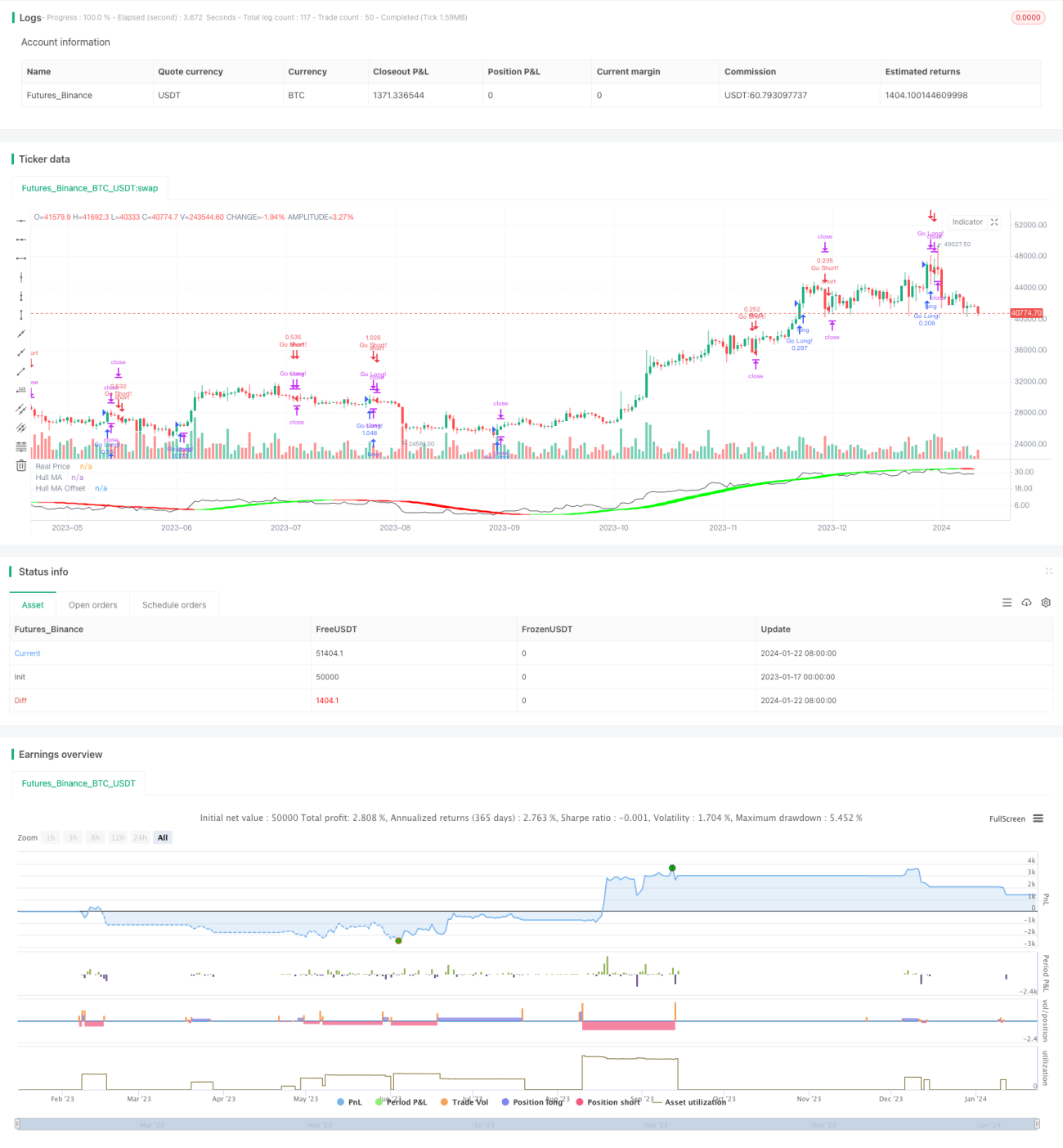
Esta estratégia de negociação sistemática e regulamentada única pertence à categoria de seguimento de tendência. Ela utiliza séries de preços normalizadas por preço para gerar sinais de negociação, em vez de usar diretamente os preços das ações. A estratégia emprega técnicas avançadas de ajuste de posição e gestão de risco, que normalmente são usadas apenas na gestão de carteiras institucionais, sendo uma técnica comprovada de dimensionamento de posições para CTAs (Commodity Trading Advisors) e fundos geridos de futuros.
Princípio da Estratégia
O "preço normalizado" é o retorno diário acumulado do preço ajustado pela volatilidade, calculado a partir de toda a série temporal de preços. O período de ajuste da volatilidade é definido pelo usuário. Com base no preço normalizado, é calculada a Média Móvel de Hull, que serve como principal indicador de tendência. O período da Média Móvel de Hull também é definido pelo usuário, com um valor padrão de 100 dias, para garantir a sensibilidade na identificação de tendências, evitando negociações excessivamente frequentes.
O núcleo da estratégia de negociação é muito simples: comprar quando o preço normalizado cruza para cima a Média Móvel de Hull, e vender quando cruza para baixo. Novos sinais de negociação fecham ativamente a posição contrária anterior.
O tamanho da posição é baseado na volatilidade recente dos preços e no objetivo de risco anualizado definido pelo usuário. Essencialmente, ajusta-se o tamanho da posição de acordo com a volatilidade: posições maiores em períodos de baixa volatilidade e menores em períodos de alta volatilidade. A volatilidade recente é o desvio padrão dos retornos logarítmicos de 14 dias, extrapolado para a volatilidade esperada de um ano. Em seguida, o tamanho da posição é ajustado com base no objetivo de risco anualizado definido pelo usuário. O objetivo de risco padrão é conservador, de 10%. O capital inicial deve ser definido como o montante máximo de perda que se está disposto a aceitar por operação (por exemplo, se o capital total é de 100.000 unidades monetárias e a perda por operação é limitada a 10%, o capital inicial deve ser definido como 10.000 unidades). O limite de alavancagem pode ser definido separadamente, para ser usado em casos onde a volatilidade do próprio ativo negociado não atinge o objetivo de risco, evitando também a subutilização do capital em períodos de volatilidade muito baixa.
O stop loss é baseado em múltiplos do Average True Range (ATR) recente dos preços, configurável pelo usuário.
Vantagens da Estratégia
- Reduz a probabilidade de sinais falsos através da normalização de preços
- Ajuste dinâmico de posições, controlando o risco de forma eficaz
- Stop loss em tempo real evita perdas excessivas
- Estratégia de negociação simples e intuitiva, fácil de entender e implementar
Riscos da Estratégia
- A Média Móvel de Hull, como principal indicador, apresenta algum atraso
- Ajustar a posição pela volatilidade para controlar o risco pode limitar o potencial de lucro
- Stop loss muito apertado pode ser violado, resultando em perdas
As medidas de controlo de risco incluem testar diferentes combinações de médias móveis, ajustar o objetivo de risco da posição, etc.
Otimização da Estratégia
- Testar o efeito de diferentes tipos de indicadores de média móvel
- Otimizar os parâmetros da média móvel
- Experimentar apenas operações de compra ou apenas de venda
- Ajustar a amplitude do stop loss para encontrar o ponto ideal
- Testar outros métodos de stop loss
Resumo
Esta estratégia integra várias técnicas de controlo de risco, como a normalização de preços, o ajuste dinâmico de posições e o stop loss. Utiliza princípios simples de seguimento de tendência para negociar. Pode ser ajustada e otimizada de acordo com as condições de mercado e preferências pessoais. Vale a pena testar e validar mais a fundo, pois possui potencial de aplicação prática.
- 1