Estratégia de cruzamento rápido QQE com base em filtro de tendência

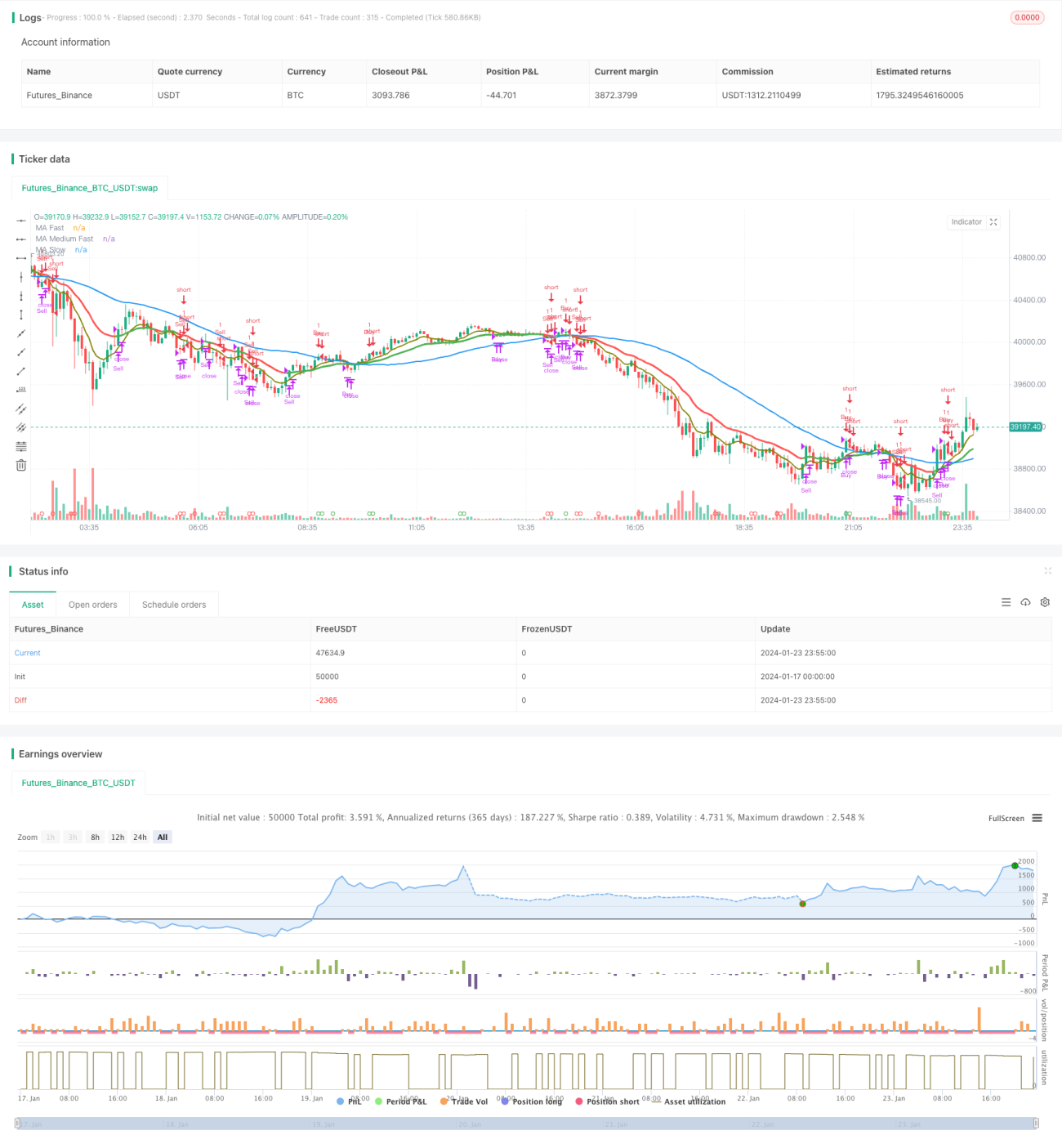
Visão Geral
A estratégia de cruzamento rápido de QQE com filtro de tendência é uma estratégia de trading que acompanha a tendência, utilizando cruzamentos rápidos do indicador QQE e médias móveis para filtrar a direção da tendência. O QQE (Estimativa Qualitativa Quantitativa) é baseado no Índice de Força Relativa (RSI), mas utiliza uma técnica de suavização como transformação adicional. Três tipos de cruzamento podem ser selecionados (todos ativados por padrão):
- Cruzamento da linha de sinal do RSI com a linha zero (XZERO)
- Cruzamento da linha de sinal do RSI com a linha RSIatr rápida (XQQE)
- Saída da linha de sinal do RSI do canal de limiar de RSI (Compra/Venda)
Os sinais de compra/venda podem ser opcionalmente filtrados por médias móveis:
- Para sinais de compra, o preço de fechamento deve estar acima da média móvel rápida, e a média móvel rápida (EMA8) > média móvel média (EMA20) > média móvel lenta (SMA50)
- Para sinais de venda, o preço de fechamento deve estar abaixo da média móvel rápida, e a média móvel rápida (EMA8) < média móvel média (EMA20) < média móvel lenta (SMA50)
E/ou filtro de direção de tendência:
- Para sinais de compra, o preço de fechamento deve estar acima da média móvel lenta (SMA50), e a média móvel direcional (EMA20) deve estar verde.
- Para sinais de venda, o preço de fechamento deve estar abaixo da média móvel lenta (SMA50), e a média móvel direcional (EMA20) deve estar vermelha.
XZERO e XQQE não estão incluídos no filtro; eles são usados para indicar sinais pendentes de compra/venda, especialmente XZERO.
Esta estratégia deve funcionar em qualquer par de moedas e na maioria dos períodos de tempo dos gráficos.
Princípio da Estratégia
A ideia central desta estratégia é usar os cruzamentos direcionais do indicador QQE rápido como sinais de negociação, combinados com um conjunto de médias móveis para filtrar sinais ruidosos, capturando assim a direção da tendência.
Especificamente, a estratégia utiliza os seguintes indicadores e sinais:
Indicador QQE Rápido: É um indicador baseado no RSI, submetido a uma suavização adicional para torná-lo mais sensível e rápido. O indicador consiste em três linhas: a banda central é a média móvel exponencial do RSI, a banda superior é a banda central + ATR rápido * um coeficiente, e a banda inferior é a banda central - ATR rápido * um coeficiente. Quando o RSI cruza acima da banda superior, é um sinal de venda; quando cruza abaixo da banda inferior, é um sinal de compra.
Cruzamento da Linha Zero: Quando a linha central do RSI cruza a linha zero, gera um sinal. Cruzamento para cima é sinal de compra; para baixo, sinal de venda. Esses sinais indicam prenúncios de mudanças na tendência.
Rompimento do Canal: Quando a linha central do RSI entra em um canal de limiar definido, gera um sinal. Rompimento do canal superior é sinal de venda; rompimento do canal inferior é sinal de compra. Esses são sinais de tendência mais fortes.
Combinação de Médias Móveis: Utiliza três conjuntos de médias móveis: rápida (período 8), média (período 20) e lenta (período 50). Quando as três linhas estão ordenadas como: rápida > média > lenta, a tendência é de alta; quando rápida < média < lenta, a tendência é de baixa. A combinação é usada para determinar a direção geral da tendência.
Filtro de Direção de Tendência: Sinais de compra são gerados apenas quando o preço de fechamento está acima da média móvel lenta e a média móvel média está subindo (máxima do período > mínima do período). Sinais de venda são gerados quando o preço de fechamento está abaixo da média móvel lenta e a média móvel média está descendo. Isso filtra alguns sinais falsos contrários.
Ao combinar sinais de cruzamento do QQE rápido com o filtro de tendência das médias móveis, é possível capturar pontos de reversão de curto/médio prazo dentro da direção da tendência de maior período, formando um sistema de trading relativamente completo. Além disso, os parâmetros do indicador são configurados para serem sensíveis, capturando pontos de inflexão da tendência o mais cedo possível.
Em resumo, esta é uma estratégia que acompanha tendências de médio/longo prazo, utilizando indicadores rápidos para capturar oportunidades de compra/venda de curto prazo, e empregando filtros de médias móveis para reduzir o risco de operar contra a tendência, maximizando assim os ganhos.
Vantagens da Estratégia
- Utiliza o indicador rápido e sensível QQE para capturar rapidamente sinais de reversão
- Aplica múltiplas médias móveis para determinar a direção de longo prazo, evitando operações contrárias
- Inclui vários tipos de cruzamento que podem ser combinados para aumentar as oportunidades de lucro
- Parâmetros ajustáveis para otimização em diferentes ativos e períodos
- Utiliza sinais de rompimento de canal do próprio indicador, sem traçar canais independentes, evitando dependência de parâmetros
- Consegue capturar bem movimentos de reversão de curto prazo dentro de grandes tendências de médio/longo prazo
- Conceito simples e claro, fácil de entender e implementar
Riscos da Estratégia
A estratégia também apresenta alguns riscos potenciais:
- Indicadores rápidos podem gerar sinais falsos, e as médias móveis não conseguem filtrar completamente, havendo risco de seguir a direção errada
- Quando ocorre uma reversão no período maior, podem ser gerados sinais contrários arriscados
- Não considera fatores de gestão de capital, podendo levar a perdas por excesso de negociação
- Ausência de stop loss, aumentando o risco de perdas ampliadas
- Risco de overfitting nos dados de backtest, necessitando validação em tempo real
Medidas e soluções incluem:
- Ajustar parâmetros das médias móveis, utilizando mais períodos para julgar a tendência
- Adicionar outros indicadores como filtro combinado, como MACD, bias, etc.
- Incluir estratégia de stop loss para controlar perdas individuais
- Validação em tempo real e otimização de parâmetros
Direções de Otimização
A estratégia ainda pode ser otimizada:
- Otimizar os parâmetros das linhas rápida e lenta do QQE para encontrar a melhor combinação
- Testar mais combinações de médias móveis para obter o melhor efeito de filtro
- Adicionar outros indicadores, como MACD, para filtrar sinais auxiliares
- Aplicar estratégias de gestão de capital para otimizar o gerenciamento de posição
- Definir estratégias de stop loss para controlar o risco de perda por operação
- Otimizar parâmetros para diferentes ativos
- Avaliar a tendência em períodos maiores para evitar ser enganado por reversões de curto prazo
Através da otimização de parâmetros, combinação com mais indicadores e implementação de gestão de capital e risco, a performance em tempo real da estratégia pode ser melhorada.
Conclusão
No geral, a estratégia de cruzamento rápido de QQE com filtro de tendência é uma opção que vale a pena considerar. Sua vantagem está em capturar rapidamente oportunidades de reversão, enquanto utiliza múltiplas médias móveis para determinar a grande tendência, evitando ao máximo operações contrárias erradas. Através da otimização de parâmetros e condições de filtro, juntamente com uma gestão de capital rigorosa, a estratégia pode gerar retornos de investimento relativamente estáveis.
É claro que os riscos não podem ser ignorados; a validação em tempo real e a otimização contínua são necessárias para garantir a praticidade e confiabilidade da estratégia. No geral, vale a pena para os investidores aprenderem e acompanharem a prática de longo prazo. Acredita-se que, com o avanço da tecnologia de trading algorítmico, estratégias baseadas em indicadores rápidos e filtros de tendência como esta continuarão a ser aprimoradas e popularizadas.
- 1