Estratégia de Timing com Indicadores Duplos de Momentum e Volatilidade de Super Tendência

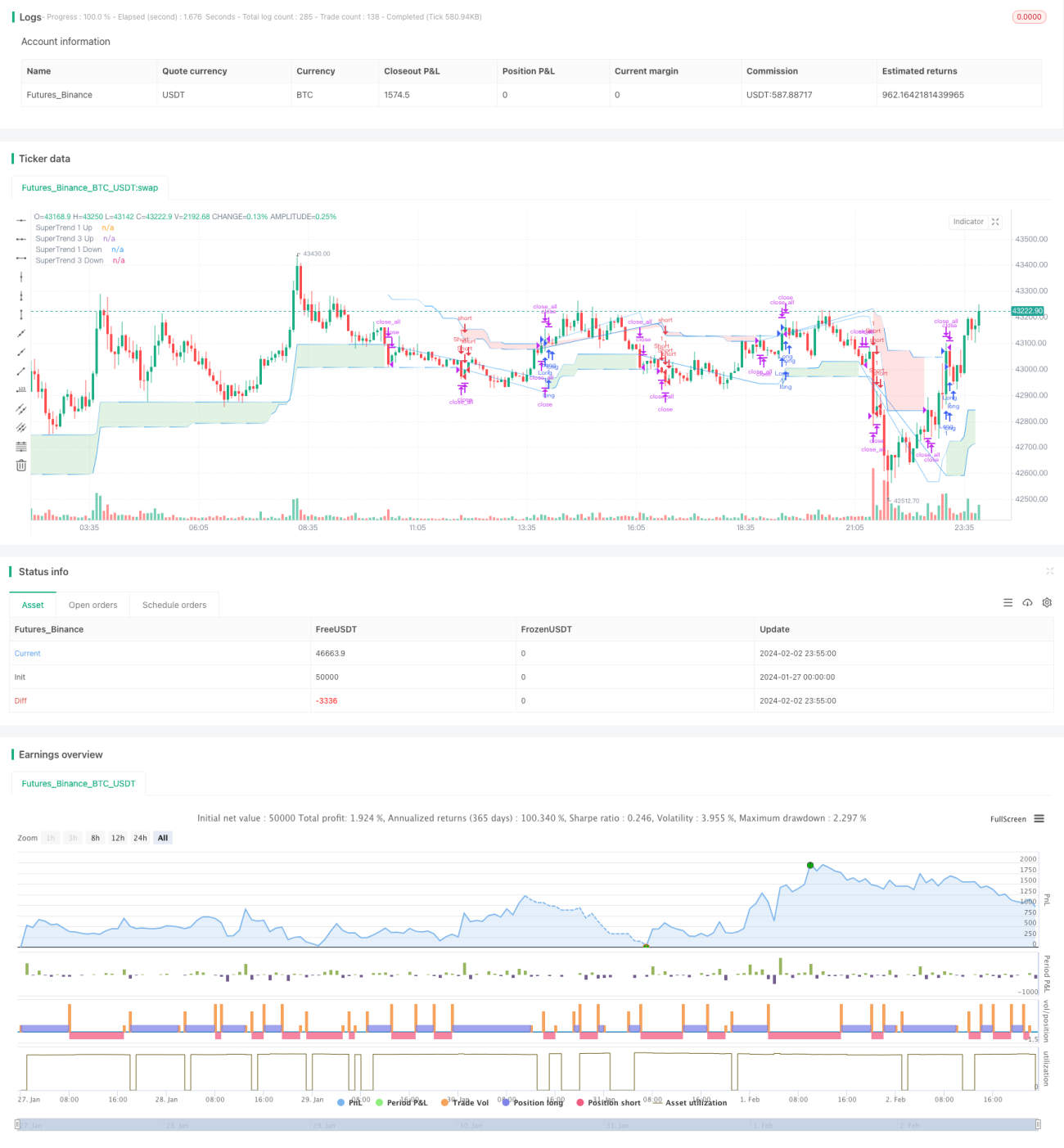
Resumo
Esta estratégia combina o indicador SuperTrend e a teoria das Ondas de Elliott, construindo uma ferramenta de negociação técnica robusta. Utiliza análise de tendência em múltiplos níveis para fornecer uma visão de mercado mais abrangente, permitindo Early Capture das potenciais reversões de tendência e movimentos de preço importantes do mercado.
Princípio da Estratégia
A ideia central reside na sua abordagem em múltiplos níveis:
- Utiliza 4 indicadores SuperTrend, cada um com diferentes comprimentos de ATR e multiplicadores, para julgar a tendência do curto ao longo prazo
- Através da fusão dos indicadores, é possível identificar sinais robustos de compra e venda
- Referenciando o método de reconhecimento de padrões das Ondas de Elliott, identifica padrões de comportamento de mercado semelhantes para confirmar os sinais de negociação
Assim, tanto se utilizam múltiplos indicadores como se acrescenta o reconhecimento de padrões, tornando a estratégia mais robusta.
Análise de Vantagens
- Design com múltiplos indicadores, proporcionando uma avaliação abrangente
- Inspirada pela teoria das ondas, o reconhecimento de padrões aumenta a estabilidade
- Ajusta a direção em tempo real para se adaptar às mudanças do mercado
- Parâmetros configuráveis, aplicáveis a diferentes ativos e períodos temporais
Análise de Riscos
- A configuração dos parâmetros depende da experiência, sendo necessário ajustar para determinar a melhor combinação
- O design com múltiplos indicadores é mais complexo, aumentando a carga computacional
- Não é possível evitar completamente a geração de sinais falsos
Pode-se otimizar os parâmetros para determinar gradualmente os parâmetros ideais; utilizar computação em nuvem para melhorar o desempenho computacional; definir stop loss para controlar o risco.
Direções de Otimização
A otimização pode ser feita nos seguintes aspetos:
- Adicionar um módulo de ajuste adaptativo de parâmetros para ajustar dinamicamente os parâmetros de acordo com as condições do mercado
- Adicionar modelos de aprendizado de máquina para auxiliar na avaliação da confiabilidade dos sinais de negociação
- Combinar indicadores de sentimento, eventos noticiosos e outros fatores externos para avaliar padrões de mercado
- Suportar modelos de parâmetros para múltiplos ativos, reduzindo o trabalho de teste
Isto tornará os parâmetros da estratégia mais inteligentes, os julgamentos mais precisos e a aplicação prática mais conveniente.
Resumo
Esta estratégia considera de forma abrangente as duas dimensões de tendência e padrão, garantindo a robustez do julgamento e aumentando a flexibilidade da estratégia. A configuração de múltiplos indicadores e parâmetros garante a aplicabilidade a todo o mercado. Se forem introduzidos métodos inteligentes e automatizados, isso aumentará significativamente o nível prático da estratégia. Fornece inspiração e referência úteis para o desenvolvimento da negociação técnica.
/*backtest
start: 2024-01-27 00:00:00
end: 2024-02-03 00:00:00
period: 5m
basePeriod: 1m
exchanges: [{"eid":"Futures_Binance","currency":"BTC_USDT"}]
*/

//@version=5
strategy("Elliott's Quadratic Momentum - Strategy [presentTrading]",shorttitle = "EQM Strategy [presentTrading]", overlay=true )

// Inputs for selecting trading direction- 1