Estratégia quantitativa baseada em reversão de pontos pivô

Visão Geral
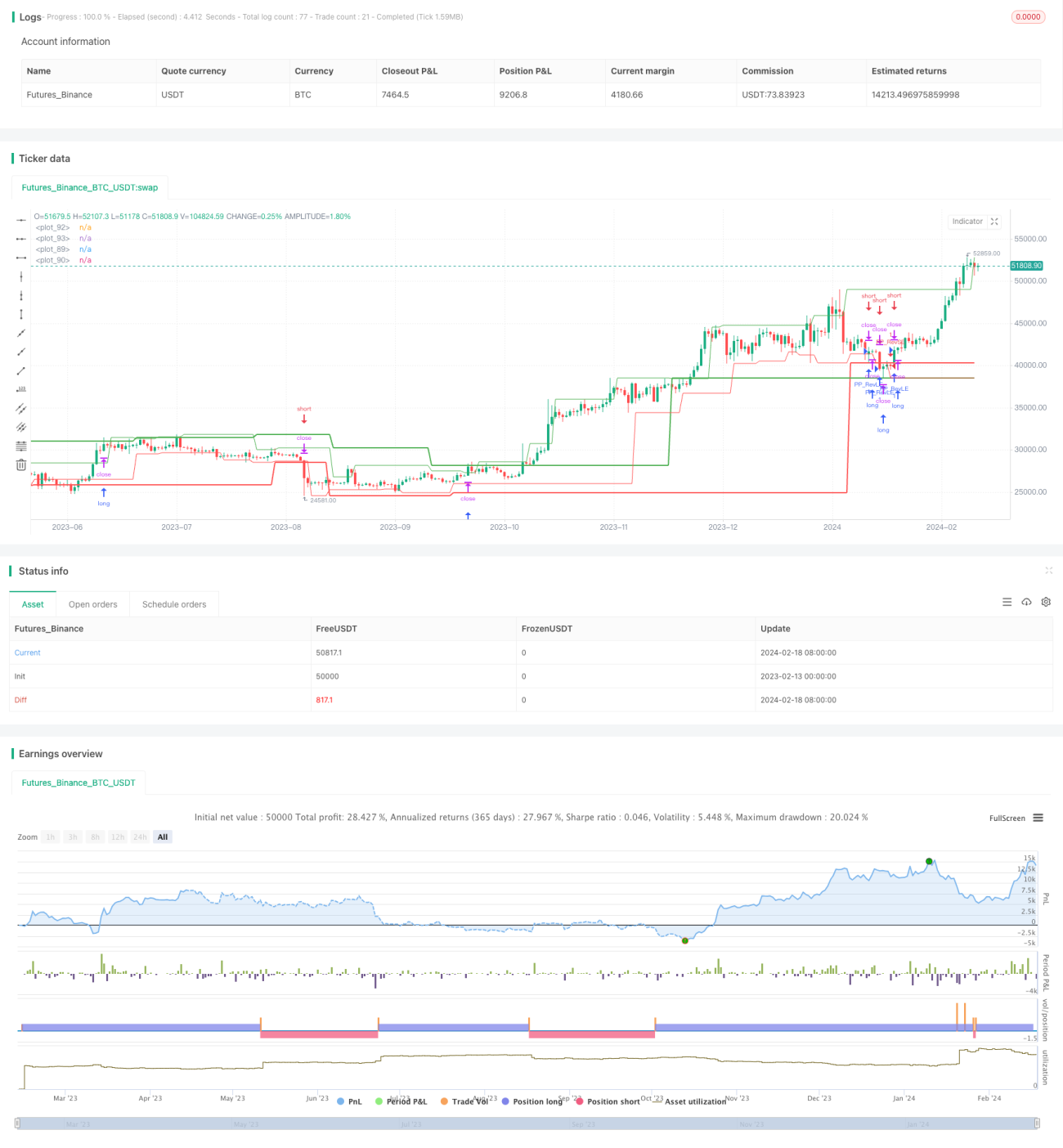
A ideia central desta estratégia é utilizar pontos de pivô para negociação quantitativa. Ela busca pontos de pivô altos e baixos importantes e, quando o preço rompe esses pontos-chave, realiza negociações de reversão.
Princípio da Estratégia
A estratégia primeiro define as funções pivotHighSig() e pivotLowSig() para encontrar pontos de pivô altos e baixos. Essas funções procuram pontos de pivô que atendam às condições nos lados esquerdo e direito.
Especificamente, para um pivô alto, ela procura uma sequência de topos mais altos no lado esquerdo e uma sequência de topos mais baixos no lado direito. Dessa forma, o pivô alto está em uma posição relativamente mais elevada. A condição para o pivô baixo é oposta: ela procura topos e fundos mais altos e mais baixos nos lados esquerdo e direito.
Após encontrar os pontos de pivô altos e baixos, a estratégia seleciona ainda os pivôs dos pivôs, ou seja, os pontos importantes entre os pontos de pivô. Isso é feito definindo várias variáveis históricas de pivôs altos e baixos, como ph1, ph2, etc.
Finalmente, quando o preço rompe o pivô dos pivôs, a negociação de reversão é realizada.
Vantagens da Estratégia
Esta estratégia quantitativa baseada em pontos de pivô tem as seguintes vantagens:
- Utiliza as zonas de suporte e resistência do mercado, que são frequentemente pontos de reversão de preço.
- Encontra simultaneamente topos e fundos importantes, permitindo negociações bilaterais (compra e venda).
- Os pontos de pivô são extremos proeminentes, e o rompimento desses pontos gera sinais mais fortes.
- O uso do pivô dos pivôs torna os sinais mais confiáveis.
Riscos e Soluções
A estratégia também apresenta alguns riscos:
- Identificação incorreta de pontos de pivô, levando a sinais errados. Solução: ajustar os parâmetros das janelas esquerda e direita para garantir uma identificação mais precisa dos pivôs.
- Rompimentos falsos. Solução: filtrar os sinais combinando mais fatores, como volume, liquidez, etc.
Direções de Otimização
Esta estratégia pode ser otimizada nas seguintes direções:
- Adicionar uma estratégia de stop loss para tornar a estratégia mais estável.
- Combinar mais indicadores para filtrar sinais.
- Desenvolver uma estratégia de previsão de reversão (PRED) utilizando aprendizado de máquina para otimizar ainda mais a previsão dos pontos de pivô.
- Adicionar funcionalidade de adaptação de parâmetros.
Resumo
No geral, esta estratégia apresenta bom desempenho. A ideia central é descobrir pontos de pivô importantes e realizar negociações de reversão quando eles são rompidos. Com otimizações adicionais, esta estratégia pode gerar sinais mais estáveis e confiáveis, obtendo assim bons retornos.
- 1