Estratégia de referência de tendência de alta do tipo breakout

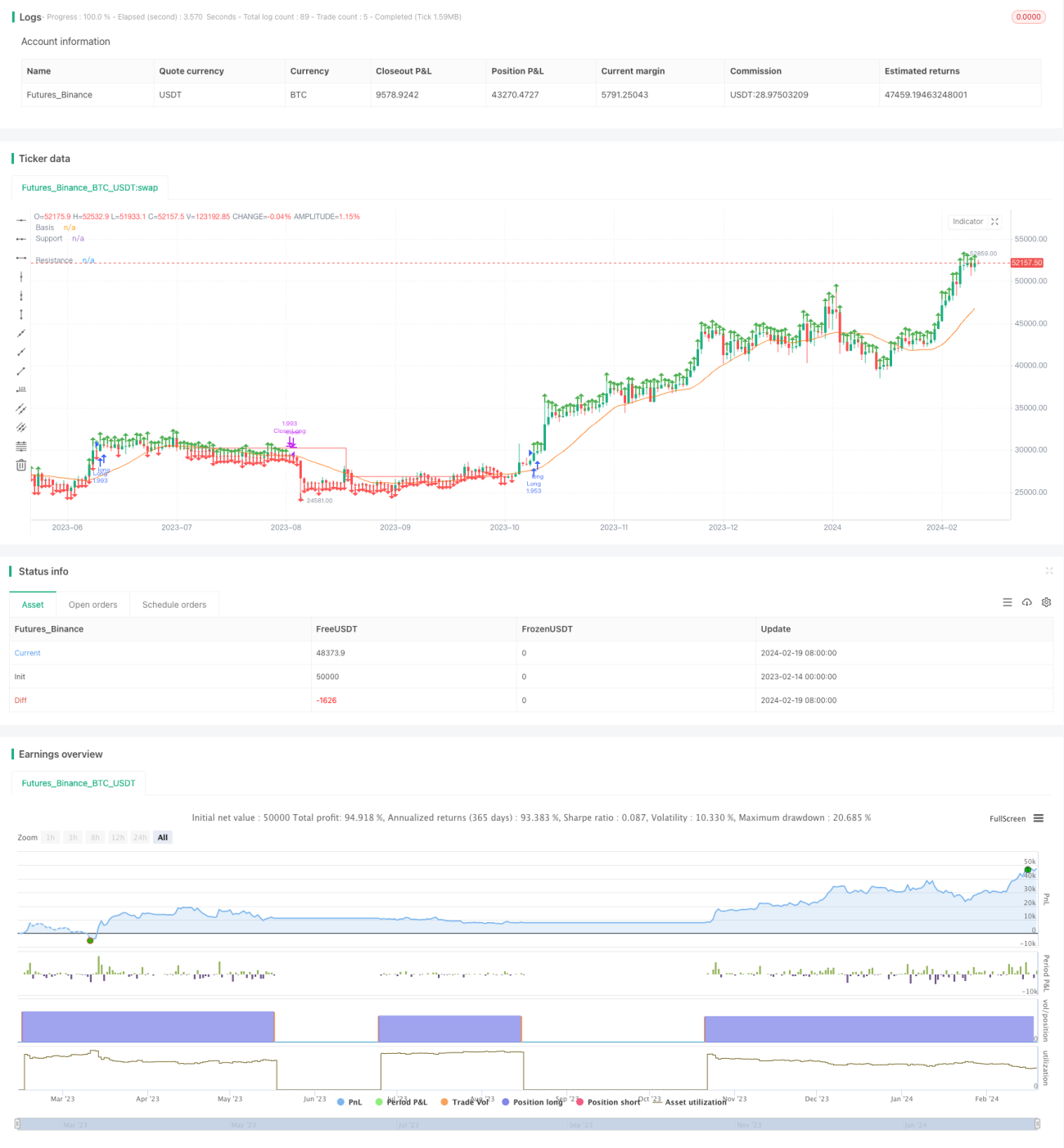
Visão geral
Esta estratégia é uma estratégia de posicionamento de longo prazo baseada em médias móveis simples para determinar a direção da tendência, combinada com linhas de suporte e resistência para formar sinais de rompimento. Ao calcular os pontos de pivot máximos e mínimos, traça linhas de resistência e suporte. Quando o preço rompe a linha de resistência, abre uma posição longa; quando rompe a linha de suporte, fecha a posição. Esta estratégia é adequada para ações com tendências claras, podendo obter uma boa relação risco-retorno.
Princípios da estratégia
- Calcular a média móvel simples de 20 períodos como linha de base para julgar a tendência.
- Calcular os pontos de pivot máximos e mínimos com base nos parâmetros fornecidos pelo usuário.
- Traçar linhas de resistência e suporte com base nos pontos de pivot máximos e mínimos.
- Quando o preço de fechamento estiver acima da linha de resistência, entrar em posição longa.
- Quando a linha de suporte cruzar abaixo da linha de resistência, fechar a posição.
Esta estratégia usa médias móveis simples para determinar a direção geral da tendência e, em seguida, utiliza rompimentos de pontos-chave para formar sinais de negociação, sendo uma estratégia típica de rompimento. Através dos pontos-chave e do julgamento da tendência, é possível filtrar eficazmente os falsos rompimentos.
Análise de vantagens
- A estratégia oferece oportunidades suficientes, adequada para ações de alta volatilidade, facilitando a captura de tendências.
- Controle de risco eficaz, alta relação risco-retorno.
- Utiliza sinais de rompimento, evitando o risco de falsos rompimentos.
- Parâmetros personalizáveis, alta adaptabilidade.
Análise de riscos
- Depende da otimização de parâmetros; parâmetros inadequados aumentam a probabilidade de falsos rompimentos.
- Atraso nos sinais de rompimento, podendo perder algumas oportunidades.
- Facilmente aciona stop loss em mercados oscilantes.
- Ajuste tardio da linha de suporte pode causar perdas.
É possível otimizar os parâmetros em negociação real e combinar com estratégias de stop loss e take profit para reduzir riscos.
Direções de otimização
- Otimizar os parâmetros do período da média móvel.
- Otimizar os parâmetros das linhas de suporte e resistência.
- Adicionar estratégias de stop loss e take profit.
- Adicionar mecanismos de confirmação de rompimento.
- Combinar com indicadores como volume de negociação para filtrar sinais.
Conclusão
No geral, esta estratégia é uma estratégia típica de rompimento, dependendo da otimização de parâmetros e liquidez, adequada para traders que seguem tendências. Como um quadro de referência, pode ser expandido modularmente conforme as necessidades reais, utilizando mecanismos como stop loss/take profit e filtragem de sinais para reduzir riscos e melhorar a estabilidade.
- 1