Estratégia de rastreamento de tendências baseada em quadros temporais transcendentes

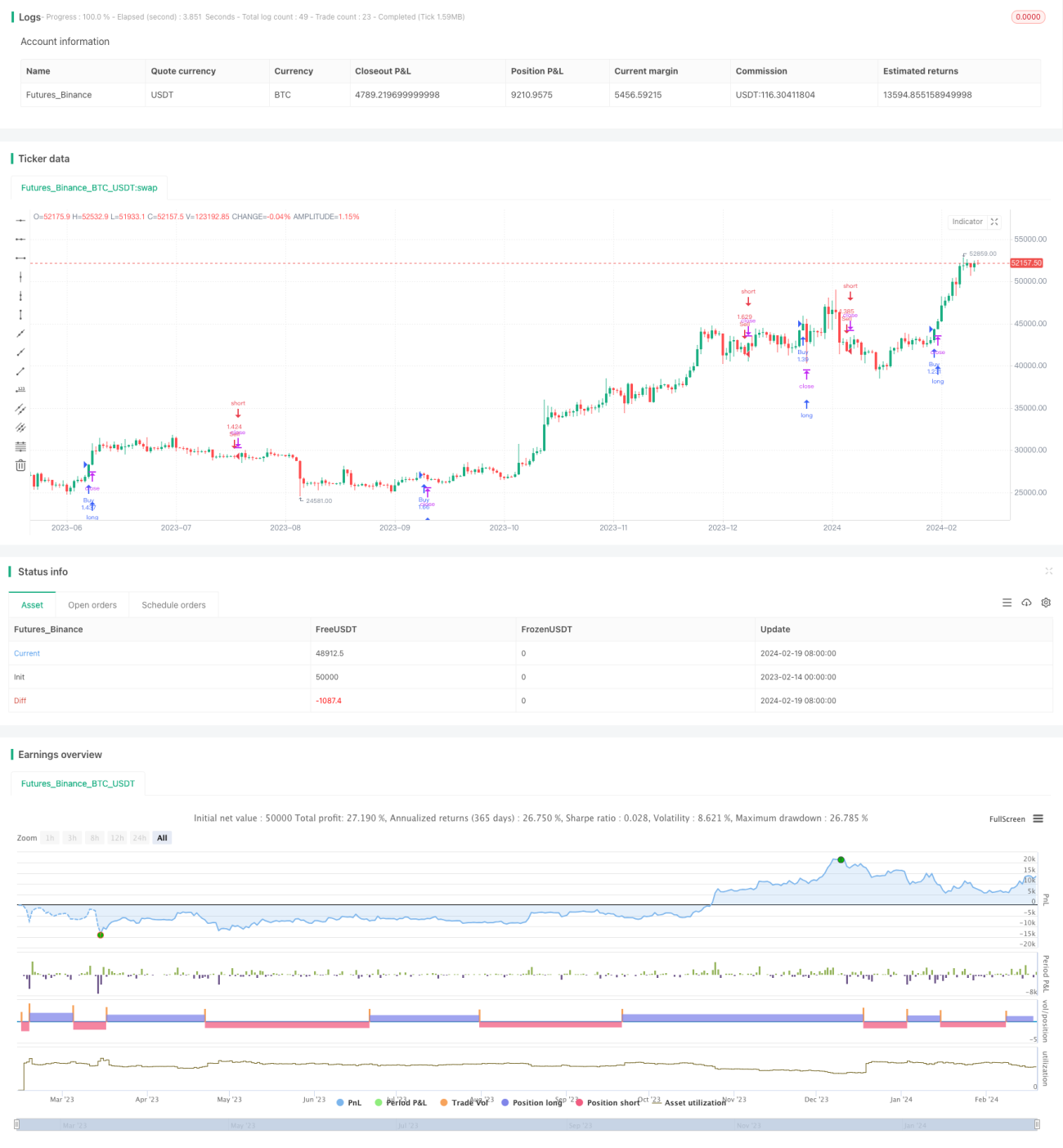
Visão Geral
O principal conceito desta estratégia é combinar múltiplos períodos de tempo para identificar tendências de mercado, utilizando o indicador Supertrend do timeframe superior como filtro, emitindo sinais de compra e venda no timeframe inferior. A estratégia visa aproveitar as informações estruturais do mercado fornecidas pelo timeframe superior para melhorar a qualidade das decisões de negociação.
Princípio da Estratégia
A estratégia utiliza a função security para obter o valor do indicador Supertrend do timeframe superior (por padrão, 4 vezes o timeframe atual). O indicador Supertrend é composto por duas linhas: a linha Supertrend e a linha de tendência. Quando a linha Supertrend está acima da linha de tendência, é um sinal de alta; quando está abaixo, é um sinal de baixa.
A estratégia utiliza a direção do Supertrend do timeframe superior como condição de filtro. Somente quando a direção do Supertrend do timeframe inferior coincide com a do timeframe superior, um sinal de negociação é emitido. Ou seja, apenas quando os indicadores Supertrend nos dois períodos de tempo mostram sinais na mesma direção, a estratégia realiza operações de compra ou venda.
Isso evita a interferência de ruídos de mercado do timeframe inferior, aumentando a confiabilidade dos sinais. Ao mesmo tempo, utiliza o timeframe superior para avaliar a estrutura do mercado, fazendo um julgamento geral mais preciso.
Vantagens da Estratégia
- Utiliza as informações estruturais do mercado fornecidas pelo timeframe superior para filtrar ruídos do timeframe inferior, melhorando a qualidade das decisões de negociação.
- A combinação de múltiplos períodos de tempo torna os sinais de negociação mais confiáveis.
- Parâmetros do indicador Supertrend podem ser personalizados para otimizar as estratégias de compra e venda.
- Inclui configuração de intervalo de datas, permitindo limitar o período de backtest.
Análise de Riscos
- O sinal do timeframe superior pode apresentar atraso, podendo perder oportunidades de curto prazo.
- A avaliação da estrutura do mercado pelo timeframe superior tem probabilidade de erro.
- O próprio indicador Supertrend também pode emitir sinais falsos.
- A limitação do período de backtest pode ignorar dados importantes, afetando a precisão dos resultados.
Soluções:
- Ajustar adequadamente a configuração do timeframe superior para reduzir o atraso do sinal.
- Combinar com outros indicadores para confirmar a avaliação estrutural do timeframe superior.
- Otimizar os parâmetros do indicador Supertrend para melhorar a qualidade dos sinais.
- Expandir gradualmente o período de backtest para testar a robustez da estratégia.
Direções de Otimização da Estratégia
Esta estratégia pode ser otimizada nos seguintes aspectos:
- Otimizar os parâmetros do indicador Supertrend para encontrar a melhor combinação de parâmetros.
- Adicionar outros indicadores em combinação para formar um modelo multifatorial.
- Testar diferentes combinações de timeframes superior e inferior.
- Adicionar mecanismos de stop loss para controlar riscos.
- Combinar algoritmos de aprendizado de máquina para ajustar dinamicamente os hiperparâmetros.
Através da otimização de parâmetros, combinação de indicadores, melhoria do stop loss e introdução de aprendizado de máquina, é possível melhorar significativamente a eficácia desta estratégia de acompanhamento de tendências em múltiplos períodos de tempo.
Resumo
Esta estratégia utiliza habilmente o julgamento de tendência do timeframe superior para orientar a execução de negociações no timeframe inferior. Esse design de múltiplos períodos de tempo pode filtrar efetivamente o ruído do mercado e identificar direções de tendência mais claras. Ao mesmo tempo, a função de configuração de datas integrada torna o backtest mais flexível. Em suma, é uma estratégia de acompanhamento de tendências em múltiplos períodos de tempo bem elaborada, que merece mais estudos e aplicações.
/*backtest
start: 2023-02-14 00:00:00
end: 2024-02-20 00:00:00
period: 1d
basePeriod: 1h
exchanges: [{"eid":"Futures_Binance","currency":"BTC_USDT"}]
*/

// This source code is subject to the terms of the Mozilla Public License 2.0 at https://mozilla.org/MPL/2.0/
// © HeWhoMustNotBeNamed

//@version=4- 1