Estratégia de Captura de Tendência com Médias Móveis Alligator de Williams

Visão Geral
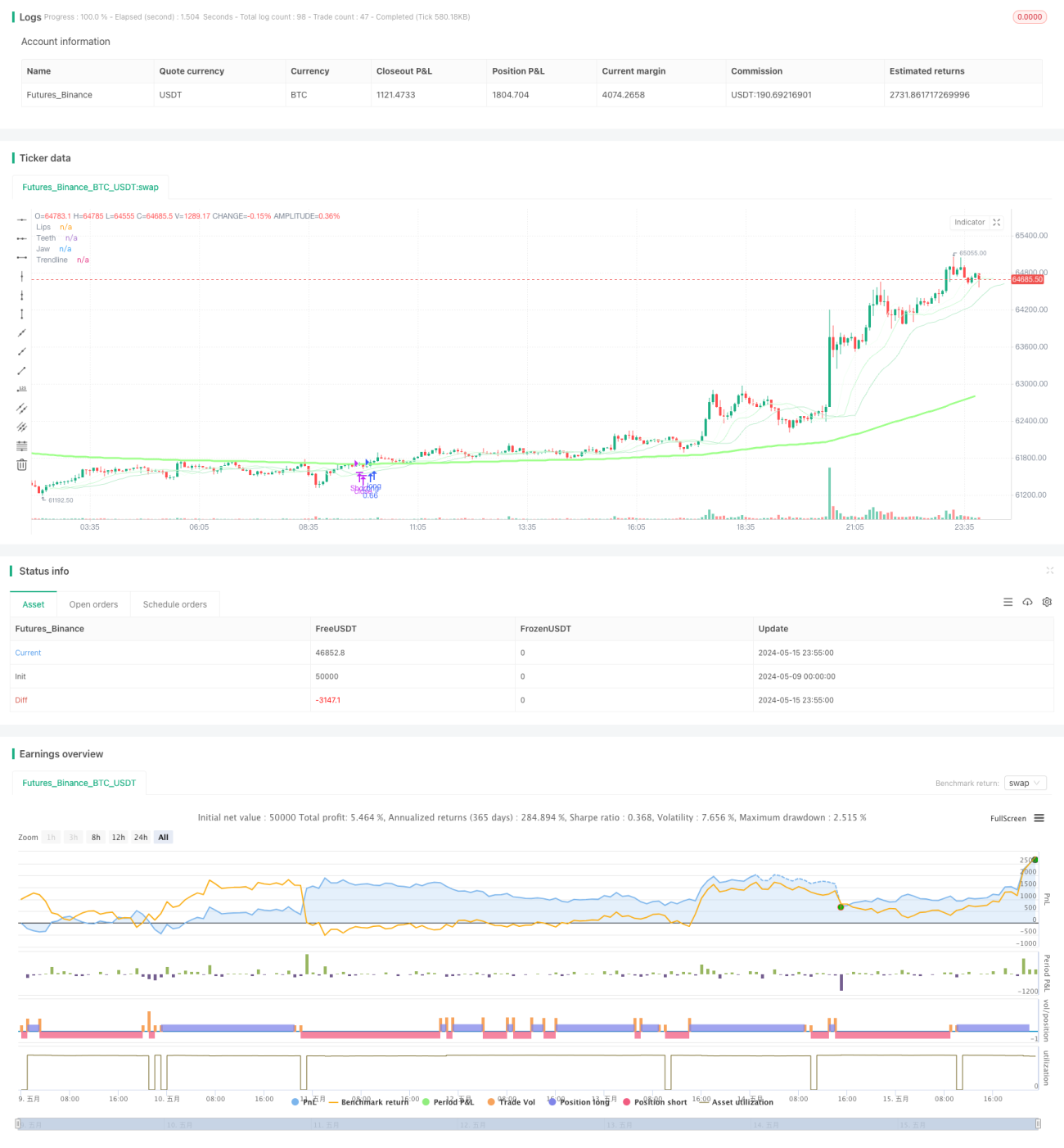
A Estratégia de Captura de Tendência com Médias Móveis e Indicador Jacaré de Williams é uma estratégia de acompanhamento de tendência que combina o Indicador Jacaré de Williams com médias móveis. A estratégia utiliza a posição relativa das três linhas do Indicador Jacaré (maxilar, dentes e lábios) para determinar a direção da tendência, ao mesmo tempo que usa uma média móvel como confirmação secundária da tendência. Quando o preço rompe a média móvel e as três linhas do Indicador Jacaré estão em alinhamento de alta, a estratégia abre uma posição longa; quando o preço cai abaixo da média móvel e as três linhas do Indicador Jacaré estão em alinhamento de baixa, a estratégia abre uma posição curta. Esta estratégia é adequada para mercados com características de tendência evidentes, como ativos de alta volatilidade, como Bitcoin e Ethereum.
Princípio da Estratégia
O núcleo da Estratégia de Captura de Tendência com Médias Móveis e Indicador Jacaré de Williams é usar o Indicador Jacaré e a média móvel para identificar e confirmar a tendência. O Indicador Jacaré é composto por três linhas: Maxilar (Jaw), Dentes (Teeth) e Lábios (Lips), que são médias móveis suavizadas (SMMA) de diferentes períodos. Quando o mercado está em uma tendência de alta, a linha dos Lábios está acima dos Dentes, e os Dentes estão acima do Maxilar; quando o mercado está em uma tendência de baixa, a linha dos Lábios está abaixo dos Dentes, e os Dentes estão abaixo do Maxilar. A estratégia introduz a média móvel como confirmação secundária da tendência. Quando o preço rompe a média móvel, combinado com o alinhamento de alta ou de baixa do Indicador Jacaré, a estratégia abre posições longas ou curtas. Este mecanismo de dupla confirmação pode filtrar efetivamente o ruído e aumentar a precisão na identificação da tendência.
Vantagens da Estratégia
- Acompanhamento de Tendência: A estratégia, ao combinar o Indicador Jacaré de Williams com a média móvel, consegue identificar e acompanhar eficazmente as tendências do mercado, sendo adequada para mercados com forte tendência.
- Dupla Confirmação: A estratégia adota um mecanismo de dupla confirmação com o Indicador Jacaré e a média móvel, o que pode filtrar ruídos, aumentar a precisão na identificação da tendência e reduzir sinais falsos.
- Parâmetros Flexíveis: Os parâmetros da estratégia são relativamente flexíveis; os usuários podem ajustar os períodos do Indicador Jacaré e da média móvel de acordo com diferentes características do mercado e estilos de negociação, para otimizar o desempenho.
- Ampla Aplicabilidade: A estratégia é adequada para vários mercados com forte tendência, como criptomoedas, forex, futuros de commodities, etc., podendo servir de referência para diferentes tipos de traders.
Riscos da Estratégia
- Mercado Lateral: Em mercados laterais, o Indicador Jacaré e a média móvel podem gerar muitos sinais falsos, levando a aberturas e fechamentos frequentes de posições, afetando os lucros.
- Reversão de Tendência: A estratégia pode reagir lentamente durante reversões de tendência, perdendo o melhor momento de entrada ou atrasando a saída, o que pode causar algumas perdas.
- Otimização de Parâmetros: O desempenho da estratégia depende da escolha dos parâmetros; diferentes configurações podem levar a resultados muito distintos, exigindo backtesting e otimização adequados.
- Gestão de Risco: A estratégia não possui medidas claras de gestão de risco, como stop loss e gerenciamento de posição, o que pode resultar em grandes drawdowns durante movimentos bruscos do mercado.
Direções de Otimização da Estratégia
- Introduzir Filtro de Força da Tendência: Adicionar um critério de força da tendência nas condições de abertura, como o indicador ADX ou a inclinação da média móvel, para filtrar sinais de tendência fraca e melhorar a qualidade das entradas.
- Otimizar Mecanismo de Saída: Em caso de reversão de tendência, considerar a utilização de mecanismos de saída mais sensíveis, como stop loss baseado no ATR ou stop loss por linha de tendência, para garantir lucros rapidamente e reduzir drawdowns.
- Otimização Dinâmica de Parâmetros: Ajustar dinamicamente os parâmetros do Indicador Jacaré e da média móvel de acordo com as mudanças nas condições do mercado, para se adaptar a diferentes ritmos e características de volatilidade.
- Adicionar Gestão de Risco: Implementar medidas rigorosas de gestão de risco, como definir stop loss adequados e regras de gerenciamento de posição, para controlar a exposição ao risco de cada operação e o drawdown máximo geral da conta.
Resumo
A Estratégia de Captura de Tendência com Médias Móveis e Indicador Jacaré de Williams forma uma estratégia simples e eficaz de acompanhamento de tendência ao combinar o Indicador Jacaré com a média móvel. Esta estratégia é adequada para mercados com forte tendência, aumentando a precisão na identificação da tendência por meio de um mecanismo de dupla confirmação. No entanto, a estratégia pode ter um desempenho inferior em mercados laterais e carece de medidas claras de gestão de risco. No futuro, pode-se considerar otimizar a estratégia em aspectos como filtro de força da tendência, otimização do mecanismo de saída, ajuste dinâmico de parâmetros e gestão de risco, a fim de melhorar sua robustez e capacidade de gerar lucros.
- 1