Estratégia de Média Móvel Baseada no Cruzamento de Duas Médias Móveis

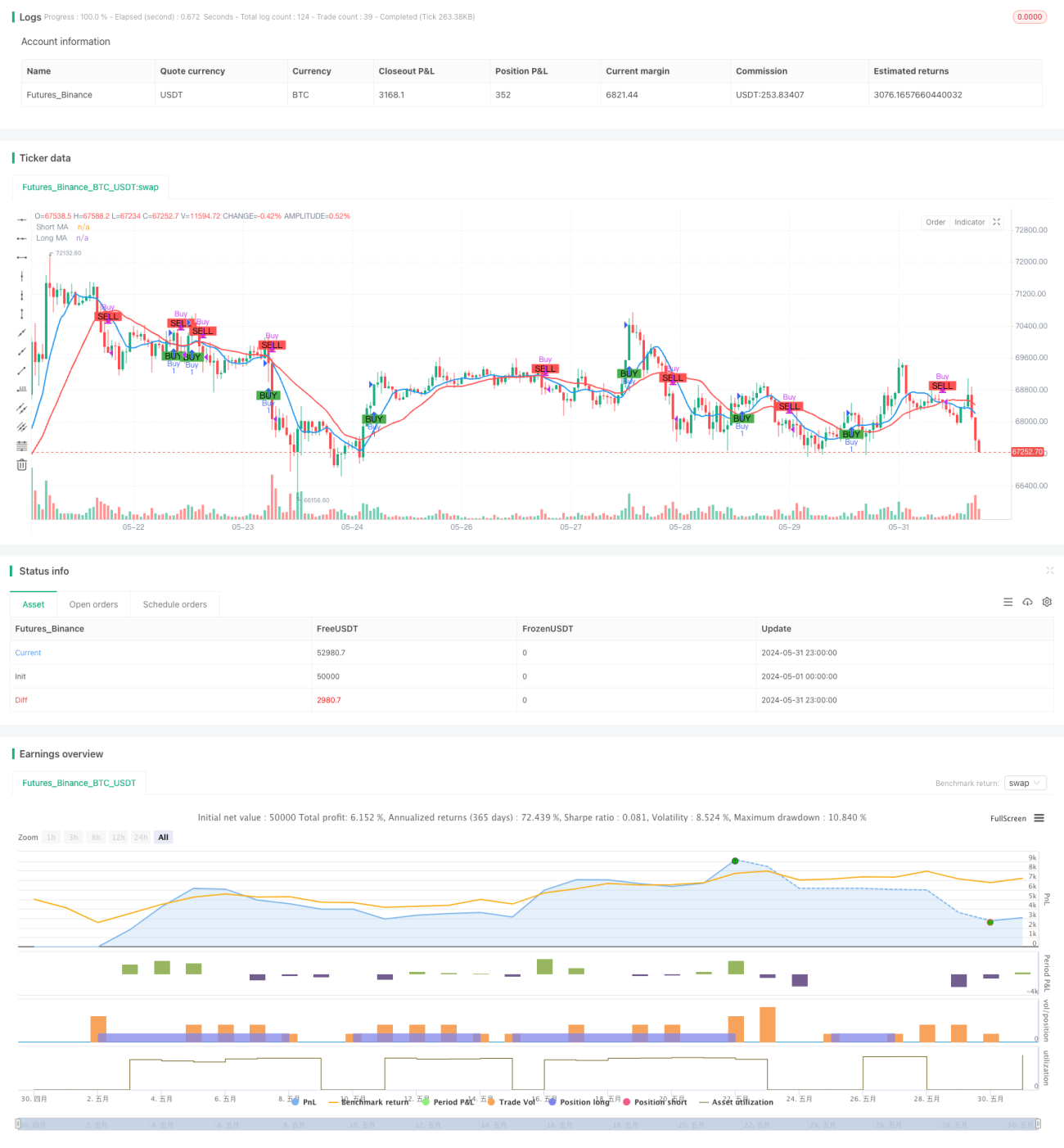
Visão Geral
A Estratégia de Médias Móveis Baseada no Cruzamento de Duplas Médias Móveis é um método de negociação intradiária simples e eficaz, concebido para identificar potenciais oportunidades de compra e venda no mercado, analisando a relação entre duas médias móveis de diferentes períodos. Esta estratégia utiliza uma média móvel simples (SMA) de curto prazo e uma média móvel simples de longo prazo. Quando a média de curto prazo cruza acima da média de longo prazo, indica um sinal de alta, sugerindo uma oportunidade potencial de compra; inversamente, quando a média de curto prazo cruza abaixo da média de longo prazo, indica um sinal de baixa, sugerindo uma oportunidade potencial de venda. Este método de cruzamento ajuda os traders a capturar movimentos de tendência no mercado, minimizando ao mesmo tempo a interferência do ruído do mercado.
Princípio da Estratégia
O princípio central desta estratégia é utilizar as características de tendência e o desfasamento das médias móveis com diferentes períodos. Ao comparar a posição relativa entre a média de curto prazo e a média de longo prazo, determina a direção da tendência atual do mercado e toma as decisões de negociação correspondentes. Quando uma tendência de alta emerge no mercado, o preço primeiro rompe a média de longo prazo, e a média de curto prazo subsequentemente cruza acima da média de longo prazo, formando um cruzamento dourado e gerando um sinal de compra. Quando uma tendência de baixa emerge no mercado, o preço primeiro rompe abaixo da média de longo prazo, e a média de curto prazo subsequentemente cruza abaixo da média de longo prazo, formando um cruzamento da morte e gerando um sinal de venda. Na configuração de parâmetros desta estratégia, o período da média móvel de curto prazo é definido como 9, e o período da média móvel de longo prazo é definido como 21. Estes dois parâmetros podem ser ajustados com base nas características do mercado e nas preferências pessoais. Além disso, esta estratégia introduz o conceito de gestão de capital, definindo o capital inicial e a percentagem de risco por negociação, utilizando o dimensionamento de posição para controlar a exposição ao risco de cada negociação.
Vantagens da Estratégia
- Simples e Fácil de Compreender: Baseia-se na teoria clássica das médias móveis, com lógica clara, fácil de entender e implementar.
- Alta Adaptabilidade: Pode ser aplicada a vários mercados e diferentes instrumentos de negociação, ajustando os parâmetros para se adaptar flexivelmente a diferentes características de mercado.
- Captura de Tendências: Ao usar o cruzamento de duas médias móveis para julgar a direção da tendência, ajuda os traders a acompanhar a tendência principal em tempo útil, aumentando as oportunidades de lucro.
- Controlo de Risco: Incorpora o conceito de gestão de risco, controlando a exposição ao risco de cada negociação através do dimensionamento da posição, gerindo eficazmente as perdas potenciais.
- Redução de Ruído: Utiliza a característica de desfasamento das médias móveis para filtrar eficazmente o ruído aleatório do mercado, aumentando a fiabilidade dos sinais de negociação.
Riscos da Estratégia
- Seleção de Parâmetros: Diferentes configurações de parâmetros podem ter um impacto significativo no desempenho da estratégia; uma escolha inadequada pode levar à ineficácia ou ao baixo desempenho da estratégia.
- Tendência do Mercado: Em mercados laterais ou pontos de reversão de tendência, a estratégia pode sofrer perdas consecutivas.
- Custos de Deslizamento: A negociação frequente pode gerar custos de deslizamento elevados, afetando o retorno global da estratégia.
- Eventos Cisne Negro: A estratégia tem baixa adaptabilidade a movimentos extremos do mercado; eventos cisne negro podem causar perdas significativas à estratégia.
- Risco de Sobreajuste: Se a otimização de parâmetros depender excessivamente de dados históricos, pode resultar num desempenho fraco da estratégia em negociações reais.
Direções de Otimização da Estratégia
- Otimização Dinâmica de Parâmetros: Ajustar dinamicamente os parâmetros da estratégia de acordo com as mudanças nas condições do mercado para melhorar a adaptabilidade.
- Confirmação de Tendência: Após a geração de um sinal de negociação, introduzir outros indicadores ou padrões de ação de preço para confirmar a tendência, aumentando a fiabilidade do sinal.
- Stop Loss e Take Profit: Introduzir mecanismos razoáveis de stop loss e take profit para controlar ainda mais a exposição ao risco de cada negociação.
- Gestão de Posição: Otimizar o método de dimensionamento da posição, por exemplo, introduzindo indicadores de volatilidade, ajustando dinamicamente a posição com base no nível de volatilidade do mercado.
- Avaliação da Força de Compra e Venda: Avaliar a relação de forças entre compradores e vendedores, intervindo no início da tendência para melhorar a precisão na identificação da tendência.
Resumo
A Estratégia de Médias Móveis Baseada no Cruzamento de Duplas Médias Móveis é um método de negociação intradiária simples e prático. Ao comparar a posição relativa das médias móveis de diferentes períodos, julga a direção da tendência do mercado e gera sinais de negociação. A estratégia tem uma lógica clara, alta adaptabilidade, pode capturar eficazmente as tendências do mercado e, ao mesmo tempo, introduz medidas de gestão de risco para controlar perdas potenciais. No entanto, a estratégia também apresenta riscos potenciais, como a seleção de parâmetros, reversões de tendência e negociação frequente. É necessário melhorar ainda mais a robustez e a rentabilidade da estratégia através de otimização dinâmica, confirmação de sinais e gestão de posição. Em suma, como um indicador clássico de análise técnica, os princípios básicos e o valor prático da média móvel já foram amplamente verificados pelo mercado, sendo uma estratégia de negociação digna de estudo aprofundado e otimização contínua.
Vantagens da Estratégia
- Simplicidade: Esta estratégia baseia-se na teoria clássica das médias móveis, com lógica clara, sendo fácil de entender e implementar.
- Adaptabilidade: Esta estratégia pode ser aplicada a múltiplos mercados e diferentes instrumentos de negociação. Ao ajustar as configurações de parâmetros, pode adaptar-se flexivelmente a diferentes características de mercado.
- Captura de Tendência: Utilizando o cruzamento de duas médias móveis para determinar a direção da tendência, ajuda os traders a acompanhar oportunamente a tendência principal, aumentando as oportunidades de lucro.
- Controlo de Risco: Esta estratégia introduz o conceito de gestão de risco, utilizando o dimensionamento de posição para controlar a exposição ao risco de cada negociação, gerindo eficazmente perdas potenciais.
- Redução de Ruído: Ao aproveitar a característica de atraso das médias móveis, filtra eficazmente o ruído aleatório do mercado, melhorando a fiabilidade dos sinais de negociação.
Riscos da Estratégia
- Seleção de Parâmetros: Diferentes configurações de parâmetros podem ter um impacto significativo no desempenho da estratégia. Uma seleção inadequada pode levar ao fracasso ou a um desempenho fraco da estratégia.
- Tendência de Mercado: Em mercados laterais ou pontos de reversão de tendência, esta estratégia pode sofrer perdas consecutivas.
- Custos de Derrapagem: A negociação frequente pode resultar em custos de derrapagem mais elevados, afetando a rentabilidade global da estratégia.
- Eventos do Cisne Negro: Esta estratégia tem pouca adaptabilidade a condições extremas de mercado; eventos do cisne negro podem causar perdas significativas à estratégia.
- Risco de Sobreajuste: Se a otimização de parâmetros depender excessivamente de dados históricos, pode levar a um desempenho fraco da estratégia na negociação real.
Direções de Otimização da Estratégia
- Otimização Dinâmica de Parâmetros: Ajustar dinamicamente os parâmetros da estratégia com base nas mudanças das condições de mercado para melhorar a adaptabilidade.
- Confirmação de Tendência: Após gerar sinais de negociação, introduzir outros indicadores ou padrões de comportamento de preços para confirmar a tendência, melhorando a fiabilidade dos sinais.
- Stop-Loss e Take-Profit: Introduzir mecanismos razoáveis de stop-loss e take-profit para controlar ainda mais a exposição ao risco de cada negociação.
- Gestão de Posição: Otimizar o método de dimensionamento de posição, como introduzir indicadores de volatilidade para ajustar dinamicamente as posições com base nos níveis de volatilidade do mercado.
- Avaliação da Força de Compra e Venda: Avaliar a relação comparativa entre forças altistas e baixistas, entrando na fase inicial de uma tendência para melhorar a precisão da captura de tendência.
Resumo
A Estratégia de Cruzamento de Médias Móveis baseada em duas médias móveis é um método de negociação intradiária simples e prático. Ao comparar a posição relativa de médias móveis com diferentes períodos, determina a direção da tendência do mercado e gera sinais de negociação. Esta estratégia tem lógica clara, forte adaptabilidade e pode capturar eficazmente as tendências do mercado, ao mesmo tempo que introduz medidas de gestão de risco para controlar perdas potenciais. No entanto, esta estratégia também apresenta riscos potenciais, como seleção de parâmetros, reversão de tendência e negociação frequente. Precisa de ser melhorada através de otimização dinâmica, confirmação de sinais, gestão de posição e outros métodos, para aumentar a robustez e rentabilidade da estratégia. Em geral, como um indicador clássico de análise técnica, os princípios básicos e o valor prático de aplicação das médias móveis foram amplamente verificados pelo mercado. É uma estratégia de negociação que vale a pena ser estudada em profundidade e otimizada continuamente.
- 1