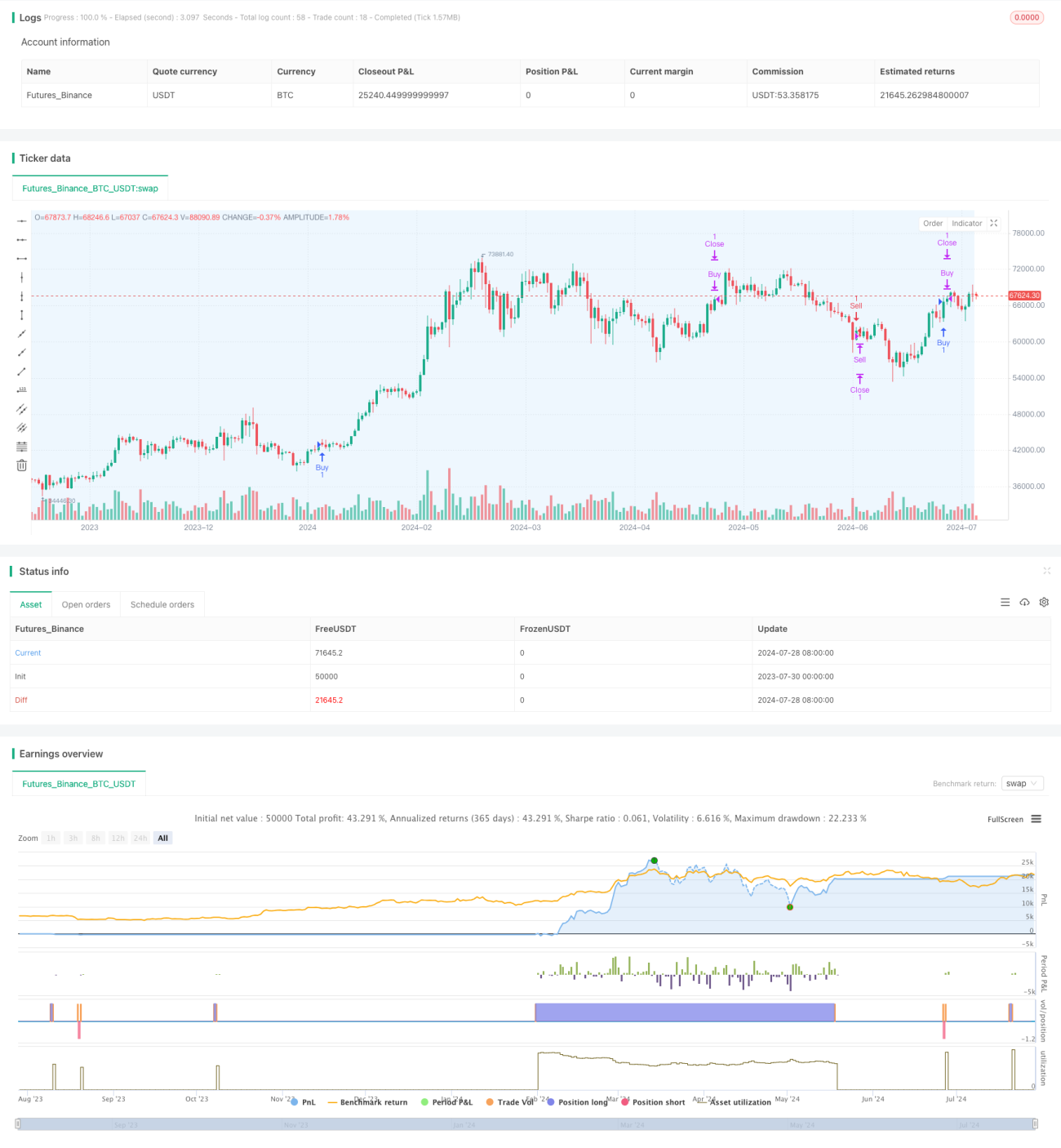
Esta estratégia de crossover de médias móveis de índices de múltiplos períodos de tempo é um sistema de negociação automatizado baseado em sinais de cruzamento de EMAs. Utiliza EMAs de diferentes períodos de tempo para gerar sinais de negociação e combina mecanismos de stop loss e profit close para gerenciar o risco. A estratégia depende principalmente de identificar potenciais oportunidades de negociação entre EMAs rápidas e lentas e EMAs de períodos de tempo mais elevados.
O princípio central da estratégia é o uso de médias móveis indexadas (EMA) de vários períodos de tempo para identificar tendências de mercado e gerar sinais de negociação.
Usando o EMA de 9 ciclos como linha rápida, o EMA de 50 ciclos como linha lenta e o EMA de 100 ciclos em ciclos de 15 minutos como linha de referência de ciclos mais altos.
Condições de compra:
Condições de venda:
Gestão de transações:
Controle de tempo de transação:
Análise de múltiplos períodos de tempo: A combinação de EMAs de diferentes períodos de tempo ajuda a reduzir os falsos sinais e a melhorar a qualidade das negociações.
Seguimento de tendências: Captura eficaz de tendências de mercado por meio de EMAs cruzadas e correlações de posição.
Gerenciamento de riscos: a estratégia de stop loss fixo e de lucro intermitente limita os riscos de perda e permite que os lucros continuem a crescer.
Flexibilidade: Parâmetros de EMA, níveis de stop loss e profit podem ser ajustados de acordo com diferentes mercados e estilos de negociação.
Automatização: A estratégia permite a negociação totalmente automatizada através da plataforma TradingView e PineConnector.
Gerenciamento do tempo: pode-se definir horários e dias de negociação específicos para evitar negociações em condições de mercado desfavoráveis.
Atraso: A EMA é essencialmente um indicador atrasado e pode não reagir rapidamente em mercados com forte volatilidade.
Falsos sinais: Em mercados horizontais, os cruzamentos de EMAs podem gerar frequentes falsos sinais, resultando em excesso de negociação.
Paradas fixas: o uso de paradas com pontos fixos pode não ser adequado para todas as condições do mercado e, às vezes, pode ser muito grande ou muito pequeno.
Depende de dados históricos: a eficácia da estratégia depende fortemente do comportamento do mercado durante o período de retrospectiva, e o desempenho futuro pode ser diferente.
Adaptabilidade de mercado: a estratégia funciona bem em alguns pares de moedas, mas pode não funcionar bem em outros.
Ajuste de parâmetros dinâmicos: Considere o ajuste do ciclo EMA, o nível de stop loss e o nível de ganho de acordo com a dinâmica da volatilidade do mercado.
Acrescente condições de filtragem: introduza indicadores técnicos adicionais ou indicadores de sentimento de mercado para filtrar os sinais de negociação e reduzir os falsos sinais.
Melhorar a estratégia de stop loss: implementar stop loss de rastreamento ou stop loss dinâmico baseado em ATR para se adaptar melhor às flutuações do mercado.
Otimização de horários de negociação: Análise de horários mais detalhados para identificar os melhores horários e datas de negociação.
Aumentar a gestão do volume de transação: ajustar o tamanho da posição de acordo com a volatilidade do mercado e o risco da conta.
Análise da correlação entre várias moedas: considerar a correlação entre vários pares de moedas, evitando a exposição excessiva a riscos de mercado semelhantes.
Integração de aprendizado de máquina: otimizar a seleção de parâmetros e o processo de geração de sinais usando algoritmos de aprendizado de máquina.
A estratégia de cruzamento de média móvel de múltiplos períodos de tempo é um sistema de negociação automatizado que combina o acompanhamento de tendências e o gerenciamento de riscos. Através do uso de sinais de cruzamento de EMA em diferentes períodos de tempo, a estratégia visa capturar as tendências do mercado e negociar no momento apropriado. Embora a estratégia tenha desempenhado bem em certas condições de mercado, existem alguns riscos e limitações inerentes.
/*backtest
start: 2023-07-30 00:00:00
end: 2024-07-29 00:00:00
period: 1d
basePeriod: 1h
exchanges: [{"eid":"Futures_Binance","currency":"BTC_USDT"}]
*/
//@version=5
strategy("Miles Multi TF EMA Strategy v 1", overlay=true)
Fast = input.int(9, "Fast EMA")
Xslow = input.int(50, "Slow EMA")
var bool inTrade = false // Ensure inTrade is declared and initialized
var int tradeDirection = 0
var float buy_slPrice = na
var float buy_tp1Price = na
var float buy_tp2Price = na
var float sell_slPrice = na
var float sell_tp1Price = na
var float sell_tp2Price = na
var bool tp1Hit = false
var bool buytp1Hit = false
var bool selltp1Hit = false
var float entryPrice = na
var float lastSignalBar = na
fastEMA = ta.ema(close, Fast)
XslowEMA = ta.ema(close, Xslow)
var int step = 0
// Example SL and TP settings (adjust according to your strategy)
slPips = input.int(150, "Stop Loss")
tp1Pips = input.int(75, "Take Profit 1")
tp2Pips = input.int(150, "Take Profit 2")
beoff = input.int(25, "Breakeven Offset")
// Define the higher time frame
higherTimeFrame = input.timeframe("15", "Higher Timeframe EMA")
// Fetch the EMA from the higher time frame
higherTimeFrameEMA = request.security(syminfo.tickerid, higherTimeFrame, ta.ema(close, 100))
// Input for trading start and end times, allowing end time to extend beyond midnight
startHour = input.int(1, "Start Hour", minval=0, maxval=23)
endHour = input.int(25, "End Hour", minval=0, maxval=47) // Extend maxval to 47 to allow specifying times into the next day
// Adjust endHour to be within 24-hour format using modulo operation
adjustedEndHour = endHour % 24
// Function to determine if the current time is within the trading hours
isTradingTime(currentHour) =>
if startHour < adjustedEndHour
currentHour >= startHour and currentHour < adjustedEndHour
else
currentHour >= startHour or currentHour < adjustedEndHour
// Get the current hour in the exchange's timezone
currentHour = hour(time, "Australia/Sydney")
// Check if the current time is within the trading hours
trading = isTradingTime(currentHour)
// Plot background color if within trading hours
bgcolor(trading ? color.new(color.blue, 90) : na)
// Inputs for trading days
tradeOnMonday = input.bool(true, "Trade on Monday")
tradeOnTuesday = input.bool(true, "Trade on Tuesday")
tradeOnWednesday = input.bool(true, "Trade on Wednesday")
tradeOnThursday = input.bool(true, "Trade on Thursday")
tradeOnFriday = input.bool(true, "Trade on Friday")
// Current time checks
currentDayOfWeek = dayofweek(time, "Australia/Sydney")
// Check if current time is within trading hours
isTradingHour = (currentHour >= startHour and currentHour < endHour)
// Check if trading is enabled for the current day of the week
isTradingDay = (currentDayOfWeek == dayofweek.monday and tradeOnMonday) or
(currentDayOfWeek == dayofweek.tuesday and tradeOnTuesday) or
(currentDayOfWeek == dayofweek.wednesday and tradeOnWednesday) or
(currentDayOfWeek == dayofweek.thursday and tradeOnThursday) or
(currentDayOfWeek == dayofweek.friday and tradeOnFriday)
// Combined check for trading time and day
isTradingTime = isTradingHour and isTradingDay
buySignal = false
sellSignal = false
// Conditions
if (step == 0 or step == 4) and ta.crossover(fastEMA, XslowEMA) and fastEMA > higherTimeFrameEMA
step := 1
if (step == 0 or step == 4) and ta.crossover(fastEMA, higherTimeFrameEMA)
step := 1
if step == 3 and ta.crossover(fastEMA, XslowEMA) and fastEMA > higherTimeFrameEMA
step := 3
if step == 2 and ta.crossover(fastEMA, XslowEMA) and fastEMA > higherTimeFrameEMA
step := 1
if (step == 0 or step == 3) and ta.crossunder(fastEMA, XslowEMA) and fastEMA < higherTimeFrameEMA
step := 2
if (step == 0 or step == 3) and ta.crossunder(fastEMA, higherTimeFrameEMA)
step := 2
if step == 4 and ta.crossunder(fastEMA, XslowEMA) and fastEMA < higherTimeFrameEMA
step := 4
if step == 1 and ta.crossunder(fastEMA, XslowEMA) and fastEMA < higherTimeFrameEMA
step := 2
// For buy signals
if step == 1 and isTradingTime and fastEMA > ta.ema(close, Xslow) and fastEMA > higherTimeFrameEMA
buySignal := true
inTrade := true
entryPrice := close
tradeDirection := 1
buytp1Hit := false
lastSignalBar := bar_index
buy_slPrice := entryPrice - slPips * syminfo.mintick
buy_tp1Price := entryPrice + tp1Pips * syminfo.mintick // Set TP1
buy_tp2Price := entryPrice + tp2Pips * syminfo.mintick // Set TP2
tp1Hit := false
step := 3
strategy.entry("Buy", strategy.long, stop=buy_slPrice, limit=buy_tp1Price)
if step == 2 and isTradingTime and fastEMA < ta.ema(close, Xslow) and fastEMA < higherTimeFrameEMA
sellSignal := true
inTrade := true
entryPrice := close
tradeDirection := -1
lastSignalBar := bar_index
selltp1Hit := false
sell_slPrice := entryPrice + slPips * syminfo.mintick
sell_tp1Price := entryPrice - tp1Pips * syminfo.mintick // Set TP1
sell_tp2Price := entryPrice - tp2Pips * syminfo.mintick // Set TP2
tp1Hit := false
step := 4
strategy.entry("Sell", strategy.short, stop=sell_slPrice, limit=sell_tp1Price)
// Move SL to breakeven once TP1 is hit and close 25% of the trade
if (ta.valuewhen(strategy.position_size != 0, strategy.position_size, 0) > 0)
if high >= buy_tp1Price and not tp1Hit
tp1Hit := true
buy_slPrice := entryPrice + beoff * syminfo.mintick
strategy.close("Buy", qty_percent = 25, comment = "TP1 Hit")
strategy.exit("Close", from_entry="Buy", stop=buy_slPrice, limit=buy_tp2Price)
if (ta.valuewhen(strategy.position_size != 0, strategy.position_size, 0) < 0)
if low <= sell_tp1Price and not tp1Hit
tp1Hit := true
sell_slPrice := entryPrice - beoff * syminfo.mintick
strategy.close("Sell", qty_percent = 25, comment = "TP1 Hit")
strategy.exit("Close", from_entry="Sell", stop=sell_slPrice, limit=sell_tp2Price)
// Managing the trade after it's initiated
if inTrade and tradeDirection == 1 and sellSignal
inTrade := false
tradeDirection := 0
buy_slPrice := na
buy_tp1Price := na
buy_tp2Price := na
tp1Hit := false
step := 2
if inTrade and tradeDirection == -1 and buySignal
inTrade := false
tradeDirection := 0
sell_slPrice := na
sell_slPrice := na
sell_tp2Price := na
tp1Hit := false
step := 1
if inTrade and tradeDirection == 1 and step == 1
step := 0
if inTrade and tradeDirection == -1 and step == 2
step := 0
if inTrade and tradeDirection == 1 and (bar_index - lastSignalBar) >= 1
if high >= buy_tp1Price and not tp1Hit
tp1Hit := true
buytp1Hit := true
lastSignalBar := bar_index
buy_slPrice := entryPrice + beoff * syminfo.mintick
step := 3
if low <= buy_slPrice and not tp1Hit and (bar_index - lastSignalBar) >= 1
strategy.close("Buy", qty_percent = 100, comment = "SL Hit")
inTrade := false
tradeDirection := 0
buy_slPrice := na
buy_tp1Price := na
buy_tp2Price := na
tp1Hit := false
buytp1Hit := false
step := 0
if inTrade and tradeDirection == 1 and tp1Hit and (bar_index - lastSignalBar) >= 1
if low <= buy_slPrice
inTrade := false
tradeDirection := 0
buy_slPrice := na
buy_tp1Price := na
buy_tp2Price := na
tp1Hit := false
buytp1Hit := false
step := 0
if high >= buy_tp2Price and (bar_index - lastSignalBar) >= 1
inTrade := false
tradeDirection := 0
buy_slPrice := na
buy_tp1Price := na
buy_tp2Price := na
tp1Hit := false
buytp1Hit := false
step := 0
if inTrade and tradeDirection == -1 and (bar_index - lastSignalBar) >= 1
if low <= sell_tp1Price and not tp1Hit
tp1Hit := true
lastSignalBar := bar_index
selltp1Hit := true
sell_slPrice := entryPrice - beoff * syminfo.mintick
step := 4
if high >= sell_slPrice and not tp1Hit and (bar_index - lastSignalBar) >= 1
strategy.close("Sell", qty_percent = 100, comment = "SL Hit")
inTrade := false
tradeDirection := 0
sell_slPrice := na
sell_tp1Price := na
sell_tp2Price := na
tp1Hit := false
selltp1Hit := false
step := 0
if inTrade and tradeDirection == -1 and tp1Hit and (bar_index - lastSignalBar) >= 1
if high >= sell_slPrice
inTrade := false
tradeDirection := 0
sell_slPrice := na
sell_tp1Price := na
sell_tp2Price := na
tp1Hit := false
selltp1Hit := false
step := 0
if low <= sell_tp2Price
inTrade := false
tradeDirection := 0
sell_slPrice := na
sell_tp1Price := na
sell_tp2Price := na
tp1Hit := false
selltp1Hit := false
step := 0