Estratégia Adaptativa Híbrida de Média Móvel Dupla e Força Relativa

EMA RSI RS
Data de criação: 2024-12-04 15:29:05 última modificação: 2024-12-04 15:29:05
cópia: 0 Cliques: 414
1
focar em
1617
Seguidores

Estratégia Adaptativa Híbrida de Média Móvel Dupla e Força Relativa

Visão geral

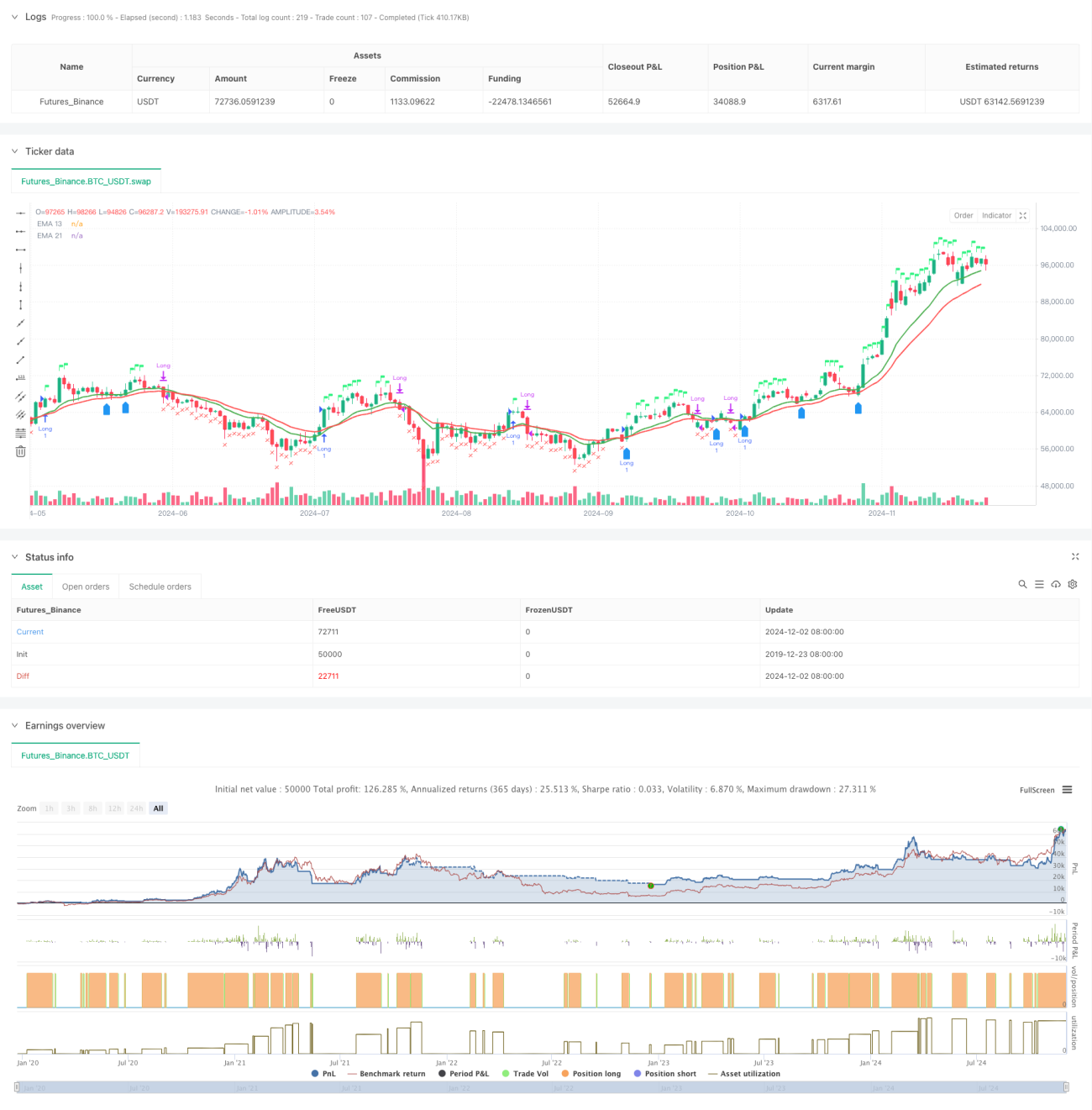
A estratégia é um sistema de negociação integrado que combina um sistema de dupla linha de equilíbrio, uma análise de indicadores de força relativa (RSI) e de força relativa (RS). A estratégia realiza um mecanismo de decisão de negociação multidimensional, através da confirmação de tendências de confirmação cruzada de médias móveis do índice (EMA) nos dias 13 e 21 e da confirmação de sinais de negociação em combinação com o RSI e o valor do RS em relação ao índice de referência. A estratégia também inclui um mecanismo de controle de risco e um julgamento baseado em condições de reentrada de 52 semanas.

Princípio da estratégia

A estratégia usa um mecanismo de confirmação de múltiplos sinais:

  1. O sinal de entrada deve atender simultaneamente às seguintes condições:
    • EMA13 com EMA21 ou preço superior a EMA13
    • RSI maior que 60
    • A intensidade relativa ((RS) é a positiva
  2. As condições para a saída incluem:
    • Preços abaixo da EMA21
    • RSI abaixo de 50
    • RS transformado em negativo
  3. Reincidência:
    • Preço superior a EMA13 e EMA13 maior que EMA21
    • RS mantido em zero
    • Ou o preço quebrou o pico da semana passada

Vantagens estratégicas

  1. Mecanismos de confirmação de múltiplos sinais reduzem o risco de falsas invasões
  2. Combinação de análise de intensidade relativa para seleção eficaz de variedades fortes
  3. Mecanismo de ajuste de ciclo de tempo adaptativo
  4. Um sistema de controlo de riscos adequado
  5. Mecanismos de reentrada inteligentes
  6. Oferece visualização de status de transação em tempo real

Risco estratégico

  1. Mercado turbulento pode gerar transações frequentes
  2. Dependência de múltiplos indicadores pode causar atraso no sinal
  3. Os limites fixos do RSI podem não ser adequados para todas as circunstâncias do mercado
  4. A precisão do cálculo da intensidade relativa depende do índice de referência
  5. O pico de 52 semanas pode ter sido muito relaxado

Direção de otimização da estratégia

  1. Introdução de um limiar RSI adaptável
  2. Otimização da lógica de julgamento das condições de reentrada
  3. Aumentar a dimensão da análise do volume de transações
  4. Melhore o mecanismo de stop-profit e stop-loss
  5. Adicionar filtro de taxa de flutuação
  6. Otimização do ciclo de cálculo de intensidade relativa

Resumir

A estratégia, através da combinação de análise técnica e análise de intensidade relativa, constrói um sistema de negociação abrangente. Seu mecanismo de confirmação de sinais múltiplos e sistema de controle de risco tornam-no de grande utilidade. Com a orientação de otimização sugerida, há espaço para uma estratégia de melhoria ainda maior. A implementação bem-sucedida da estratégia requer que o comerciante tenha uma profunda compreensão do mercado e ajuste os parâmetros apropriados de acordo com as características específicas da variedade de negociação.

Código-fonte da estratégia
/*backtest
start: 2019-12-23 08:00:00
end: 2024-12-03 00:00:00
period: 1d
basePeriod: 1d
exchanges: [{"eid":"Futures_Binance","currency":"BTC_USDT"}]
*/

//@version=5
strategy("EMA 13 & 21 Entry Exit", overlay=true)

// Define the EMAs
ema13 = ta.ema(close, 13)
ema21 = ta.ema(close, 21)

// Define the RSI
rsi = ta.rsi(close, 14)

// Calculate the closing price relative to Nifty 50
//nifty50 = request.security("NSE:NIFTY", timeframe.period, close)
//closeRelative = close / nifty50

// Define a base period (e.g., 123) and adjust it based on the timeframe
//basePeriod = 123

// Calculate the effective period based on the timeframe
//effectivePeriod = basePeriod * (timeframe.isintraday ? (60 / timeframe.multiplier) : 1)

// Calculate the EMA
//rs = ta.ema(closeRelative, effectivePeriod)

// Define the Relative Strength with respect to NIFTY 50
nifty50 = request.security("swap", "D", close)
rs = ta.ema(close / nifty50, 55 )

// Define the previous 2-week low and last week's high
twoWeekLow = ta.lowest(low, 10)  // 10 trading days roughly equal to 2 weeks
lastWeekHigh = ta.highest(high, 5)  // 5 trading days roughly equal to 1 week
fiftytwoWeekhigh = ta.highest(high, 52*5) // 252 tradingdays roughly equal to 52 week.

// Long condition: EMA 21 crossing above EMA 55, price above EMA 21, RSI > 50, and RS > 0
longCondition = ta.crossover(ema13, ema21) or close > ema13 and rsi > 60 and rs > 0

// Exit condition: Price closing below EMA 55 or below the previous 2-week low
exitCondition = close < ema21 or rsi < 50 or rs < 0 //or close < fiftytwoWeekhigh*0.80

// Re-entry condition: Price crossing above EMA 21 after an exit, EMA 21 > EMA 55, and RS > 1
reEntryCondition = ta.crossover(close, ema13) and ema13 > ema21 and rs > 0

// Re-entry condition if trailing stop loss is hit: Price crossing above last week's high
reEntryAfterSL = ta.crossover(close, lastWeekHigh)

// Plot the EMAs
plot(ema13 ,color=color.green, title="EMA 13",linewidth = 2)
plot(ema21, color=color.red, title="EMA 21",linewidth = 2)


// Plot buy and sell signals
plotshape(series=longCondition, location=location.abovebar, color=color.rgb(50, 243, 130), style=shape.flag, title="Buy Signal")
plotshape(series=exitCondition, location=location.belowbar, color=color.red, style=shape.xcross, title="Sell Signal")
plotshape(series=reEntryCondition or reEntryAfterSL, location=location.belowbar, color=color.blue, style=shape.labelup, title="Re-entry Signal")
//plotshape(series = fiftytwoWeekhigh,location=location.abovebar, color=color.blue,style=shape.flag, title="52WH")

// Plot background color for RS > 0
//bgcolor(rs > 0 ? color.new(color.green, 90) : na, title="RS Positive Background")
// Plot the previous 2-week low and last week's high
// plot(twoWeekLow, color=color.orange, title="2-Week Low")
// plot(lastWeekHigh, color=color.purple, title="Last Week High")

// Strategy logic
if (longCondition or reEntryCondition or reEntryAfterSL)
    strategy.entry("Long", strategy.long)

if (exitCondition)
    strategy.close("Long")

 // Calculate Stop Loss (SL) and Profit
var float entryPrice = na
var float stopLoss = na
var float profit = na

if (strategy.opentrades > 0)
    entryPrice := strategy.opentrades.entry_price(strategy.opentrades - 1)
    stopLoss := fiftytwoWeekhigh * 0.80
    profit := (close - entryPrice) / entryPrice * 100

// Display the strategy table
var table strategyTable = table.new(position.top_right, 4, 2, border_width = 1)

// Make the table movable
tableX = input.int(0, title="Table X Position")
tableY = input.int(0, title="Table Y Position")

// Add size options for the table
tableSize = input.string("small", title="Table Size", options=["tiny", "small", "large"])

// Adjust table size based on user input
tableWidth = tableSize == "tiny" ? 2 : tableSize == "small" ? 4 : 6
tableHeight = tableSize == "tiny" ? 1 : tableSize == "small" ? 2 : 3

// Create the table with the specified size
//table = table.new(position.top_right, tableWidth, tableHeight, border_width = 1)

// Position the table based on user input
// table.cell(strategyTable, tableX, tableY, "Entry Price",  bgcolor=#18eef9)
// table.cell(strategyTable, tableX, tableY + 1, str.tostring(entryPrice, format.mintick), bgcolor=#18eef9)
// table.cell(strategyTable, tableX + 1, tableY, "Stop Loss (20%)", bgcolor=color.red)
// table.cell(strategyTable, tableX + 1, tableY + 1, str.tostring(stopLoss, format.mintick), bgcolor=color.red)
// table.cell(strategyTable, tableX + 2, tableY, "Profit (%)", bgcolor=color.green)
// table.cell(strategyTable, tableX + 2, tableY + 1, str.tostring(profit, format.percent), bgcolor=color.green)