
Visão Geral
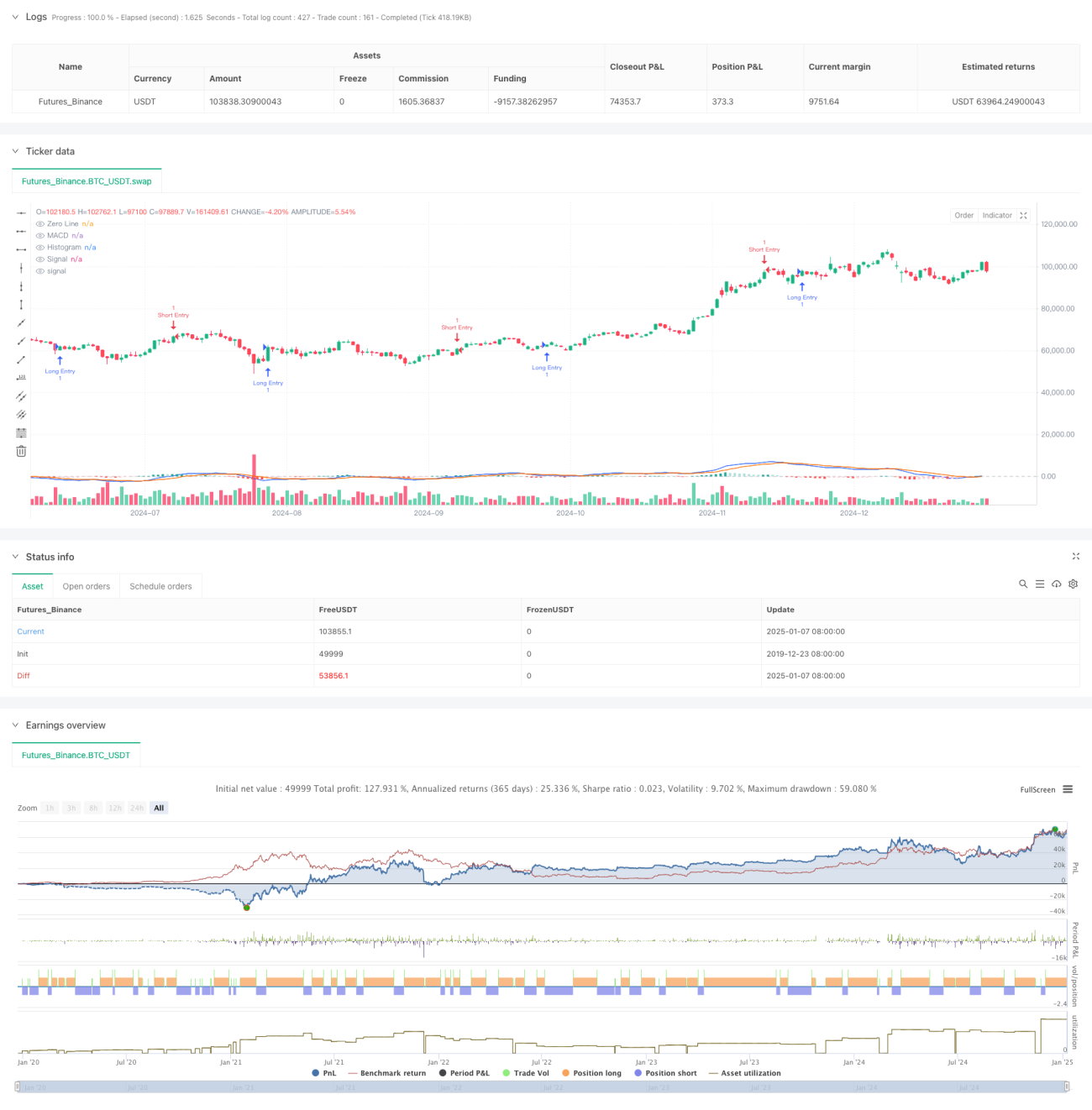
Esta estratégia é um sistema de negociação baseado no indicador MACD e na relação preço-volume, que identifica pontos de reversão da tendência do mercado observando as mudanças na forma do histograma do MACD. A estratégia utiliza um mecanismo dinâmico de stop-loss e take-profit, adaptando-se à volatilidade do mercado por meio do indicador ATR, gerenciando riscos de forma eficaz.
Princípio da Estratégia
A lógica central da estratégia baseia-se nas variações de tonalidade do histograma do MACD (claro/escuro), combinada com um sistema duplo de médias móveis EMA e SMA. Quando o histograma do MACD muda de escuro para claro, indica que o momentum está mudando, e o sistema executa a negociação nesse momento. Especificamente:
- Utiliza médias móveis rápidas (12) e lentas (26) para calcular o valor do MACD.
- Suaviza o MACD por meio de uma linha de sinal de 9 períodos.
- Observa as mudanças na tonalidade do histograma do MACD.
- Define stop-loss e take-profit dinâmicos com base no indicador ATR de 14 períodos.
Vantagens da Estratégia
- Combinação de indicadores cientificamente sólida: o MACD captura tendências de forma eficaz, e o ATR se adapta à volatilidade.
- Configuração flexível de stop-loss e take-profit: os parâmetros de múltiplos permitem ajustes de acordo com as características de diferentes mercados.
- Sinais de negociação claros: a mudança de tonalidade do histograma permite julgar intuitivamente o momento de entrada.
- Abrange tanto posições compradas quanto vendidas, aumentando a aplicabilidade e as oportunidades de lucro.
Riscos da Estratégia
- O MACD, como indicador defasado, pode perder o melhor ponto de entrada em movimentos rápidos do mercado.
- Em mercados laterais, pode gerar sinais falsos, levando a negociações frequentes.
- Ajustes inadequados dos múltiplos do ATR podem resultar em stop-loss muito frouxo ou muito apertado.
- É necessário um gerenciamento de capital adequado para evitar perdas excessivas por transação.
Direções de Otimização da Estratégia
- Introduzir sinais de confirmação de volume, aumentando a confiabilidade dos sinais.
- Adicionar um filtro de tendência, reduzindo sinais falsos em mercados laterais.
- Otimizar os múltiplos de stop-loss e take-profit, permitindo ajustes dinâmicos conforme diferentes períodos de tempo.
- Incluir um filtro de volatilidade, reduzindo a frequência de negociações em períodos de alta volatilidade.
- Considerar a introdução de um filtro de tempo, evitando negociações em períodos desfavoráveis.
Resumo
Esta é uma estratégia abrangente que combina o clássico indicador de análise técnica MACD com métodos modernos de controle de risco. Ao observar as mudanças na forma do histograma do MACD, ela captura as mudanças de momentum do mercado e utiliza o ATR para um controle de risco dinâmico. O design da estratégia é razoável, a lógica operacional é clara e possui bom valor prático. Com otimização e melhoria contínuas, esta estratégia tem potencial para obter desempenho superior na implementação prática.
- 1