
Visão Geral
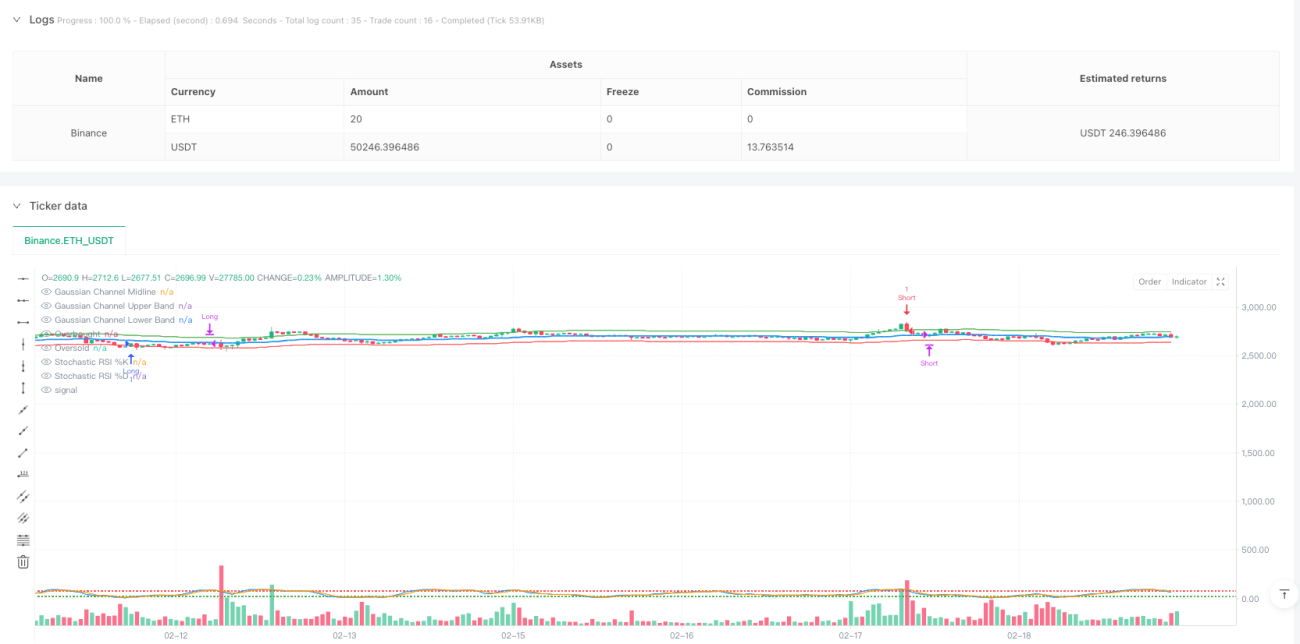
Esta estratégia é um sistema de negociação de acompanhamento de tendência que combina o Canal Gaussiano e o Índice de Força Relativa Estocástico (Stochastic RSI). O Canal Gaussiano é utilizado para identificar a tendência dos preços e a faixa de volatilidade, enquanto o Stochastic RSI atua como filtro para confirmar condições de sobrecompra e sobrevenda, aumentando a precisão dos sinais de negociação. A estratégia gera sinais de negociação observando o cruzamento dos preços com os limites do Canal Gaussiano e a posição do Stochastic RSI.
Princípio da Estratégia
A lógica central da estratégia baseia-se nos seguintes componentes-chave:
- Cálculo do Canal Gaussiano: Utiliza um filtro gaussiano para calcular a linha média e define as bandas superior e inferior com base em um multiplicador. O filtro gaussiano emprega suavização exponencial, reduzindo efetivamente o ruído dos preços.
- Indicador Stochastic RSI: Combina as vantagens do oscilador estocástico e do RSI, identificando estados de sobrecompra e sobrevenda através de duas linhas suavizadas, %K e %D.
- Condições de entrada:
- Longo: Preço rompe a banda inferior do Canal Gaussiano e o Stochastic RSI está em zona de sobrevenda.
- Curto: Preço rompe a banda superior do Canal Gaussiano e o Stochastic RSI está em zona de sobrecompra.
- Condições de saída:
- Quando o preço cruza a linha média do Canal Gaussiano.
- Ou quando o Stochastic RSI atinge níveis opostos de sobrecompra/sobrevenda.
Vantagens da Estratégia
- Alta confiabilidade dos sinais: Combina indicadores de tendência e momentum, filtrando eficazmente sinais falsos.
- Controle de risco aprimorado: Utiliza o Canal Gaussiano como níveis dinâmicos de suporte e resistência, oferecendo uma boa estrutura de gerenciamento de risco.
- Alta flexibilidade de parâmetros: Permite ajustar a largura do canal e os parâmetros do RSI conforme as características do mercado.
- Eficiência computacional: O filtro gaussiano possui baixo custo computacional, sendo adequado para negociação em tempo real.
- Adaptabilidade: Pode ser utilizado em diferentes períodos e condições de mercado.
Riscos da Estratégia
- Risco de mercado lateral: Em mercados de congestão, pode gerar frequentes sinais falsos de rompimento.
- Risco de defasagem: A suavização dos indicadores pode causar certo atraso nos sinais.
- Sensibilidade a parâmetros: Diferentes combinações de parâmetros podem levar a resultados de negociação significativamente distintos.
- Dependência do ambiente de mercado: Apresenta melhor desempenho em mercados com tendência forte, mas pode gerar grandes drawdowns em mercados com reversões rápidas.
Direções de Otimização da Estratégia
- Otimização dinâmica de parâmetros:
- Ajuste adaptativo da largura do canal com base na volatilidade do mercado.
- Ajuste dinâmico dos parâmetros do Stochastic RSI com base nas características do ciclo de mercado.
- Mecanismos de confirmação de sinais:
- Adicionar indicadores de confirmação de volume.
- Introduzir filtros de força da tendência.
- Aprimoramento do gerenciamento de risco:
- Implementar stop loss e take profit dinâmicos.
- Incluir módulo de gestão de posição.
- Identificação do ambiente de mercado:
- Desenvolver um classificador de estado do mercado.
- Ajustar os parâmetros da estratégia de acordo com os diferentes estados do mercado.
Resumo
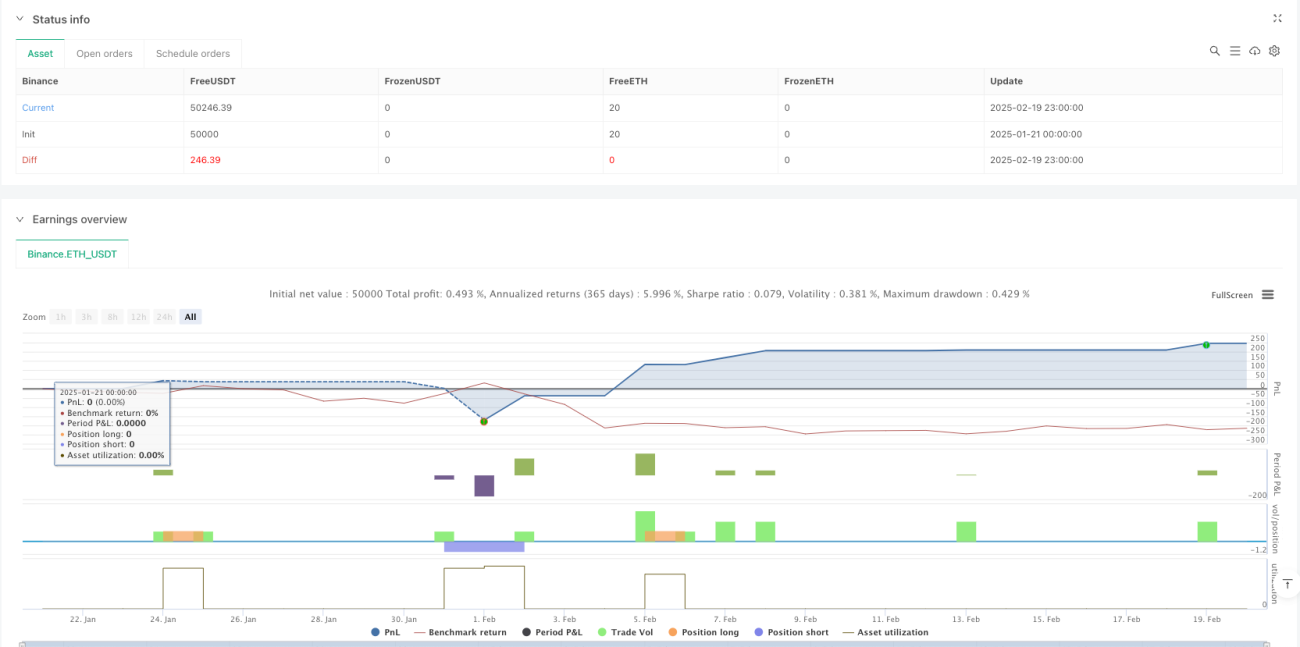
Esta estratégia constrói um sistema de negociação que combina características de acompanhamento de tendência e momentum, ao integrar o Canal Gaussiano e o Stochastic RSI. O design da estratégia é razoável, com boa escalabilidade e adaptabilidade. Através das direções de otimização sugeridas, é possível melhorar ainda mais a estabilidade e a lucratividade da estratégia. Na aplicação prática, recomenda-se testar exaustivamente diferentes combinações de parâmetros e realizar otimizações direcionadas com base nas características específicas do mercado.
- 1