Estratégia de Negociação com Grade Adaptativa de Bollinger

Visão Geral
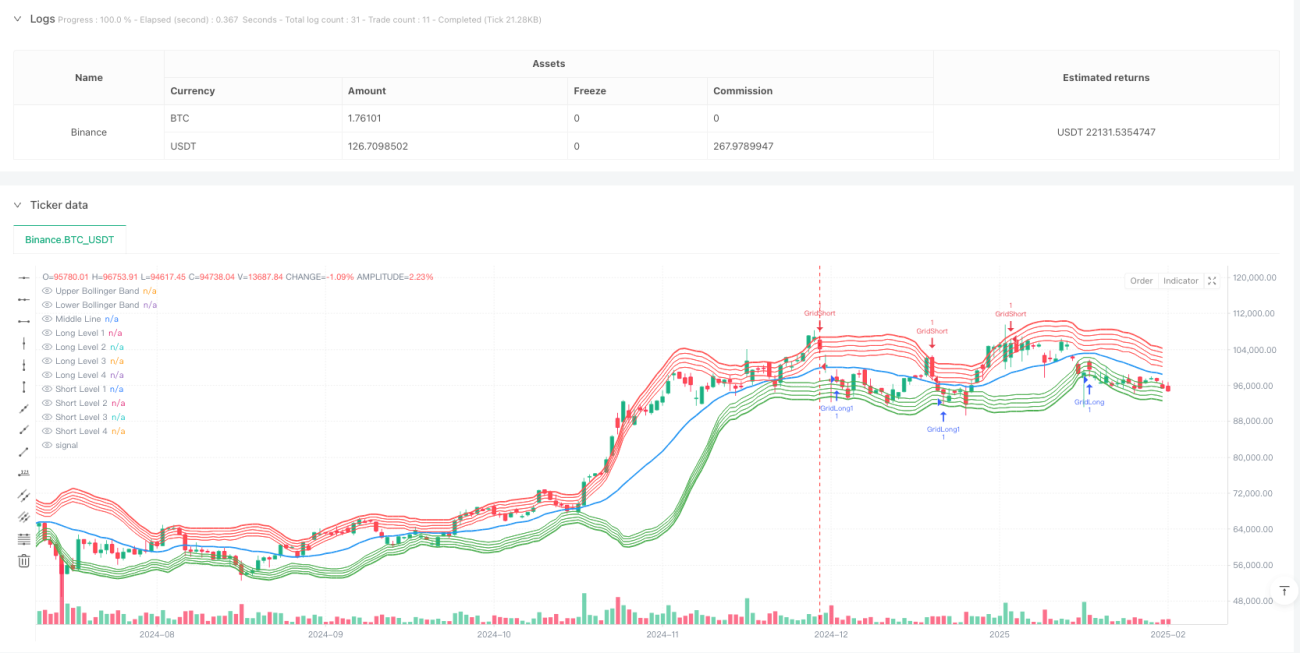
Esta é uma estratégia de grid trading avançada baseada nas Bandas de Bollinger. A estratégia utiliza as bandas superior e inferior, juntamente com a banda média, para determinar dinamicamente as posições da grade e ajustar automaticamente o espaçamento entre os níveis com base na volatilidade do mercado. O sistema executa operações de compra e venda correspondentes sempre que o preço rompe uma linha da grade, realizando uma negociação em grade totalmente automatizada.
Princípio da Estratégia
A estratégia usa uma média móvel de 20 períodos como a banda média das Bandas de Bollinger e 2 desvios padrão como largura de banda. Com base nas Bandas de Bollinger, a estratégia define 4 níveis de grade entre as bandas superior e inferior, com espaçamento de 1% entre os níveis. Quando o preço rompe uma linha da grade para cima, o sistema executa uma operação de compra; quando rompe para baixo, executa uma operação de venda. Esse design permite que a estratégia lucre consistentemente em mercados laterais.
Vantagens da Estratégia
- Ajuste dinâmico – A posição da grade se move junto com as Bandas de Bollinger, permitindo que a estratégia se adapte a diferentes condições de mercado.
- Risco controlável – As Bandas de Bollinger delimitam a faixa de negociação, evitando exposição excessiva em movimentos extremos.
- Alta automação – O sistema executa as negociações automaticamente, sem necessidade de intervenção manual.
- Negociação bidirecional – Possibilidade de lucrar tanto em mercados de alta quanto de baixa.
- Parâmetros ajustáveis – O espaçamento e a quantidade de níveis da grade podem ser flexivelmente ajustados conforme necessário.
Riscos da Estratégia
- Risco de mercado tendencial – Em movimentos unidirecionais, podem ocorrer drawdowns significativos.
- Risco de gestão de capital – Múltiplas grades acionadas simultaneamente podem levar a uma posição excessivamente pesada.
- Risco de slippage – Em condições de alta volatilidade, o preço executado pode desviar dos níveis da grade.
- Risco técnico – As Bandas de Bollinger podem gerar sinais falsos de rompimento.
Soluções:
- Definir um limite máximo de posição total.
- Introduzir um filtro de tendência.
- Otimizar o mecanismo de execução de ordens.
- Adicionar filtros de confirmação de sinais.
Direções de Otimização da Estratégia
- Espaçamento adaptativo da grade – Ajustar dinamicamente o espaçamento com base na volatilidade.
- Incorporar relação preço-volume – Combinar indicadores de volume para otimizar o timing de entrada.
- Otimizar mecanismo de stop loss – Projetar um esquema de stop loss mais flexível.
- Aprimorar gestão de capital – Implementar dimensionamento de posição baseado em risco.
- Coordenação de múltiplos períodos – Introduzir mecanismos de confirmação de sinais de múltiplos períodos.
Resumo
Esta estratégia combina Bandas de Bollinger com grid trading para criar um sistema de negociação automatizado que equilibra flexibilidade e estabilidade. Sua principal vantagem é a capacidade de se adaptar a diferentes condições de mercado, enquanto o controle de risco é alcançado por meio do ajuste de parâmetros. Embora apresente alguns riscos inerentes, com otimizações e refinamentos contínuos é possível construir um sistema de negociação mais robusto.
- 1