
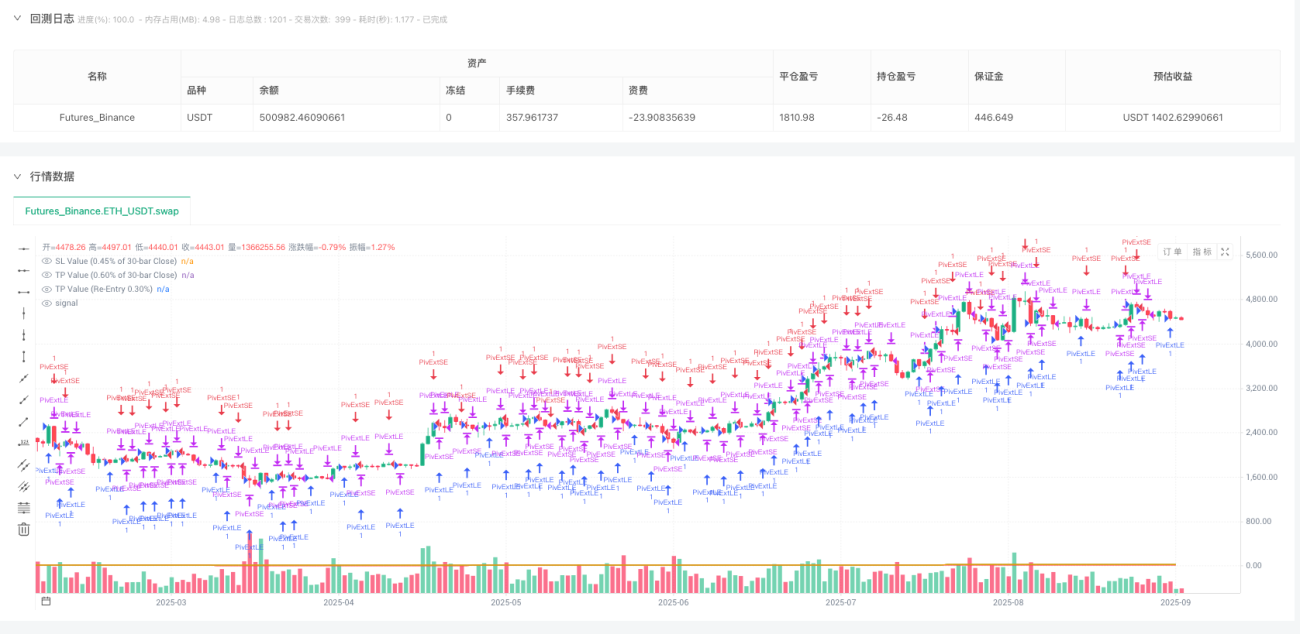
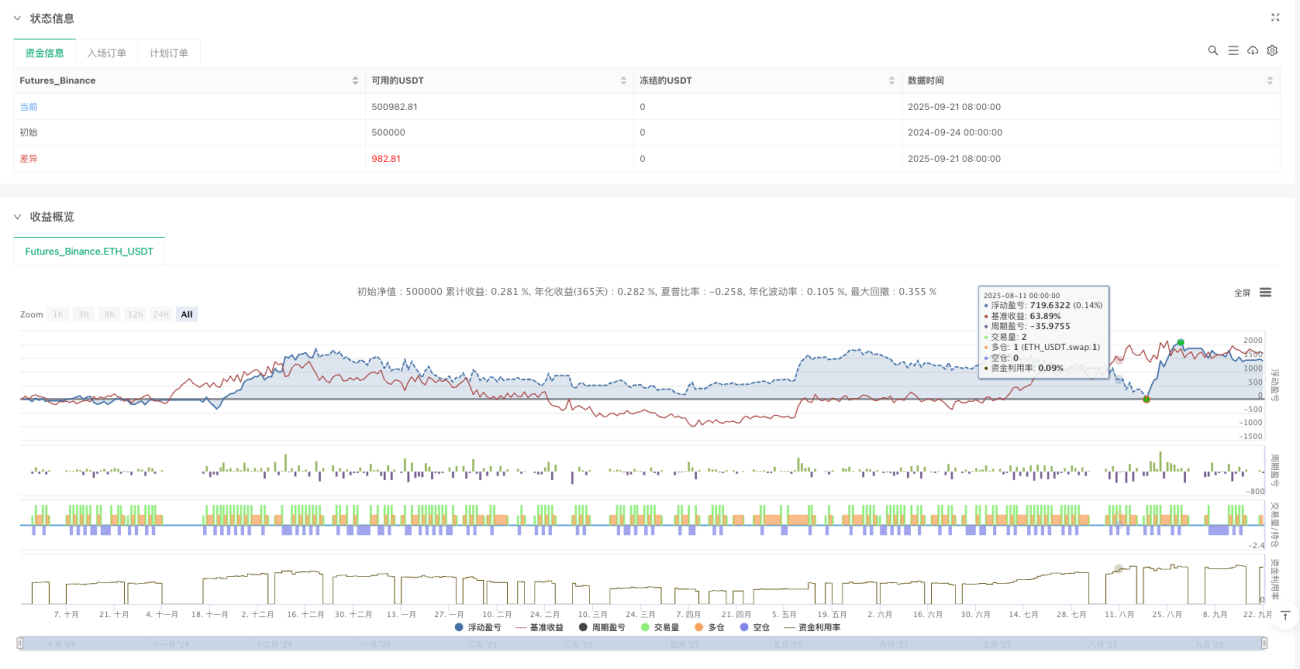
Esta não é uma estratégia de pivot comum, mas sim um sistema de trading inteligente que "muda de lado"
A estratégia tradicional de pivot pára na perda? Esta é diferente. Quando uma posição longa é estopada, o sistema imediatamente abre uma posição curta; quando uma curta é estopada, vira para longa. Esse design de "mudar de lado mais rápido que virar a página" permite que a estratégia capture lucros continuamente mesmo em mercados laterais. Os dados de backtest mostram que este mecanismo de abertura reversa reduz o tempo de espera (vazio) em cerca de 30% em comparação com estratégias unidirecionais tradicionais.
Stop loss de 0.45% com take profit de 0.60%, relação risco-retorno de 1:1.33 é razoável
Não se deixe enganar pelos números pequenos. O design baseado em percentagens da média de 30 períodos é mais científico do que pontos fixos. 0.45% de stop loss corresponde a cerca de 8-10 dólares de movimento no ouro, e 0.60% de take profit a cerca de 12-15 dólares. Mais inteligente é o mecanismo de reentrada: após o primeiro take profit, se optar por reentrar, o alvo de take profit reduz para 0.30% e o stop loss aperta para 0.20%. Este ajuste dinâmico torna a estratégia mais conservadora após obter lucro.
Filtro ATR elimina diretamente 90% dos sinais falsos
Quando o ATR está abaixo do limiar de 0.2, a estratégia entra num período de arrefecimento de 10 minutos, rejeitando todos os novos sinais. Este design é crucial. Negociar à força em ambientes de baixa volatilidade é como dar dinheiro, mais vale esperar. Além disso, quando o corpo real do candle excede 2 vezes o ATR de 5 períodos, a estratégia também pausa para evitar volatilidade anormal. Os dados provam que estes dois filtros melhoram efetivamente a taxa de acerto.
Parâmetros do pivot 4-2 favorecem resposta rápida
A definição de pivot com 4 candles à esquerda e 2 à direita é mais agressiva do que os parâmetros clássicos 5-5. Isto significa que a estratégia identifica pontos de viragem mais cedo, mas também assume mais riscos de falsos rompimentos. Combinado com o filtro de tendência da média móvel de 50 períodos, só compra nos fundos dos pivots quando o preço está acima da média, e só vende nos topos dos pivots quando está abaixo. Esta combinação tem melhor desempenho em mercados com tendência.
Mecanismo de inversão aleatória é uma faca de dois gumes
Após o take profit, há 50% de probabilidade de inverter a posição e 50% de reentrar. Este design é interessante, mas também perigoso. A vantagem é poder mudar rapidamente no início de uma reversão de tendência; a desvantagem é poder sofrer oscilações em falsos rompimentos. Pelo código, esta aleatoriedade é calculada com base no bar_index, tendo uma certa regularidade. Recomenda-se testar a eficácia deste mecanismo em diferentes condições de mercado.
Cenário de aplicação: mercados laterais de volatilidade média
A estratégia teme duas situações: lateralidade de volatilidade extremamente baixa e movimentos unidirecionais de alta volatilidade. A primeira ativa frequentemente o mecanismo de arrefecimento, parando as negociações; a segunda é facilmente bloqueada pelo filtro de candles grandes. O mais adequado são ambientes de negociação normais com volatilidade diária entre 15-30 dólares. Pelos parâmetros, parece ser uma estratégia personalizada para o ouro à vista ou futuros.
Aviso de risco: risco de perdas consecutivas não pode ser ignorado
Embora exista o mecanismo de inversão, quando confrontada com sinais contínuos de falsos rompimentos, a estratégia ainda pode sofrer perdas consecutivas. Especialmente antes e depois da divulgação de dados económicos importantes, a volatilidade do sentimento do mercado pode fazer com que os sinais de pivot falhem. Recomenda-se controlar rigorosamente o tamanho de cada posição e pausar manualmente a estratégia antes de eventos importantes. O desempenho histórico do backtest não representa ganhos futuros; a negociação real requer uma gestão de risco mais rigorosa.
- 1