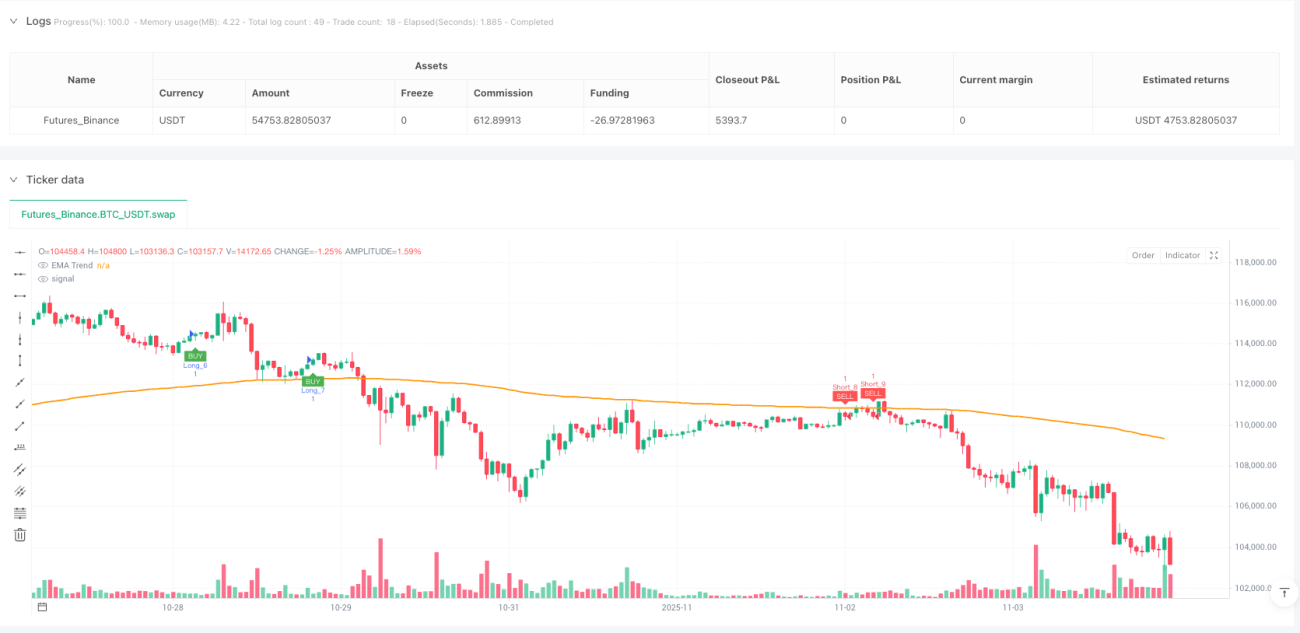
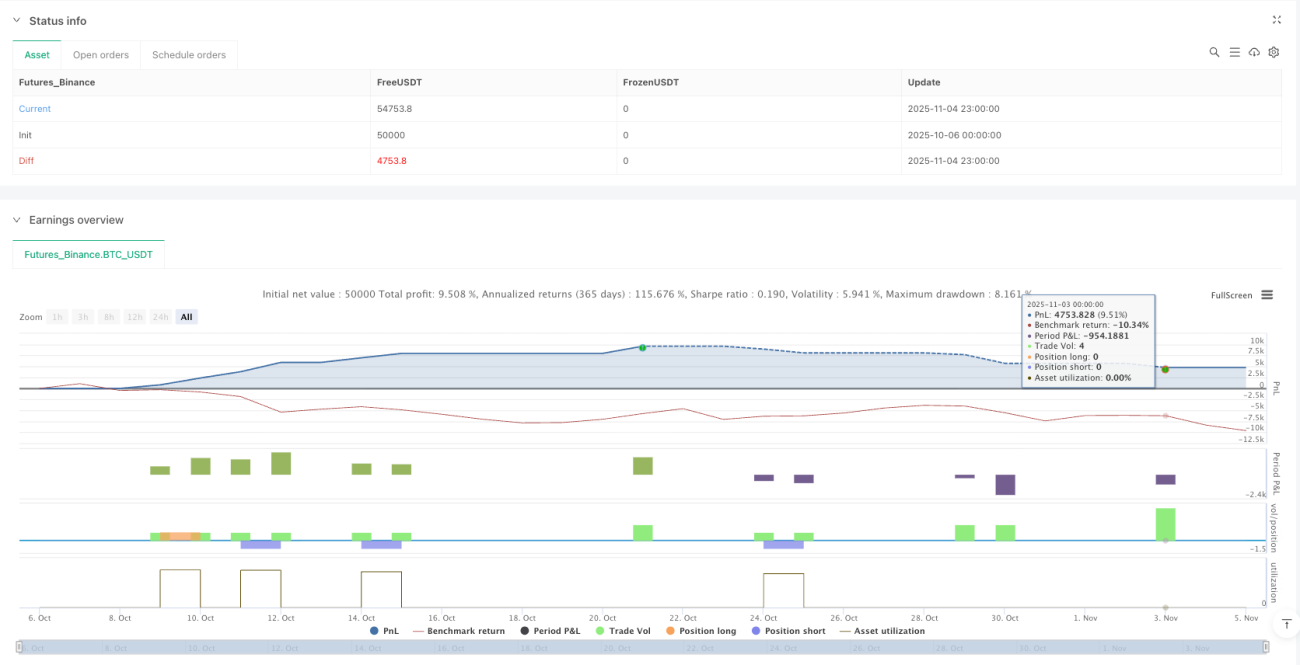
A estratégia é como um caçador experiente, especializado em identificar essas armadilhas e operar de forma inversa. Em outras palavras, quando o preço deliberadamente “faz uma falsa ruptura” e retira rapidamente o suporte de resistência importante, seguimos o ritmo do grande capital!
O foco!A estratégia usa uma rede de defesa de três camadas:
🔸 Filtros de tendênciasEMA de 200 ciclos é como um motorista velho dizendo se é um caminho de subida ou de descida. 🔸 Identificação de bits-chaveO que é o “Movimento dos Soldados” (Movimento dos Soldados) no Japão? 🔸 Teste de limpeza de liquidez“A falsa ação” para capturar grandes capitais
Como um tubarão, você tem que saber onde o peixe está, com que anel, quando o leme!
Imagine: você está na fila para comprar chá de leite, e de repente alguém grita “gratuito!” e todos correm para a frente, mas os mais espertos já estão na frente.
Os preços “fingiam” cair abaixo do nível de suporte (sweeping stop loss) e depois retrocederam rapidamente, o melhor momento para entrar. A estratégia estabelece uma zona de amortecimento de 0,6 vezes o ATR para garantir que seja realmente “sweeping” e não uma verdadeira quebra.
Guia para evitar poçosA estratégia de forçar a aplicação de um risco/recompensa de 1:2 é como dirigir sem usar o cinto de segurança.
Esta estratégia é mais adequada para o comércio de ouro em um ciclo de 15 minutos, porque o mercado de ouro é muito fluido, os falsos breaks são evidentes e o ciclo de 15 minutos filtra muito ruído.
Lembre-se: não seja ganancioso! A estratégia te ajuda a encontrar um bom lugar, o resto é do mercado e do tempo.
/*backtest
start: 2025-10-06 00:00:00
end: 2025-11-05 00:00:00
period: 1h
basePeriod: 1h
exchanges: [{"eid":"Futures_Binance","currency":"BTC_USDT"}]
*/
//@version=6
strategy("Gold 15m: Trend + S/R + Liquidity Sweep (RR 1:2)", overlay=true, default_qty_type=strategy.fixed, default_qty_value=1, commission_type=strategy.commission.percent, commission_value=0.0)
// ---------------------- INPUTS ----------------------
symbol_input = input.string(title="Symbol (for reference only)", defval="XAUUSD")
tf_note = input.timeframe(title="Intended timeframe", defval="15")
ema_len = input.int(200, "Trend EMA length", minval=50)
pivot_left = input.int(5, "Pivot left bars", minval=1)
pivot_right = input.int(5, "Pivot right bars", minval=1)
sweep_atr_mult = input.float(0.6, "Liquidity sweep buffer (ATR ×)", step=0.1)
sl_atr_mult = input.float(0.5, "SL buffer beyond pivot (ATR ×)", step=0.1)
min_sweep_bars = input.int(1, "Max bars between sweep and reclaim", minval=1)
use_only_trend = input.bool(true, "Only trade with trend (EMA filter)")
rr = input.float(2.0, "Reward/Risk (TP = RR × Risk)", minval=1.0, step=0.1)
enable_long = input.bool(true, "Enable Longs")
enable_short = input.bool(true, "Enable Shorts")
show_zones = input.bool(true, "Plot pivots / zones")
// ---------------------- INDICATORS ----------------------
ema_trend = ta.ema(close, ema_len)
atr = ta.atr(14)
// ---------------------- PIVOT S/R DETECTION ----------------------
// Using builtin pivots: returns price of pivot when formed, else na
ph = ta.pivothigh(high, pivot_left, pivot_right)
pl = ta.pivotlow(low, pivot_left, pivot_right)
// We'll track last confirmed pivot prices and bar index
var float lastPivotHigh = na
var int lastPivotHighBar = na
var float lastPivotLow = na
var int lastPivotLowBar = na
if not na(ph)
lastPivotHigh := ph
lastPivotHighBar := bar_index - pivot_right
if not na(pl)
lastPivotLow := pl
lastPivotLowBar := bar_index - pivot_right
// ---------------------- LIQUIDITY SWEEP DETECTION ----------------------
// For a bullish liquidity sweep (buy):
// 1) Price makes a new low wick below lastPivotLow - (atr * sweep_atr_mult) (sweep candle)
// 2) Within `min_sweep_bars` the price reclaims: close > lastPivotLow => bullish signal
var int sweepLowBar = na
var int sweepHighBar = na
// detect sweep down (wick pierce)
isSweepDown = false
if not na(lastPivotLow)
// a candle with low sufficiently below pivot
isSweepDown := low < (lastPivotLow - atr * sweep_atr_mult)
// detect sweep up (wick pierce)
isSweepUp = false
if not na(lastPivotHigh)
isSweepUp := high > (lastPivotHigh + atr * sweep_atr_mult)
// record bar of sweep
if isSweepDown
sweepLowBar := bar_index
if isSweepUp
sweepHighBar := bar_index
// check reclaim after sweep: close back above pivot (buy reclaim) or close back below pivot (sell reclaim)
// ensure reclaim happens within `min_sweep_bars` bars after sweep
bullReclaim = false
bearReclaim = false
if not na(lastPivotLow) and not na(sweepLowBar)
if (bar_index - sweepLowBar) <= min_sweep_bars and close > lastPivotLow
bullReclaim := true
if not na(lastPivotHigh) and not na(sweepHighBar)
if (bar_index - sweepHighBar) <= min_sweep_bars and close < lastPivotHigh
bearReclaim := true
// ---------------------- TREND FILTER ----------------------
in_uptrend = close > ema_trend
in_downtrend = close < ema_trend
// final entry conditions
longCondition = enable_long and bullReclaim and (not use_only_trend or in_uptrend)
shortCondition = enable_short and bearReclaim and (not use_only_trend or in_downtrend)
// Note: variable name required by Pine, we set from input
use_only_trend := use_only_trend // no-op to fix linter if needed
// ---------------------- ORDER EXECUTION & SL/TP CALC ----------------------
var int tradeId = 0
// For buy: SL = lastPivotLow - (atr * sl_atr_mult)
// risk = entry - SL
// TP = entry + rr * risk
if longCondition
// compute SL and TP
sl_price = lastPivotLow - atr * sl_atr_mult
entry_price = close
risk_amt = entry_price - sl_price
tp_price = entry_price + (risk_amt * rr)
// safety: only place trade if positive distances
if risk_amt > 0 and tp_price > entry_price
tradeId += 1
// send entry and exit with stop & limit
strategy.entry("Long_"+str.tostring(tradeId), strategy.long)
strategy.exit("ExitLong_"+str.tostring(tradeId), from_entry="Long_"+str.tostring(tradeId), stop=sl_price, limit=tp_price)
// For sell: SL = lastPivotHigh + (atr * sl_atr_mult)
// risk = SL - entry
// TP = entry - rr * risk
if shortCondition
sl_price_s = lastPivotHigh + atr * sl_atr_mult
entry_price_s = close
risk_amt_s = sl_price_s - entry_price_s
tp_price_s = entry_price_s - (risk_amt_s * rr)
if risk_amt_s > 0 and tp_price_s < entry_price_s
tradeId += 1
strategy.entry("Short_"+str.tostring(tradeId), strategy.short)
strategy.exit("ExitShort_"+str.tostring(tradeId), from_entry="Short_"+str.tostring(tradeId), stop=sl_price_s, limit=tp_price_s)
// ---------------------- PLOTTING ----------------------
// EMA (trend)
plot(ema_trend, title="EMA Trend", linewidth=2)
// arrows and markers for entries
plotshape(longCondition, title="Buy Signal", location=location.belowbar, style=shape.labelup, text="BUY", textcolor=color.white, size=size.tiny, color=color.green)
plotshape(shortCondition, title="Sell Signal", location=location.abovebar, style=shape.labeldown, text="SELL", textcolor=color.white, size=size.tiny, color=color.red)
// plot last SL/TP lines for last trade (visual reference)
// find last open position and plot currently active SL/TP if any
if strategy.position_size > 0
last_sl = strategy.position_avg_price - (strategy.position_avg_price - (lastPivotLow - atr * sl_atr_mult))
// instead use exit order price from last exit? Simpler: plot SL/TP computed earlier if long
// This may plot approximate lines; TradingView native order lines will also display.
// We skip redundant plotting to avoid confusion.