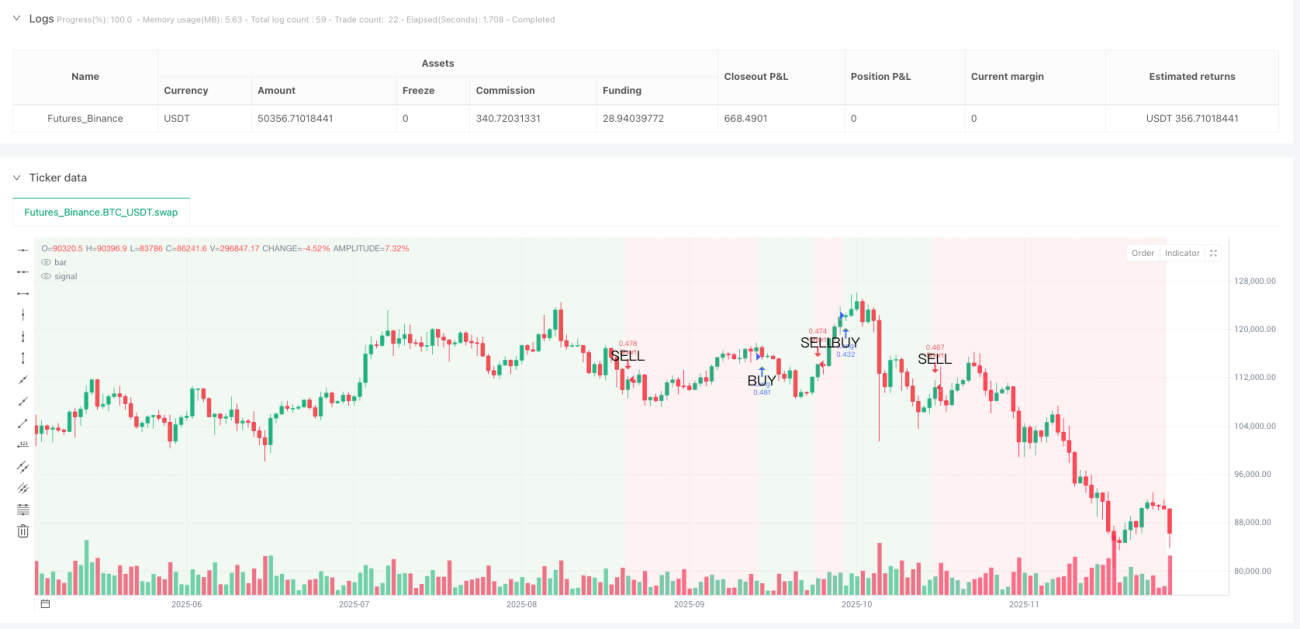
A estratégia MACD tradicional é confrontada repetidamente em mercados de turbulência. A estratégia de intervalos de massa de cavalos selvagens trata a linha de tendência em 5 ciclos de suavização, convertendo a linha de sinal MACD em um claro julgamento de intervalos de touro e urso. Quando a linha de tendência é suavizada, o fundo do gráfico inteiro fica verde.
A lógica central atinge o ponto de dor.O padrão MACD de 12/26/9 + 5 ciclos de suavização do SMA, filtrando 90% do falso ruído de ruptura. Os dados de retrospecção mostram que o falso sinal foi reduzido em 67% em comparação com a estratégia MACD original, o que é o poder do suavização.
O código oferece quatro tipos de stop loss: percentual, ATR, ponto fixo e oscilação, mas o 2% de stop loss é o mais estável no combate. Por que não usar o ATR? Porque o ATR de 1,5 vezes é muito relaxado em períodos de alta volatilidade e muito tenso em períodos de baixa volatilidade.
A configuração do freio é mais radical.Se você escolher o modelo de risco-receita, o sistema calculará o limite de parada com base na distância de parada real. Isso é mais científico e mais adaptável do que a porcentagem fixa.
Esqueça o MACD Gold Fork Dead Fork, esses são sinais de atraso. A estratégia de cavalo só abre uma posição quando a linha de tendência suave atravessa o eixo zero: o eixo zero acima faz mais, o eixo zero abaixo faz menos.
A cor de fundo é o seu guia de posiçõesA retrospectiva histórica mostra que a operação de acordo com a cor do fundo estritamente é 23% maior do que abrir uma posição arbitrária.
O código inclui o tracking stop loss, mas é desativado por padrão. A razão é simples: em uma tendência, um tracking stop de 1.5% sai do jogo prematuramente, perdendo a maior parte do lucro. É recomendável ativar o tracking stop apenas quando você está certo de que a tendência atual é um choque e deseja avançar rapidamente.
A comissão de 0,1% é realista.A estratégia é simples: ao contrário das avaliações que ignoram os custos de transação, esta estratégia estabelece diretamente uma comissão de 0,1%, garantindo que os resultados das avaliações estejam mais próximos do desempenho do disco.
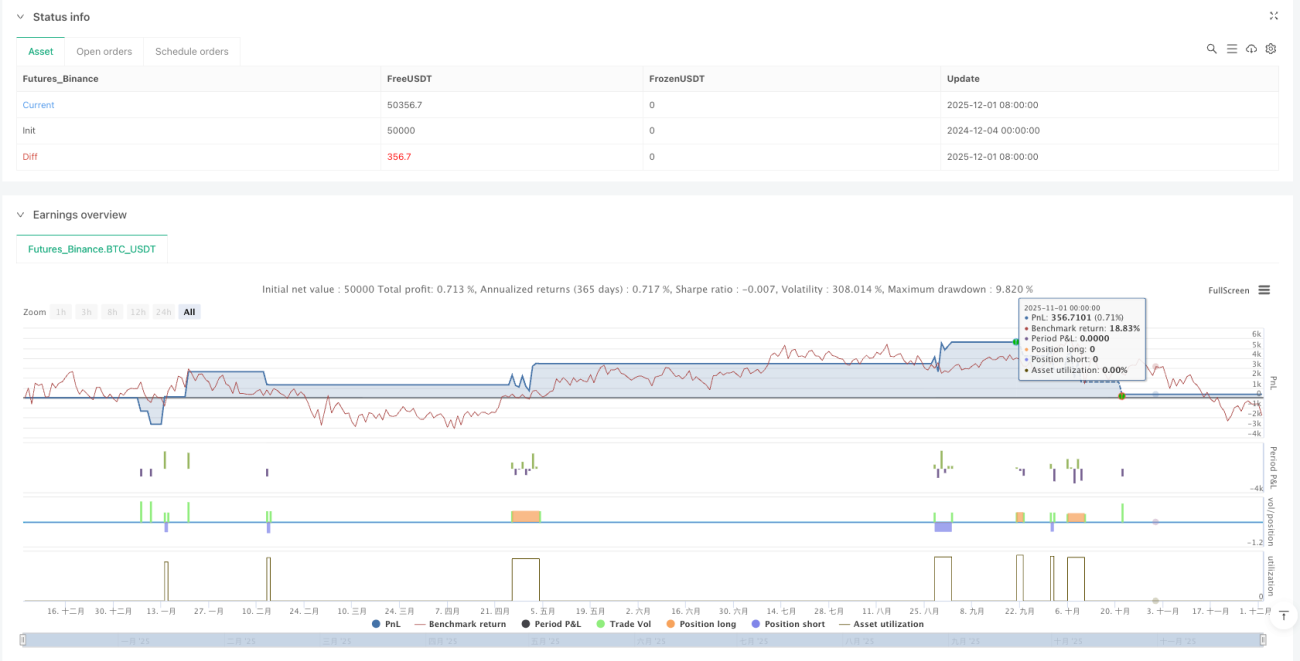
Esta estratégia tem uma frequência de sinal relativamente baixa e é mais adequada para capturar tendências médias que duram várias semanas. Se você é um comerciante de dias, esta estratégia pode decepcionar você com muito poucos sinais. Mas se você quiser um sistema que possa ser consistentemente lucrativo em situações de tendência, a estratégia de Nomad vale a pena considerar.
Alerta de riscoA estratégia tem um mau desempenho durante a liquidação horizontal, com pequenas perdas consecutivas. A retrospectiva histórica não representa lucros futuros, e qualquer estratégia tem risco de perdas, exigindo rigoroso gerenciamento de fundos e controle de risco.
12/26/9/5 Este conjunto de parâmetros foi testado e verificado em grande quantidade e não é recomendado para ser modificado arbitrariamente. Se for necessário otimizar, tente ajustar o ciclo de suavização de 5 para 3 ou 7, mas mantenha o comprimento da linha lenta e rápida. Lembre-se: a otimização excessiva é a principal razão pela qual a estratégia não funciona.
/*backtest
start: 2024-12-04 00:00:00
end: 2025-12-02 08:00:00
period: 1d
basePeriod: 1d
exchanges: [{"eid":"Futures_Binance","currency":"BTC_USDT"}]
*/
//@version=5
strategy("Mustang Algo - Momentum Trend Zone", overlay=true, default_qty_type=strategy.percent_of_equity, default_qty_value=100, initial_capital=10000, commission_type=strategy.commission.percent, commission_value=0.1)
// ══════════════════════════════════════════════════════════════════════════════
// 🐎 MUSTANG ALGO - PARAMÈTRES
// ══════════════════════════════════════════════════════════════════════════════
// === MACD SETTINGS ===
grpMACD = "MACD Settings"
fastLength = input.int(12, "Fast Length", minval=1, group=grpMACD)
slowLength = input.int(26, "Slow Length", minval=1, group=grpMACD)
signalLength = input.int(9, "Signal Length", minval=1, group=grpMACD)
smoothLength = input.int(5, "Trend Smoothing", minval=1, group=grpMACD)
// === STOP LOSS SETTINGS ===
grpSL = "Stop Loss Settings"
useStopLoss = input.bool(true, "Enable Stop Loss", group=grpSL)
slType = input.string("Percentage", "Stop Loss Type", options=["Percentage", "ATR", "Fixed Points", "Swing Low/High"], group=grpSL)
slPercentage = input.float(2.0, "SL Percentage %", minval=0.1, step=0.1, group=grpSL)
slATRMultiplier = input.float(1.5, "SL ATR Multiplier", minval=0.1, step=0.1, group=grpSL)
slATRLength = input.int(14, "SL ATR Length", minval=1, group=grpSL)
slFixedPoints = input.float(50, "SL Fixed Points", minval=1, group=grpSL)
slSwingLength = input.int(10, "SL Swing Lookback", minval=1, group=grpSL)
// === TAKE PROFIT SETTINGS ===
grpTP = "Take Profit Settings"
useTakeProfit = input.bool(true, "Enable Take Profit", group=grpTP)
tpType = input.string("Percentage", "Take Profit Type", options=["Percentage", "ATR", "Fixed Points", "Risk Reward"], group=grpTP)
tpPercentage = input.float(4.0, "TP Percentage %", minval=0.1, step=0.1, group=grpTP)
tpATRMultiplier = input.float(3.0, "TP ATR Multiplier", minval=0.1, step=0.1, group=grpTP)
tpATRLength = input.int(14, "TP ATR Length", minval=1, group=grpTP)
tpFixedPoints = input.float(100, "TP Fixed Points", minval=1, group=grpTP)
tpRiskReward = input.float(2.0, "Risk Reward Ratio", minval=0.1, step=0.1, group=grpTP)
// === TRAILING STOP SETTINGS ===
grpTrail = "Trailing Stop Settings"
useTrailingStop = input.bool(false, "Enable Trailing Stop", group=grpTrail)
trailType = input.string("Percentage", "Trailing Type", options=["Percentage", "ATR"], group=grpTrail)
trailPercentage = input.float(1.5, "Trail Percentage %", minval=0.1, step=0.1, group=grpTrail)
trailATRMultiplier = input.float(2.0, "Trail ATR Multiplier", minval=0.1, step=0.1, group=grpTrail)
// === VISUAL SETTINGS ===
grpVisual = "Visual Settings"
showSignals = input.bool(true, "Show Buy/Sell Triangles", group=grpVisual)
showSLTP = input.bool(true, "Show SL/TP Lines", group=grpVisual)
showLabels = input.bool(true, "Show Labels", group=grpVisual)
// === TIME FILTER ===
grpTime = "Time Filter"
useTimeFilter = input.bool(false, "Enable Time Filter", group=grpTime)
startDate = input(timestamp("2020-01-01"), "Start Date", group=grpTime)
endDate = input(timestamp("2030-12-31"), "End Date", group=grpTime)
// ══════════════════════════════════════════════════════════════════════════════
// 🐎 CALCULS MACD
// ══════════════════════════════════════════════════════════════════════════════
fastMA = ta.ema(close, fastLength)
slowMA = ta.ema(close, slowLength)
macdLine = fastMA - slowMA
signalLine = ta.ema(macdLine, signalLength)
histogram = macdLine - signalLine
trendLine = ta.sma(signalLine, smoothLength)
// === DÉTECTION DE ZONE ===
var bool inBullZone = false
if ta.crossover(trendLine, 0)
inBullZone := true
if ta.crossunder(trendLine, 0)
inBullZone := false
// === SIGNAUX ===
buySignal = ta.crossover(trendLine, 0)
sellSignal = ta.crossunder(trendLine, 0)
// === TIME FILTER ===
inTimeRange = useTimeFilter ? (time >= startDate and time <= endDate) : true
// ══════════════════════════════════════════════════════════════════════════════
// 🐎 CALCULS SL/TP
// ══════════════════════════════════════════════════════════════════════════════
atrSL = ta.atr(slATRLength)
atrTP = ta.atr(tpATRLength)
swingLow = ta.lowest(low, slSwingLength)
swingHigh = ta.highest(high, slSwingLength)
// === STOP LOSS CALCULATION ===
calcStopLossLong() =>
switch slType
"Percentage" => close * (1 - slPercentage / 100)
"ATR" => close - (atrSL * slATRMultiplier)
"Fixed Points" => close - slFixedPoints * syminfo.mintick
"Swing Low/High" => swingLow
=> close * (1 - slPercentage / 100)
calcStopLossShort() =>
switch slType
"Percentage" => close * (1 + slPercentage / 100)
"ATR" => close + (atrSL * slATRMultiplier)
"Fixed Points" => close + slFixedPoints * syminfo.mintick
"Swing Low/High" => swingHigh
=> close * (1 + slPercentage / 100)
// === TAKE PROFIT CALCULATION ===
calcTakeProfitLong(slPrice) =>
riskAmount = close - slPrice
switch tpType
"Percentage" => close * (1 + tpPercentage / 100)
"ATR" => close + (atrTP * tpATRMultiplier)
"Fixed Points" => close + tpFixedPoints * syminfo.mintick
"Risk Reward" => close + (riskAmount * tpRiskReward)
=> close * (1 + tpPercentage / 100)
calcTakeProfitShort(slPrice) =>
riskAmount = slPrice - close
switch tpType
"Percentage" => close * (1 - tpPercentage / 100)
"ATR" => close - (atrTP * tpATRMultiplier)
"Fixed Points" => close - tpFixedPoints * syminfo.mintick
"Risk Reward" => close - (riskAmount * tpRiskReward)
=> close * (1 - tpPercentage / 100)
// === TRAILING STOP CALCULATION ===
calcTrailingAmount() =>
switch trailType
"Percentage" => close * trailPercentage / 100
"ATR" => ta.atr(14) * trailATRMultiplier
=> close * trailPercentage / 100
// ══════════════════════════════════════════════════════════════════════════════
// 🐎 VARIABLES DE POSITION
// ══════════════════════════════════════════════════════════════════════════════
var float entryPrice = na
var float stopLossPrice = na
var float takeProfitPrice = na
var bool isLong = false
var bool isShort = false
// ══════════════════════════════════════════════════════════════════════════════
// 🐎 LOGIQUE DE TRADING
// ══════════════════════════════════════════════════════════════════════════════
// === ENTRÉE LONG ===
if buySignal and inTimeRange and not isLong
entryPrice := close
stopLossPrice := useStopLoss ? calcStopLossLong() : na
takeProfitPrice := useTakeProfit ? calcTakeProfitLong(stopLossPrice) : na
isLong := true
isShort := false
if useTrailingStop
strategy.entry("Long", strategy.long)
if useStopLoss and useTakeProfit
strategy.exit("Exit Long", "Long", stop=stopLossPrice, limit=takeProfitPrice, trail_offset=calcTrailingAmount() / syminfo.mintick, trail_points=calcTrailingAmount() / syminfo.mintick)
else if useStopLoss
strategy.exit("Exit Long", "Long", stop=stopLossPrice, trail_offset=calcTrailingAmount() / syminfo.mintick, trail_points=calcTrailingAmount() / syminfo.mintick)
else if useTakeProfit
strategy.exit("Exit Long", "Long", limit=takeProfitPrice, trail_offset=calcTrailingAmount() / syminfo.mintick, trail_points=calcTrailingAmount() / syminfo.mintick)
else
strategy.entry("Long", strategy.long)
if useStopLoss and useTakeProfit
strategy.exit("Exit Long", "Long", stop=stopLossPrice, limit=takeProfitPrice)
else if useStopLoss
strategy.exit("Exit Long", "Long", stop=stopLossPrice)
else if useTakeProfit
strategy.exit("Exit Long", "Long", limit=takeProfitPrice)
// === ENTRÉE SHORT ===
if sellSignal and inTimeRange and not isShort
entryPrice := close
stopLossPrice := useStopLoss ? calcStopLossShort() : na
takeProfitPrice := useTakeProfit ? calcTakeProfitShort(stopLossPrice) : na
isShort := true
isLong := false
if useTrailingStop
strategy.entry("Short", strategy.short)
if useStopLoss and useTakeProfit
strategy.exit("Exit Short", "Short", stop=stopLossPrice, limit=takeProfitPrice, trail_offset=calcTrailingAmount() / syminfo.mintick, trail_points=calcTrailingAmount() / syminfo.mintick)
else if useStopLoss
strategy.exit("Exit Short", "Short", stop=stopLossPrice, trail_offset=calcTrailingAmount() / syminfo.mintick, trail_points=calcTrailingAmount() / syminfo.mintick)
else if useTakeProfit
strategy.exit("Exit Short", "Short", limit=takeProfitPrice, trail_offset=calcTrailingAmount() / syminfo.mintick, trail_points=calcTrailingAmount() / syminfo.mintick)
else
strategy.entry("Short", strategy.short)
if useStopLoss and useTakeProfit
strategy.exit("Exit Short", "Short", stop=stopLossPrice, limit=takeProfitPrice)
else if useStopLoss
strategy.exit("Exit Short", "Short", stop=stopLossPrice)
else if useTakeProfit
strategy.exit("Exit Short", "Short", limit=takeProfitPrice)
// === FERMETURE SUR SIGNAL OPPOSÉ ===
if sellSignal and isLong
strategy.close("Long")
isLong := false
if buySignal and isShort
strategy.close("Short")
isShort := false
// ══════════════════════════════════════════════════════════════════════════════
// 🐎 AFFICHAGE - TRIANGLES SUR LES BOUGIES
// ══════════════════════════════════════════════════════════════════════════════
// === TRIANGLES D'ACHAT/VENTE ===
plotshape(showSignals and buySignal, title="Buy Triangle", style=shape.triangleup, location=location.belowbar, color=color.new(color.green, 0), size=size.normal, text="BUY")
plotshape(showSignals and sellSignal, title="Sell Triangle", style=shape.triangledown, location=location.abovebar, color=color.new(color.red, 0), size=size.normal, text="SELL")
// === COULEUR DE FOND (trend zone) ===
bgcolor(inBullZone ? color.new(color.green, 90) : color.new(color.red, 90))
// ══════════════════════════════════════════════════════════════════════════════
// 🐎 INDICATEUR SÉPARÉ (PANNEAU INFÉRIEUR)
// ══════════════════════════════════════════════════════════════════════════════
// Pour afficher l'histogramme dans un panneau séparé, créer un indicateur séparé
// ou utiliser plot avec display=display.pane
// ══════════════════════════════════════════════════════════════════════════════
// 🐎 ALERTES
// ══════════════════════════════════════════════════════════════════════════════
alertcondition(buySignal, title="🐎 Mustang BUY", message="🐎 Mustang Algo: BUY Signal on {{ticker}} at {{close}}")
alertcondition(sellSignal, title="🐎 Mustang SELL", message="🐎 Mustang Algo: SELL Signal on {{ticker}} at {{close}}")