Стратегия индекса импульса и разворота

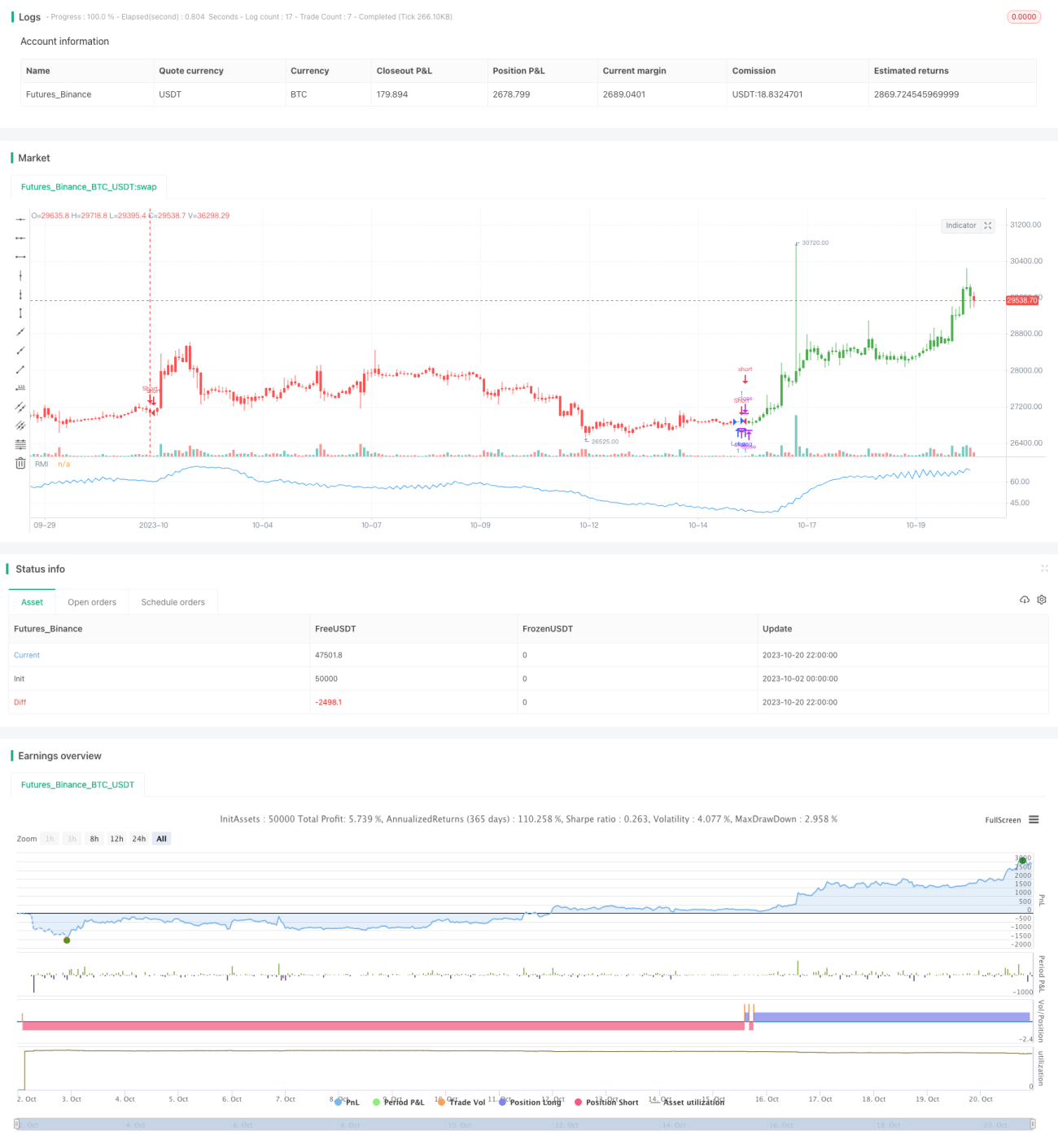
Обзор
Стратегия на основе индекса относительного импульса (Relative Momentum Index, RMI) является улучшенной версией стратегии на основе индекса относительной силы (RSI). Эта стратегия рассчитывает импульс изменения цены за определенный период времени и определяет, находится ли рынок в состоянии перекупленности или перепроданности, чтобы уловить моменты разворота.
Принцип стратегии
Формула расчета стратегии RMI:
xMom = xPrice - xPrice[Length] // Вычисление изменения цены за период Length
xMU = если xMom >= 0: предыдущий xMU минус xMU/Length плюс xMom; иначе: предыдущий xMU
xMD = если xMom <= 0: предыдущий xMD минус xMD/Length плюс абсолютное значение xMom; иначе: 0
RM = xMU / xMD
RMI = 100 * (RM / (1 + RM))
Сначала стратегия вычисляет изменение цены xMom за период Length. Если xMom >= 0, это означает рост цены, и xMU накапливает xMom; если xMom < 0, это означает падение цены, и xMD накапливает абсолютное значение xMom. RM – это отношение xMU и xMD, представляющее силу изменения цены. RMI нормализует RM, получая индекс в диапазоне от 0 до 100.
Когда RMI превышает порог SellZone, это указывает на перекупленность – открывается короткая позиция; когда RMI ниже порога BuyZone, это указывает на перепроданность – открывается длинная позиция.
Преимущества стратегии
- По сравнению с RSI, индекс RMI более чувствителен и позволяет раньше улавливать моменты разворота цены.
- RMI измеряет силу движения цены и не подвержен влиянию бокового тренда.
- Основанный на импульсе, RMI более точно определяет состояния перекупленности и перепроданности.
Риски стратегии
- Как и другие разворотные стратегии, стратегия RMI подвержена риску ложных пробоев. В сильных трендах точки входа могут быть пробиты.
- Параметры RMI требуют оптимизации под разные инструменты, иначе эффективность может быть низкой.
- Необходимо разумно устанавливать пороги перекупленности/перепроданности, иначе будет слишком много ложных сигналов.
Снизить риски можно за счет соответствующего расширения стоп-лосса, оптимизации комбинаций параметров, комбинирования с трендовыми стратегиями и т.д.
Оптимизация стратегии
Стратегию RMI можно оптимизировать по следующим направлениям:
- Оптимизация параметра Length – выбор периода, максимизирующего доходность стратегии.
- Оптимизация порогов перекупленности/перепроданности для снижения вероятности ложных сигналов.
- Добавление механизма стоп-лосса для контроля убытков по каждой сделке.
- Комбинирование с трендовыми стратегиями или стратегиями на скользящих средних для повышения процента выигрышных сделок.
- Выбор подходящих торговых сессий в зависимости от особенностей инструмента для повышения стабильности стратегии.
Заключение
Стратегия RMI, измеряя изменения ценового импульса, выполняет разворотные операции и позволяет эффективно улавливать возможности краткосрочных откатов. По сравнению с RSI, RMI более чувствителен и не подвержен влиянию боковых движений. Однако эта стратегия все еще несет риск ложных пробоев, поэтому для достижения максимальной эффективности необходимо оптимизировать параметры и использовать ее в сочетании с трендовыми стратегиями.
/*backtest
start: 2023-10-02 00:00:00
end: 2023-10-21 00:00:00
period: 2h
basePeriod: 15m
exchanges: [{"eid":"Futures_Binance","currency":"BTC_USDT"}]
*/

//@version=2
////////////////////////////////////////////////////////////
//  Copyright by HPotter v1.0 19/10/2017
// The Relative Momentum Index (RMI) was developed by Roger Altman. Impressed - 1