Стратегия выбора времени на основе двойного индикатора супертренда, моментума и волатильности

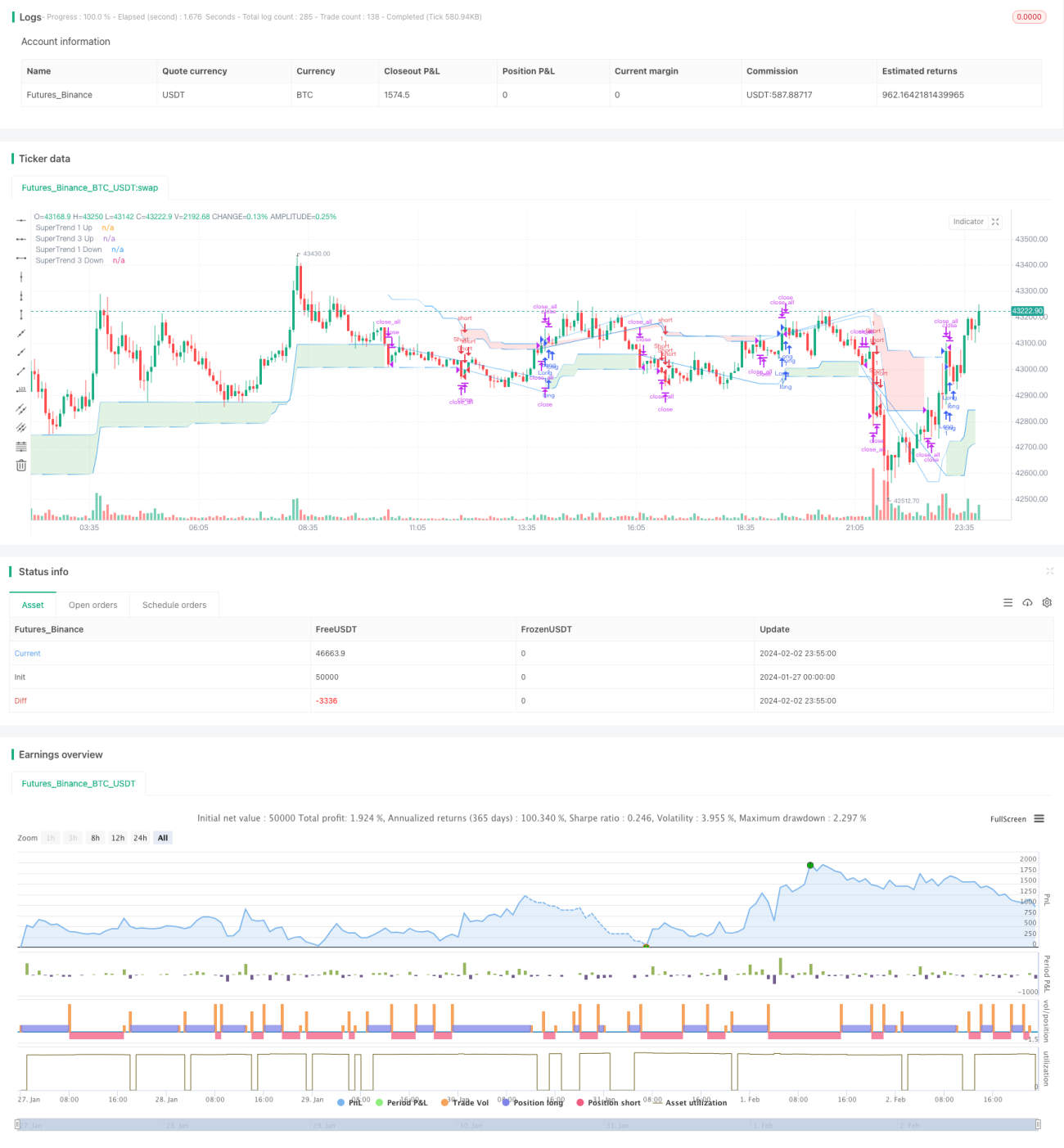
Обзор
Данная стратегия объединяет индикатор SuperTrend и теорию волн Эллиотта, создавая надежный инструмент технической торговли. Она использует многоуровневый анализ тренда для предоставления более полного рыночного обзора, позволяя на ранней стадии фиксировать потенциальные развороты тренда и значительные ценовые движения.
Принцип стратегии
Ключевая идея заключается в её многоуровневом подходе:
- Используются 4 индикатора SuperTrend, каждый с различными значениями длины ATR и множителя, для оценки тренда от краткосрочного до долгосрочного.
- Путем объединения индикаторов можно выявить надежные сигналы на покупку и продажу.
- Используются методы распознавания паттернов волн Эллиотта для выявления аналогичных моделей рыночного поведения и подтверждения торговых сигналов.
Таким образом, стратегия использует несколько индикаторов и добавляет распознавание паттернов, что делает её более устойчивой.
Преимущества
- Многоиндикаторный дизайн обеспечивает всестороннюю оценку.
- Вдохновение от теории волн, распознавание паттернов повышает стабильность.
- Корректировка направления в реальном времени, адаптация к рыночным изменениям.
- Настраиваемые параметры, подходящие для разных инструментов и таймфреймов.
Анализ рисков
- Настройка параметров зависит от опыта, требуется подбор оптимального сочетания.
- Многоиндикаторный дизайн сложен и увеличивает вычислительную нагрузку.
- Невозможно полностью избежать ложных сигналов.
Риски можно снизить путем оптимизации параметров для определения наилучших значений, использования облачных вычислений для повышения производительности и установки стоп-лоссов для контроля убытков.
Направления оптимизации
Оптимизацию можно проводить по следующим направлениям:
- Добавление модуля адаптивной настройки параметров для динамической корректировки в зависимости от рыночных условий.
- Внедрение моделей машинного обучения для оценки надежности торговых сигналов.
- Интеграция внешних факторов, таких как индикаторы настроения и новостные события, для оценки рыночных паттернов.
- Поддержка шаблонов параметров для нескольких инструментов, сокращение времени на тестирование.
Это сделает параметры стратегии более интеллектуальными, оценку — более точной, а практическое применение — более удобным.
Заключение
Стратегия комплексно учитывает два измерения — тренд и паттерн, обеспечивая как надежность оценки, так и гибкость. Множество индикаторов и настройка параметров гарантируют применимость на всех рынках. Дальнейшее внедрение интеллектуальных и автоматизированных методов значительно повысит практическую эффективность стратегии. Она предлагает полезные идеи и примеры для развития технической торговли.
/*backtest
start: 2024-01-27 00:00:00
end: 2024-02-03 00:00:00
period: 5m
basePeriod: 1m
exchanges: [{"eid":"Futures_Binance","currency":"BTC_USDT"}]
*/

//@version=5
strategy("Elliott's Quadratic Momentum - Strategy [presentTrading]",shorttitle = "EQM Strategy [presentTrading]", overlay=true )

// Inputs for selecting trading direction- 1