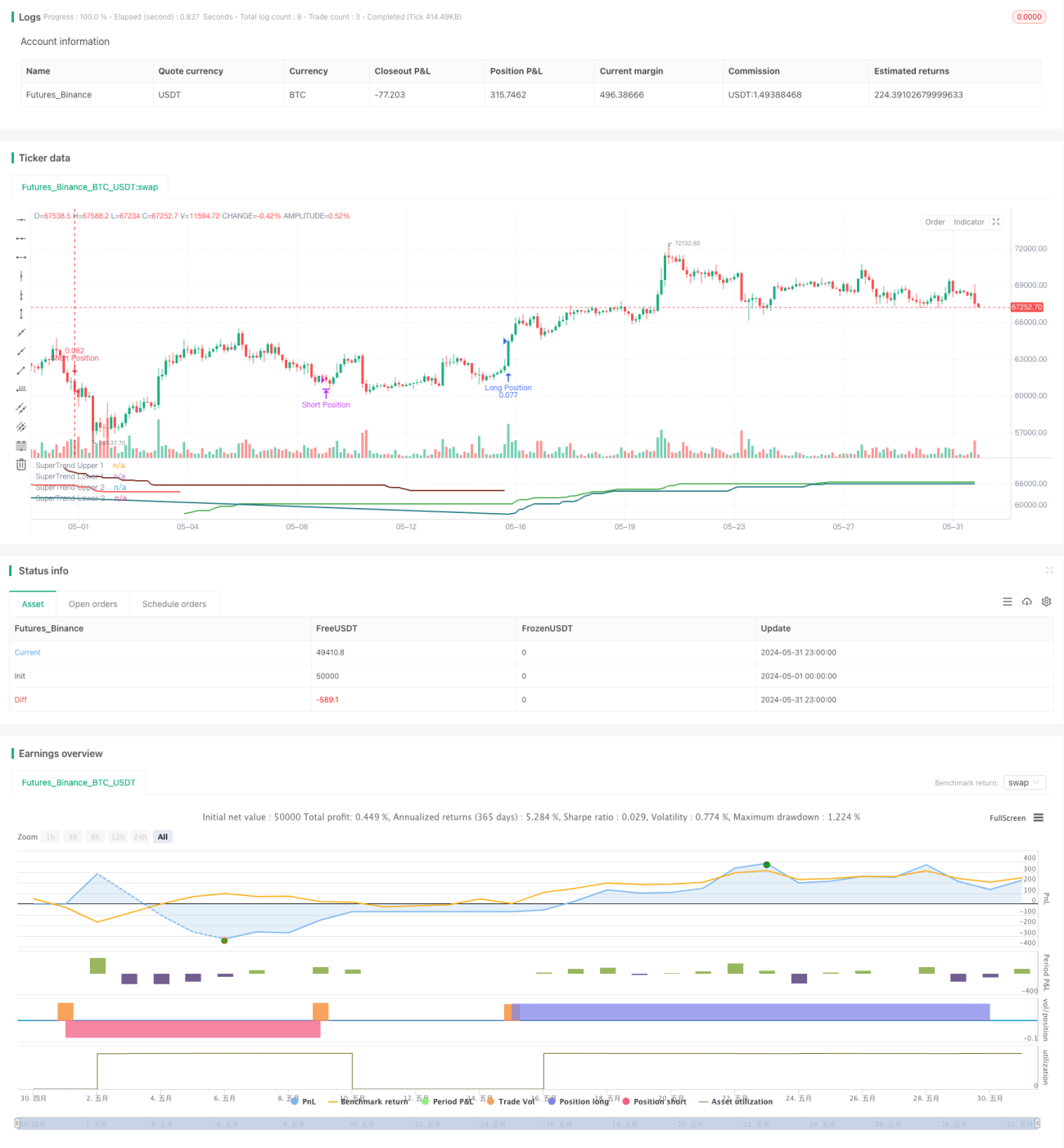
Корректировка волатильности канала Double Vegas. Количественная торговая стратегия SuperTrend.

ATR SMA STD HLC3
Дата создания: 2024-06-03 11:16:38 Последнее изменение: 2024-06-03 11:16:38
Копировать: 0 Количество просмотров: 709
1
Подписаться
1617
Подписчики

Корректировка волатильности канала Double Vegas. Количественная торговая стратегия SuperTrend.

Обзор

“Двойная стратегия количественного трейдинга SuperTrend с регулировкой волатильности канала Vegas” - это продвинутая система количественного трейдинга, которая объединяет два индикатора Volatility Adjustment SuperTrend с регулировкой волатильности канала Vegas с различными параметрами, чтобы более точно улавливать рыночные тенденции и генерировать торговые сигналы, которые согласуются с направлением общего рынка. Эта стратегия оптимизирует расчеты SuperTrend, объединяя волатильность и используя ширину канала Vegas, чтобы создать динамично реагирующую торговую систему.

Стратегический принцип

Сначала стратегия рассчитывает канал Вегаса, который получается из простого скользящего среднего ((SMA) и стандартного разрыва ((STD) цены закрытия в течение определенной длины окна. Этот канал помогает измерить волатильность рынка и закладывает основу для корректировки индикатора SuperTrend. Затем, используя средний реальный диапазон ((ATR) и корректированный множитель, определяется рост и падение SuperTrend.

Стратегические преимущества

Основным преимуществом “Двойной канала Вегас, изменяющей волатильность, количественная торговая стратегия SuperTrend” является то, что она может динамически корректировать показатели SuperTrend в соответствии с изменяющимися рыночными условиями. Благодаря интеграции ширины канала Вегас, стратегия может лучше реагировать на рыночные колебания и повышать точность идентификации тенденций. Кроме того, использование двух индикаторов SuperTrend с различными параметрами настройки может обеспечить более полную рыночную перспективу, что помогает подтвердить тенденции и отфильтровать ошибочные сигналы.

Стратегический риск

Несмотря на то, что эта стратегия направлена на повышение точности идентификации тенденций, все же существуют некоторые риски. Во-первых, стратегия может генерировать ошибочные торговые сигналы в условиях чрезвычайно высокой волатильности или неопределенности в движении рынка. Во-вторых, слишком частые сделки могут привести к высоким торговым затратам, влияющим на общую производительность стратегии.

Направление оптимизации стратегии

“Двойная стратегия количественного трейдинга SuperTrend, корректирующая волатильность канала Vegas, может быть оптимизирована несколькими способами. Одним из потенциальных направлений оптимизации является сочетание с другими техническими показателями, такими как относительно сильный индекс ((RSI) или смена сдвигающейся средней сдвигающейся средней ((MACD), для повышения надежности признания тенденции.

Подвести итог

В целом, “Двойная стратегия для количественного трейдинга SuperTrend с корректировкой волатильности канала Vegas” - это мощная торговая система, которая повышает точность определения тенденций путем интеграции корректировки волатильности и использования ширины канала Vegas. Стратегия использует два показателя SuperTrend с различными параметрическими настройками для получения более полного взгляда на рынок. Несмотря на то, что стратегия демонстрирует огромный потенциал, необходимо осторожно относиться к ее присущим рискам.

Исходный код стратегии
/*backtest
start: 2024-05-01 00:00:00
end: 2024-05-31 23:59:59
period: 3h
basePeriod: 15m
exchanges: [{"eid":"Futures_Binance","currency":"BTC_USDT"}]
*/

// This Pine Script™ code is subject to the terms of the Mozilla Public License 2.0 at https://mozilla.org/MPL/2.0/
// © PresentTrading

// The "Double Vegas SuperTrend Enhanced" strategy uses two SuperTrend indicators with different ATR and Vegas Channel settings 
// to identify market trends and generate trades. Trades are executed only when both SuperTrends align in the same direction. 
// The strategy includes configurable take-profit and stop-loss levels, and plots the SuperTrend levels on the chart.

//@version=5
strategy("Double Vegas SuperTrend Enhanced - Strategy [presentTrading]", shorttitle="Double Vegas SuperTrend Enhanced - Strategy [presentTrading]", overlay=true, overlay = false, 
 precision=3, commission_value= 0.1, commission_type=strategy.commission.percent, slippage= 1, currency=currency.USD, default_qty_type = strategy.percent_of_equity, 
 default_qty_value = 10, initial_capital= 10000)


// Input settings allow the user to customize the strategy's parameters.
tradeDirectionChoice = input.string(title="Trade Direction", defval="Both", options=["Long", "Short", "Both"]) // Option to select the trading direction

// Settings for the first Vegas SuperTrend
atrPeriod1 = input(10, "ATR Period for SuperTrend 1") // Length of the ATR for volatility measurement
vegasWindow1 = input(100, "Vegas Window Length 1") // Length of the moving average for the Vegas Channel
superTrendMultiplier1 = input(5, "SuperTrend Multiplier Base 1") // Base multiplier for the SuperTrend calculation
volatilityAdjustment1 = input.float(5, "Volatility Adjustment Factor 1") // Factor to adjust the SuperTrend sensitivity to the Vegas Channel width

// Settings for the second Vegas SuperTrend
atrPeriod2 = input(5, "ATR Period for SuperTrend 2") // Length of the ATR for volatility measurement
vegasWindow2 = input(200, "Vegas Window Length 2") // Length of the moving average for the Vegas Channel
superTrendMultiplier2 = input(7, "SuperTrend Multiplier Base 2") // Base multiplier for the SuperTrend calculation
volatilityAdjustment2 = input.float(7, "Volatility Adjustment Factor 2") // Factor to adjust the SuperTrend sensitivity to the Vegas Channel width

// Settings for Hold Days and TPSL Conditions
useHoldDays = input.bool(true, title="Use Hold Days")
holdDays = input.int(5, title="Hold Days", minval=1, maxval=60, step=1)
TPSLCondition = input.string("None", "TPSL Condition", options=["TP", "SL", "Both", "None"])
takeProfitPerc = input(30.0, title="Take Profit (%)")
stopLossPerc = input(20.0, title="Stop Loss (%)")

// Calculate the first Vegas Channel using a simple moving average and standard deviation.
vegasMovingAverage1 = ta.sma(close, vegasWindow1)
vegasChannelStdDev1 = ta.stdev(close, vegasWindow1)
vegasChannelUpper1 = vegasMovingAverage1 + vegasChannelStdDev1
vegasChannelLower1 = vegasMovingAverage1 - vegasChannelStdDev1

// Adjust the first SuperTrend multiplier based on the width of the Vegas Channel.
channelVolatilityWidth1 = vegasChannelUpper1 - vegasChannelLower1
adjustedMultiplier1 = superTrendMultiplier1 + volatilityAdjustment1 * (channelVolatilityWidth1 / vegasMovingAverage1)

// Calculate the first SuperTrend indicator values.
averageTrueRange1 = ta.atr(atrPeriod1)
superTrendUpper1 = hlc3 - (adjustedMultiplier1 * averageTrueRange1)
superTrendLower1 = hlc3 + (adjustedMultiplier1 * averageTrueRange1)
var float superTrendPrevUpper1 = na
var float superTrendPrevLower1 = na
var int marketTrend1 = 1

// Update SuperTrend values and determine the current trend direction for the first SuperTrend.
superTrendPrevUpper1 := nz(superTrendPrevUpper1[1], superTrendUpper1)
superTrendPrevLower1 := nz(superTrendPrevLower1[1], superTrendLower1)
marketTrend1 := close > superTrendPrevLower1 ? 1 : close < superTrendPrevUpper1 ? -1 : nz(marketTrend1[1], 1)
superTrendUpper1 := marketTrend1 == 1 ? math.max(superTrendUpper1, superTrendPrevUpper1) : superTrendUpper1
superTrendLower1 := marketTrend1 == -1 ? math.min(superTrendLower1, superTrendPrevLower1) : superTrendLower1
superTrendPrevUpper1 := superTrendUpper1
superTrendPrevLower1 := superTrendLower1

// Calculate the second Vegas Channel using a simple moving average and standard deviation.
vegasMovingAverage2 = ta.sma(close, vegasWindow2)
vegasChannelStdDev2 = ta.stdev(close, vegasWindow2)
vegasChannelUpper2 = vegasMovingAverage2 + vegasChannelStdDev2
vegasChannelLower2 = vegasMovingAverage2 - vegasChannelStdDev2

// Adjust the second SuperTrend multiplier based on the width of the Vegas Channel.
channelVolatilityWidth2 = vegasChannelUpper2 - vegasChannelLower2
adjustedMultiplier2 = superTrendMultiplier2 + volatilityAdjustment2 * (channelVolatilityWidth2 / vegasMovingAverage2)

// Calculate the second SuperTrend indicator values.
averageTrueRange2 = ta.atr(atrPeriod2)
superTrendUpper2 = hlc3 - (adjustedMultiplier2 * averageTrueRange2)
superTrendLower2 = hlc3 + (adjustedMultiplier2 * averageTrueRange2)
var float superTrendPrevUpper2 = na
var float superTrendPrevLower2 = na
var int marketTrend2 = 1

// Update SuperTrend values and determine the current trend direction for the second SuperTrend.
superTrendPrevUpper2 := nz(superTrendPrevUpper2[1], superTrendUpper2)
superTrendPrevLower2 := nz(superTrendPrevLower2[1], superTrendLower2)
marketTrend2 := close > superTrendPrevLower2 ? 1 : close < superTrendPrevUpper2 ? -1 : nz(marketTrend2[1], 1)
superTrendUpper2 := marketTrend2 == 1 ? math.max(superTrendUpper2, superTrendPrevUpper2) : superTrendUpper2
superTrendLower2 := marketTrend2 == -1 ? math.min(superTrendLower2, superTrendPrevLower2) : superTrendLower2
superTrendPrevUpper2 := superTrendUpper2
superTrendPrevLower2 := superTrendLower2

// Enhanced Visualization
// Plot the SuperTrend and Vegas Channel for visual analysis for both lengths.
plot(marketTrend1 == 1 ? superTrendUpper1 : na, "SuperTrend Upper 1", color=color.green, linewidth=2)
plot(marketTrend1 == -1 ? superTrendLower1 : na, "SuperTrend Lower 1", color=color.red, linewidth=2)

plot(marketTrend2 == 1 ? superTrendUpper2 : na, "SuperTrend Upper 2", color=color.rgb(31, 119, 130), linewidth=2)
plot(marketTrend2 == -1 ? superTrendLower2 : na, "SuperTrend Lower 2", color=color.rgb(120, 42, 26), linewidth=2)

// Detect trend direction changes and plot entry/exit signals for both lengths.
trendShiftToBullish1 = marketTrend1 == 1 and marketTrend1[1] == -1
trendShiftToBearish1 = marketTrend1 == -1 and marketTrend1[1] == 1

trendShiftToBullish2 = marketTrend2 == 1 and marketTrend2[1] == -1
trendShiftToBearish2 = marketTrend2 == -1 and marketTrend2[1] == 1

// Define conditions for entering long or short positions, and execute trades based on these conditions for both lengths.
enterLongCondition1 = marketTrend1 == 1
enterShortCondition1 = marketTrend1 == -1

enterLongCondition2 = marketTrend2 == 1
enterShortCondition2 = marketTrend2 == -1

// Entry conditions: Both conditions must be met for a trade to be executed.
enterLongCondition = enterLongCondition1 and enterLongCondition2 and not na(superTrendPrevUpper1[1]) and not na(superTrendPrevUpper2[1])
enterShortCondition = enterShortCondition1 and enterShortCondition2 and not na(superTrendPrevLower1[1]) and not na(superTrendPrevLower2[1])

// Variables to track entry times
var float longEntryTime = na
var float shortEntryTime = na

// Variables to track whether we have recently exited a trade to prevent re-entry in the same trend
var bool recentlyExitedLong = false
var bool recentlyExitedShort = false

// Check trade direction choice before executing trade entries.
if (enterLongCondition and (tradeDirectionChoice == "Long" or tradeDirectionChoice == "Both"))
    if (strategy.position_size < 0)
        strategy.close("Short Position")
    strategy.entry("Long Position", strategy.long)
    longEntryTime := time
    recentlyExitedLong := false
    recentlyExitedShort := false

if (enterShortCondition and (tradeDirectionChoice == "Short" or tradeDirectionChoice == "Both"))
    if (strategy.position_size > 0)
        strategy.close("Long Position")
    strategy.entry("Short Position", strategy.short)
    shortEntryTime := time
    recentlyExitedShort := false
    recentlyExitedLong := false

// Exit conditions: Either condition being met will trigger an exit.
exitLongCondition = marketTrend1 == -1 or marketTrend2 == -1
exitShortCondition = marketTrend1 == 1 or marketTrend2 == 1

// Close positions based on exit conditions or hold days.
if (useHoldDays and not na(longEntryTime) and (time >= longEntryTime + holdDays * 86400000) and strategy.position_size > 0)
    strategy.close("Long Position")
    longEntryTime := na
    recentlyExitedLong := true

if (useHoldDays and not na(shortEntryTime) and (time >= shortEntryTime + holdDays * 86400000) and strategy.position_size < 0)
    strategy.close("Short Position")
    shortEntryTime := na
    recentlyExitedShort := true

if (not useHoldDays and exitLongCondition and strategy.position_size > 0)
    strategy.close("Long Position")
    longEntryTime := na
    recentlyExitedLong := true

if (not useHoldDays and exitShortCondition and strategy.position_size < 0)
    strategy.close("Short Position")
    shortEntryTime := na
    recentlyExitedShort := true

// Reset recently exited flags on trend change to allow re-entry on a new trend
if (trendShiftToBullish1 or trendShiftToBullish2)
    recentlyExitedLong := false

if (trendShiftToBearish1 or trendShiftToBearish2)
    recentlyExitedShort := false

// Conditional Profit and Loss Management
if (TPSLCondition == "TP" or TPSLCondition == "Both") 
    // Apply take profit conditions
    strategy.exit("TakeProfit_Long", "Long Position", limit=close * (1 + takeProfitPerc / 100))
    strategy.exit("TakeProfit_Short", "Short Position", limit=close * (1 - takeProfitPerc / 100))

if (TPSLCondition == "SL" or TPSLCondition == "Both") 
    // Apply stop loss conditions
    strategy.exit("StopLoss_Long", "Long Position", stop=close * (1 - stopLossPerc / 100))
    strategy.exit("StopLoss_Short", "Short Position", stop=close * (1 + stopLossPerc / 100))

// Ensure that new entry signals can override the hold days condition
if (enterLongCondition and (tradeDirectionChoice == "Long" or tradeDirectionChoice == "Both"))
    if (strategy.position_size < 0)
        strategy.close("Short Position")
    strategy.entry("Long Position", strategy.long)
    longEntryTime := time
    recentlyExitedLong := false
    recentlyExitedShort := false

if (enterShortCondition and (tradeDirectionChoice == "Short" or tradeDirectionChoice == "Both"))
    if (strategy.position_size > 0)
        strategy.close("Long Position")
    strategy.entry("Short Position", strategy.short)
    shortEntryTime := time
    recentlyExitedShort := false
    recentlyExitedLong := false