Стратегия адаптивного импульса тренда теории Доу

DTTAS HH/HL LH/LL SL/TP TTS
Дата создания: 2025-04-03 13:05:17 Последнее изменение: 2025-04-03 13:05:17
Копировать: 0 Количество просмотров: 359
2
Подписаться
319
Подписчики

Стратегия адаптивного импульса тренда теории Доу Стратегия адаптивного импульса тренда теории Доу

Обзор

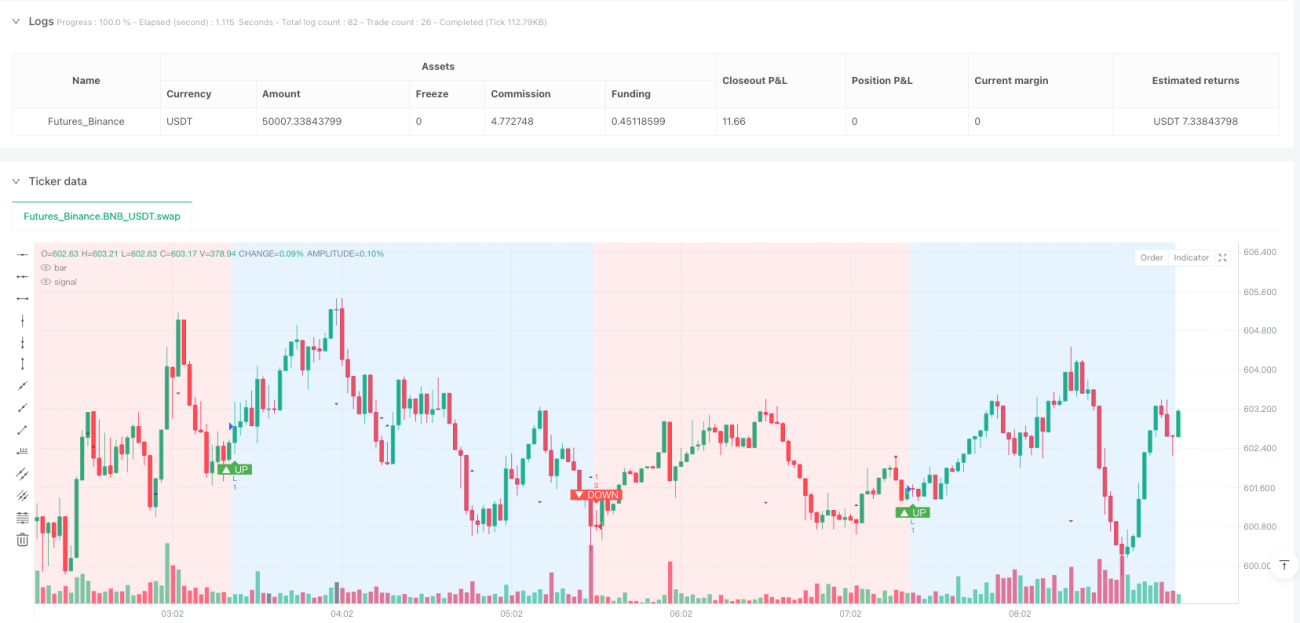
Стратегия адаптивной динамики доушской теории - это продвинутый метод торговли, основанный на принципах классической доушской теории, направляющий торговые решения путем идентификации ключевых поворотных точек в рыночных тенденциях. Стратегия фокусируется на обнаружении и подтверждении основных динамик ценовых тенденций, используя более высокие высоты и более высокие низкие значения для определения восходящей тенденции и более низкие высоты и более низкие значения для определения нисходящей тенденции.

Стратегический принцип

Основные принципы стратегии основаны на классическом методе идентификации тенденций в теории Доу. Стратегия использует функции ta.pivothigh () и ta.pivotlow () для обнаружения ключевых поворотных точек. Конкретная реализация включает в себя следующие ключевые шаги:

  1. Обнаружение точек поворота: определение количества столбов с левой и левой стороны с использованием параметров pivotLookback для идентификации высоких и низких точек.
  2. Подтверждение тренда: восходящая тенденция подтверждается только при одновременном выполнении условий более высоких максимумов и более высоких минимумов; также, понижающая тенденция подтверждается только при одновременном выполнении условий более низких максимумов и более низких минимумов.
  3. Продолжительность тренда: если условия для перехода в тренд не выполнены, стратегия сохраняет предыдущее состояние тренда, что позволяет более плавное отслеживание тренда.

Стратегические преимущества

  1. Идентификация динамических тенденций: Стратегия может динамически улавливать изменения в тенденциях рынка путем постоянного анализа ключевых поворотных точек.
  2. Гибкий режим торговли: предлагает три режима торговли: автоматический, только сделай больше и только сделай меньше, чтобы удовлетворить потребности различных трейдеров.
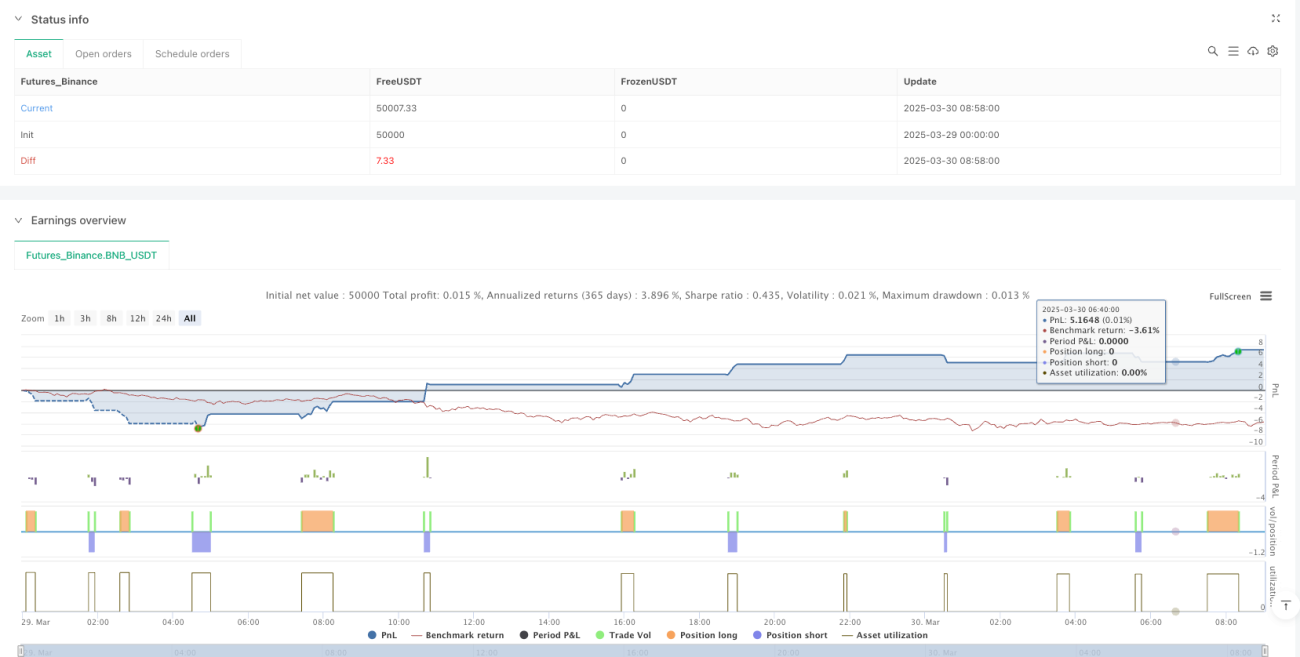
  3. Управление рисками: встроенные механизмы остановки и остановки, которые позволяют эффективно контролировать риски отдельных сделок.
  4. Визуализация трендов: интуитивное отображение направления тренда с помощью цветов фона и знаков, что позволяет трейдерам быстро понять состояние рынка.
  5. Низкая задержка: метод реагирует на изменения тенденций быстрее, чем традиционные стратегии скользящих средних.

Стратегический риск

  1. Риск отставания: из-за использования обнаружения переломных точек существует риск отставания стратегии, которая может не поймать ранние сигналы тенденции.
  2. Риск рыночной волатильности: Частые незначительные изменения цен могут привести к ненужным сделкам на рынках, где волатильность не заметна.
  3. Чувствительность параметров: выбор параметров pivotLookback оказывает большое влияние на эффективность стратегии, требуя корректировки для разных рынков и временных рамок.
  4. Торговые издержки: частые сделки могут привести к более высоким торговым издержкам, особенно в случае высоких комиссионных.

Направление оптимизации стратегии

  1. Введение дополнительных фильтров: в сочетании с индикатором силы тренда (например, ATR) для фильтрации сигналов слабого тренда.
  2. Динамическая параметровая настройка: разработка механизма самостоятельной адаптации параметров pivotLookback на основе рыночной волатильности.
  3. Проверка в несколько временных рамок: перекрестная проверка трендовых сигналов в разных временных рамах, повышение надежности сигналов.
  4. Улучшение машинного обучения: исследование использования алгоритмов машинного обучения для оптимизации идентификации тенденций и времени входа.
  5. Оптимизация управления рисками: регулирование стоп-лосса и стоп-дистанции в зависимости от динамики волатильности рынка.

Подвести итог

Стратегия динамики, адаптирующаяся к тенденциям теории Дауса, является мощным методом отслеживания тенденций, который предоставляет трейдерам систематизированный инструмент для идентификации тенденций с помощью инновационных технологий анализа точек отклонения. Несмотря на некоторые присущие риски, ее гибкость и динамичность делают ее ценным методом в современной количественной торговой стратегии.

Overview

The Dow Theory Trend Adaptive Momentum Strategy is an advanced trading approach based on classic Dow Theory principles, designed to guide trading decisions by identifying key turning points in market trends. The strategy focuses on detecting and confirming the fundamental dynamics of price trends, using Higher Highs and Higher Lows to define uptrends, and Lower Highs and Lower Lows to define downtrends. This method aims to provide a systematic approach to capturing market trends and responding promptly when trends change.

Strategy Principles

The core principle of this strategy is based on the classic Dow Theory trend identification method. The strategy detects key turning points using ta.pivothigh() and ta.pivotlow() functions. Specific implementation includes the following key steps:

  1. Turning Point Detection: Use the pivotLookback parameter to determine the number of bars on both sides for identifying highs and lows.
  2. Trend Confirmation: An uptrend is confirmed only when both Higher Highs and Higher Lows conditions are met; similarly, a downtrend is confirmed only when both Lower Highs and Lower Lows conditions are satisfied.
  3. Trend Persistence: If trend conversion conditions are not met, the strategy maintains the previous trend state, achieving smoother trend tracking.

Strategy Advantages

  1. Dynamic Trend Identification: By continuously analyzing key turning points, the strategy can dynamically capture market trend changes.
  2. Flexible Trading Modes: Provides three trading modes - automatic, long-only, and short-only - to meet different traders’ needs.
  3. Risk Management: Built-in stop-loss and take-profit mechanisms effectively control the risk of individual trades.
  4. Trend Visualization: Intuitively displays trend direction through background colors and markers, making it easy for traders to understand market conditions.
  5. Low Latency: Compared to traditional moving average strategies, this method can respond to trend changes more quickly.

Strategy Risks

  1. Lag Risk: Due to using pivot point detection, the strategy inherently carries a lag risk and may not capture the earliest trend signals.
  2. Ranging Market Risk: In markets with unclear fluctuations, frequent small price changes may lead to unnecessary trades.
  3. Parameter Sensitivity: The choice of pivotLookback parameter significantly impacts strategy performance and requires adjustment for different markets and timeframes.
  4. Trading Costs: Frequent trading may result in high transaction costs, especially with higher commission rates.

Strategy Optimization Directions

  1. Introduce Additional Filters: Combine trend strength indicators (such as ATR) to filter weak trend signals.
  2. Dynamic Parameter Adjustment: Develop an adaptive pivotLookback parameter mechanism based on market volatility.
  3. Multi-Timeframe Verification: Cross-verify trend signals across different timeframes to improve signal reliability.
  4. Machine Learning Enhancement: Explore using machine learning algorithms to optimize trend identification and entry timing.
  5. Risk Management Optimization: Dynamically adjust stop-loss and take-profit distances based on market volatility.

Conclusion

The Dow Theory Trend Adaptive Momentum Strategy is a powerful trend-following method that provides traders with a systematic trend identification tool through innovative turning point analysis techniques. Despite some inherent risks, its flexibility and dynamism make it a valuable approach in modern quantitative trading strategies. Successfully applying this strategy requires a deep understanding of its working principles and continuous optimization and adjustment based on specific market environments.

Исходный код стратегии
/*backtest
start: 2025-03-29 00:00:00
end: 2025-03-30 09:00:00
period: 2m
basePeriod: 2m
exchanges: [{"eid":"Futures_Binance","currency":"BNB_USDT"}]
*/

//@version=5
// strategy(title="Dow Theory Trend Strategy v3", shorttitle="Dow Trend Strat v3", overlay=true,
//      initial_capital=10000, default_qty_type=strategy.percent_of_equity, default_qty_value=10,
//      commission_type=strategy.commission.percent, commission_value=0.1, // Example strategy settings with commission
//      process_orders_on_close=true) // Consider processing on bar close for more stable backtests
strategy(title="Dow Theory Trend Strategy v3", shorttitle="Dow Trend Strat v3", overlay=true) // Basic strategy settings

// --- 設定 ---
// Calculation Settings
pivotLookback = input.int(10, title="Pivot Lookback Period", minval=1, tooltip="ピボットハイ/ローを検出するための左右のバーの数", group="Calculation Settings")

// Display Settings
showPivotPoints = input.bool(true, title="Show Pivot Points", tooltip="ピボットハイ/ローのポイントを表示します", group="Display Settings")
showTrendChange = input.bool(true, title="Show Trend Change Signals", tooltip="トレンド転換のシグナル(エントリーポイント)を表示します", group="Display Settings")

// Strategy Settings
// --- Manual Trend Override (配列定義を input 内に変更) ---
manualTrendMode = input.string("Auto", title="Manual Trend Mode",
     options=["Auto", "Long Only", "Short Only"], // オプションをここで直接定義
     tooltip="手動でトレード方向を指定 (Auto: ダウ理論に従う, Long Only: ロングのみ, Short Only: ショートのみ)",
     group="Strategy Settings")

// Risk Management Settings
useStopLoss = input.bool(true, title="Use Stop Loss", group="Risk Management")
stopLossTicks = input.float(100, title="Stop Loss (Ticks)", minval=1, group="Risk Management", tooltip="エントリー価格からのストップロスまでのティック(最小値動き)数。例:EURUSDで20 pips (tick=0.00001)なら200。")
useTakeProfit = input.bool(true, title="Use Take Profit", group="Risk Management")
takeProfitTicks = input.float(200, title="Take Profit (Ticks)", minval=1, group="Risk Management", tooltip="エントリー価格からのテイクプロフィットまでのティック(最小値動き)数。例:EURUSDで40 pips (tick=0.00001)なら400。")

// --- ピボットハイ/ローの検出 ---
pivotHighPrice = ta.pivothigh(high, pivotLookback, pivotLookback)
pivotLowPrice = ta.pivotlow(low, pivotLookback, pivotLookback)

// --- ピボットポイントの値を保持するための変数 ---
var float lastPivotHigh = na
var float prevPivotHigh = na
var float lastPivotLow = na
var float prevPivotLow = na
var int lastPivotHighBar = na
var int prevPivotHighBar = na
var int lastPivotLowBar = na
var int prevPivotLowBar = na

// --- 新しいピボットが確定したかどうかの検出と値の更新 ---
if not na(pivotHighPrice)
    if na(lastPivotHigh) or pivotHighPrice != lastPivotHigh
        prevPivotHigh := lastPivotHigh
        prevPivotHighBar := lastPivotHighBar
        lastPivotHigh := pivotHighPrice
        lastPivotHighBar := bar_index - pivotLookback

if not na(pivotLowPrice)
    if na(lastPivotLow) or pivotLowPrice != lastPivotLow
        prevPivotLow := lastPivotLow
        prevPivotLowBar := lastPivotLowBar
        lastPivotLow := pivotLowPrice
        lastPivotLowBar := bar_index - pivotLookback

// --- ダウ理論に基づくトレンド判定 (改良版) ---
var int trendDirection = 0
bool hasEnoughPivots = not na(lastPivotHigh) and not na(prevPivotHigh) and not na(lastPivotLow) and not na(prevPivotLow)

if hasEnoughPivots
    isHigherHigh = lastPivotHigh > prevPivotHigh
    isHigherLow = lastPivotLow > prevPivotLow
    isUptrendConfirmed = isHigherHigh and isHigherLow

    isLowerHigh = lastPivotHigh < prevPivotHigh
    isLowerLow = lastPivotLow < prevPivotLow
    isDowntrendConfirmed = isLowerHigh and isLowerLow

    if isUptrendConfirmed
        trendDirection := 1
    else if isDowntrendConfirmed
        trendDirection := -1
    else
        trendDirection := trendDirection[1]

// --- トレンド転換の検出 ---
bool trendChanged = ta.change(trendDirection) != 0
bool changedToUp = trendChanged and trendDirection == 1
bool changedToDown = trendChanged and trendDirection == -1

// --- 描画処理 ---
bgcolor(trendDirection == 1 ? color.new(color.blue, 85) : trendDirection == -1 ? color.new(color.red, 85) : color.new(color.gray, 90), title="Trend Background")
plotshape(showPivotPoints and not na(pivotHighPrice), title="Pivot High", location=location.abovebar, color=color.new(color.maroon, 20), style=shape.triangledown, size=size.tiny, offset=-pivotLookback)
plotshape(showPivotPoints and not na(pivotLowPrice), title="Pivot Low", location=location.belowbar, color=color.new(color.navy, 20), style=shape.triangleup, size=size.tiny, offset=-pivotLookback)
plotshape(showTrendChange and changedToUp, title="Uptrend Start Signal", location=location.belowbar, color=color.new(color.green, 0), style=shape.labelup, text="▲ UP", textcolor=color.white, size=size.small)
plotshape(showTrendChange and changedToDown, title="Downtrend Start Signal", location=location.abovebar, color=color.new(color.red, 0), style=shape.labeldown, text="▼ DOWN", textcolor=color.white, size=size.small)

// --- ストラテジーロジック ---
bool allowLong = manualTrendMode == "Auto" or manualTrendMode == "Long Only"
bool allowShort = manualTrendMode == "Auto" or manualTrendMode == "Short Only"

if (changedToUp and allowLong)
    strategy.entry("L", strategy.long, comment="Go Long")
    if (useStopLoss or useTakeProfit)
        float slValue = useStopLoss and stopLossTicks > 0 ? stopLossTicks : na
        float tpValue = useTakeProfit and takeProfitTicks > 0 ? takeProfitTicks : na
        strategy.exit("LX", from_entry="L", loss=slValue, profit=tpValue, comment_loss="SL Long", comment_profit="TP Long")

if (changedToDown and allowShort)
    strategy.entry("S", strategy.short, comment="Go Short")
    if (useStopLoss or useTakeProfit)
        float slValue = useStopLoss and stopLossTicks > 0 ? stopLossTicks : na
        float tpValue = useTakeProfit and takeProfitTicks > 0 ? takeProfitTicks : na
        strategy.exit("SX", from_entry="S", loss=slValue, profit=tpValue, comment_loss="SL Short", comment_profit="TP Short")

// --- デバッグ用 ---
// plot(trendDirection, title="Trend Direction Value")