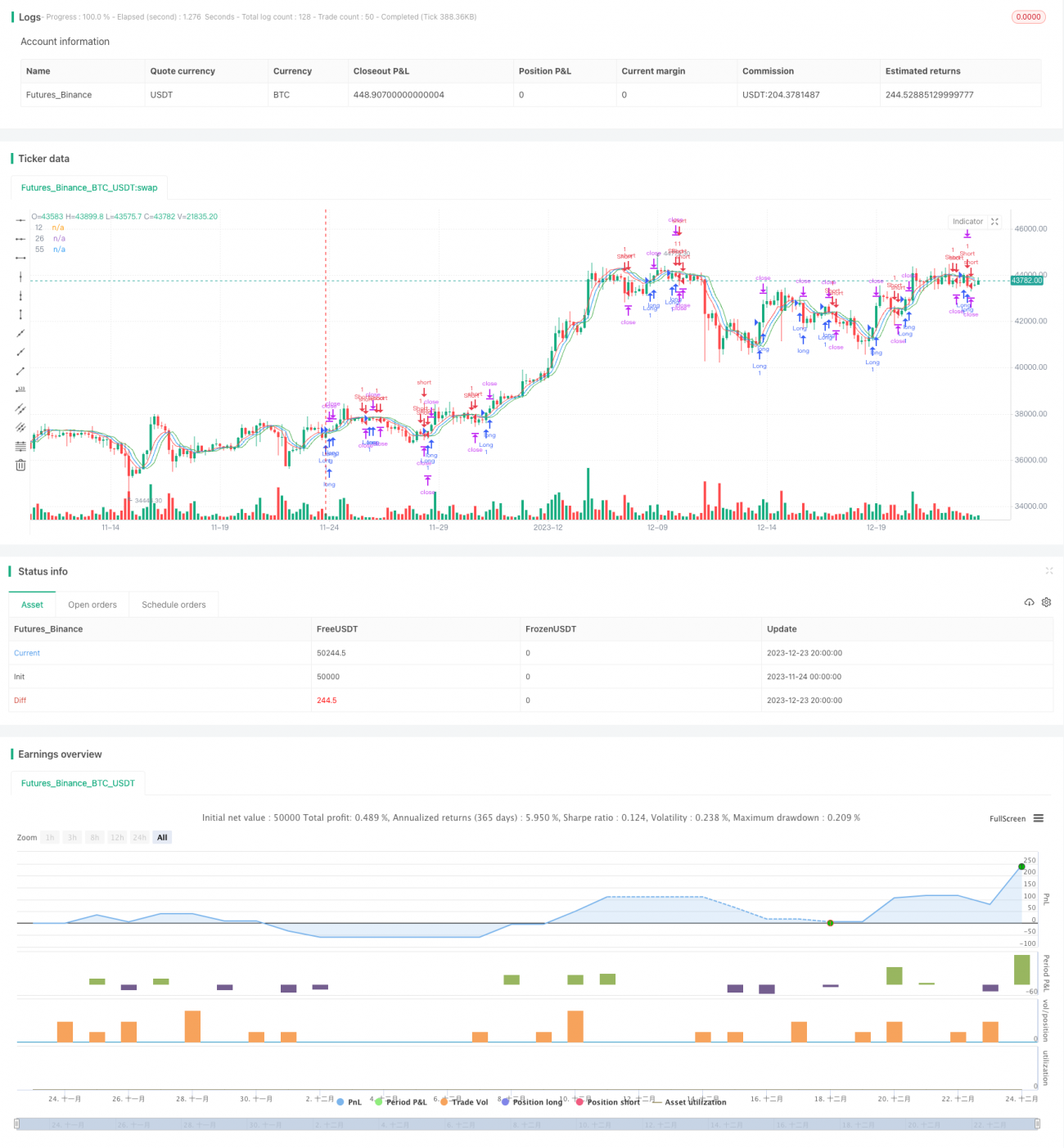
اس حکمت عملی میں تین کم ٹائملیٹڈ حرکت پذیر اوسط استعمال کی جاتی ہیں ، جن میں 12 دور ، 26 دور اور 55 دور کی کم ٹائملیٹڈ ٹیما اوسط شامل ہیں۔ یہ تین اوسط لائنیں بالترتیب نمائندگی کرتی ہیں: فاسٹ اوسط ، میڈیم اوسط اور سست اوسط۔ جب فاسٹ اوسط پر میڈیم اوسط سے گزرتا ہے تو خریدنے کا اشارہ ہوتا ہے۔ جب فاسٹ اوسط نیچے میڈیم اوسط سے گزرتا ہے تو بیچنے کا اشارہ ہوتا ہے۔ اس طرح تین اوسط لائنوں کے کراسنگ سے مارکیٹ میں خرید و فروخت کی جگہ کا تعین کیا جاتا ہے ، جس سے اعلی تعدد کی تجارت ہوتی ہے۔
کوڈ میں ٹیمپلیٹ فنکشن ٹیما کی وضاحت کی گئی ہے تاکہ کم وقت کی تاخیر ٹیما اوسط لکیری کا حساب لگایا جاسکے۔ اس کا حساب کتاب فارمولا یہ ہے: ٹیما = 2*EMA - EMA ((ای ایم اے) ، EMA کا استعمال کرتے ہوئے ، بنیادی طور پر ایک ڈبل انڈیکس ہموار اوسط ہے ، جس میں تاخیر کو بہت کم کیا گیا ہے۔ اس طرح قیمت میں تبدیلیوں کا زیادہ تیزی سے جواب دیا جاسکتا ہے ، جس سے ٹریڈنگ سگنل کے فیصلے کی حقیقت میں اضافہ ہوتا ہے۔
خاص طور پر ، اس حکمت عملی کے لئے داخلے کا فیصلہ یہ ہے کہ: ایک خریدنے کا اشارہ پیدا ہوتا ہے جب تیز رفتار اوسط لائن پر درمیانی اوسط لائن کو عبور کرتا ہے اور تیز رفتار اوسط لائن سست اوسط لائن سے اوپر ہے۔ ایک فروخت کا اشارہ پیدا ہوتا ہے جب تیز رفتار اوسط لائن کے نیچے درمیانی اوسط لائن کو عبور کرتا ہے اور تیز رفتار اوسط لائن سست اوسط لائن سے نیچے ہوتی ہے۔
اس حکمت عملی کا سب سے بڑا فائدہ یہ ہے کہ یہ فوری اور درست فیصلے کرتا ہے۔ تین اوسط لائن کم وقت میں تاخیر کا ڈیزائن بہت کم تاخیر کا سبب بنتا ہے ، قیمت میں تبدیلیوں کا فوری جواب دینے کے قابل ہوتا ہے۔ اس کے ساتھ ہی تین اوسط لائن کا استعمال کرتے ہوئے کراس فیصلے کرنے سے بچتا ہے ، غلط فیصلے سے بچتا ہے۔
اس کے علاوہ، یہ حکمت عملی اعلی تعدد ٹریڈنگ کے لئے موزوں ہے، جس میں مختصر لائن کی قیمتوں میں اتار چڑھاو سے فائدہ اٹھانا ممکن ہے۔ تیز رفتار اور تیز رفتار آپریٹنگ موڈ کے ذریعہ، زیادہ اتار چڑھاؤ والے بازاروں میں فائدہ اٹھانا ممکن ہے۔
اس حکمت عملی کا سب سے بڑا خطرہ یہ ہے کہ ممکنہ طور پر انتہائی مختصر سودے بازی کا سامنا کرنا پڑسکتا ہے۔ تین اوسط سے کم وقت میں تاخیر کا ڈیزائن اس بات کا تعین کرتا ہے کہ یہ قیمت کی تبدیلیوں کے لئے انتہائی حساس ہے ، جس میں کچھ مارکیٹوں میں انتہائی مختصر لہر کا سامنا کرنا پڑتا ہے۔ اس وقت اس کا مقابلہ کرنا آسان ہے۔
اس کے علاوہ ، ہائی فریکوئینسی ٹریڈنگ میں زیادہ فیس اور سلائڈ پوائنٹس کی ادائیگی کی ضرورت ہوتی ہے۔ اگر منافع بخش صلاحیت کم ہے تو ، تجارت کے اخراجات کو ریورس ارورڈج کیا جاسکتا ہے۔
اس کے علاوہ ، اس حکمت عملی میں تاجروں کی اصل وقت کی نگرانی کی صلاحیتوں کی زیادہ ضرورت ہوتی ہے ، جس میں روک تھام اور روک تھام کی اپ ڈیٹ کی ضرورت ہوتی ہے۔
اس حکمت عملی کو مندرجہ ذیل پہلوؤں سے بہتر بنایا جاسکتا ہے:
ٹرپل میڈین لائن کے دورانیہ کے پیرامیٹرز کو بہتر بنانے کے لئے تاکہ یہ مختلف مارکیٹوں کی خصوصیات کے مطابق بہتر ہو سکے؛
سگنل کی توثیق کرنے کے لئے اتار چڑھاؤ کے اشارے یا حجم کے اشارے شامل کریں ، تاکہ ہنگامہ خیز حالات میں پھنسنے سے بچا جاسکے۔
مزید عوامل کے ساتھ سٹاپ نقصان کا طریقہ کار قائم کریں، متحرک ٹریکنگ کو لاگو کریں؛
پوزیشن مینجمنٹ کو بہتر بنانا ، فنڈ مینجمنٹ کے ذریعہ انفرادی خطرے پر قابو پانا۔
مشین لرننگ الگورتھم کے ساتھ مل کر حکمت عملی کے پیرامیٹرز کو متحرک طور پر بہتر بنائیں۔
یہ حکمت عملی تین اوسط لائن کم وقت میں تاخیر سے فوری تجارت کی حکمت عملی ہے۔ یہ کم تاخیر کے ذریعہ ڈیزائن کیا گیا ہے ، تیز رفتار اور تیز رفتار باہر نکلنے کے لئے موزوں ہے ، جو ہائی فریکوئینسی تجارت کے لئے موزوں ہے۔ اس حکمت عملی کی سب سے بڑی خوبی یہ ہے کہ سگنل کا فیصلہ تیزی سے درست ہے ، اور سب سے بڑی خرابی یہ ہے کہ زلزلے کی صورتحال میں آسانی سے پھنس جانا ہے۔ اس مضمون میں اصولوں کی تفصیلی تجزیہ ، طاقت کا تجزیہ ، خطرے کا تجزیہ اور اصلاح کی تلاش کے ذریعے اس تجارتی حکمت عملی کا ایک جامع جائزہ لیا گیا ہے۔
||
The strategy is named “Low Lag Triple Moving Average Fast Trading Strategy”. Its main idea is to determine entries and exits based on the golden cross and death cross of three moving averages with different parameters and low lag design.
The strategy uses three low-lag moving averages, including 12-, 26-, and 55-period low-lag TEMA. These three MAs represent fast, medium and slow MAs. When the fast MA crosses over the medium MA, a buy signal is generated. When the fast MA crosses below the medium MA, a sell signal is generated. By using the crossover of the three MAs to determine market entry and exit points, high frequency trading can be achieved.
The template function tema() is defined in the code to calculate the low-lag TEMA. Its calculation formula is: TEMA = 2*EMA - EMA(EMA). It uses the double exponential moving average EWMA for calculation. Essentially it is a double smoothed EMA with the main merit of largely reducing the lagging effect. Thus it can respond to price changes faster and improve the timeliness of trading signals.
Specifically, the entry rules of this strategy are: when the fast MA crosses over the medium MA and the fast MA is above the slow MA, a buy signal is generated. When the fast MA crosses below the medium MA and the fast MA is below the slow MA, a sell signal is generated.
The biggest advantage of this strategy is that the entries and exits are determined quickly and accurately. The low-lag design of the three MAs greatly reduces the lagging effect so that they can respond to price changes rapidly. Also, using the crossover of three MAs to determine signals avoids false signals.
In addition, this strategy is suitable for high-frequency trading to capture profits from short-term price fluctuations. Through fast entries and exits it can profit from high volatility markets.
The biggest risk is that ultra short-term whipsaws may occur. Due to the high sensitivity to price changes from the low-lag design, some markets may experience high-frequency oscillations. Then whipsaws are very likely to happen.
Also, high-frequency trading requires paying relatively high commissions and slippage costs. If the profiting ability is insufficient, it is easy to suffer losses from the trading costs.
Moreover, this strategy requires the trader to have strong real-time monitoring abilities to update the stop loss and take profit timely.
The strategy can be optimized from the following aspects:
Optimize the period parameters of the three MAs to better suit different market characteristics.
Add volatility indicators or volume indicators to confirm signals and avoid whipsaws in ranging markets.
Incorporate more factors to set up dynamic trailing stop mechanisms.
Optimize position sizing to control single trade risks through money management techniques.
Incorporate machine learning algorithms to dynamically optimize the strategy parameters.
This is a low-lag triple moving average fast trading strategy. Through its low-lag design, fast entries and exits can be achieved, which is suitable for high-frequency trading to capture short-term opportunities. The biggest advantage of this strategy is that its signal determination is fast and accurate. The biggest disadvantage is that it is prone to be whipsawed in ranging markets. This article comprehensively summarizes this trading strategy through detailed analysis of its rationale, advantages, risks and optimization directions.
[/trans]
/*backtest
start: 2023-11-24 00:00:00
end: 2023-12-24 00:00:00
period: 4h
basePeriod: 15m
exchanges: [{"eid":"Futures_Binance","currency":"BTC_USDT"}]
*/
//@version=4
strategy("scalping low lag tema etal", shorttitle="Scalping tema",initial_capital=10000, overlay=true)
mav = input(title="Moving Average Type", defval="temadelay", options=["nkclose", "ema", "emadelay", "fastema", "tema", "temadelay"])
lenb = 3
N = input(8)
K = input(1.2)
fracCap = input(1.0)
in = close + K*mom(close,N)
source = close
length = 8
sigma = 12.0
offset = 0.9
p = 4
// length = 10
// sigma = 6.0
// offset = 0.85
tema(src,len) => fastemaOut = 2*ema(src, len) - ema(ema(src, len), len)
a = 0.0
b = 0.0
c = 0.0
if mav == "nkclose"
a := ema(in, 12)
b := a[1]
c := a[2]
if mav == "ema"
a := ema(close, 12)
b := ema(close, 26)
c := ema(close, 55)
if mav == "emadelay"
a := ema(close, 12)
b := a[1]
c := a[2]
if mav == "fastema"
a := ema(in, 12)
b := ema(in, 26)
c := ema(in, 55)
if mav == "tema"
a := tema(close, 12)
b := tema(close, 26)
c := tema(close, 55)
if mav == "temadelay"
a := tema(close, 12)
b := a[1]
c := a[2]
TP = input(200)
SL = input(130)
TS = input(1)
// TP = input(50)
// SL = input(110)
// TS = input(1)
orderSize = floor((fracCap * strategy.equity) / close)
long = cross(a, c) and a > b
short = cross(a, c) and a < b
plot(a, title="12", color=color.red, linewidth=1)
plot(b, title="26", color=color.blue, linewidth=1)
plot(c, title="55", color=color.green, linewidth=1)
strategy.entry("Long", strategy.long, qty=orderSize, when=long)
strategy.entry("Short", strategy.short, qty=orderSize, when=short)
// strategy.entry("Long", strategy.long, 100.0, when=long)
// strategy.entry("Short", strategy.short, 100.0, when=short)
// strategy.entry("Long", strategy.long, 100.0, when=long)
// strategy.entry("Short", strategy.short, 100.0, when=short)
// strategy.entry("Long", strategy.long, 1.0, when=long)
// strategy.entry("Short", strategy.short, 1.0, when=short)
TPP = (TP > 0) ? TP : na
SLP = (SL > 0) ? SL : na
TSP = (TS > 0) ? TS : na
// strategy.exit("Close Short", "Short", qty_percent=100, profit=TPP, loss=SLP, trail_points=TSP, when=long)
// strategy.exit("Close Long", "Long", qty_percent=100, profit=TPP, loss=SLP, trail_points=TSP, when=short)
// strategy.exit("Close Long", "Long", qty_percent=100, profit=TPP, loss=SLP, trail_points=TSP, when=long[1])
// strategy.exit("Close Short", "Short", qty_percent=100, profit=TPP, loss=SLP, trail_points=TSP, when=short[1])
strategy.exit("Close Long", "Long", qty_percent=100, profit=TPP, loss=SLP, trail_points=TSP)
strategy.exit("Close Short", "Short", qty_percent=100, profit=TPP, loss=SLP, trail_points=TSP)