انکولی کافمان موونگ ایوریج ٹرینڈ ٹریکنگ حکمت عملی

جائزہ
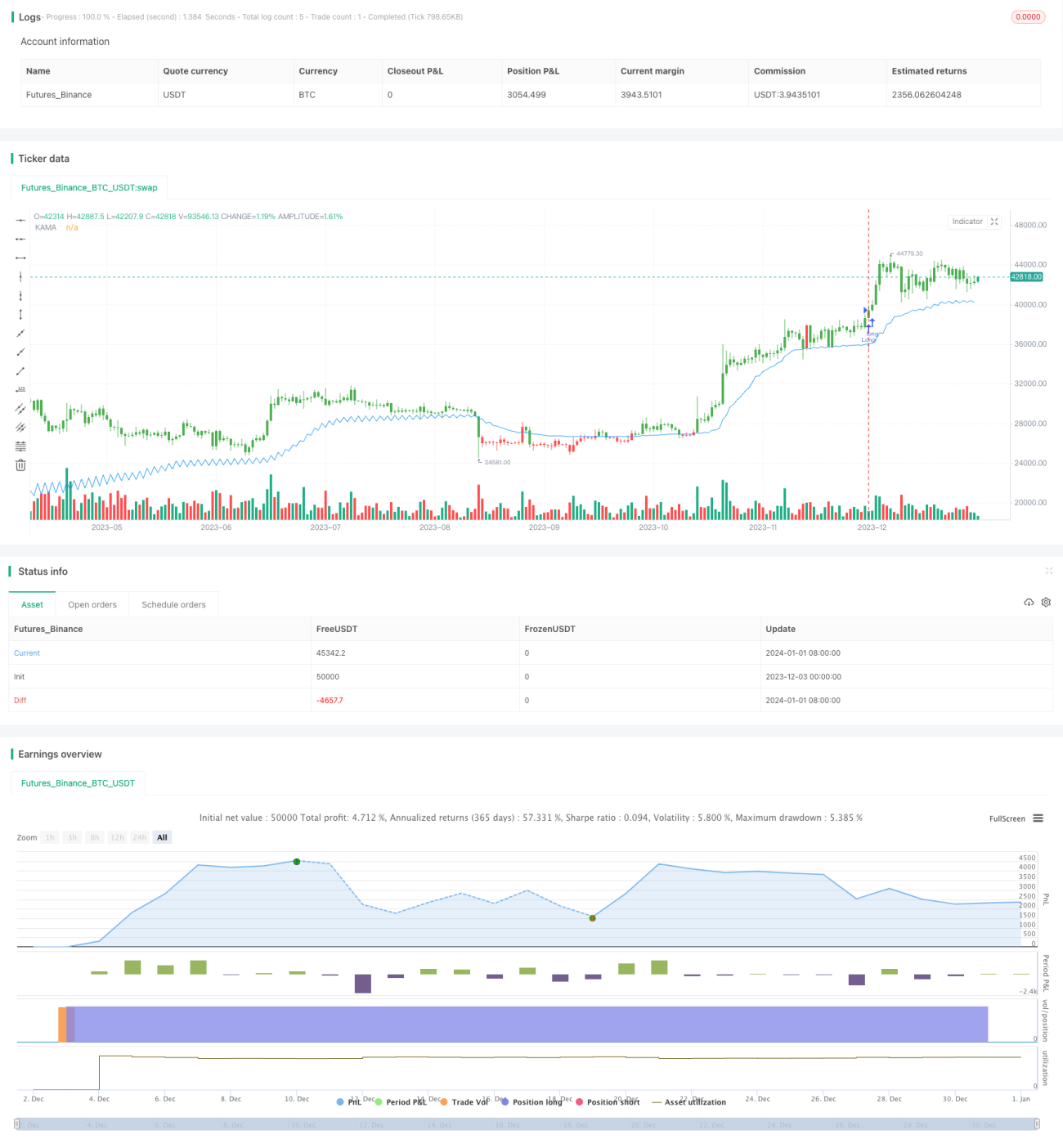
یہ حکمت عملی کافمین ایڈاپٹیو موونگ ایوریج (KAMA) انڈیکیٹر کا استعمال کرتے ہوئے قیمت کے رجحان کو ٹریک کرتی ہے، تاکہ کم خریدو اور اونچا بیچو اور منافع حاصل کیا جا سکے۔
حکمت عملی کا اصول
کافمین ایڈاپٹیو موونگ ایوریج (KAMA) انڈیکیٹر کا حساب کتاب اس طرح ہے:
nAMA = nz(nAMA[1]) + nsmooth * (Close - nz(nAMA[1]))
جہاں:
nsmooth = (nefratio * (nfastend - nslowend) + nslowend)^2
nefratio = nsignal / nnoise
nsignal = |Close - Close[Length]|
nnoise = sum(|Close - Close[1]|, Length)
nfastend = 0.666
nslowend = 0.0645
یہ انڈیکیٹر مارکیٹ کی اتار چڑھاؤ اور قیمت کی تبدیلی کے رجحان دونوں کو مدنظر رکھتا ہے، اور قیمت کے رجحان کو تیزی سے ٹریک کر سکتا ہے۔ خاص طور پر:
- جب مارکیٹ میں اتار چڑھاؤ کم ہوتا ہے، nsmooth nslowend کے قریب ہوتا ہے اور KAMA لائن آہستہ آہستہ تبدیل ہوتی ہے، جس سے مارکیٹ کا شور دب جاتا ہے۔
- جب مارکیٹ میں اتار چڑھاؤ بڑھتا ہے اور رجحان ظاہر ہوتا ہے، nsmooth nfastend کے قریب ہو جاتا ہے اور KAMA لائن تیزی سے تبدیل ہوتی ہے اور رجحان کو ٹریک کرتی ہے۔
قیمت اور KAMA کے تعلق کا موازنہ کرکے قیمت کے رجحان کی سمت کا تعین کیا جا سکتا ہے، اور اس کی بنیاد پر لانگ یا شارٹ کا فیصلہ کیا جاتا ہے۔
حکمت عملی کے فوائد
اس حکمت عملی کا سب سے بڑا فائدہ یہ ہے کہ یہ قیمت کے رجحان کی تبدیلیوں کو ٹریک کرنے کے لیے ایڈاپٹیو موونگ ایوریج انڈیکیٹر استعمال کرتی ہے، جو شور کے اثرات کو مؤثر طریقے سے کم کر سکتی ہے اور ٹریکنگ کی اچھی کارکردگی فراہم کرتی ہے۔ مخصوص فوائد درج ذیل ہیں:
- KAMA انڈیکیٹر مارکیٹ کے شور کو دباتا ہے، جس سے غیر ضروری ٹریڈز کی تعداد کم ہو سکتی ہے۔
- KAMA انڈیکیٹر قیمت میں تبدیلی کے رجحان کو تیزی سے جواب دیتا ہے اور ٹریکنگ کی اچھی کارکردگی رکھتا ہے۔
- حکمت عملی کے فیصلہ سازی کے اصول سادہ اور واضح ہیں، سمجھنے اور لاگو کرنے میں آسان ہیں۔
- الٹی ٹریڈنگ کو ترتیب دینے کی سہولت موجود ہے، جو مختلف مارکیٹ کے حالات کے مطابق ڈھل سکتی ہے۔
حکمت عملی کے خطرات
اس حکمت عملی میں کچھ خطرات بھی موجود ہیں:
- رینج مارکیٹ میں KAMA انڈیکیٹر غلط سگنل پیدا کر سکتا ہے۔ پیرامیٹرز کو ایڈجسٹ کرکے انڈیکیٹر کی کارکردگی کو بہتر بنایا جا سکتا ہے۔
- ٹریکنگ میں تاخیر موجود ہے، جس کی وجہ سے مختصر مدت کے قیمت کے الٹ جانے سے محروم رہا جا سکتا ہے۔ دیگر انڈیکیٹرز کے ساتھ ملا کر تشخیص کی جا سکتی ہے۔
- ٹریڈنگ فیس اور سلپج کو مدنظر نہیں رکھا گیا ہے، اس لیے لائیو ٹریڈنگ میں نتائج بیک ٹیسٹ کے مقابلے میں کمزور ہوں گے۔
حکمت عملی کی بہتری کے راستے
اس حکمت عملی کو درج ذیل پہلوؤں سے مزید بہتر بنایا جا سکتا ہے:
- KAMA کے پیرامیٹرز کو بہتر بنائیں تاکہ انڈیکیٹر کی ٹریکنگ حساسیت بڑھ سکے۔
- سٹاپ لاس میکانزم شامل کریں تاکہ ایک ٹریڈ میں زیادہ سے زیادہ نقصان کو کنٹرول کیا جا سکے۔
- دیگر انڈیکیٹرز کے ساتھ سگنلز کو فلٹر کریں تاکہ فیصلوں کی درستگی بڑھ سکے۔
- دوبارہ داخلے کا میکانزم شامل کریں تاکہ رجحان کو مزید ٹریک کیا جا سکے۔
خلاصہ
یہ حکمت عملی کافمین ایڈاپٹیو موونگ ایوریج انڈیکیٹر کا استعمال کرتے ہوئے قیمت کے رجحان کو ٹریک کرتی ہے، فیصلہ سازی کے اصول سادہ اور واضح ہیں، اور لائیو ٹریڈنگ میں آسانی سے لاگو کی جا سکتی ہے۔ یہ انڈیکیٹر شور کو دبانے کے ساتھ ساتھ قیمت کی تبدیلیوں پر تیزی سے ردعمل دیتا ہے، اور ٹریکنگ کی اچھی کارکردگی فراہم کرتا ہے۔ یہ ایک قابلِ سفارش رجحان پر مبنی حکمت عملی ہے۔
/*backtest
start: 2023-12-03 00:00:00
end: 2024-01-02 00:00:00
period: 1d
basePeriod: 1h
exchanges: [{"eid":"Futures_Binance","currency":"BTC_USDT"}]
*/

//@version=2
////////////////////////////////////////////////////////////
//  Copyright by HPotter v1.0 25/08/2017
// Everyone wants a short-term, fast trading trend that works without large- 1