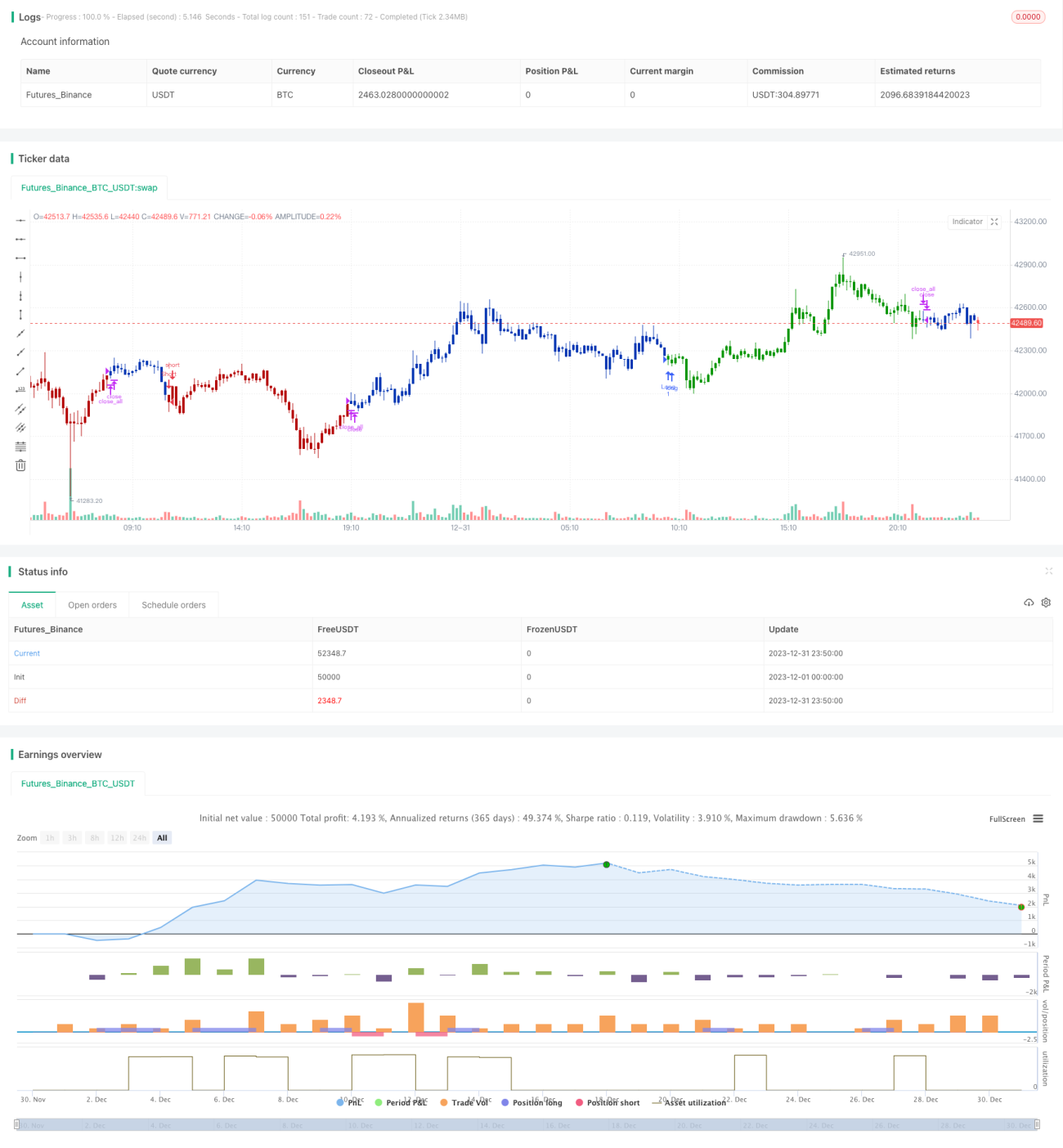
اس حکمت عملی کا بنیادی خیال 123 ریورس موڈ اور اسمارٹ فنڈ فلو انڈیکس (ایس ایم آئی) اشارے کے ساتھ مل کر ایک مستحکم رجحان ٹریکنگ ٹریڈنگ حاصل کرنا ہے۔ جب دو سگنل بیک وقت خریدنے یا بیچنے کے سگنل دیتے ہیں تو یہ حکمت عملی اسی طرح کی کثیر سر یا خالی سر پوزیشن قائم کرتی ہے۔
اس حکمت عملی کے دو حصے ہیں:
123 واپسی کی حکمت عملی: یہ حکمت عملی اسٹاک کی اختتامی قیمت اور 9 ویں اسٹوک اشارے پر مبنی واپسی کی تجارت پر مبنی ہے۔ خاص طور پر ، جب دو مسلسل دن کے اختتامی قیمت کے تعلقات میں الٹ ہوتا ہے ((یعنی پچھلے دن کی اختتامی قیمت پچھلے دو دن سے زیادہ ہے ، اور اگلے دن کی اختتامی قیمت پچھلے دن سے کم ہے) ، اور اسٹوک کی فوری لائن سست لائن سے زیادہ ہے ، خالی ہوجاتا ہے۔ جب دو مسلسل دن کے اختتامی قیمت کے تعلقات میں الٹ ہوتا ہے ((یعنی پچھلے دن کی اختتامی قیمت پچھلے دو دن سے کم ہے ، اور اگلے دن کی اختتامی قیمت پچھلے دن سے زیادہ ہے) ، اور اسٹوک کی فوری لائن سست لائن سے کم ہے ، تو زیادہ کریں۔
ایس ایم آئی حکمت عملی: اس حکمت عملی میں سمارٹ کیش فلو انڈیکس کی بنیاد پر رجحانات کا سراغ لگانا شامل ہے۔ ایس ایم آئی اشارے ادارہ دارالحکومت اور خوردہ دارالحکومت کے کھیل کی عکاسی کرسکتے ہیں ، ایس ایم آئی میں اضافہ اس بات کی نشاندہی کرتا ہے کہ ادارہ دارالحکومت جذب ہورہا ہے ، اور اس کے برعکس ادارہ دارالحکومت فروخت ہورہا ہے۔ جب ایس ایم آئی اشارے میں اضافہ ہوتا ہے تو زیادہ کام کریں ، جب کمی ہوتی ہے تو خالی ہوجائیں۔
اس حکمت عملی میں ایک سے زیادہ پوزیشن لی جاتی ہے جب 123 ریورس شکل اور ایس ایم آئی انڈیکس بیک وقت خریدنے کا اشارہ دیتے ہیں۔ اس حکمت عملی میں ایک خالی پوزیشن لی جاتی ہے جب دونوں بیک وقت فروخت کرنے کا اشارہ دیتے ہیں۔
اس حکمت عملی میں الٹ موڑ اور رجحان سے باخبر رہنے کے اشارے شامل ہیں ، جس سے مارکیٹ کے الٹ پوائنٹس کو مؤثر طریقے سے پہچانا جاسکتا ہے اور اس رجحان کا پیچھا کیا جاسکتا ہے ، جس سے مستحکم منافع حاصل کیا جاسکتا ہے۔ اس کے کچھ فوائد یہ ہیں:
123 الٹ موڈ اعلی جیت اور منافع کی شرح کے ساتھ آتا ہے ، جو مختصر الٹ کے مواقع کو مؤثر طریقے سے پہچان سکتا ہے۔
ایس ایم آئی اشارے ادارے کے فنڈز کے بہاؤ کی عکاسی کرسکتے ہیں ، جس سے ادارے کے فنڈز کو مستحکم منافع مل سکتا ہے۔
ریورس پیٹرن اور رجحان ٹریکنگ اشارے کے استعمال کے ساتھ مل کر ، سگنل کے معیار کو بہتر بنایا جاسکتا ہے ، غیر ضروری تجارت کو کم کیا جاسکتا ہے ، اور خطرے کو مؤثر طریقے سے کنٹرول کیا جاسکتا ہے۔
اس حکمت عملی میں کچھ خطرات بھی ہیں، جن میں سے کچھ یہ ہیں:
123 الٹ موڈ میں کچھ غلط سگنل کا خطرہ موجود ہے ، نقصان دہ تجارت کو مکمل طور پر نہیں بچا جاسکتا ہے۔ سگنل کے معیار کو بہتر بنانے کے لئے پیرامیٹرز کو مناسب طریقے سے بہتر بنایا جاسکتا ہے۔
ایس ایم آئی اشارے میں کچھ تاخیر ہے ، جو مکمل طور پر حقیقی وقت میں فنڈز کے بہاؤ کی عکاسی نہیں کرسکتی ہے۔ اس کی درستگی کو بہتر بنانے کے لئے دیگر اشارے کے ساتھ مل کر تصدیق کی جاسکتی ہے۔
ڈبل سگنل بہت زیادہ محافظیت کا مسئلہ پیدا کرتا ہے ، اور ہوسکتا ہے کہ ایک مضبوط یکطرفہ رجحان کی صورت حال سے محروم ہوجائے۔ سگنل کے حالات کو مناسب طریقے سے نرمی دی جاسکتی ہے ، جس سے فلٹرنگ کے معیار کو کم کیا جاسکتا ہے۔
اس حکمت عملی کو مزید بہتر بنانے کے لیے مندرجہ ذیل نکات پر غور کیا جا سکتا ہے:
پیرامیٹرز کو بہتر بنائیں ، بہترین پیرامیٹرز کا مجموعہ تلاش کریں ، حکمت عملی کی منافع بخش کارکردگی کو بہتر بنائیں۔
نقصانات کو روکنے کے لئے ایک اضافی طریقہ کار ، جو انفرادی نقصانات کو مؤثر طریقے سے کنٹرول کرسکتا ہے۔
دیگر اشارے یا شکلوں کے ساتھ مل کر ، سگنل کی کیفیت کو مزید تصدیق کریں ، سگنل کی درستگی کو بہتر بنائیں۔
مختلف اقسام کے لئے پیرامیٹرز کو بہتر بنانا ، حکمت عملی کی موافقت کو بہتر بنانا
اس حکمت عملی کا مجموعی نظریہ واضح ہے ، اور اس میں ردوبدل کی شکل اور رجحان سے باخبر رہنے کے اشارے کو مؤثر طریقے سے شامل کیا گیا ہے ، جس سے قلیل مدتی ردوبدل کے مواقع کی مستقل شناخت اور درمیانی اور طویل مدتی رجحانات کا سراغ لگایا جاسکتا ہے۔ پیرامیٹرز کی اصلاح اور میکانزم ڈیزائن میں بہتری کے ذریعہ ، حکمت عملی کی منافع بخش صلاحیت اور خطرے پر قابو پانے کی صلاحیت کو مزید بڑھایا جاسکتا ہے۔
The main idea of this strategy is to combine the 123 reversal pattern and the Smart Money Index (SMI) indicator to achieve stable trend tracking trading. The strategy will only establish corresponding long or short positions when both signals issue buy or sell signals at the same time.
The strategy consists of two parts:
123 reversal strategy: This strategy implements reversal trading based on the closing price of the stock and the 9-day Stoch indicator. Specifically, go short when the closing price relationship reverses for two consecutive days (i.e. the previous closing price is higher than the one before the previous day, and the next closing price is lower than the previous day), and Stoch fast line is above slow line; go long when the closing price relationship reverses for two consecutive days (i.e. the previous closing price is lower than the one before the previous day, and the next closing price is higher than the previous day), and Stoch fast line is below slow line.
SMI strategy: This strategy implements trend tracking based on the Smart Money Index. The SMI indicator can reflect the game between institutional funds and retail funds. The rise of SMI indicates that institutional funds are absorbing funds, while the fall indicates that institutional funds are selling out. Go long when SMI rises and go short when SMI falls.
The strategy will only take a long position when both the 123 reversal pattern and the SMI indicator issue a buy signal at the same time. It will only take a short position when both issue a sell signal at the same time.
The strategy combines reversal patterns and trend tracking indicators to effectively identify market reversal points and track trends for steady profits. The specific advantages are as follows:
The 123 reversal pattern has a relatively high win rate and profit rate, which can effectively identify short-term reversal opportunities.
The SMI indicator can reflect the direction of institutional funds. Tracking institutional funds can obtain more steady profits.
The combined use of reversal patterns and trend tracking indicators can improve the quality of signals, reduce unnecessary trading, and effectively control risks.
The strategy also has some risks, mainly concentrated in the following areas:
The 123 reversal pattern has a certain risk of false signals and cannot completely avoid losing trades. Parameters can be optimized appropriately to improve signal quality.
The SMI indicator has a certain lag and cannot completely reflect the direction of funds in real time. Other indicators can be combined for verification to improve accuracy.
Double signals can lead to over-conservative problems, possibly missing stronger one-sided trending opportunities. Signal conditions can be appropriately relaxed to reduce filtering criteria.
The strategy can also be further optimized in the following aspects:
Optimize parameters to find the optimal parameter combination and improve the profitability of the strategy.
Add stop loss mechanisms to effectively control single loss.
Combine other indicators or patterns to further verify signal quality and improve signal accuracy.
Optimize parameters separately for different varieties to improve the adaptability of the strategy.
The overall idea of the strategy is clear, effectively combining reversal patterns and trend tracking indicators to steadily identify short-term reversal opportunities and track medium-to-long term trends. By improving parameters optimization and mechanism design, the profitability and risk control capabilities of the strategy can be further enhanced.
/*backtest
start: 2023-12-01 00:00:00
end: 2023-12-31 23:59:59
period: 10m
basePeriod: 1m
exchanges: [{"eid":"Futures_Binance","currency":"BTC_USDT"}]
*/
//@version=4
////////////////////////////////////////////////////////////
// Copyright by HPotter v1.0 10/07/2021
// This is combo strategies for get a cumulative signal.
//
// First strategy
// This System was created from the Book "How I Tripled My Money In The
// Futures Market" by Ulf Jensen, Page 183. This is reverse type of strategies.
// The strategy buys at market, if close price is higher than the previous close
// during 2 days and the meaning of 9-days Stochastic Slow Oscillator is lower than 50.
// The strategy sells at market, if close price is lower than the previous close price
// during 2 days and the meaning of 9-days Stochastic Fast Oscillator is higher than 50.
//
// Second strategy
// Smart money index (SMI) or smart money flow index is a technical analysis indicator demonstrating investors sentiment.
// The index was invented and popularized by money manager Don Hays.[1] The indicator is based on intra-day price patterns.
// The main idea is that the majority of traders (emotional, news-driven) overreact at the beginning of the trading day
// because of the overnight news and economic data. There is also a lot of buying on market orders and short covering at the opening.
// Smart, experienced investors start trading closer to the end of the day having the opportunity to evaluate market performance.
// Therefore, the basic strategy is to bet against the morning price trend and bet with the evening price trend. The SMI may be calculated
// for many markets and market indices (S&P 500, DJIA, etc.)
//
// The SMI sends no clear signal whether the market is bullish or bearish. There are also no fixed absolute or relative readings signaling
// about the trend. Traders need to look at the SMI dynamics relative to that of the market. If, for example, SMI rises sharply when the
// market falls, this fact would mean that smart money is buying, and the market is to revert to an uptrend soon. The opposite situation
// is also true. A rapidly falling SMI during a bullish market means that smart money is selling and that market is to revert to a downtrend
// soon. The SMI is, therefore, a trend-based indicator.
// Some analysts use the smart money index to claim that precious metals such as gold will continually maintain value in the future.
//
// WARNING:
// - For purpose educate only
// - This script to change bars colors.
////////////////////////////////////////////////////////////
Reversal123(Length, KSmoothing, DLength, Level) =>
vFast = sma(stoch(close, high, low, Length), KSmoothing)
vSlow = sma(vFast, DLength)
pos = 0.0
pos := iff(close[2] < close[1] and close > close[1] and vFast < vSlow and vFast > Level, 1,
iff(close[2] > close[1] and close < close[1] and vFast > vSlow and vFast < Level, -1, nz(pos[1], 0)))
pos
SMI(Length, tf) =>
pos = 0.0
nRes = 0.0
xcloseH1 = security(syminfo.tickerid, tf, close[1])
xopenH1 = security(syminfo.tickerid, tf, open[1])
nRes := nz(nRes[1], 1) - (open - close) + (xopenH1 - xcloseH1)
xSmaRes = sma(nRes, Length)
pos:= iff(xSmaRes > nRes, 1,
iff(xSmaRes < nRes, -1, nz(pos[1], 0)))
pos
strategy(title="Combo Backtest 123 Reversal & Smart Money Index (SMI)", shorttitle="Combo", overlay = true)
line1 = input(true, "---- 123 Reversal ----")
Length = input(14, minval=1)
KSmoothing = input(1, minval=1)
DLength = input(3, minval=1)
Level = input(50, minval=1)
//-------------------------
line2 = input(true, "---- Smart Money Index (SMI) ----")
LengthSMI = input(18, minval=1)
res = input(title="Resolution", type=input.resolution, defval="D")
reverse = input(false, title="Trade reverse")
posReversal123 = Reversal123(Length, KSmoothing, DLength, Level)
posSMI = SMI(LengthSMI, res)
pos = iff(posReversal123 == 1 and posSMI == 1 , 1,
iff(posReversal123 == -1 and posSMI == -1, -1, 0))
possig = iff(reverse and pos == 1, -1,
iff(reverse and pos == -1 , 1, pos))
if (possig == 1 )
strategy.entry("Long", strategy.long)
if (possig == -1 )
strategy.entry("Short", strategy.short)
if (possig == 0)
strategy.close_all()
barcolor(possig == -1 ? #b50404: possig == 1 ? #079605 : #0536b3 )