سپر ٹرینڈ مومینٹم وولیٹیلیٹی دوہرے اشاریے وقت کا انتخاب کرنے کی حکمت عملی

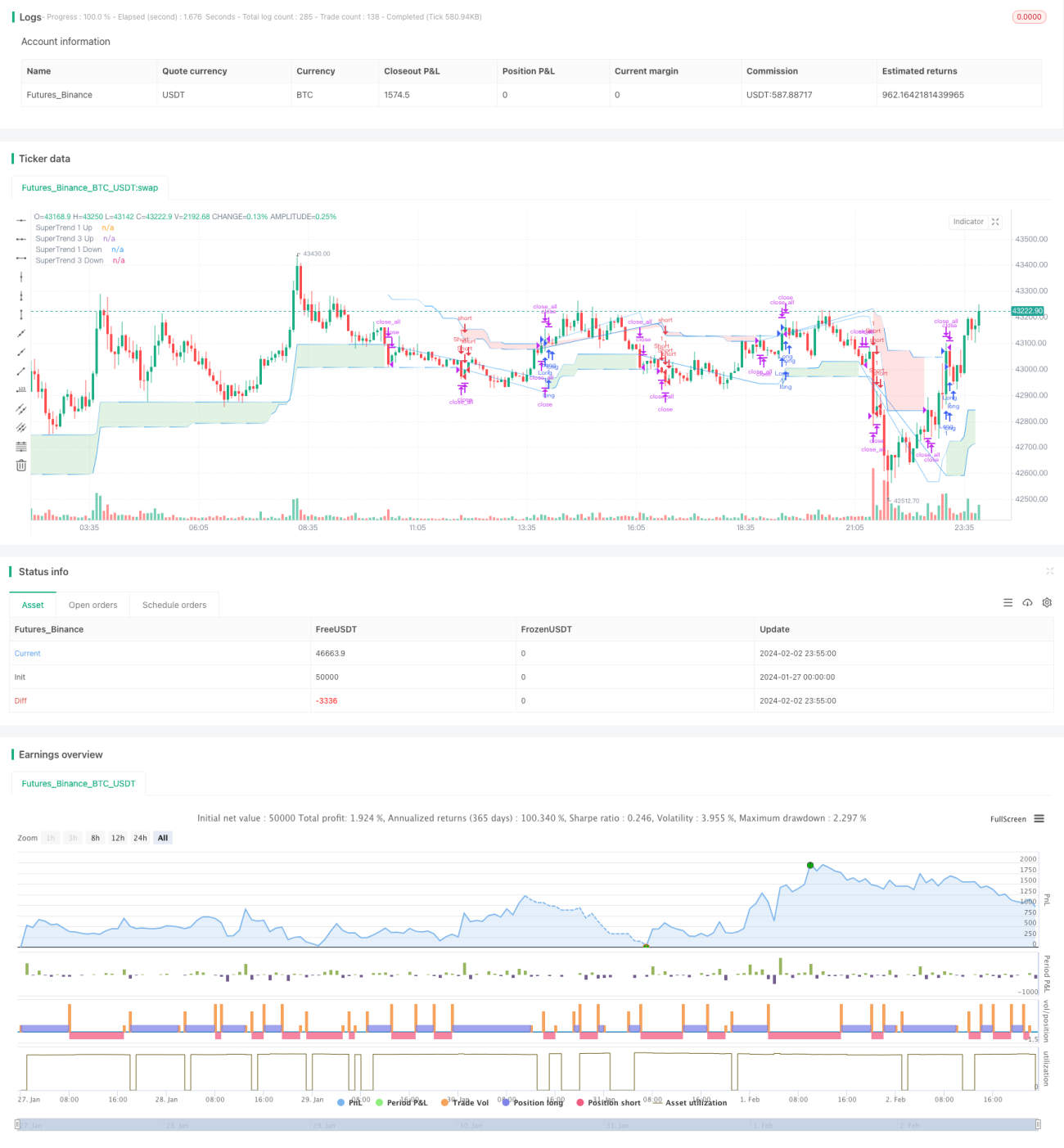
جائزہ
یہ حکمت عملی سپرٹرینڈ انڈیکیٹر اور ایلیٹ ویو تھیوری کو ملا کر ایک مضبوط تکنیکی تجارتی آلہ تشکیل دیتی ہے۔ یہ کثیر سطحی رجحان تجزیہ کے ذریعے مارکیٹ کا زیادہ جامع نظارہ فراہم کرتی ہے، جس سے ممکنہ رجحان کے الٹ جانے اور اہم قیمت کی نقل و حرکت کو جلد پکڑا جا سکتا ہے۔
حکمت عملی کا اصول
بنیادی خیال اس کے کثیر سطحی نقطہ نظر میں مضمر ہے:
- چار سپرٹرینڈ انڈیکیٹر استعمال کیے جاتے ہیں، ہر ایک مختلف ATR لمبائی اور ضرب کے ساتھ، مختصر سے طویل مدت تک رجحان کا فیصلہ کرتا ہے
- انڈیکیٹرز کے امتزاج سے مضبوط خرید و فروخت کے سگنل تلاش کیے جا سکتے ہیں
- ایلیٹ ویو کے پیٹرن کی شناخت کے طریقے سے ملتے جلتے مارکیٹ رویے کے نمونوں کی نشاندہی کر کے تجارتی سگنل کی تصدیق کی جاتی ہے
اس طرح، متعدد انڈیکیٹرز کے استعمال کے ساتھ پیٹرن کی شناخت بھی شامل ہو جاتی ہے، جس سے حکمت عملی مزید مستحکم ہو جاتی ہے۔
فوائد کا تجزیہ
- کثیر انڈیکیٹر ڈیزائن، ہمہ جہت فیصلہ فراہم کرتا ہے
- لہر نظریہ سے متاثر، پیٹرن کی شناخت استحکام بڑھاتی ہے
- حقیقی وقت میں سمت کی تبدیلی، مارکیٹ کی تبدیلیوں کے مطابق ڈھلتی ہے
- پیرامیٹر ترتیب پذیر، مختلف اشیاء اور وقت کے دورانیوں کے لیے موزوں
خطرات کا تجزیہ
- پیرامیٹر کی ترتیب تجربے پر منحصر ہے، بہترین پیرامیٹر مجموعہ طے کرنے کے لیے ایڈجسٹمنٹ کی ضرورت ہے
- کثیر انڈیکیٹر ڈیزائن پیچیدہ ہے، حساب کا بوجھ بڑھاتا ہے
- غلط سگنلز کی پیداوار سے مکمل طور پر بچا نہیں جا سکتا
پیرامیٹر آپٹیمائزیشن کے ذریعے بتدریج بہترین پیرامیٹرز طے کیے جا سکتے ہیں؛ کلاؤڈ کمپیوٹنگ استعمال کر کے کمپیوٹیشنل کارکردگی بڑھائی جا سکتی ہے؛ خطرے پر قابو پانے کے لیے سٹاپ لاس لگایا جا سکتا ہے۔
بہتری کے رخ
درج ذیل پہلوؤں سے بہتری لائی جا سکتی ہے:
- خود انطباقی پیرامیٹر ایڈجسٹمنٹ ماڈیول شامل کرنا، مارکیٹ کی صورتحال کے مطابق پیرامیٹرز کو متحرک طور پر ایڈجسٹ کرنا
- مشین لرننگ ماڈل شامل کرنا، تجارتی سگنل کی وشوسنییتا کا اندازہ لگانے میں مدد دینا
- جذباتی اشاریوں، خبروں کے واقعات جیسے بیرونی عوامل کو ملا کر مارکیٹ کے نمونوں کا فیصلہ کرنا
- متعدد اشیاء کے پیرامیٹر ٹیمپلیٹس کی حمایت، جانچ کی محنت کم کرنا
اس سے حکمت عملی کے پیرامیٹرز زیادہ ذہین، فیصلے زیادہ درست، اور عملی استعمال زیادہ آسان ہو جائیں گے۔
نتیجہ
یہ حکمت عملی رجحان اور پیٹرن دونوں جہتوں پر غور کرتی ہے، جس سے فیصلوں کی مضبوطی یقینی ہوتی ہے اور حکمت عملی کی لچک بھی بڑھتی ہے۔ کثیر انڈیکیٹرز اور پیرامیٹر کی ترتیب پوری مارکیٹ میں قابل اطلاق ہونے کی ضمانت دیتی ہے۔ اگر مزید ذہین اور خودکار طریقے متعارف کرائے جائیں تو حکمت عملی کی عملی سطح بہت بڑھ جائے گی۔ یہ تکنیکی تجارت کی ترقی کے لیے مفید رہنمائی اور سیکھنے کا ذریعہ فراہم کرتی ہے۔
/*backtest
start: 2024-01-27 00:00:00
end: 2024-02-03 00:00:00
period: 5m
basePeriod: 1m
exchanges: [{"eid":"Futures_Binance","currency":"BTC_USDT"}]
*/

//@version=5
strategy("Elliott's Quadratic Momentum - Strategy [presentTrading]",shorttitle = "EQM Strategy [presentTrading]", overlay=true )

// Inputs for selecting trading direction- 1