رجحان فلٹر پن بار ریورسل حکمت عملی

جائزہ
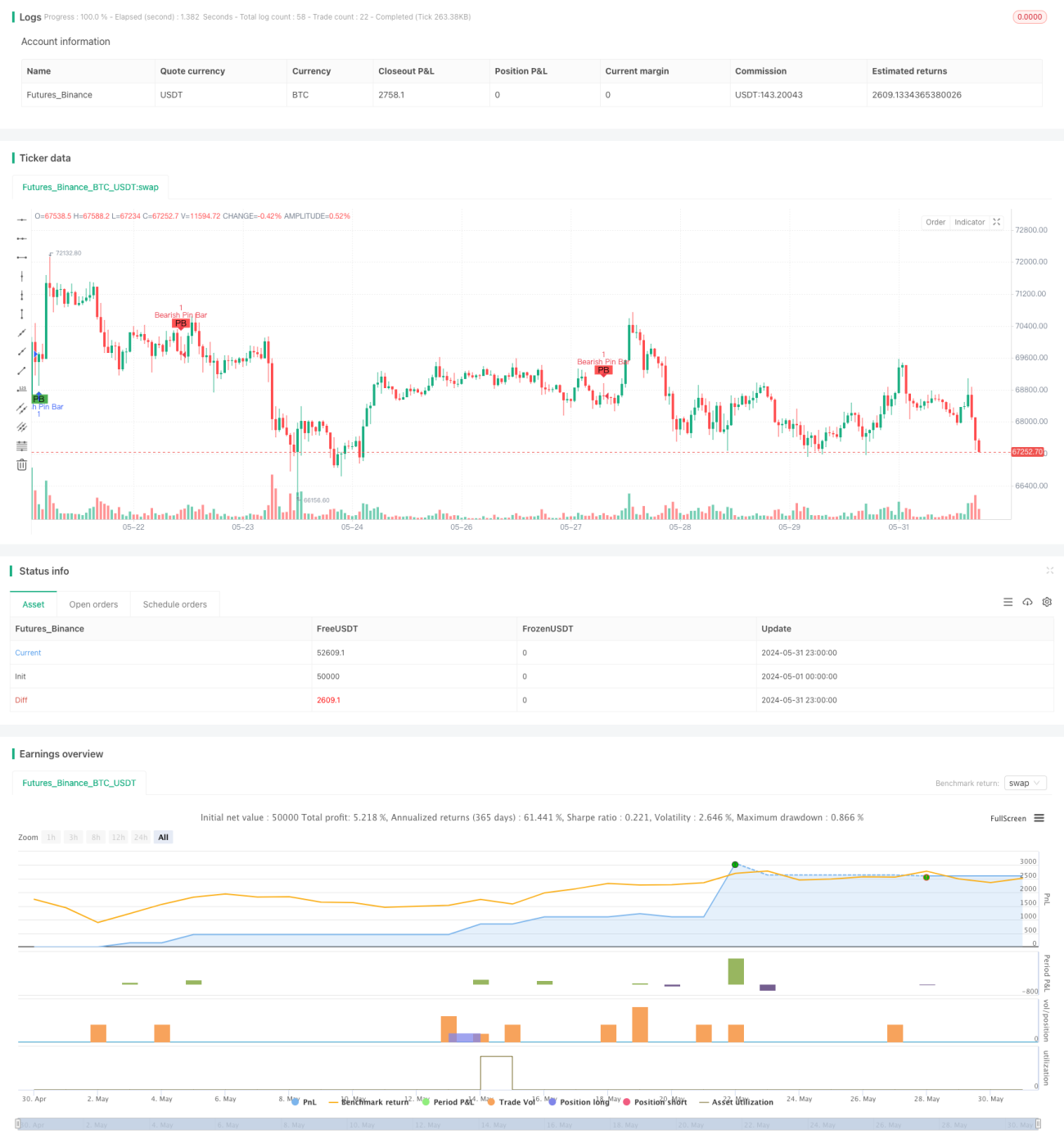
یہ حکمت عملی بنیادی طور پر مخصوص کینڈل سٹک پیٹرن — Pin Bar — کی شناخت کے ذریعے ممکنہ مارکیٹ کے اُلٹ پلٹ کے مقامات کا تعین کرتی ہے۔ Pin Bar ایک کینڈل سٹک پیٹرن ہے جو ایک لمبی ڈاٹ اور ایک چھوٹے باڈی پر مشتمل ہوتا ہے، جو ظاہر کرتا ہے کہ اس مقام پر مارکیٹ میں نمایاں اتار چڑھاؤ آیا، لیکن قیمت واپس آگئی، اس بات کا اشارہ دیتے ہوئے کہ یہ مقام ممکنہ طور پر سپورٹ یا مزاحمت کا درجہ رکھتا ہے۔ یہ حکمت عملی 50 پیریڈ سادہ موونگ ایوریج (SMA) کا استعمال کرتی ہے تاکہ موجودہ رجحان کی سمت کا تعین کیا جا سکے، اور 20 پیریڈ SMA کو ٹریڈنگ والیوم فلٹر کے طور پر استعمال کرتی ہے۔ جب Pin Bar ظاہر ہوتا ہے اور اس کا والیوم اس اوسط سے زیادہ ہوتا ہے تو اسی صورت میں اسے ایک مؤثر سگنل سمجھا جاتا ہے۔ اس کے علاوہ، حکمت عملی نسبتاً طاقت کے اشاریے (RSI) کا بھی حساب لگاتی ہے، لیکن اسے براہِ راست داخلے اور باہر نکلنے کی شرائط میں استعمال نہیں کیا جاتا، بلکہ یہ سگنلز کو مزید فلٹر کرنے کے لیے ایک اختیاری شرط کے طور پر رکھا گیا ہے۔
حکمت عملی کا اصول
- سب سے پہلے Pin Bar کے اوپری اور نچلے ڈاٹ کے ساتھ ساتھ اس کے باڈی کے رشتہ دار سائز کا تعین کیا جاتا ہے، جس کے لیے شرط یہ ہے کہ اوپری یا نچلا ڈاٹ کم از کم پوری کینڈل کی اونچائی اور نیچائی کی رینج کا 60% ہو، جبکہ باڈی 30% سے زیادہ نہ ہو۔
- بند اور کھلنے والی قیمت کے موازنے سے یہ طے کیا جاتا ہے کہ Pin Bar تیزی کا ہے یا مندی کا۔
- 50 پیریڈ SMA کا استعمال کرتے ہوئے موجودہ رجحان کا تعین کیا جاتا ہے: جب بند ہونے والی قیمت SMA سے اوپر ہو تو اسے تیزی کا رجحان سمجھا جاتا ہے، ورنہ مندی کا۔
- 20 پیریڈ والیوم SMA کو والیوم فلٹر کے لیے حد کے طور پر استعمال کیا جاتا ہے، صرف اس صورت میں جب Pin Bar کے وقت کا والیوم اس قدر سے زیادہ ہو تو سگنل کو مؤثر سمجھا جاتا ہے۔
- شناخت شدہ تیزی اور مندی والے Pin Bars کو چارٹ پر دکھایا جاتا ہے۔
- جب تیزی کا Pin Bar ظاہر ہوتا ہے تو لانگ پوزیشن کھولی جاتی ہے، جبکہ مندی کے Pin Bar پر شارٹ پوزیشن کھولی جاتی ہے۔
- سٹاپ لاس کو Pin Bar کے باڈی کے سائز کے 2 گنا پر، اور ٹیک پروفٹ کو 3 گنا پر رکھا جاتا ہے۔ لانگ پوزیشن کا سٹاپ لاس Pin Bar کی سب سے نیچی قیمت سے نیچے اور ٹیک پروفٹ سب سے اونچی قیمت سے اوپر رکھا جاتا ہے؛ شارٹ پوزیشن کے لیے اس کے برعکس ہے۔
فوائد کا تجزیہ
- Pin Bar قیمت کے اُلٹ پلٹ کا ایک بہت ہی بدیہی اور مؤثر پیٹرن ہے، جو مارکیٹ کے جذبات میں اچانک تبدیلی کو نسبتاً درست طریقے سے پکڑ سکتا ہے۔
- رجحان فلٹر کی شرط اس بات کو یقینی بناتی ہے کہ Pin Bar سگنل موجودہ رجحان کی سمت سے مطابقت رکھتا ہو، جس سے سگنلز کی جیت کی شرح میں نمایاں اضافہ ہوتا ہے۔
- والیوم کی شرط ان سگنلز کو فلٹر کرنے میں مدد دیتی ہے جن میں مارکیٹ کی مناسب شرکت نہ ہو، اس طرح شور کو کم کیا جاتا ہے۔
- سٹاپ لاس اور ٹیک پروفٹ کی جگہیں خود Pin Bar کی خصوصیات پر مبنی ہیں، جس سے خطرہ اور منافع کا تناسب مناسب رہتا ہے۔
- کوڈ کی منطق اور قواعد واضح ہیں، جنہیں سمجھنا اور نافذ کرنا آسان ہے۔
خطرات کا تجزیہ
- رینج میں چلنے والی مارکیٹوں میں Pin Bar سگنلز کی وشوسنییتا بہت کم ہو جاتی ہے، کیونکہ اس صورت میں رجحان کا فلٹر زیادہ کارآمد نہیں رہتا۔
- انتہائی منفی یا مثبت واقعات کی صورت میں، Pin Bar بھی ناکام ہو سکتا ہے۔
- ٹریڈز کی تعداد کم ہوتی ہے، جس کی وجہ سے بیک ٹیسٹنگ کے نمونے ناکافی ہو سکتے ہیں۔
- مخصوص مصنوعات اور ٹائم فریم کے لیے، پہلے سے طے شدہ پیرامیٹرز کو مزید بہتر کرنے کی ضرورت ہو سکتی ہے۔
- مجموعی طور پر، ایک واحد سگنل سسٹم کا خطرہ زیادہ ہوتا ہے۔
بہتری کی سمت
- سگنلز کے ذرائع کو بڑھانے کے لیے دیگر اُلٹ پلٹ پیٹرن جیسے اندرونی بار (Inside Bar) وغیرہ کو بھی شامل کرنے پر غور کیا جا سکتا ہے۔
- سٹاپ لاس اور ٹیک پروفٹ کی جگہوں کو ATR جیسے اتار چڑھاؤ کے اشاریوں کے ذریعے متحرک طور پر ایڈجسٹ کیا جا سکتا ہے تاکہ مختلف مارکیٹ حالات کے مطابق ڈھالا جا سکے۔
- منافع بڑھانے کے لیے فیصدی ٹریلنگ سٹاپ لاس کا استعمال کیا جا سکتا ہے۔
- ممکنہ ناکام سگنلز کو فلٹر کرنے کے لیے مزید بنیادی ڈیٹا جیسے اقتصادی کیلنڈر اور اہم واقعات کو شامل کیا جا سکتا ہے۔
- ہر ٹریڈ میں خطرے کی نمائش کو کنٹرول کرنے کے لیے سرمایہ کے انتظام کا ماڈیول متعارف کرانے پر غور کیا جا سکتا ہے۔
خلاصہ
یہ Pin Bar اُلٹ پلٹ کی حکمت عملی ایک سادہ اور مؤثر نقطہ نظر پر مبنی ہے، جس میں رجحان اور والیوم کی فلٹرنگ کے ذریعے سگنل کی شناخت کی درستگی کو بہتر بنایا گیا ہے۔ اگرچہ اس میں ابھی کچھ بہتری کی گنجائش ہے، لیکن مجموعی سوچ قابل عمل ہے اور مزید بہتری اور جانچ کے قابل ہے۔ Pin Bar خود ایک کلاسیکی قیمت پیٹرن ہے، اسے دیگر اشاریوں یا سگنلز کے ساتھ ملا کر بھی استعمال کیا جا سکتا ہے تاکہ ایک زیادہ مستحکم ٹریڈنگ سسٹم حاصل کیا جا سکے۔
- 1