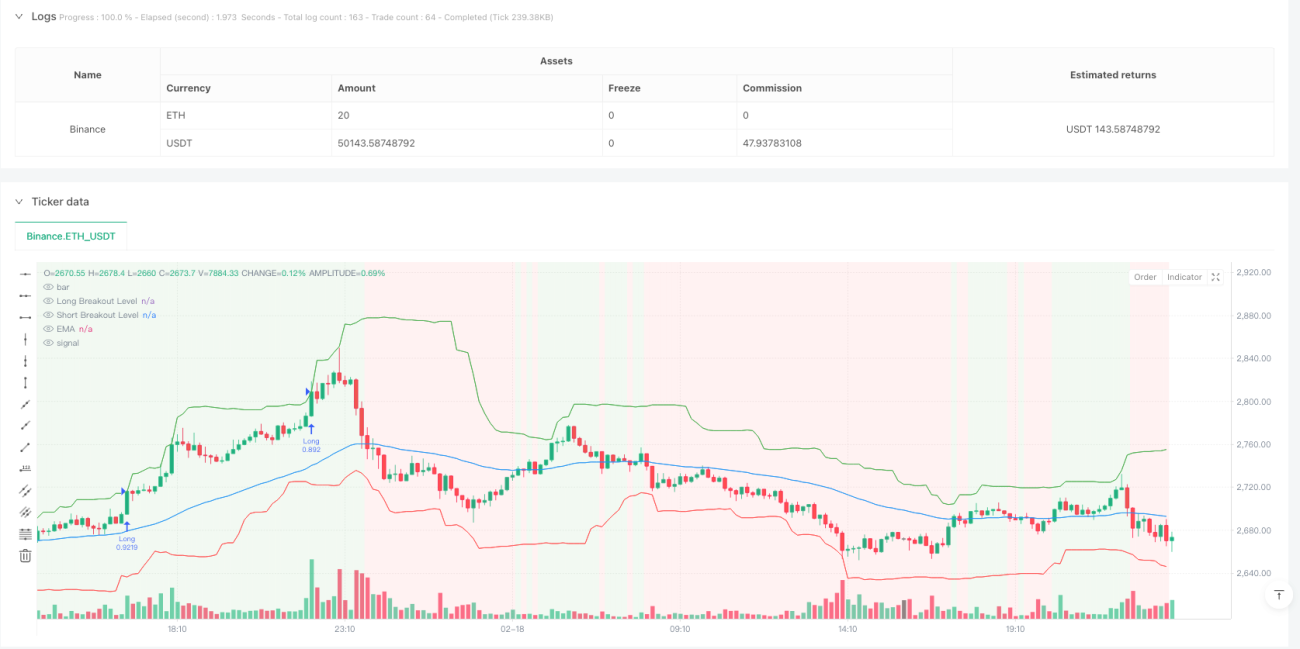
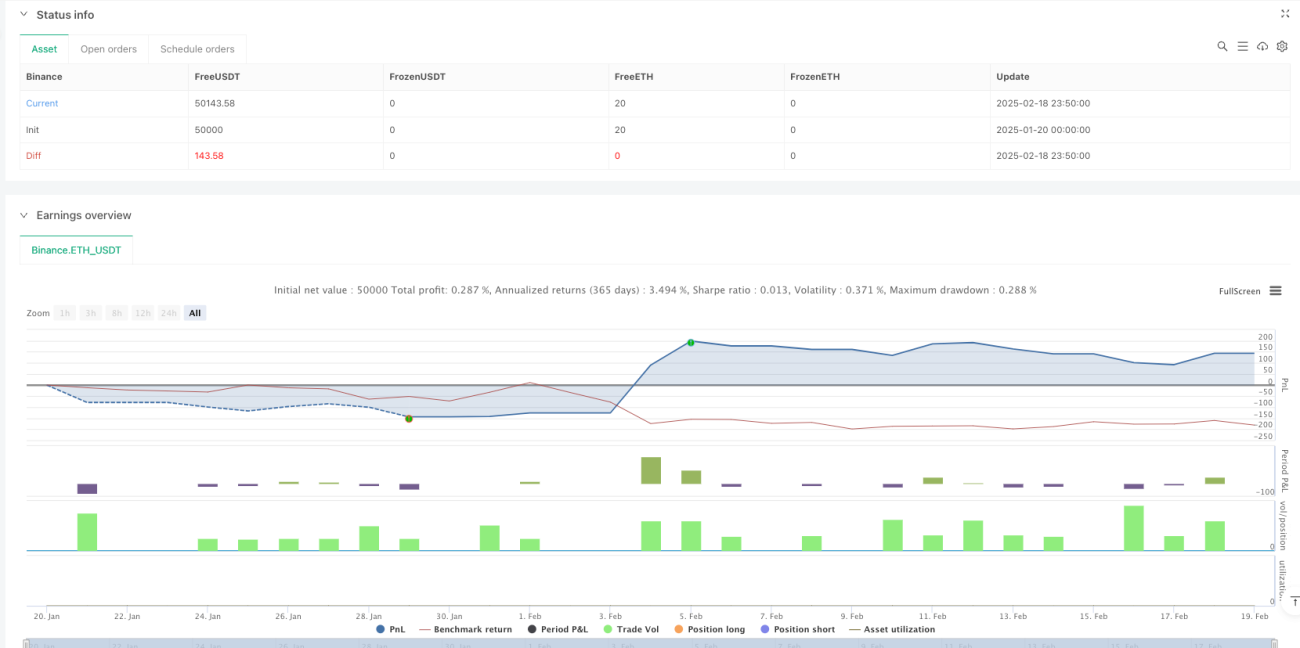
اتار چڑھاؤ مومنٹم بریک آؤٹ ٹریڈنگ حکمت عملی رجحان اور مومینٹم فلٹرز کو یکجا کرتی ہے۔

ATR EMA RSI HH LL RR
تخلیق کی تاریخ: 2025-02-20 15:13:31 آخر میں ترمیم کریں: 2025-02-20 15:13:31
کاپی: 1 کلکس کی تعداد: 401
2
پر توجہ دیں
319
پیروکار

اتار چڑھاؤ مومنٹم بریک آؤٹ ٹریڈنگ حکمت عملی رجحان اور مومینٹم فلٹرز کو یکجا کرتی ہے۔ اتار چڑھاؤ مومنٹم بریک آؤٹ ٹریڈنگ حکمت عملی رجحان اور مومینٹم فلٹرز کو یکجا کرتی ہے۔

جائزہ

یہ حکمت عملی ایک مقداری تجارتی نظام ہے جس میں اتار چڑھاؤ کی شرح میں اضافے ، رجحانات کی پیروی اور حرکیات کی تصدیق شامل ہے۔ یہ اے ٹی آر پر مبنی متحرک توڑ کی سطح کا حساب کتاب کرکے تجارتی مواقع کی نشاندہی کرتا ہے ، اور ای ایم اے ٹرینڈ فلٹرنگ اور آر ایس آئی حرکیات کے اشارے کے ساتھ مل کر۔ حکمت عملی میں خطرے کے سخت کنٹرول اقدامات شامل ہیں جن میں مقررہ فیصد خطرے کا انتظام اور متحرک اسٹاپ نقصان کی ترتیب شامل ہے۔

حکمت عملی کا اصول

اس حکمت عملی میں تین بنیادی اجزاء شامل ہیں:

  1. اتار چڑھاؤ کی شرح کے ذریعے توڑنے کے حساب سے: اعلی ترین قیمت اور کم از کم قیمت کا استعمال کرتے ہوئے ، اے ٹی آر کے ضارب کے ساتھ مل کر متحرک طور پر توڑنے والی کم قیمتوں کا حساب لگانا ، پیش گوئی کے انحراف سے بچنا۔
  2. رجحان فلٹرنگ: موجودہ رجحان کی سمت کا تعین کرنے کے لئے قلیل مدتی ای ایم اے کا استعمال کریں ، صرف ای ایم اے کے اوپر اور ای ایم اے کے نیچے خالی آرڈر کھولیں۔
  3. تحریک کی تصدیق: آر ایس آئی اشارے کا استعمال کرتے ہوئے مارکیٹ کی تحریک کی تصدیق کریں ، ملٹی ہیڈ انٹری کے لئے آر ایس آئی 50 سے زیادہ کی ضرورت ہوتی ہے ، اور خالی ہیڈ انٹری کے لئے آر ایس آئی 50 سے کم کی ضرورت ہوتی ہے۔

اسٹریٹجک فوائد

  1. متحرک موافقت: مارکیٹ میں اتار چڑھاؤ کی شرح کے مطابق توڑ کی سطح خود بخود ایڈجسٹ ہوجاتی ہے ، جس سے حکمت عملی مختلف مارکیٹ کے حالات کے مطابق ہوجاتی ہے۔
  2. ایک سے زیادہ فلٹرنگ: رجحانات اور متحرک اشارے کے ساتھ مل کر جھوٹے سگنل کو کم کریں۔
  3. سخت رسک کنٹرول: پوزیشن کا انتظام فکسڈ رسک فی صد کے ساتھ کیا جاتا ہے اور متحرک اسٹاپ نقصان کی حفاظت کا استعمال کیا جاتا ہے۔
  4. مضبوط حسب ضرورت: اہم پیرامیٹرز جیسے اے ٹی آر سائیکل ، توڑ ضرب ، ای ایم اے سائیکل وغیرہ کو مخصوص ضروریات کے مطابق ایڈجسٹ کیا جاسکتا ہے۔

اسٹریٹجک رسک

  1. تاخیر کا خطرہ: متحرک اوسط جیسے اشارے کا استعمال داخلے کے نقطہ نظر میں تاخیر کا سبب بن سکتا ہے۔
  2. زلزلے کی مارکیٹ کا خطرہ: زلزلے کی مارکیٹوں میں اکثر جھوٹے بریک سگنل پیدا ہوسکتے ہیں۔
  3. پیرامیٹر حساسیت: حکمت عملی کی کارکردگی پیرامیٹرز کی ترتیبات سے زیادہ حساس ہے اور اس کی اچھی طرح سے جانچ کی ضرورت ہے۔ حل:
  • مختلف مارکیٹ کے حالات میں ریٹرننگ اور اصلاحات کی تجویز
  • مارکیٹ ماحول شناخت ماڈیول شامل کر سکتے ہیں
  • پیسے کے زیادہ قدامت پسند انتظام کی تجویز

حکمت عملی کی اصلاح کی سمت

  1. مارکیٹ کے ماحول کے مطابق: اتار چڑھاؤ کی شرح کی حد کا فیصلہ شامل کریں ، مختلف اتار چڑھاؤ کے ماحول میں مختلف پیرامیٹرز کی ترتیبات کا استعمال کریں۔
  2. سگنل کی اصلاح: ٹرانزیکشن کی تصدیق میں اضافہ کرنے پر غور کیا جاسکتا ہے ، جس سے بریکٹ سگنل کی وشوسنییتا میں اضافہ ہوتا ہے۔
  3. اسٹاپ نقصان کی اصلاح: مارکیٹ میں اتار چڑھاؤ کے مطابق ایڈجسٹ کرنے کے لئے متحرک ایڈجسٹ منافع اور نقصان کا تناسب۔
  4. ٹائم فلٹرنگ: ٹائم ونڈو فلٹرنگ میں اضافہ کریں تاکہ غیر مناسب اوقات میں تجارت سے بچا جاسکے۔

خلاصہ کریں۔

یہ ایک ساختہ ، منطقی اور واضح مقدار میں تجارت کی حکمت عملی ہے۔ اس میں اتار چڑھاؤ کی شرح کو توڑنے ، رجحان کی پیروی اور حرکیات کی تصدیق کو جوڑ کر ، نمایاں قیمت میں اتار چڑھاؤ کو پکڑنے کے ساتھ ساتھ خطرے پر قابو پانے کی حکمت عملی ہے۔ حکمت عملی کی تخصیص پذیری مضبوط ہے ، جو مختلف قسم کے تجارت اور مارکیٹ کے حالات کے مطابق مزید بہتر بنانے کے لئے موزوں ہے۔

حکمت عملی کا ماخذ کوڈ
/*backtest
start: 2025-01-20 00:00:00
end: 2025-02-19 00:00:00
period: 10m
basePeriod: 10m
exchanges: [{"eid":"Binance","currency":"ETH_USDT"}]
*/

//@version=5
// Volatility Momentum Breakout Strategy
//
// Description:
// This strategy is designed to capture significant price moves by combining a volatility breakout method
// with a momentum filter. Volatility is measured by the Average True Range (ATR), which is used to set dynamic
// breakout levels. A short‑term Exponential Moving Average (EMA) is applied as a trend filter, and the Relative
// Strength Index (RSI) is used to help avoid entries when the market is overextended.
// 
// Signal Logic:
// • Long Entry: When the current close is above the highest high of the previous N bars (excluding the current bar)
//   plus a multiple of ATR, provided that the price is above the short‑term EMA and the RSI is above 50.
// • Short Entry: When the current close is below the lowest low of the previous N bars (excluding the current bar)
//   minus a multiple of ATR, provided that the price is below the short‑term EMA and the RSI is below 50.
// 
// Risk Management:
// • Trades are sized to risk 2% of account equity.
// • A stop loss is placed at a fixed ATR multiple away from the entry price.
// • A take profit target is set to achieve a 1:2 risk‑reward ratio.
// 
// Backtesting Parameters:
// • Initial Capital: $10,000
// • Commission: 0.1% per trade
// • Slippage: 1 tick per bar
//
// Disclaimer:
// Past performance is not indicative of future results. This strategy is experimental and provided solely for educational
// purposes. Always backtest and paper trade before any live deployment.
//
// Author: [Your Name]
// Date: [Date]

strategy("Volatility Momentum Breakout Strategy", overlay=true, initial_capital=10000, default_qty_type=strategy.percent_of_equity, default_qty_value=5, commission_type=strategy.commission.percent, commission_value=0.1, slippage=1)

// ─── INPUTS ─────────────────────────────────────────────────────────────
atrPeriod       = input.int(14, "ATR Period", minval=1)
atrMultiplier   = input.float(1.5, "ATR Multiplier for Breakout", step=0.1)
lookback        = input.int(20, "Breakout Lookback Period", minval=1)
emaPeriod       = input.int(50, "EMA Period", minval=1)
rsiPeriod       = input.int(14, "RSI Period", minval=1)
rsiLongThresh   = input.float(50, "RSI Long Threshold", step=0.1)
rsiShortThresh  = input.float(50, "RSI Short Threshold", step=0.1)

// Risk management inputs:
riskPercent     = input.float(2.0, "Risk Percent per Trade (%)", step=0.1) * 0.01   // 2% risk per trade
riskReward      = input.float(2.0, "Risk-Reward Ratio", step=0.1)                    // Target profit is 2x risk
atrStopMult     = input.float(1.0, "ATR Multiplier for Stop Loss", step=0.1)         // Stop loss distance in ATRs

// ─── INDICATOR CALCULATIONS ───────────────────────────────────────────────
atrVal   = ta.atr(atrPeriod)
emaVal   = ta.ema(close, emaPeriod)
rsiVal   = ta.rsi(close, rsiPeriod)

// Calculate breakout levels using the highest high and lowest low of the previous N bars,
// excluding the current bar (to avoid look-ahead bias).
highestHigh = ta.highest(high[1], lookback)
lowestLow   = ta.lowest(low[1], lookback)

// Define breakout thresholds.
longBreakoutLevel  = highestHigh + atrMultiplier * atrVal
shortBreakoutLevel = lowestLow  - atrMultiplier * atrVal

// ─── SIGNAL LOGIC ─────────────────────────────────────────────────────────
// Long Entry: Price closes above the long breakout level,
// the close is above the EMA, and RSI > 50.
longCondition = (close > longBreakoutLevel) and (close > emaVal) and (rsiVal > rsiLongThresh)
// Short Entry: Price closes below the short breakout level,
// the close is below the EMA, and RSI < 50.
shortCondition = (close < shortBreakoutLevel) and (close < emaVal) and (rsiVal < rsiShortThresh)

if (longCondition)
    strategy.entry("Long", strategy.long)
if (shortCondition)
    strategy.entry("Short", strategy.short)

// ─── RISK MANAGEMENT ──────────────────────────────────────────────────────
// For each new trade, use the entry price as the basis for stop loss and target calculations.
// We assume the entry price equals the close on the bar where the trade is triggered.
var float longEntryPrice  = na
var float shortEntryPrice = na

// Record entry prices when a trade is opened.
if (strategy.position_size > 0 and na(longEntryPrice))
    longEntryPrice := strategy.position_avg_price
if (strategy.position_size < 0 and na(shortEntryPrice))
    shortEntryPrice := strategy.position_avg_price

// Calculate stop loss and take profit levels based on ATR.
longStop   = longEntryPrice - atrStopMult * atrVal
longTarget = longEntryPrice + (longEntryPrice - longStop) * riskReward
shortStop  = shortEntryPrice + atrStopMult * atrVal
shortTarget= shortEntryPrice - (shortStop - shortEntryPrice) * riskReward

// Issue exit orders if a position is open.
if (strategy.position_size > 0 and not na(longEntryPrice))
    strategy.exit("Long Exit", from_entry="Long", stop=longStop, limit=longTarget)
if (strategy.position_size < 0 and not na(shortEntryPrice))
    strategy.exit("Short Exit", from_entry="Short", stop=shortStop, limit=shortTarget)

// Reset recorded entry prices when the position is closed.
if (strategy.position_size == 0)
    longEntryPrice  := na
    shortEntryPrice := na

// ─── CHART VISUAL AIDS ─────────────────────────────────────────────────────
// Plot the breakout levels and EMA.
plot(longBreakoutLevel, color=color.new(color.green, 0), title="Long Breakout Level", style=plot.style_linebr)
plot(shortBreakoutLevel, color=color.new(color.red, 0), title="Short Breakout Level", style=plot.style_linebr)
plot(emaVal, color=color.blue, title="EMA")

// Optionally, shade the background: green when price is above the EMA (bullish) and red when below.
bgcolor(close > emaVal ? color.new(color.green, 90) : color.new(color.red, 90), title="Trend Background")