اڈاپٹیو موونگ ایوریج کراس اوور اتار چڑھاؤ سے باخبر رہنے والی مقداری تجارتی حکمت عملی

MA交叉 ATR EMA SMA WMA HMA VWMA 趋势过滤 波动率过滤 跟踪止损 双重止盈
تخلیق کی تاریخ: 2025-05-14 10:49:04 آخر میں ترمیم کریں: 2025-05-14 10:49:04
کاپی: 0 کلکس کی تعداد: 317
2
پر توجہ دیں
319
پیروکار

اڈاپٹیو موونگ ایوریج کراس اوور اتار چڑھاؤ سے باخبر رہنے والی مقداری تجارتی حکمت عملی اڈاپٹیو موونگ ایوریج کراس اوور اتار چڑھاؤ سے باخبر رہنے والی مقداری تجارتی حکمت عملی

حکمت عملی کا جائزہ

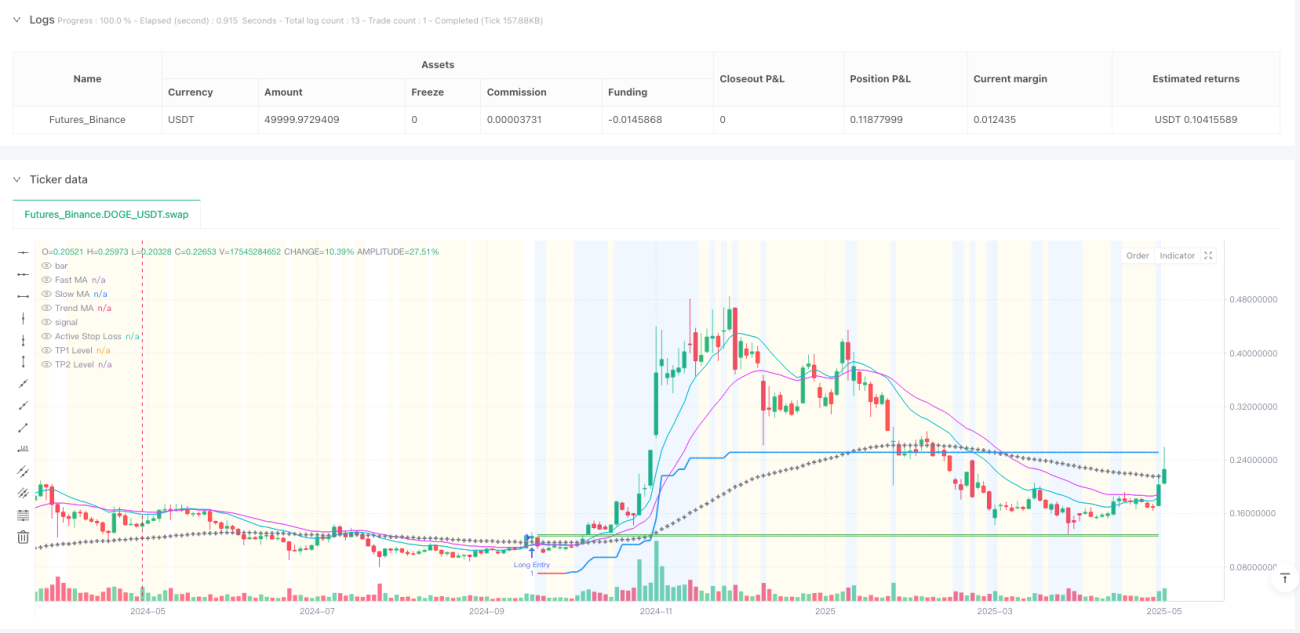
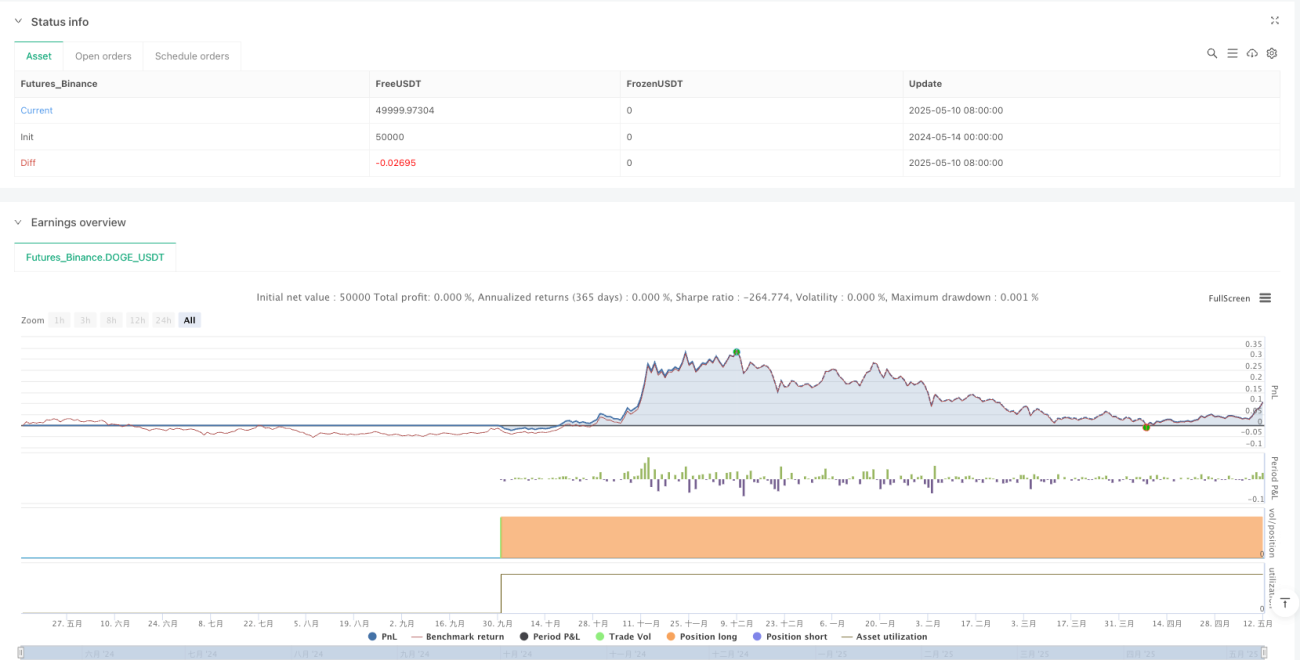
خودکشی میڈین لائن کراس وولٹیج ٹریکنگ کوانٹم ٹریڈنگ اسٹریٹجی ایک منظم حکمت عملی ہے جو خاص طور پر ہائی فریکوئنسی ٹریڈنگ اور شارٹ لائن آپریشن کے لئے ڈیزائن کی گئی ہے۔ اس حکمت عملی کا بنیادی حصہ تیزی سے چلنے والی میڈین لائن ((MA) اور آہستہ چلنے والی میڈین لائن کے کراس کو بطور اہم سگنل ٹرگر استعمال کرتا ہے ، جبکہ چھوٹے لیکن تیز رفتار قیمت میں اتار چڑھاو کو پکڑنے کے لئے متعدد کلیدی فلٹرز اور عین مطابق رسک مینجمنٹ ٹولز کے ساتھ مل کر ہے۔ اس حکمت عملی میں انتہائی ترتیب دینے کی اہلیت ہے ، جس سے صارفین کو مختلف مارکیٹوں کی رفتار سے متعلق تجارتی ضروریات کے مطابق اوسط لائن کی قسم ((EMA ، SMA ، WMA ، HMA ، VWMA) اور اس کے دورانیہ پیرامیٹرز کو منتخب کرنے کی لچک ملتی ہے۔ اس کے علاوہ ، یہ حکمت عملی API کے لئے تیار ہے ، جو خود کار طریقے سے ٹریڈنگ سسٹم میں ہموار ہے ، سگنل کی تیز رفتار عملدرآمد کو یقینی بناتا ہے ، خاص طور پر چھوٹے منافع کے حصول کے لئے اعلی

حکمت عملی کا اصول

اس حکمت عملی کی بنیادی منطق کو مندرجہ ذیل اہم حصوں میں تقسیم کیا گیا ہے:

  1. داخلہ سگنل: بنیادی طور پر تیز اوسط لائن اور سست اوسط لائن کے کراس / کراس کے ذریعے داخلے کی شرط کے طور پر ٹرگر کریں۔ صارف اوسط لائن کی قسم (ای ایم اے ، ایس ایم اے ، ڈبلیو ایم اے ، ایچ ایم اے ، وی ڈبلیو ایم اے) اور سائیکل کی لمبائی کو لچکدار ترتیب دے سکتا ہے تاکہ سگنل کی حساسیت کو مختلف مارکیٹ کے حالات کے مطابق بنایا جاسکے۔

  2. رجحانات کا فلٹرحکمت عملی: بڑے رجحانات کے فلٹر کے طور پر طویل مدتی منتقل اوسط کا انتخاب کرتے ہوئے ، اس بات کو یقینی بنائیں کہ صرف بڑے رجحانات کی سمت میں ہی تجارت کی جائے ، اور مضبوط سمت والے بازاروں میں الٹا مختصر تجارت سے گریز کریں۔

  3. فلٹر کی تصدیق کریں

    • اے ٹی آر فلو ریٹ فلٹر: انتہائی فلیٹ یا “مردہ” مارکیٹوں میں داخلے کو روکنے کے لئے ڈیزائن کیا گیا ہے ، جس میں متحرک حد سے کم اتار چڑھاؤ ہوتا ہے ((اوسط اے ٹی آر پر مبنی) ، جس سے غیر رجحان ، کم توانائی کی حالت میں ہلچل کو روکنے میں مدد ملتی ہے۔
    • ترسیل کی مقدار فلٹر: کم سے کم مارکیٹ میں شرکت کی ضرورت کے ذریعے داخلے کے سگنل کی توثیق کریں (معاملت کی مقدار کا موازنہ اس کی حرکت پذیری اوسط سے) ، اور کم لیکویڈیٹی چوٹیوں یا غیر اہم قیمتوں کے عمل پر مبنی داخلے سے گریز کریں۔
  4. رسک مینجمنٹ کٹ

    • ابتدائی اتار چڑھاو کی شرح کا نقصاناے ٹی آر پر مبنی ابتدائی روک ہر تجارت کے لئے خطرہ کی تعریف کے لئے ایک مقصد نقطہ آغاز فراہم کرتا ہے ، جو حالیہ اتار چڑھاؤ کے لئے موزوں ہے۔
    • اے ٹی آر ٹریکنگ نقصان: متحرک مارکیٹوں کے لئے ضروری ہے کہ اسٹاپ لاس لائن کا سراغ لگانا فائدہ مند قیمتوں کی نقل و حرکت کے مطابق ایڈجسٹ کیا جائے ، جس کا مقصد کامیاب شارٹ لائن تجارت سے ہونے والے منافع کو بچانا ہے ، جبکہ رجحان کے الٹ جانے پر نسبتا quickly تیزی سے نقصان کو کم کرنا ہے۔
    • منافع اور توازن کی روک تھام (اختیاری): TP1 تک پہنچنے یا قیمت میں مخصوص ATR فاصلے پر منتقل ہونے کے بعد ، اسٹاپ نقصان کو خود بخود داخلے کی قیمت پر منتقل کیا جاسکتا ہے (بشمول بیئرنگ) ، جو فوری اور غیر جانبدار اور ابتدائی کامیاب تجارت کے خطرے کے لئے استعمال کیا جاتا ہے۔
    • ڈبل منافع کی سطحٹی پی 1: ٹی پی 1 اور ٹی پی 2 کے لئے دو منافع بخش اہداف مرتب کیے گئے ہیں۔ ٹی پی 1 کو تیزی سے حصہ لینے کے لئے ڈیزائن کیا گیا ہے (جیسے 50٪) ، جبکہ ٹی پی 2 باقی پوزیشنوں کے لئے زیادہ قیمتی جگہ کی جدوجہد کرتی ہے۔
  5. پوزیشن مینجمنٹ: پوزیشن سائز کی ایک مقررہ تعداد کو اپنانا ، ہر تجارت کے پوزیشن سائز پر عین مطابق کنٹرول حاصل کرنا ، ہائی فریکوینسی ماحول میں یکساں رسک ایپلی کیشنز اور API کمانڈ جنریشن کے لئے ضروری ہے۔

اسٹریٹجک فوائد

کوڈ کو گہرائی سے تجزیہ کرنے کے بعد ، اس حکمت عملی کے درج ذیل واضح فوائد ہیں:

  1. اعلی ترتیب: صارف مختلف پیرامیٹرز کو لچکدار طریقے سے ایڈجسٹ کرسکتا ہے ، بشمول اوسط لائن کی قسم اور دورانیہ ، فلٹر کی ترتیبات اور رسک مینجمنٹ پیرامیٹرز ، تاکہ حکمت عملی مختلف مارکیٹ کے ماحول اور تجارتی طرز کے مطابق ہو۔

  2. کثیر سطحی فلٹرنگ میکانزم: رجحانات ، اتار چڑھاؤ اور حجم کے فلٹرز کے ساتھ مل کر ، غلط سگنل اور مارکیٹ کے شور کو مؤثر طریقے سے کم کریں ، اور تجارت کے معیار کو بہتر بنائیں۔

  3. اچھی طرح سے خطرے کا انتظامحکمت عملی میں ایک سے زیادہ نقصانات کو روکنے کا طریقہ کار ((ابتدائی ، ٹریکنگ ، نقصانات کا توازن) اور دوہری منافع کے اہداف شامل ہیں ، جس سے نفیس خطرے پر قابو پانے اور منافع کے تحفظ کو حاصل کیا جاسکتا ہے۔

  4. API دوستانہ ڈیزائن: واضح اور واضح انٹری اور آؤٹ لک منطق غیر واضح سگنل پیدا کرتی ہے ، جس سے بیرونی تجارتی نظام کے ساتھ انضمام آسان ہوجاتا ہے ، جس سے آرڈر کی فوری طور پر عملدرآمد ممکن ہوجاتی ہے۔

  5. درست پوزیشن کنٹرول: فکسڈ تعداد میں پوزیشن سائز API کے اختتامی مقامات پر بوجھ کو آسان بناتا ہے ، جس سے آٹومیشن پر عملدرآمد زیادہ قابل اعتماد ہوتا ہے۔

  6. انتہائی موافقت پذیر: پیرامیٹرز کو ایڈجسٹ کرنے کے ذریعے ، حکمت عملی اعلی تعدد شارٹ لائن ٹریڈنگ ماڈل سے زیادہ طویل مدتی رجحانات کی پیروی کرنے والے ماڈل میں تبدیل ہوسکتی ہے ، جو مارکیٹ کے مختلف حالات اور انفرادی ٹریڈنگ کی ترجیحات کے مطابق ہے۔

اسٹریٹجک رسک

اگرچہ یہ حکمت عملی اچھی طرح سے ڈیزائن کی گئی ہے ، اس میں کچھ ممکنہ خطرات اور چیلنجز ہیں:

  1. پیرامیٹر کی اصلاح کے خطراتچونکہ حکمت عملی میں بہت سارے ترتیب دینے والے پیرامیٹرز شامل ہیں ، اس لئے زیادہ سے زیادہ اصلاحات کے نتیجے میں مثبت نتائج کی جانچ پڑتال کی جاسکتی ہے ، لیکن اس کی اصل کارکردگی خراب ہے۔ سرمایہ کاروں کو اس خطرے سے بچنے کے لئے نمونہ سے باہر کے اعداد و شمار پر توثیق کرنا چاہئے یا آگے کی جانچ کرنا چاہئے۔

  2. ٹرانزیکشن لاگت کا اثرہائی فریکوئینسی ٹریڈنگ کا مطلب یہ ہے کہ بہت سارے لین دین ، جمع شدہ کمیشن اور سلائڈ پوائنٹس سے خالص منافع کی اہلیت پر نمایاں اثر پڑ سکتا ہے۔ ان اخراجات کا استعمال کرنے سے پہلے سیٹ اپ اور ریٹرننگ میں درست حساب کتاب کرنا ضروری ہے۔

  3. سگنل کے معیار میں تبدیلی: مختلف مارکیٹ کے حالات کے تحت ، مساوی لائن کراس سگنل کی وشوسنییتا میں تبدیلی آسکتی ہے ، خاص طور پر ایک ایسی مارکیٹ میں جہاں افقی جھٹکے یا انتہائی اتار چڑھاؤ ہوتا ہے۔

  4. ٹیکنالوجی پر انحصار: API تیار حکمت عملی کے طور پر ، اس کی تاثیر کا انحصار عملدرآمد کی رفتار اور تکنیکی استحکام پر ہے ، نظام میں تاخیر یا خرابی سے مواقع ضائع ہوسکتے ہیں یا عملدرآمد میں انحراف ہوسکتا ہے۔

  5. فنڈز کی حد: پوزیشنوں کی ایک مقررہ تعداد کا سائز تمام اکاؤنٹس کے سائز کے لئے موزوں نہیں ہوسکتا ہے۔ چھوٹے اکاؤنٹس کو زیادہ خطرہ لاحق ہوسکتا ہے ، جبکہ بڑے اکاؤنٹس کو اپنے فنڈز کو مکمل طور پر استعمال نہیں کرنا پڑتا ہے۔

حکمت عملی کی اصلاح کی سمت

حکمت عملی کے ڈیزائن اور ممکنہ خطرات کی بنیاد پر ، کچھ ممکنہ اصلاحات یہ ہیں:

  1. موافقت کے پیرامیٹرز: کلیدی پیرامیٹرز (جیسے اے ٹی آر ضرب اور اوسط لائن کی مدت) کو مارکیٹ کے حالات کی بنیاد پر خود بخود ایڈجسٹ کرنے کے لئے ڈیزائن کیا گیا ہے ، جس سے مارکیٹ کے مختلف مراحل میں حکمت عملی کی موافقت میں اضافہ ہوتا ہے۔

  2. ذہین فلٹرنگ میں اضافہ: مارکیٹ کی ساخت ، اتار چڑھاؤ کے نمونوں کی شناخت یا متعلقہ اثاثوں کی وابستگی جیسے اضافی مارکیٹ اسٹیٹ اشارے کو مربوط کرنا ، فلٹر کی درستگی کو مزید بہتر بناتا ہے۔

  3. متحرک پوزیشن مینجمنٹ: اکاؤنٹ کے سائز ، موجودہ اتار چڑھاؤ اور حالیہ حکمت عملی کی کارکردگی پر مبنی متحرک پوزیشنوں کی گنتی کے ساتھ پوزیشنوں کی ایک مقررہ تعداد کی جگہ ، زیادہ ذہین فنڈ مینجمنٹ کے لئے۔

  4. ملٹی ٹائم فریم تصدیق: مختلف ٹائم فریموں پر سگنل کی توثیق کریں ، اس بات کو یقینی بنائیں کہ تجارت کی سمت بڑے بازار کے ڈھانچے کے مطابق ہے ، اور غیر ضروری تجارت کو کم کریں۔

  5. مشین لرننگ انٹیگریشن: مشین لرننگ الگورتھم کا استعمال کرتے ہوئے تاریخی سگنل کی کارکردگی کا تجزیہ کریں ، مستقبل کے سگنل کی کامیابی کے امکانات کی پیش گوئی کریں ، اور اعلی کامیابی کے ساتھ تجارت کو ترجیح دیں۔

  6. ٹریڈنگ سیشن مینجمنٹ: کم لیکویڈیٹی یا اعلی اتار چڑھاؤ کے اوقات سے بچنے کے لئے ، مارکیٹ میں سب سے زیادہ موثر ٹریڈنگ ونڈوز پر توجہ مرکوز کرنے کے لئے ٹریڈنگ ٹائم فلٹر شامل کریں۔

  7. متعلقہ فلٹر: کثیر اثاثہ ٹریڈنگ کے لئے، متعلقہ مارکیٹوں کے ساتھ وابستگی کا تجزیہ شامل کریں، مخصوص خطرے کے عوامل کو زیادہ سے زیادہ نمائش سے بچیں.

خلاصہ کریں۔

خود کار طریقے سے متوازن کراس لہر کی نقل و حرکت کی پیمائش کرنے والی ٹریڈنگ حکمت عملی ایک مکمل خصوصیات والا ہائی فریکوئینسی ٹریڈنگ سسٹم ہے ، جس میں متعدد کلیدی فلٹرز اور تیز رفتار قیمتوں میں اتار چڑھاؤ کو پکڑنے کے لئے تیار کردہ ایک اہم خطرے کے انتظام کے ٹولز کے ساتھ مل کر متوازن کراس لہر کے ذریعے سگنل کو متحرک کیا گیا ہے۔ حکمت عملی کی طاقت اس کی انتہائی قابل ترتیب اور مکمل خطرے کے انتظام کے فریم ورک میں ہے ، جس سے تاجر انفرادی خطرے کی برداشت اور مارکیٹ کے حالات کے مطابق تجارتی پیرامیٹرز کو بہتر بنانے کے قابل ہوجاتا ہے۔

ہائی فریکوئینسی تاجروں کے لئے ، حکمت عملی واضح اندراج اور باہر نکلنے کی منطق اور بیرونی عملدرآمد پلیٹ فارم کے ساتھ ہموار انضمام کی اہلیت مہیا کرتی ہے ، جو فوری طور پر بدلتے ہوئے بازاروں میں فیصلوں پر عمل درآمد کرنے کے لئے ضروری ہے۔ تاہم ، اس حکمت عملی کو استعمال کرتے وقت ، تجارت کے اخراجات کو جمع کرنے اور زیادہ سے زیادہ اصلاحات کے خطرے پر خصوصی توجہ دی جانی چاہئے ، تاکہ حکمت عملی کی صحت اور منافع کو حقیقی تجارت میں برقرار رکھا جاسکے۔

آخر کار ، یہ حکمت عملی ایک متوازن نقطہ نظر کی نمائندگی کرتی ہے جو تکنیکی اشارے اور رسک مینجمنٹ ٹولز کی طاقت کو استعمال کرتی ہے ، جبکہ مارکیٹ کے بدلتے ہوئے حالات کے مطابق ڈھالنے کے لئے کافی لچک کو برقرار رکھتی ہے۔ محتاط پیرامیٹرز کی ایڈجسٹمنٹ اور مسلسل نگرانی میں بہتری کے ساتھ ، یہ حکمت عملی ایک قابل قدر جزو بن سکتی ہے۔

حکمت عملی کا ماخذ کوڈ
/*backtest
start: 2024-05-14 00:00:00
end: 2025-05-12 08:00:00
period: 2d
basePeriod: 2d
exchanges: [{"eid":"Futures_Binance","currency":"DOGE_USDT"}]
*/

//@version=5
// © ArrowTrade x:ArrowTrade

// --- STRATEGY DEFINITION ---
strategy(
     title="Arrow's Flexible MA Cross Strategy [API Ready]", // Added branding
     shorttitle="ArrowFlex",                  // Added branding
     overlay=true,
     initial_capital=1000, // Example capital, user should adjust
     commission_type=strategy.commission.percent,
     commission_value=0.036, // Example commission, user MUST adjust to their broker/exchange
     slippage=2,             // Example slippage (in ticks), user should adjust based on asset/broker
     process_orders_on_close=true, // Calculates/executes on bar close. Set to false for intrabar (use with caution & specific logic)
     pyramiding=0,           // No pyramiding allowed (one entry per direction)
     default_qty_type=strategy.fixed // Defaulting to fixed quantity
     // Removed default_qty_value from here
     )

// ================================================================================
//  Strategy Description (for TradingView Public Library & Users)
// ================================================================================
// © ArrowTrade
//
// A configurable Moving Average Crossover strategy designed for flexibility and
// API integration.
//
// Features:
// - MA Crossover Entries: Uses configurable Fast/Slow MA crossovers for signals.
// - Trend Filter: Optional longer-term MA filter to trade only with the trend.
// - Volatility Filter: Optional ATR filter to avoid low-volatility periods.
// - Volume Filter: Optional Volume filter to confirm entries with sufficient volume.
// - Stop Loss Options:
//     - Initial Volatility Stop (ATR-based)
//     - ATR Trailing Stop
//     - Break-Even Stop (activated by TP1 hit or ATR distance)
// - Take Profit Options:
//     - Two independent TP levels (percentage-based).
//     - Configurable partial close percentage at TP1.
// - Position Sizing: Fixed quantity per trade (adjustable).
//
// Intended Use:
// While configurable for various styles (scalping to trend-following by adjusting
// parameters), this strategy is built with API automation in mind. The clear
// entry and exit logic facilitates integration with external execution platforms
// via webhooks or other methods. Parameters can be tightened (shorter MAs,
// tighter stops/TPs, specific filters) for higher-frequency signals suitable
// for scalping.
//
// Disclaimer:
// Backtesting results are hypothetical and do not guarantee future performance.
// Market conditions change constantly. Always perform your own due diligence,
// forward testing, and rigorous risk management before trading live with any
// strategy. Ensure you adjust inputs like commission, slippage, and position
// size to accurately reflect your specific broker/exchange and risk profile.
// ================================================================================


// === INPUTS (Grouped and Ordered by Importance/Function) ===

// --- 1. Core Signal & Trend Filter ---
grp_signal = "1. Core Signal & Trend Filter"
signalSource   = input.source(high, title="Signal Source", group=grp_signal, tooltip="Price source for calculating the signal MAs (e.g., close, hl2, ohlc4). 'hlc3' or 'ohlc4' can provide smoother signals.")
signalMaType   = input.string("EMA", title="Signal MA Type", options=["EMA", "SMA", "WMA", "HMA", "VWMA"], group=grp_signal, tooltip="Type of Moving Average used for the fast/slow signal lines (EMA reacts faster, SMA smoother, HMA reduces lag).")
signalFastLen  = input.int(12, title="Fast MA Period", minval=2, maxval=100, step=1, group=grp_signal, tooltip="Period for the shorter-term signal MA. Shorter periods lead to more frequent signals (potentially more noise/scalping).")
signalSlowLen  = input.int(25, title="Slow MA Period", minval=3, maxval=200, step=1, group=grp_signal, tooltip="Period for the longer-term signal MA. Must be greater than Fast MA Period. Defines the crossover signal.")
useTrendFilter = input.bool(true, title="Enable Trend Filter", group=grp_signal, tooltip="If enabled, entry signals are only taken in the direction of the longer-term trend defined by the Trend MA.")
trendMaType    = input.string("EMA", title="Trend MA Type", options=["EMA", "SMA", "WMA", "HMA", "VWMA"], group=grp_signal, tooltip="Type of Moving Average used for the trend filter.")
trendMaLen     = input.int(100, title="Trend MA Period", minval=50, maxval=500, step=10, group=grp_signal, tooltip="Period for the Trend MA. Significantly longer than signal MAs typically. Higher values filter more aggressively.")
trendMaSource  = input.source(hl2, title="Trend MA Source", group=grp_signal, tooltip="Price source for the Trend MA calculation.")

// --- 2. Risk Management: Stop Loss ---
grp_stop = "2. Risk Management: Stop Loss"
useVolatilityStop    = input.bool(true, title="Enable Initial Volatility Stop", group=grp_stop, tooltip="Sets the initial stop loss based on Average True Range (ATR) at the time of entry.")
volStopAtrPeriod     = input.int(7, title="   Initial Stop ATR Period", minval=1, maxval=50, step=1, group=grp_stop, tooltip="ATR lookback period for calculating the initial stop distance.")
volStopAtrMultiplier = input.float(5, title="   Initial Stop ATR Multiplier", minval=0.5, maxval=10, step=0.1, group=grp_stop, tooltip="Multiplier for the ATR value to determine stop distance (Stop = Entry +/- ATR * Multiplier). Lower values = tighter initial stop.")
useTrailingStop      = input.bool(true, title="Enable ATR Trailing Stop", group=grp_stop, tooltip="If enabled, the stop loss will trail behind price based on current ATR, potentially locking in profits. Can override the initial/BE stop if it moves favorably.")
trailAtrPeriod       = input.int(15, title="   Trailing ATR Period", minval=1, maxval=50, step=1, group=grp_stop, tooltip="ATR lookback period for calculating the trailing distance.")
trailAtrMultiplier   = input.float(4.0, title="   Trailing ATR Multiplier", minval=0.5, maxval=10, step=0.1, group=grp_stop, tooltip="Multiplier for the current ATR to determine trailing distance. Lower values trail tighter.")
useBreakEvenStop     = input.bool(false, title="Enable Break-Even Stop", group=grp_stop, tooltip="If enabled, moves the stop loss to entry price (plus a small profit buffer) once a certain condition is met.")
beActivationChoice   = input.string("TP1 Reached", title="   BE Activation Condition", options=["TP1 Reached", "ATR Distance Moved"], group=grp_stop, tooltip="When should the Break-Even Stop activate? When TP1 is hit, or when price moves a certain ATR distance from entry?")
beActivationAtrMult  = input.float(1.5, title="   BE Activation ATR Multiplier", minval=0.1, maxval=5, step=0.1, group=grp_stop, tooltip="Used only if 'ATR Distance Moved' is selected. BE activates if price moves (Entry +/- ATR * Multiplier). Uses 'Initial Stop ATR Period'.")
beProfitTicks        = input.int(2, title="   BE Profit Buffer (Ticks)", minval=0, maxval=50, step=1, group=grp_stop, tooltip="Moves the stop to Entry Price +/- this many ticks (e.g., to cover commissions). Set to 0 for exact entry price.")

// --- 3. Risk Management: Take Profit ---
grp_tp = "3. Risk Management: Take Profit (TP)"
useTp1        = input.bool(true, title="Enable TP1", group=grp_tp, tooltip="Enable the first Take Profit level.")
tp1Pct        = input.float(1.5, title="   TP1 Target (%)", minval=0.1, maxval=20, step=0.1, group=grp_tp, tooltip="First TP target as a percentage distance from the entry price. Should be less than TP2 %.")
tp1QtyPercent = input.int(50, title="   TP1 Close Quantity (%)", minval=1, maxval=100, step=5, group=grp_tp, tooltip="Percentage of the original position size to close when TP1 is hit.")
useTp2        = input.bool(true, title="Enable TP2", group=grp_tp, tooltip="Enable the second (final) Take Profit level.")
tp2Pct        = input.float(3.0, title="   TP2 Target (%)", minval=0.2, maxval=30, step=0.1, group=grp_tp, tooltip="Second TP target as a percentage distance from the entry price. Closes the remaining position.")

// --- 4. Additional Filters ---
grp_filters = "4. Additional Filters"
useAtrFilter        = input.bool(true, title="Enable ATR Volatility Filter", group=grp_filters, tooltip="If enabled, avoids entries during periods of very low volatility (ATR below a moving average of ATR). Helps filter choppy/sideways markets.")
atrFilterPeriod     = input.int(14, title="   ATR Filter Period", minval=1, maxval=50, step=1, group=grp_filters, tooltip="Lookback period for calculating the current ATR and its average for the filter.")
atrFilterMultiplier = input.float(0.5, title="   ATR Filter Threshold Multiplier", minval=0.1, maxval=5, step=0.1, group=grp_filters, tooltip="Entry requires current ATR to be >= (Average ATR * Multiplier). Lower values filter more aggressively.")
useVolumeFilter     = input.bool(true, title="Enable Volume Filter", group=grp_filters, tooltip="If enabled, requires the volume of the entry bar to be above a moving average of volume. Acts as confirmation.")
volumeLookback      = input.int(30, title="   Volume MA Period", minval=2, maxval=100, step=1, group=grp_filters, tooltip="Lookback period for calculating the average volume.")
volumeMultiplier    = input.float(1.0, title="   Min Volume Ratio (vs Avg)", minval=0.1, maxval=5, step=0.1, group=grp_filters, tooltip="Entry requires current volume to be >= (Average Volume * Multiplier). Values >= 1 require above-average volume.")

// --- 5. Position Sizing ---
grp_size = "5. Position Sizing"
// Define the quantity input with its own default value
qtyValue = input.float(0.01, title="Position Size (Fixed Qty)", minval=0.0001, step=0.0001, group=grp_size, tooltip="Fixed quantity (contracts/shares/lots) per trade. Adjust based on your account size, risk tolerance, and the asset being traded. Can be overridden by API.")


// === FUNCTIONS ===
f_ma(maType, src, len) =>
    float result = na
    if maType == "SMA"
        result := ta.sma(src, len)
    else if maType == "EMA"
        result := ta.ema(src, len)
    else if maType == "WMA"
        result := ta.wma(src, len)
    else if maType == "HMA"
        result := ta.hma(src, len)
    else if maType == "VWMA"
        result := ta.vwma(src, len)
    result

// === CORE CALCULATIONS ===

// Parameter Sanity Check
if signalSlowLen <= signalFastLen and barstate.islast
    runtime.error("Signal Slow MA Period must be greater than Fast MA Period!")

// 1. Moving Averages
float fastMA = f_ma(signalMaType, signalSource, signalFastLen)
float slowMA = f_ma(signalMaType, signalSource, signalSlowLen)
float trendMA = useTrendFilter ? f_ma(trendMaType, trendMaSource, trendMaLen) : na

// 2. ATR Values
float atrValueStop = ta.atr(volStopAtrPeriod)
float atrValueTrail = ta.atr(trailAtrPeriod)
float atrValueFilter = ta.atr(atrFilterPeriod)
float atrValueBE = ta.atr(volStopAtrPeriod)

// 3. Filter Conditions
bool trendFilterOK_L = not useTrendFilter or (not na(trendMA) and signalSource > trendMA)
bool trendFilterOK_S = not useTrendFilter or (not na(trendMA) and signalSource < trendMA)
float avgAtrFilter = ta.sma(atrValueFilter, atrFilterPeriod)
bool volatilityFilterOK = not useAtrFilter or (not na(atrValueFilter) and not na(avgAtrFilter) and atrValueFilter >= avgAtrFilter * atrFilterMultiplier)
float avgVolume = ta.sma(volume, volumeLookback)
bool volumeFilterOK = not useVolumeFilter or (not na(volume) and not na(avgVolume) and volume >= avgVolume * volumeMultiplier)
bool finalFilterOK_L = trendFilterOK_L and volatilityFilterOK and volumeFilterOK
bool finalFilterOK_S = trendFilterOK_S and volatilityFilterOK and volumeFilterOK

// 4. Entry Signals
bool longCross = not na(fastMA) and not na(slowMA) and ta.crossover(fastMA, slowMA)
bool shortCross = not na(fastMA) and not na(slowMA) and ta.crossunder(fastMA, slowMA)
bool longEntrySignal = longCross and finalFilterOK_L
bool shortEntrySignal = shortCross and finalFilterOK_S

// === STRATEGY EXECUTION LOGIC ===

// --- State Variables (persisted between bars) ---
var float entryPriceVar = na
var float initialStopPrice = na
var float currentStopPrice = na
var float trailStopLevel = na
var bool isBEActive = false
var bool tp1Reached = false
var float qtyToCloseTp1_Var = na

// --- Position Status ---
bool inLong = strategy.position_size > 0
bool inShort = strategy.position_size < 0
bool inTrade = strategy.position_size != 0

// --- Reset State Variables on Trade Exit ---
if not inTrade and inTrade[1]
    entryPriceVar := na
    initialStopPrice := na
    currentStopPrice := na
    trailStopLevel := na
    isBEActive := false
    tp1Reached := false
    qtyToCloseTp1_Var := na

// --- Handle New Entries ---
if longEntrySignal and not inTrade
    strategy.entry("Long Entry", strategy.long, qty=qtyValue) // Use qtyValue from input

if shortEntrySignal and not inTrade
    strategy.entry("Short Entry", strategy.short, qty=qtyValue) // Use qtyValue from input


// --- Manage Stops and Take Profits for Open Positions ---
if inTrade
    // Initialize state on the bar immediately AFTER entry
    if na(entryPriceVar)
        entryPriceVar := strategy.position_avg_price
        float positionQty = strategy.position_size

        if not na(positionQty) and tp1QtyPercent > 0 and useTp1
            qtyToCloseTp1_Var := math.abs(positionQty * tp1QtyPercent / 100)
        else
            qtyToCloseTp1_Var := 0.0

        if useVolatilityStop and not na(atrValueStop)
            initialStopPrice := entryPriceVar + (inLong ? -1 : 1) * atrValueStop * volStopAtrMultiplier
            currentStopPrice := initialStopPrice
        else
            initialStopPrice := na
            currentStopPrice := na

        if useTrailingStop and not na(atrValueTrail)
            trailStopLevel := entryPriceVar + (inLong ? -1 : 1) * atrValueTrail * trailAtrMultiplier
        else
            trailStopLevel := na

        isBEActive := false
        tp1Reached := false

    // --- Calculations within the trade (if entry price is set) ---
    if not na(entryPriceVar)

        // 1. Calculate TP Levels for the current bar
        float tp1LevelL = na, float tp2LevelL = na, float tp1LevelS = na, float tp2LevelS = na
        if useTp1
            tp1LevelL := entryPriceVar * (1 + tp1Pct / 100)
            tp1LevelS := entryPriceVar * (1 - tp1Pct / 100)
        if useTp2
            tp2LevelL := entryPriceVar * (1 + tp2Pct / 100)
            tp2LevelS := entryPriceVar * (1 - tp2Pct / 100)

        // 2. Check and Activate Break-Even Stop
        if useBreakEvenStop and not isBEActive and not na(currentStopPrice)
            float beTriggerL = na, float beTriggerS = na
            if beActivationChoice == "TP1 Reached" and useTp1
                if not na(tp1LevelL)
                    beTriggerL := tp1LevelL
                if not na(tp1LevelS)
                    beTriggerS := tp1LevelS
            else if beActivationChoice == "ATR Distance Moved" and not na(atrValueBE)
                beTriggerL := entryPriceVar + atrValueBE * beActivationAtrMult
                beTriggerS := entryPriceVar - atrValueBE * beActivationAtrMult

            float beTargetLevel = entryPriceVar + (inLong ? 1 : -1) * beProfitTicks * syminfo.mintick

            if not na(beTriggerL) and not na(beTargetLevel) and inLong and high >= beTriggerL and beTargetLevel > currentStopPrice
                currentStopPrice := beTargetLevel
                isBEActive := true
            if not na(beTriggerS) and not na(beTargetLevel) and inShort and low <= beTriggerS and beTargetLevel < currentStopPrice
                currentStopPrice := beTargetLevel
                isBEActive := true

        // 3. Update Trailing Stop
        if useTrailingStop and not na(currentStopPrice) and not na(atrValueTrail)
            float newTrailStopL = low - atrValueTrail * trailAtrMultiplier
            float newTrailStopS = high + atrValueTrail * trailAtrMultiplier
            float prevTrail = trailStopLevel[1]
            float calculatedNewTrail = na

            if inLong
                calculatedNewTrail := na(prevTrail) ? newTrailStopL : math.max(prevTrail, newTrailStopL)
                if not na(calculatedNewTrail)
                    trailStopLevel := calculatedNewTrail
                if not na(trailStopLevel) and trailStopLevel > currentStopPrice
                    currentStopPrice := trailStopLevel
            if inShort
                calculatedNewTrail := na(prevTrail) ? newTrailStopS : math.min(prevTrail, newTrailStopS)
                if not na(calculatedNewTrail)
                    trailStopLevel := calculatedNewTrail
                if not na(trailStopLevel) and trailStopLevel < currentStopPrice
                    currentStopPrice := trailStopLevel

        // --- Execute Exits ---

        // 4. Apply Stop Loss Exit
        if not na(currentStopPrice)
            bool isTrailingActiveNow = useTrailingStop and not na(trailStopLevel) and currentStopPrice == trailStopLevel
            string stop_comment = isBEActive ? "BE Stop" : (isTrailingActiveNow ? "Trail Stop" : "Vol Stop")
            if inLong
                strategy.exit("SL Exit L", from_entry="Long Entry", stop=currentStopPrice, comment=stop_comment + " L")
            if inShort
                strategy.exit("SL Exit S", from_entry="Short Entry", stop=currentStopPrice, comment=stop_comment + " S")

        // 5. Apply Take Profit Exits
        // TP1 Exit (Partial Quantity)
        if useTp1 and not tp1Reached and not na(qtyToCloseTp1_Var) and qtyToCloseTp1_Var > 0
            if inLong and not na(tp1LevelL)
                strategy.exit("TP1 Exit L", from_entry="Long Entry", qty=qtyToCloseTp1_Var, limit=tp1LevelL, comment="TP1 Hit L")
                if high >= tp1LevelL
                    tp1Reached := true
            if inShort and not na(tp1LevelS)
                strategy.exit("TP1 Exit S", from_entry="Short Entry", qty=qtyToCloseTp1_Var, limit=tp1LevelS, comment="TP1 Hit S")
                if low <= tp1LevelS
                    tp1Reached := true

        // TP2 Exit (Remaining Quantity)
        if useTp2
            if inLong and not na(tp2LevelL)
                strategy.exit("TP2 Exit L", from_entry="Long Entry", limit=tp2LevelL, comment="TP2 Hit L")
            if inShort and not na(tp2LevelS)
                strategy.exit("TP2 Exit S", from_entry="Short Entry", limit=tp2LevelS, comment="TP2 Hit S")


// === PLOTTING ===

// 1. Moving Averages
plot(fastMA, "Fast MA", color=color.new(color.aqua, 0), linewidth=1)
plot(slowMA, "Slow MA", color=color.new(color.fuchsia, 0), linewidth=1)
plot(useTrendFilter and not na(trendMA) ? trendMA : na, "Trend MA", color=color.new(color.gray, 0), linewidth=2, style=plot.style_cross)

// 2. Active Stop Loss Level
color stopColor = color.new(color.red, 0)
bool isTrailingActivePlot = useTrailingStop and not na(trailStopLevel) and not na(currentStopPrice) and currentStopPrice == trailStopLevel
if isBEActive
    stopColor := color.new(color.orange, 0)
else if isTrailingActivePlot
    stopColor := color.new(color.blue, 0)
plot(inTrade and not na(currentStopPrice) ? currentStopPrice : na, "Active Stop Loss", stopColor, style=plot.style_linebr, linewidth=2)

// 3. Take Profit Levels
float plot_tp1LevelL = na, float plot_tp1LevelS = na, float plot_tp2LevelL = na, float plot_tp2LevelS = na
if not na(entryPriceVar)
    if useTp1
        plot_tp1LevelL := entryPriceVar * (1 + tp1Pct / 100)
        plot_tp1LevelS := entryPriceVar * (1 - tp1Pct / 100)
    if useTp2
        plot_tp2LevelL := entryPriceVar * (1 + tp2Pct / 100)
        plot_tp2LevelS := entryPriceVar * (1 - tp2Pct / 100)
plot(inTrade and useTp1 and not na(inLong ? plot_tp1LevelL : plot_tp1LevelS) ? (inLong ? plot_tp1LevelL : plot_tp1LevelS) : na, "TP1 Level", color=color.new(color.green, 30), style=plot.style_linebr, linewidth=1)
plot(inTrade and useTp2 and not na(inLong ? plot_tp2LevelL : plot_tp2LevelS) ? (inLong ? plot_tp2LevelL : plot_tp2LevelS) : na, "TP2 Level", color=color.new(color.green, 0), style=plot.style_linebr, linewidth=1)

// 4. Entry Signal Markers
plotshape(longEntrySignal, title="Long Entry Signal", location=location.belowbar, color=color.new(color.green, 0), style=shape.triangleup, size=size.small)
plotshape(shortEntrySignal, title="Short Entry Signal", location=location.abovebar, color=color.new(color.red, 0), style=shape.triangledown, size=size.small)

// 5. Background Color Filters
bgcolor(useTrendFilter and not na(trendMA) and inTrade ? (inLong ? color.new(color.blue, 90) : color.new(color.red, 90)) : na, title="Trend Filter Active")
bgcolor(useAtrFilter and not volatilityFilterOK ? color.new(color.gray, 85) : na, title="Low Volatility Filter Active")
bgcolor(useVolumeFilter and not volumeFilterOK ? color.new(color.yellow, 90) : na, title="Low Volume Filter Active")