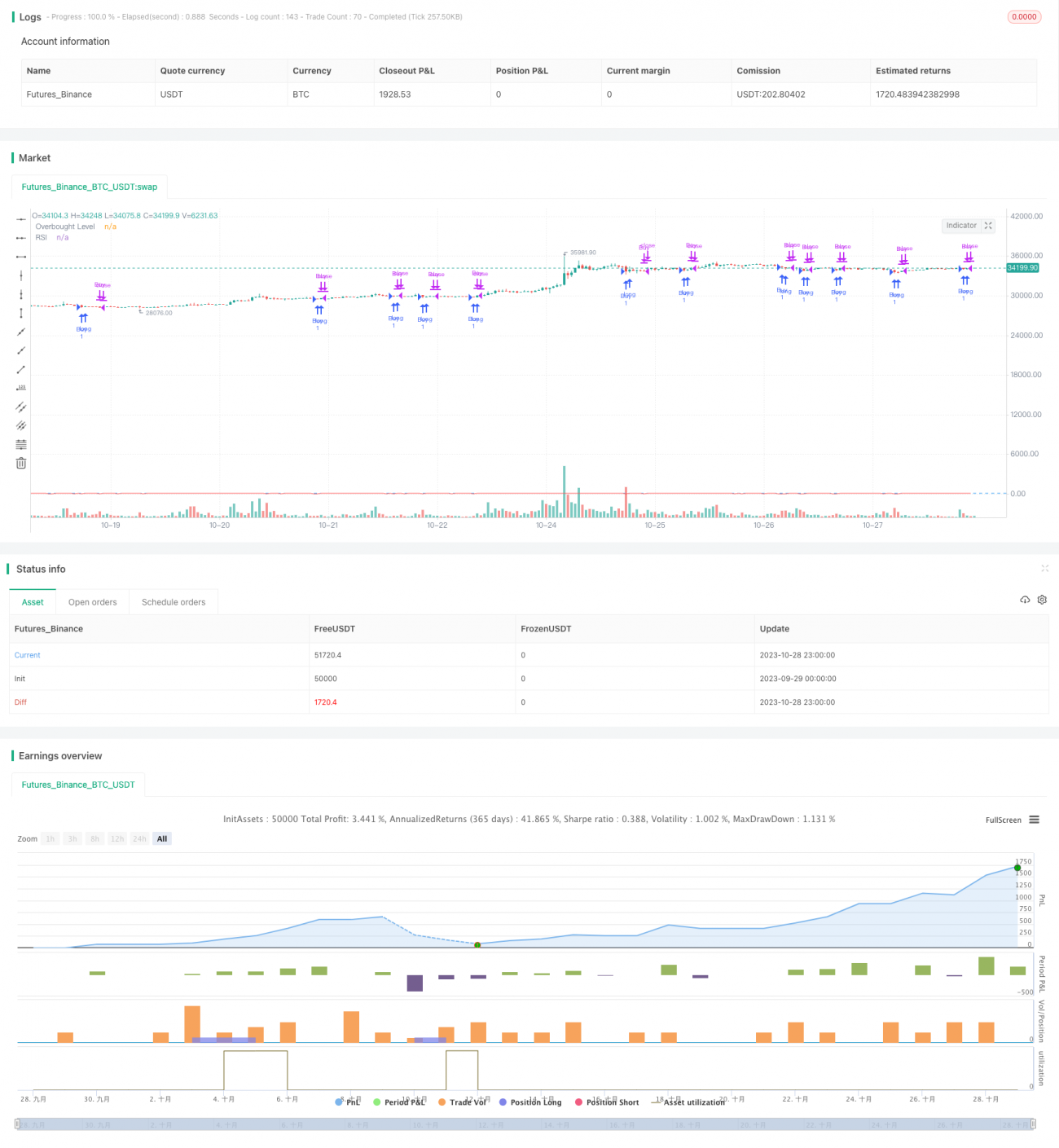
Chiến lược đảo ngược mức bật thấp


Ngày tạo: 2023-10-30 11:53:56 sửa đổi lần cuối: 2023-10-30 11:53:56
sao chép: 0 Số nhấp chuột: 663
1
tập trung vào
1617
Người theo dõi

Chiến lược đảo ngược mức bật thấp

[trans]

Tổng quan

Chiến lược đảo ngược điểm thấp là một chiến lược giao dịch chứng khoán đơn giản và hiệu quả. Nó bằng cách nắm bắt cơ hội đảo ngược điểm thấp, đi vào thị trường khi giá cổ phiếu đảo ngược lên, sử dụng các hoạt động ngắn hạn, dừng lỗ nhanh chóng sau khi có lợi nhuận và rút lui.

Nguyên tắc chiến lược

Chiến lược này chủ yếu dựa trên hai chỉ số: giá thấp nhất 5 ngày để xác định thời gian nhập và RSI 2 ngày để xác định thời gian thoát.

Quá trình hoạt động cụ thể như sau:

  1. Nếu giá đóng cửa hôm đó thấp hơn giá thấp nhất 5 ngày hôm qua, thì hãy mua thêm vào khi đóng cửa.

  2. Nếu RSI 2 ngày kết thúc ở trên vùng mua quá mức (bằng mặc định là 50), thì dừng bán hàng vào cuối ngày.

  3. Nếu không kích hoạt điều kiện dừng trong vòng 5 ngày sau khi nhập cảnh, bạn sẽ bị buộc phải rút lui.

Bằng cách này, chúng ta sẽ mua nhiều hơn khi giá cổ phiếu đang ở điểm quan trọng để đảo ngược, khóa lợi nhuận thông qua tín hiệu mua quá mức của RSI, đồng thời đặt thời gian dừng để kiểm soát rủi ro.

Phân tích lợi thế

Chiến lược này có những lợi thế sau:

  1. Điều hành đơn giản, dễ thực hiện. Chỉ cần quan sát hai chỉ số, quy tắc rõ ràng, bạn có thể đưa ra quyết định giao dịch nhanh chóng.

  2. Sử dụng tư duy đảo ngược xu hướng, đi vào trước khi giá cổ phiếu tăng lên, và nắm bắt được những xu hướng lớn hơn.

  3. Cài đặt điểm dừng để kiểm soát tổn thất đơn lẻ và đạt được lợi nhuận ổn định.

  4. Các giao dịch có thể được thực hiện nhiều lần.

  5. Có thể áp dụng rộng rãi cho hầu hết các cổ phiếu, đặc biệt là các cổ phiếu có đặc điểm biến động giá thấp trong ngắn hạn.

Phân tích rủi ro

Chiến lược này cũng có một số rủi ro:

  1. Lựa chọn sai thời gian đảo ngược có thể dẫn đến thua lỗ.

  2. Đặt điểm dừng không đúng cách có thể làm tăng tổn thất. Cần xem xét mức dừng hợp lý.

  3. Chuyển động của thị trường, điểm dừng khó được kích hoạt. Các tham số RSI có thể được điều chỉnh thích hợp.

  4. Chỉ thích hợp cho hoạt động ngắn hạn, không thích hợp để giữ lâu dài.

  5. Tần suất đổi tay cao làm tăng chi phí giao dịch và chi phí điểm trượt.

Hướng tối ưu hóa

Chiến lược này có thể được tối ưu hóa thêm bằng cách:

  1. Kết hợp các chỉ số xu hướng để tránh hoạt động ngược. Ví dụ MACD, KDJ, v.v.

  2. Kiểm tra các tham số giá thấp nhất trong các ngày khác nhau để tìm chỉ số xác nhận ngược phù hợp hơn.

  3. Kiểm tra kích thước tham số của RSI, tối ưu hóa điều kiện dừng.

  4. Xem xét thêm mô-đun tối ưu hóa dừng lỗ, thiết lập điểm dừng lỗ động thông qua ATR.

  5. Tối ưu hóa thời gian nhập học, có thể chờ nhập học sau khi xác nhận ngược, lọc các đột phá giả.

  6. Đặt mục tiêu dừng hợp lý sau khi tính đến chi phí giao dịch. Kiểm soát tần suất giao dịch.

Tóm tắt

Chiến lược phản hồi điểm thấp đảo ngược là một chiến lược hoạt động ngắn hạn điển hình. Nó nắm bắt cơ hội giao dịch phản hồi điểm thấp, sử dụng các chỉ số đơn giản để đánh giá thời gian vào và thời gian ra, để thực hiện dừng lỗ nhanh chóng. So với mua và giữ, chiến lược này có lợi thế về lợi nhuận rủi ro cao hơn.

||

Overview

The Low Point Rebound strategy is a simple and effective stock trading strategy. It captures low point rebound opportunities and enters the market when stock prices reverse upwards. It aims to profit in the short term and exit quickly with stop loss.

Strategy Logic

This strategy mainly uses two indicators: the 5-day lowest price to determine entry timing and the 2-day RSI to determine exit timing.

The specific process is as follows:

  1. If today’s close is below yesterday’s 5-day lowest price, go long at today’s close.

  2. If 2-day RSI closes above the overbought level (default 50), close long position at today’s close to take profit.

  3. If held for more than 5 days without meeting profit taking criteria, forced exit with stop loss.

This allows us to enter long around key points when prices reverse upwards. RSI overbought signals are used to lock in profits, while stop loss controls risk.

Advantage Analysis

This strategy has the following advantages:

  1. Simple to implement. Only two indicators to monitor, clear rules for quick decisions.

  2. Captures significant trends by entering before reversal upswings.

  3. Stop loss and take profit points control single trade loss and achieve stable profits.

  4. High capital turnover without long waiting times. Can repeat trades frequently.

  5. Widely applicable to most stocks, especially those with clear short-term low price reversals.

Risk Analysis

There are also some risks to this strategy:

  1. Picking wrong reversal timing may lead to losses. Identifying reversals needs experience.

  2. Improper stop loss placement may magnify losses. Reasonable stop loss percentage should be considered.

  3. Price whipsaws may prevent take profit from triggering. RSI parameters could be adjusted.

  4. Only suitable for short-term trading, not long term holds.

  5. High turnover increases transaction and slippage costs.

Improvement Directions

This strategy can be further optimized in the following aspects:

  1. Add trend indicators to avoid counter trend trades. E.g. MACD, KDJ etc.

  2. Test different lowest price lookback periods to find better reversal confirmation.

  3. Optimize RSI parameters for better profit taking levels.

  4. Consider dynamic stop loss module using ATR.

  5. Improve entry timing with confirmation after reversal signal. Filter fake breakouts.

  6. Set reasonable profit targets considering transaction costs. Control trade frequency.

Conclusion

The Low Point Rebound strategy is a typical short-term trading strategy. It capitalizes on low point reversal opportunities using simple indicators for entry and exit timing, enabling quick profit taking and stopping losses. Compared to buy and hold, it offers higher risk adjusted returns. With continuous parameter and rule optimization, this strategy can be adapted for most stocks to generate steady profits. But trading costs from high turnover should be monitored. Overall, the Low Point Rebound is an easy to use yet effective strategy for stock market trading.

Mã nguồn chiến lược
/*backtest
start: 2023-09-29 00:00:00
end: 2023-10-29 00:00:00
period: 1h
basePeriod: 15m
exchanges: [{"eid":"Futures_Binance","currency":"BTC_USDT"}]
*/

// This source code is subject to the terms of the Mozilla Public License 2.0 at https://mozilla.org/MPL/2.0/
// © hobbiecode

// If today’s close is below yesterday’s five-day low, go long at the close.
// Sell at the close when the two-day RSI closes above 50.
// There is a time stop of five days if the sell criterium is not triggered.

//@version=5
strategy("Hobbiecode - Five Day Low RSI Strategy", overlay=true)

// RSI parameters
rsi_period = 2
rsi_upper = 50

// Calculate RSI
rsi_val = ta.rsi(close, rsi_period)

// Check if today's close is below yesterday's 5-day low
conditionEntry = close < ta.lowest(low[1], 5) and strategy.position_size < 1
if (conditionEntry)
    strategy.entry("Buy", strategy.long)

// Check if RSI closes above 50
if (strategy.position_size > 0 and rsi_val > rsi_upper)
    strategy.close("Buy")

// If position held for more than 5 days without sell criteria, then close position
if (strategy.position_size > 0 and ta.barssince(conditionEntry) >= 5)
    strategy.close("Buy")


// Plot RSI on chart
plot(rsi_val, title="RSI", color=color.red)
hline(rsi_upper, title="Overbought Level", color=color.blue)