Chiến lược đột phá giá theo điểm số tiêu chuẩn

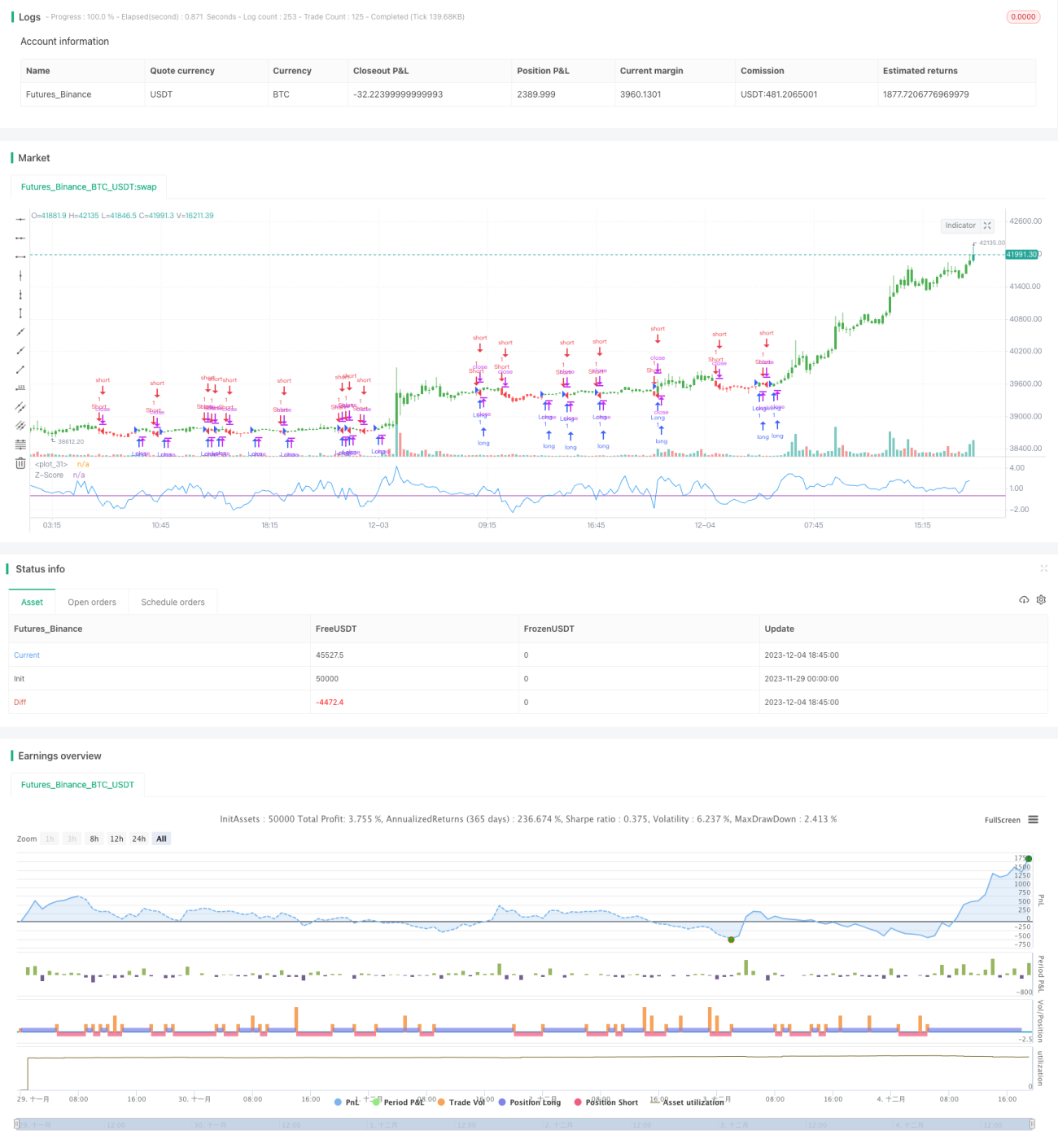
Tổng quan
Chiến lược phá vỡ giá dựa trên điểm số chuẩn (Z-Score Price Breakout Strategy) sử dụng chỉ số điểm số chuẩn của giá để xác định liệu giá hiện tại có đang ở trạng thái bất thường hay không, từ đó tạo ra tín hiệu giao dịch. Khi điểm số chuẩn của giá cao hơn hoặc thấp hơn một ngưỡng nhất định, điều đó cho thấy giá đã bước vào trạng thái bất thường, lúc này có thể thực hiện lệnh mua hoặc bán.
Nguyên lý chiến lược
Chỉ số cốt lõi của chiến lược này là điểm số chuẩn của giá (Z-Score), công thức tính như sau:
Z_score = (C - SMA(n)) / StdDev(C,n)
Trong đó C là giá đóng cửa, SMA(n) là đường trung bình động đơn giản n chu kỳ, StdDev(C,n) là độ lệch chuẩn của giá đóng cửa trong n chu kỳ.
Điểm số chuẩn phản ánh mức độ chênh lệch của giá hiện tại so với giá trung bình. Khi điểm số chuẩn của giá lớn hơn một ngưỡng dương nhất định (ví dụ +2), điều đó cho thấy giá hiện tại đã cao hơn giá trung bình 2 độ lệch chuẩn, thuộc mức tương đối cao; khi nhỏ hơn một ngưỡng âm nhất định (ví dụ -2), điều đó cho thấy giá hiện tại đã thấp hơn giá trung bình 2 độ lệch chuẩn, thuộc mức tương đối thấp.
Chiến lược này trước tiên tính điểm số chuẩn của giá, sau đó đặt các ngưỡng dương và âm (ví dụ 0 và 0), khi điểm số chuẩn cao hơn ngưỡng dương thì phát tín hiệu mua, khi thấp hơn ngưỡng âm thì phát tín hiệu bán.
Phân tích ưu điểm
- Sử dụng điểm số chuẩn của giá để xác định sự bất thường của giá là một phương pháp định lượng phổ biến và hiệu quả.
- Có thể dễ dàng thực hiện giao dịch hai chiều (mua và bán).
- Tham số linh hoạt, có thể điều chỉnh chu kỳ, ngưỡng, v.v.
- Có thể kết hợp với các chỉ báo khác để tạo thành hệ thống giao dịch.
Phân tích rủi ro
- Chiến lược điểm số chuẩn khá thô sơ, dễ tạo ra tín hiệu giả.
- Cần thiết lập tham số phù hợp, như chu kỳ và ngưỡng.
- Cần xem xét chiến lược cắt lỗ để kiểm soát rủi ro.
Hướng tối ưu hóa
- Tối ưu tham số chu kỳ, tìm chu kỳ tối ưu.
- Tối ưu ngưỡng dương và âm, giảm tín hiệu giả.
- Thêm bộ lọc, kết hợp với các chỉ báo khác.
- Thêm chiến lược cắt lỗ.
Tổng kết
Chiến lược phá vỡ giá dựa trên điểm số chuẩn xác định liệu giá hiện tại có ở trạng thái bất thường hay không và giao dịch dựa trên dấu hiệu dương/âm của điểm số chuẩn. Chiến lược này đơn giản, dễ thực hiện, có thể giao dịch hai chiều nhưng cũng tồn tại rủi ro nhất định. Bằng cách tối ưu tham số và sử dụng cắt lỗ, có thể củng cố chiến lược này, kết hợp với các chỉ báo khác để tạo thành hệ thống giao dịch định lượng hoàn chỉnh.
/*backtest
start: 2023-11-29 00:00:00
end: 2023-12-04 19:00:00
period: 15m
basePeriod: 5m
exchanges: [{"eid":"Futures_Binance","currency":"BTC_USDT"}]
*/

//@version=2
////////////////////////////////////////////////////////////
//  Copyright by HPotter v1.0 18/01/2017
// The author of this indicator is Veronique Valcu. The z-score (z) for a data - 1