Chiến lược giao dịch theo xu hướng dựa trên hồi quy tuyến tính và đường trung bình động

Tổng quan
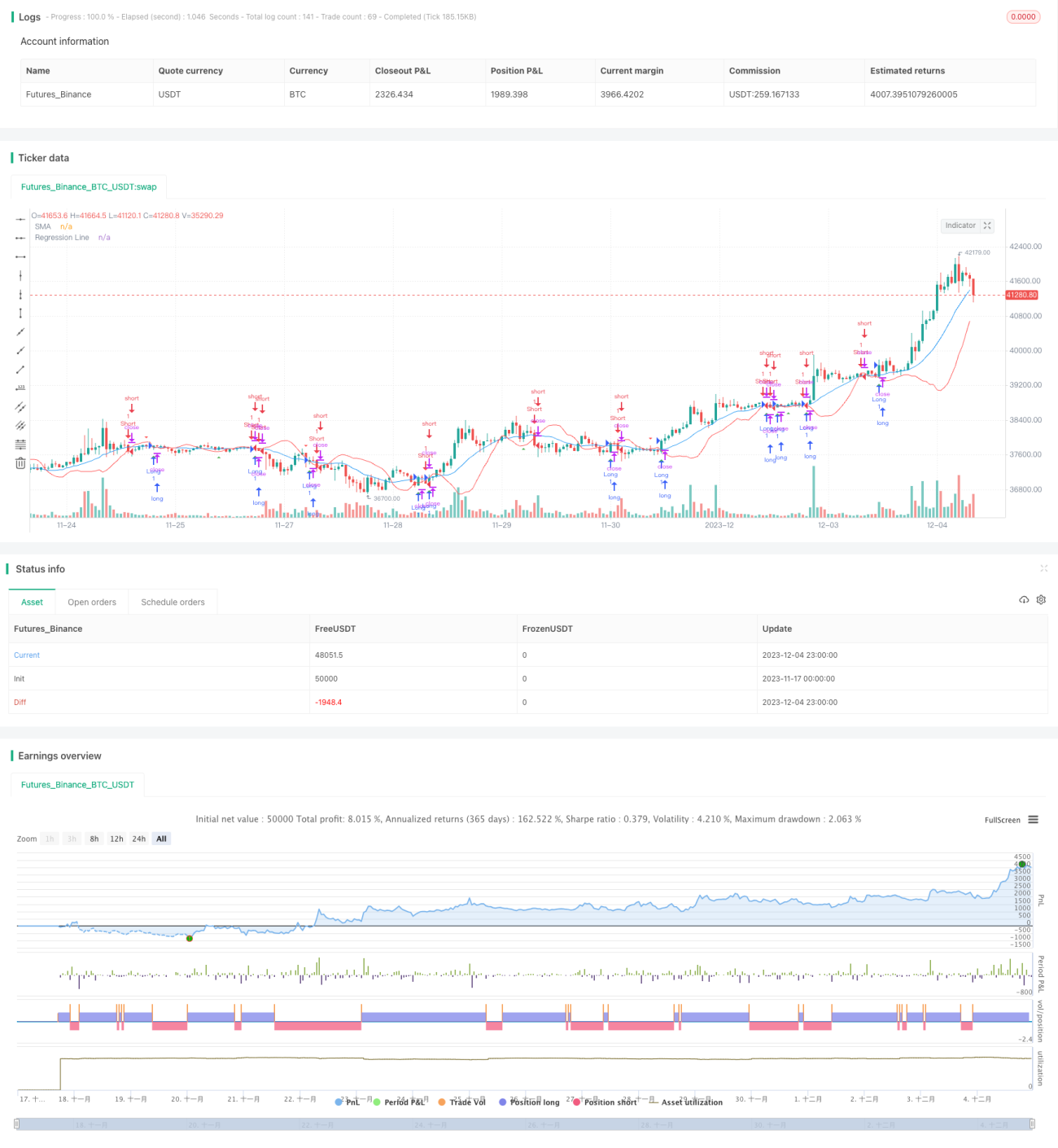
Chiến lược này thiết kế một hệ thống giao dịch theo xu hướng đơn giản dựa trên đường hồi quy tuyến tính và đường trung bình động. Khi đường hồi quy tuyến tính cắt lên trên đường trung bình động, chúng ta mua vào (long); khi đường hồi quy tuyến tính cắt xuống dưới đường trung bình động, chúng ta bán ra (short). Đồng thời, kết hợp độ dốc của đường hồi quy tuyến tính để lọc một phần tín hiệu giao dịch, chỉ vào lệnh khi hướng xu hướng phù hợp.
Tên chiến lược
Trend Following Regression Trading Strategy (Chiến lược giao dịch hồi quy theo xu hướng)
Nguyên lý chiến lược
Chiến lược này bao gồm các phần chính sau:
- Tính đường trung bình động đơn giản (SMA) N ngày
- Tính đường hồi quy tuyến tính trong N ngày gần nhất
- Khi giá đóng cửa cắt lên trên đường SMA và cao hơn đường hồi quy, mua vào (long)
- Khi giá đóng cửa cắt xuống dưới đường SMA và thấp hơn đường hồi quy, bán ra (short)
- Đặt giá cắt lỗ và giá chốt lời
Đường hồi quy tuyến tính có thể mô phỏng tốt hướng xu hướng trong một khoảng thời gian gần đây. Điều này giúp xác định hướng xu hướng tổng thể. Khi giá phá vỡ đường SMA, chúng ta cần đánh giá thêm xem hướng của đường hồi quy tuyến tính có phù hợp với sự phá vỡ này hay không. Chỉ khi cả hai cùng hướng, tín hiệu giao dịch mới được phát sinh. Nhờ đó, có thể lọc bỏ một phần các phá vỡ giả.
Ngoài ra, chiến lược còn thiết lập cơ chế cắt lỗ. Khi giá chạm mức cắt lỗ, vị thế sẽ được đóng để cắt lỗ. Tương tự, cũng thiết lập mức chốt lời để khóa một phần lợi nhuận.
Ưu điểm của chiến lược
Chiến lược này có những ưu điểm sau:
- Kết hợp chỉ báo xu hướng và chỉ báo phá vỡ, tránh phá vỡ giả, nâng cao chất lượng tín hiệu
- Sử dụng hồi quy tuyến tính để xác định hướng xu hướng, thực hiện lọc xu hướng, chỉ mua vào khi xu hướng tăng và chỉ bán ra khi xu hướng giảm
- Thiết lập cơ chế cắt lỗ và chốt lời để kiểm soát rủi ro
- Quy tắc rõ ràng, dễ hiểu và dễ thực hiện
- Chỉ cần điều chỉnh một vài tham số, không quá phức tạp
Phân tích rủi ro
Chiến lược này cũng tồn tại một số rủi ro:
- Trong thị trường đi ngang (dao động), sẽ phát sinh nhiều tín hiệu giao dịch sai lầm hơn
- Việc thiết lập chu kỳ đường trung bình động và chu kỳ hồi quy cần được kiểm tra và tối ưu hóa nhiều lần; nếu thiết lập không phù hợp có thể ảnh hưởng đến hiệu suất chiến lược
- Trong các điều kiện thị trường cực đoan, mức cắt lỗ có thể bị vượt qua dẫn đến thua lỗ lớn
- Chỉ dựa trên các chỉ báo kỹ thuật, không kết hợp các yếu tố cơ bản
Đối với những rủi ro này, chúng ta có thể tối ưu hóa từ các khía cạnh sau:
- Trong thị trường đi ngang, cân nhắc tạm dừng chiến lược hoặc sử dụng các chỉ báo khác để lọc
- Tiến hành backtest nhiều lần với các tham số để tìm ra tham số tối ưu
- Tối ưu hóa và điều chỉnh linh hoạt vị trí cắt lỗ
- Kết hợp các yếu tố cơ bản như dữ liệu kinh tế
Hướng tối ưu hóa
Chiến lược này chủ yếu có thể được tối ưu hóa từ các khía cạnh sau:
- Thêm các chỉ báo phụ trợ khác để đánh giá tình trạng thị trường, tránh giao dịch trong thị trường đi ngang
- Tối ưu hóa loại đường trung bình động, ví dụ kết hợp đường trung bình động kép, đường trung bình động ba, v.v.
- Phân tích thêm độ dốc của đường hồi quy, thêm quy tắc đánh giá độ dốc
- Kết hợp chỉ báo biến động, thiết lập vị trí cắt lỗ và chốt lời động
- Sử dụng phương pháp học máy để tự động tối ưu hóa các tham số
Tổng kết
Chiến lược này tích hợp chức năng theo dõi xu hướng của đường trung bình động với chức năng xác định xu hướng của hồi quy tuyến tính, tạo thành một hệ thống giao dịch theo xu hướng tương đối đơn giản và dễ thực hiện. Trong thị trường có xu hướng rõ ràng, chiến lược này có thể đạt được hiệu quả tốt. Chúng ta cần tiến hành nhiều backtest và tối ưu hóa đối với các tham số và quy tắc, đồng thời kiểm soát rủi ro tốt, thì chiến lược này sẽ có thể mang lại lợi nhuận đầu tư ổn định.
- 1