Chiến lược theo dõi xu hướng đường trung bình động Kaufman thích ứng

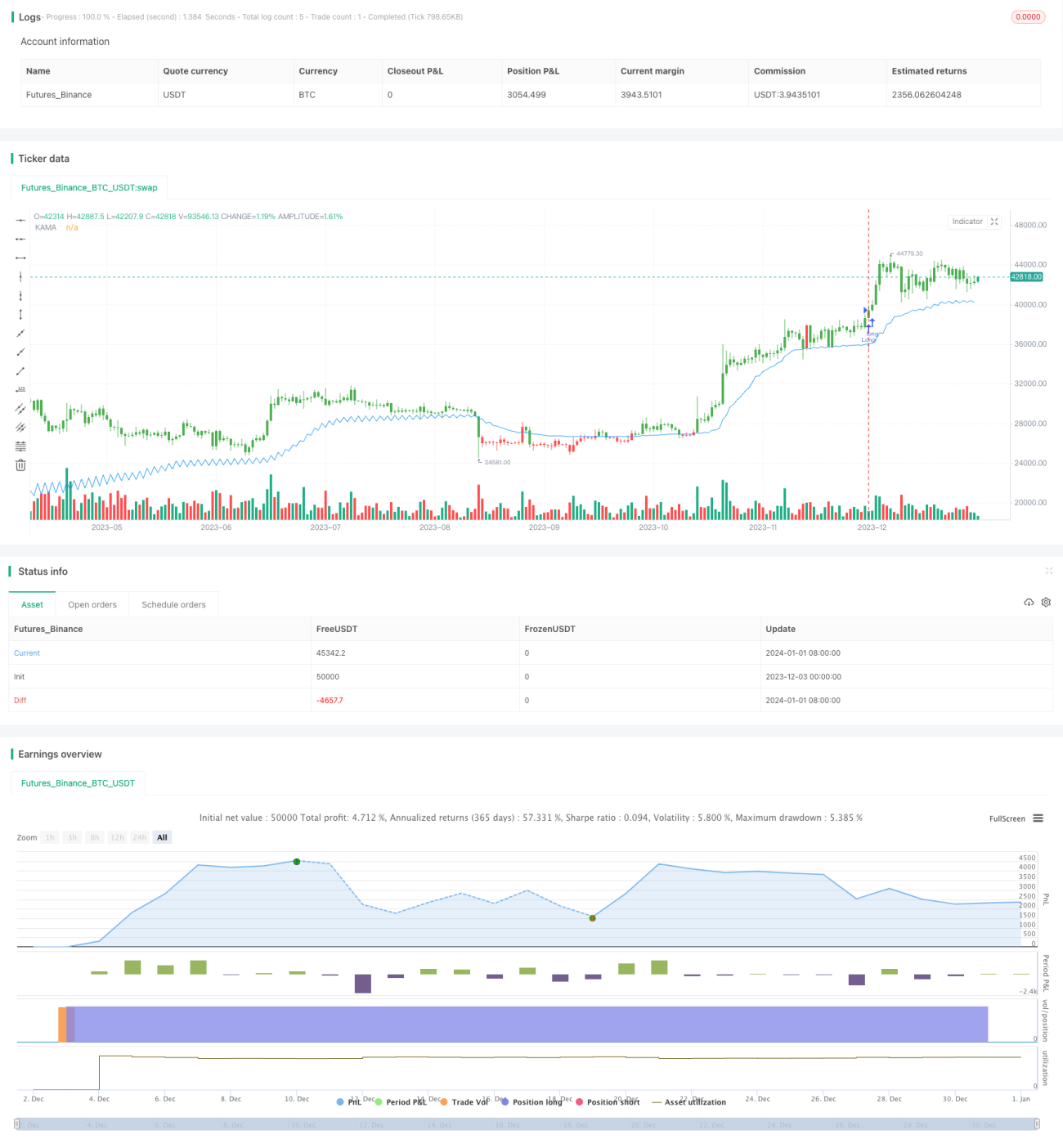
Tổng quan
Chiến lược này sử dụng chỉ báo đường trung bình động thích ứng Kaufman (KAMA) để theo dõi xu hướng giá, thực hiện mua thấp bán cao nhằm thu lợi nhuận.
Nguyên lý chiến lược
Công thức tính chỉ báo KAMA:
nAMA = nz(nAMA[1]) + nsmooth * (Close - nz(nAMA[1]))
Trong đó:
nsmooth = (nefratio * (nfastend - nslowend) + nslowend)^2
nefratio = nsignal / nnoise
nsignal = |Close - Close[Length]|
nnoise = sum(|Close - Close[1]|, Length)
nfastend = 0.666
nslowend = 0.0645
Chỉ báo này xem xét tổng hợp biến động thị trường và xu hướng thay đổi giá, có thể theo dõi xu hướng giá nhanh hơn. Cụ thể:
- Khi thị trường biến động nhỏ, nsmooth gần với nslowend, đường KAMA thay đổi chậm, triệt tiêu nhiễu thị trường.
- Khi thị trường biến động gia tăng và hình thành xu hướng, nsmooth gần với nfastend, đường KAMA thay đổi nhanh, bám theo xu hướng.
Bằng cách so sánh mối quan hệ giữa giá và KAMA, có thể xác định hướng xu hướng giá, từ đó quyết định mua hay bán.
Ưu điểm chiến lược
Ưu điểm lớn nhất của chiến lược này là sử dụng chỉ báo đường trung bình động thích ứng để theo dõi sự thay đổi xu hướng giá, có thể giảm thiểu hiệu quả ảnh hưởng của nhiễu, hiệu quả theo dõi tốt. Cụ thể:
- Chỉ báo KAMA triệt tiêu nhiễu thị trường, có thể giảm số lần giao dịch không cần thiết.
- Chỉ báo KAMA có thể phản ứng nhanh với xu hướng thay đổi giá, hiệu quả bám sát tốt.
- Quy tắc ra quyết định của chiến lược đơn giản rõ ràng, dễ hiểu và dễ thực hiện.
- Có thể cấu hình giao dịch ngược chiều, thích ứng với các môi trường thị trường khác nhau.
Rủi ro chiến lược
Chiến lược này cũng tồn tại một số rủi ro:
- Trong thị trường dao động sideway, chỉ báo KAMA có thể phát ra tín hiệu sai. Có thể điều chỉnh tham số để tối ưu hiệu quả chỉ báo.
- Tồn tại độ trễ bám sát, có thể bỏ lỡ các đảo chiều giá ngắn hạn. Có thể kết hợp với các chỉ báo khác để chẩn đoán.
- Chưa xem xét chi phí giao dịch và trượt giá, hiệu quả thực tế sẽ kém hơn so với backtest.
Hướng tối ưu hóa chiến lược
Chiến lược này có thể được tối ưu hóa từ các khía cạnh sau:
- Tối ưu tham số KAMA, nâng cao độ nhạy theo dõi của chỉ báo.
- Thêm cơ chế cắt lỗ, kiểm soát mức lỗ tối đa cho mỗi giao dịch.
- Kết hợp các chỉ báo khác để lọc tín hiệu, nâng cao độ chính xác của quyết định.
- Thêm cơ chế tái nhập lệnh, tiếp tục bám theo xu hướng.
Tổng kết
Chiến lược này sử dụng chỉ báo đường trung bình động thích ứng Kaufman để theo dõi xu hướng giá, quy tắc ra quyết định đơn giản rõ ràng, dễ thao tác thực tế. Chỉ báo này vừa triệt tiêu nhiễu vừa phản ứng nhanh với sự thay đổi giá, hiệu quả bám sát tốt, là một chiến lược theo xu hướng đáng được khuyến nghị.
/*backtest
start: 2023-12-03 00:00:00
end: 2024-01-02 00:00:00
period: 1d
basePeriod: 1h
exchanges: [{"eid":"Futures_Binance","currency":"BTC_USDT"}]
*/

//@version=2
////////////////////////////////////////////////////////////
//  Copyright by HPotter v1.0 25/08/2017
// Everyone wants a short-term, fast trading trend that works without large- 1